Artwork
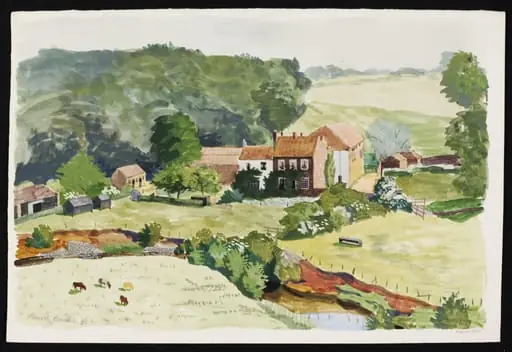
Cox's Farm, and White House, Ashopton
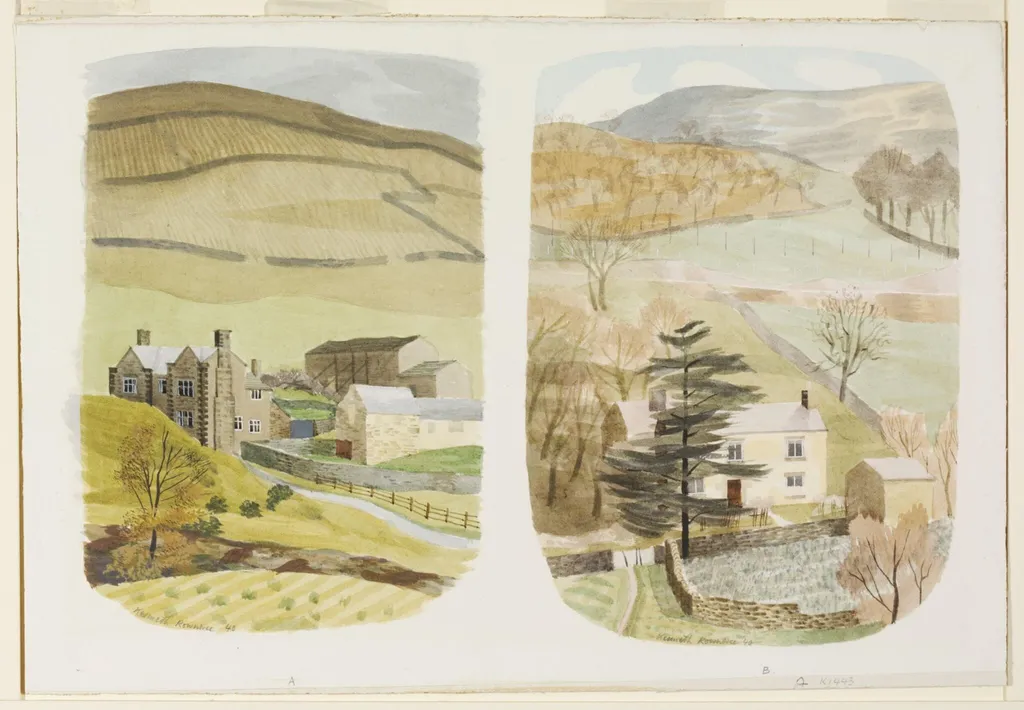
Cox's Farm, and White House, Ashopton is a watercolor work on paper by the Social Realist artist Rowntree. It dates from 1940 and is held in the collection of the Victoria and Albert Museum.
About this work
Overview
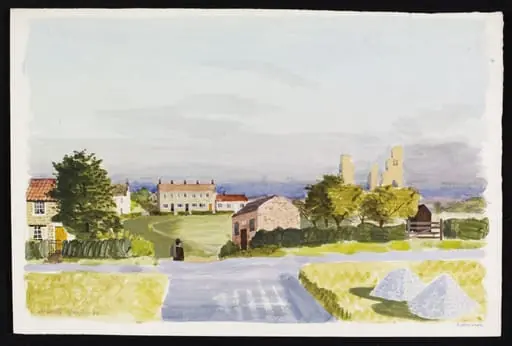
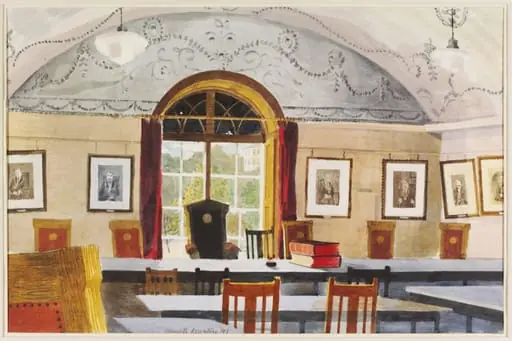
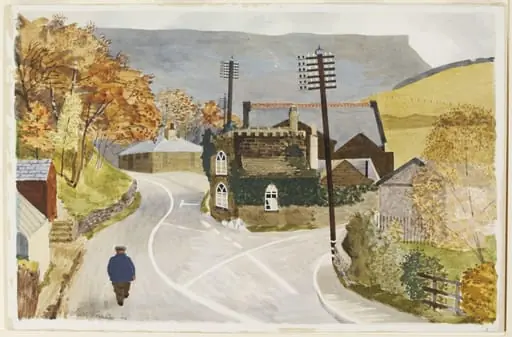
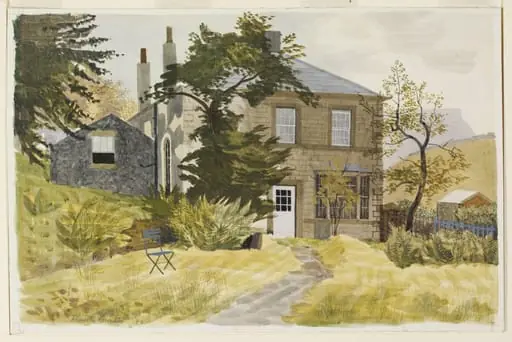
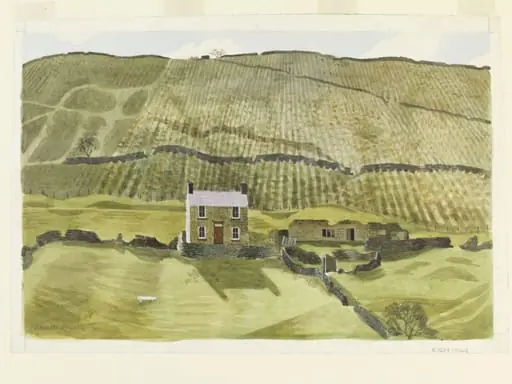
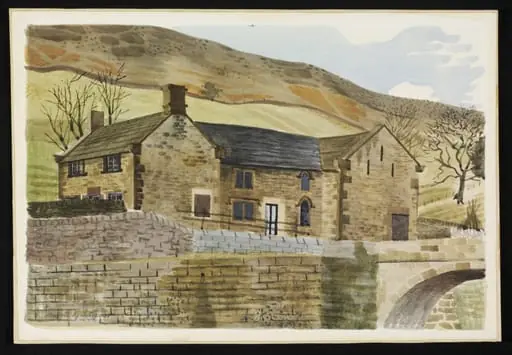
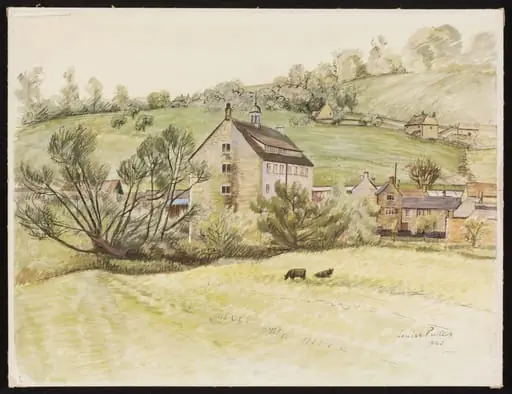
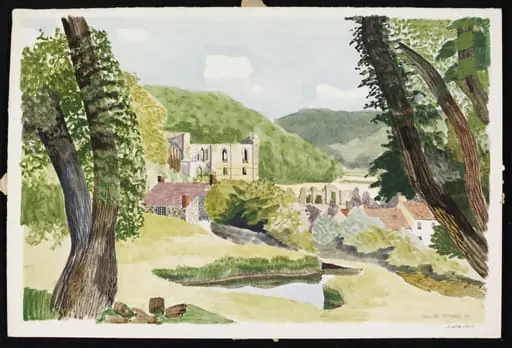
Cox's Farm, and White House, Ashopton is a dual watercolour study on a single sheet, created by Rowntree in 1940. The work presents two adjacent rural scenes from Ashopton.
Subject & Meaning
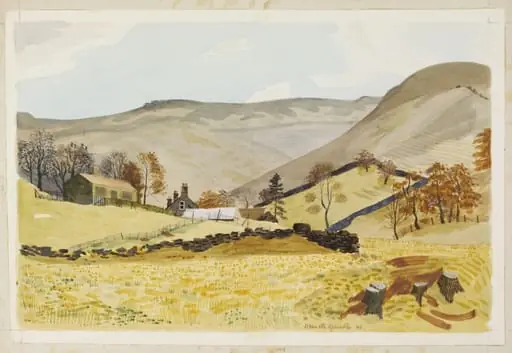
The left panel depicts Cox’s Farm, a stone farmhouse with outbuildings at the foot of a hill, surrounded by fields and a stream. The right panel shows the White House, a white dwelling nestled among trees, with bare hills visible in the distance and a snowy patch near a fence.
Technique & Style
Executed in soft, muted tones of yellows, greens, and blues, the watercolours convey a sense of serenity. The gentle, detailed rendering, akin to a refined sketch, contrasts warmer hues on the left with cooler tones on the right.
History & Provenance
Commissioned as part of the Recording Britain project (1940), a wartime initiative led by Sir Kenneth Clark to document vulnerable English landscapes and buildings, the piece is signed and dated by the artist in the bottom corners.
Context
Part of a broader effort to capture rural scenes, historic sites, and traditional life during WWII, this work reflects the project’s aim to preserve visual records of England’s heritage amid wartime uncertainty.
Legacy
Now associated with the aesthetic of peaceful, detailed watercolours, this piece is comparable to works found in the Victoria and Albert Museum, reflecting a style appreciated for its calming, observant portrayal of the countryside.
Artist & collection