Artwork
Sita
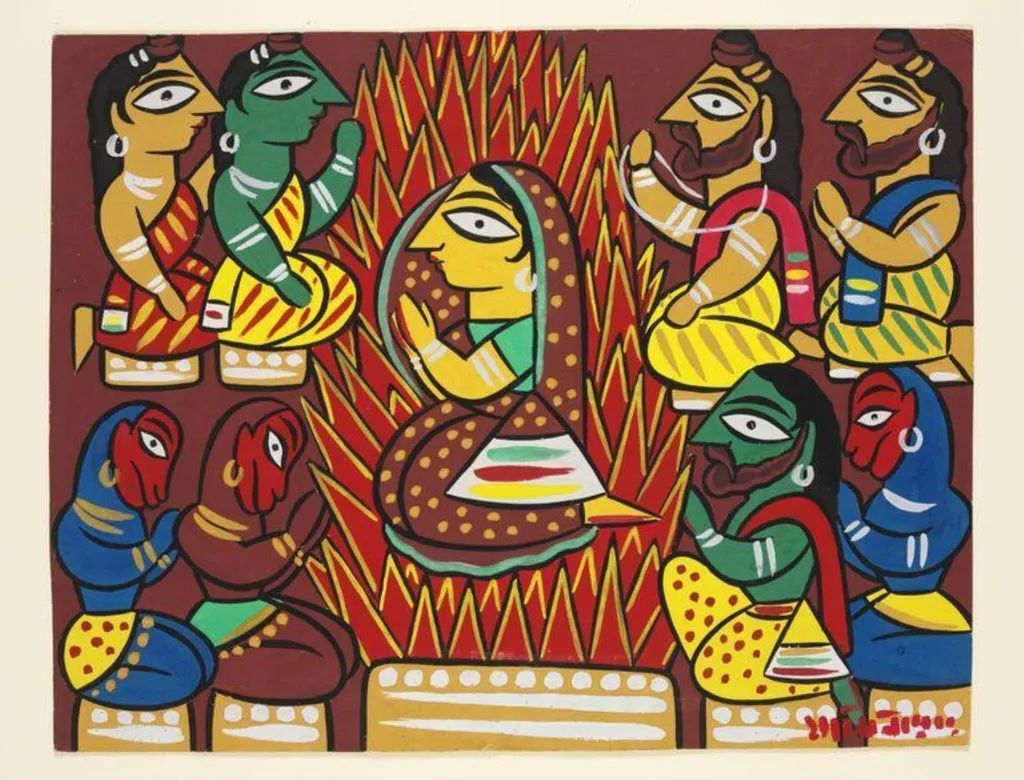
Sita is a paint painting by the Bengal School artist Jamini Roy. It dates from 1940 and is held in the collection of the Victoria and Albert Museum.
About this work
Overview
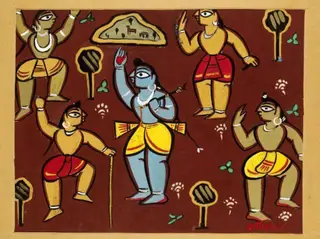
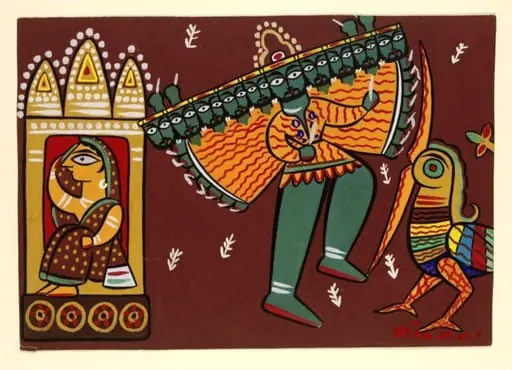
This painting depicts a pivotal scene from the Hindu epic, the Ramayana, where Sita undergoes a fire-ordeal to prove her innocence. Characterized by bold lines and flat, vibrant colors, the work reflects Jamini Roy's distinctive style, influenced by rural Bengal's folk traditions.
Subject & Meaning
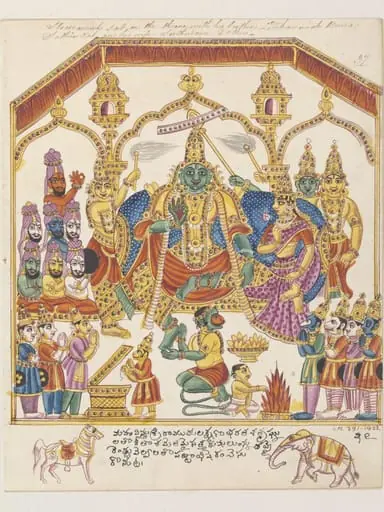
The scene portrays Sita seated amidst a stylized, sharp-edged blaze, her hands folded in composure. Onlookers include Rama, Lakshman, warriors, and monkeys, all with notably large eyes. The painting conveys Sita's trial by fire, a testament to her purity within the mythological narrative.
Technique & Style
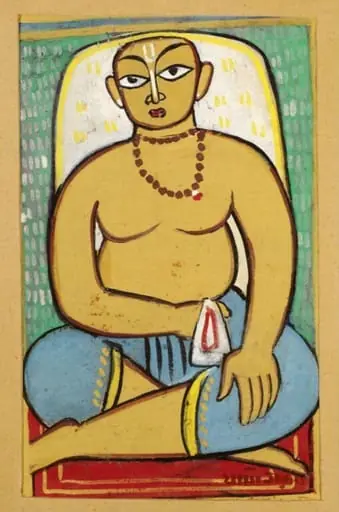
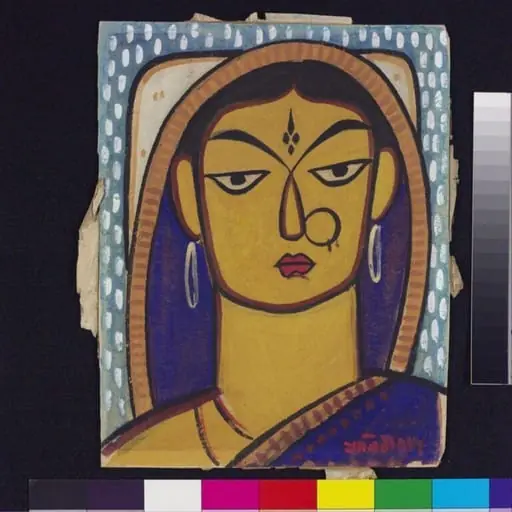
Roy's signature technique is evident in the bold outlines, flat color blocks, and stylization of flames into geometric shapes. These elements align with the folk art of rural Bengal, which heavily influenced his work. The overall effect is a simplified yet potent visual language.
History & Provenance
Produced in Jamini Roy's workshop, this piece was likely created by his apprentices using the artist's established stock motifs, all signed with his name. Roy's workshop model aimed to revive collaborative indigenous artisanal practices, reflecting his support for Indian independence and cultural authenticity.
Context
Jamini Roy's artistic evolution was intertwined with India's struggle for independence. His search for a modern, authentic Indian art form led him to embrace and amplify folk traditions, distinguishing his work from more Westernized Indian art of the time.
Legacy
This work contributes to Roy's legacy of revitalizing Indian folk art elements in modern painting. His influence can be seen in subsequent generations of artists who similarly sought to root their practice in indigenous traditions, ensuring the piece's relevance within Indian art history.
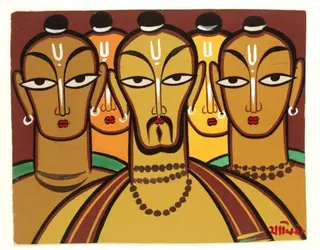
Artist & collection
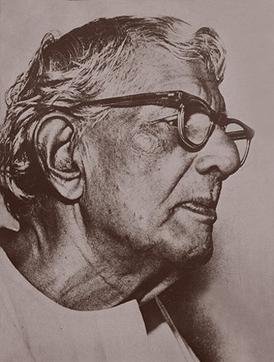
Artist
Jamini Roy was an Indian painter. He was honoured by the Government of India the award of Padma Bhushan in 1954. He remains one of the most famous pupils of Abanindranath Tagore, another praised Indian artist and…