Artwork
Untitled
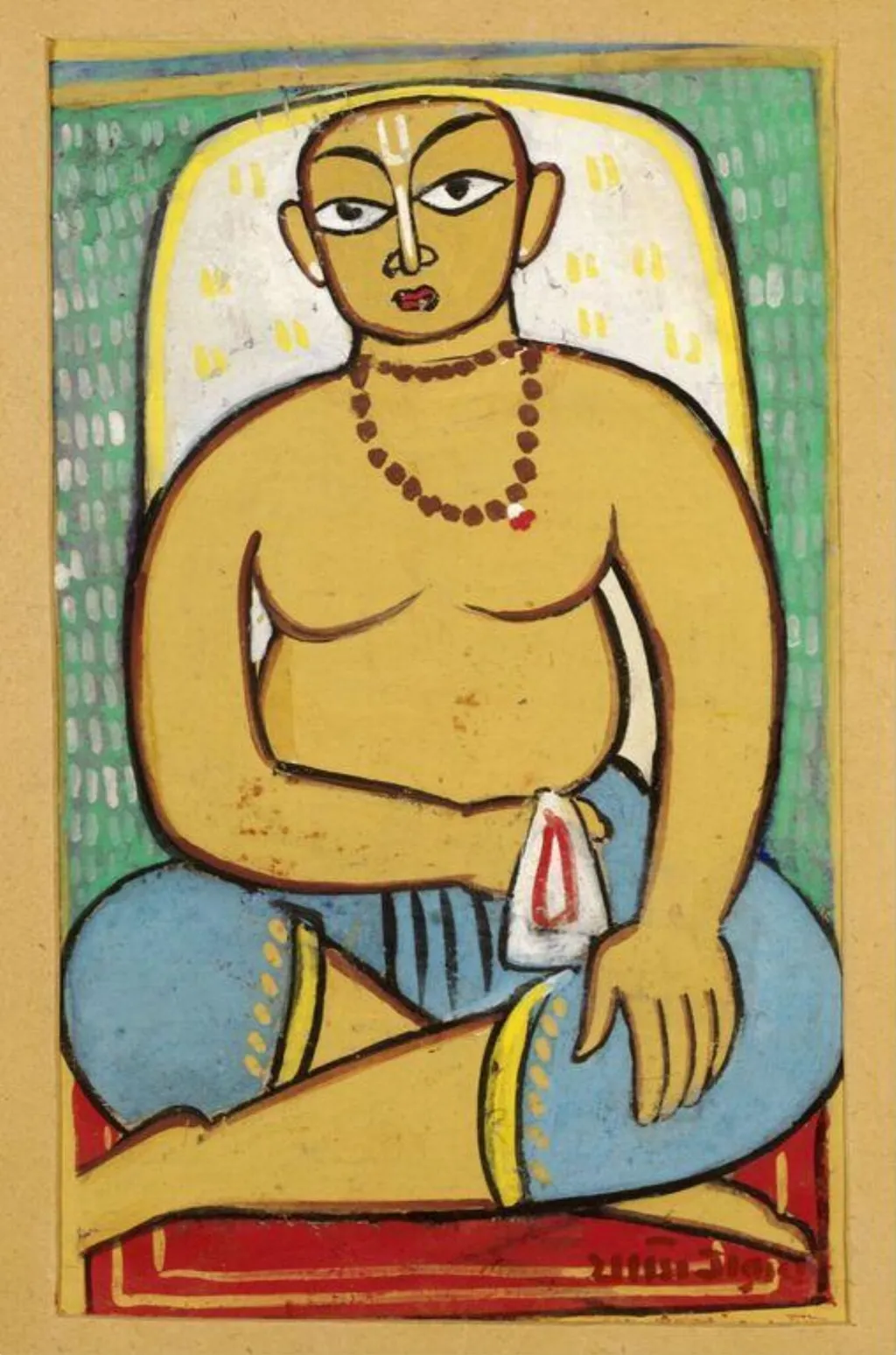
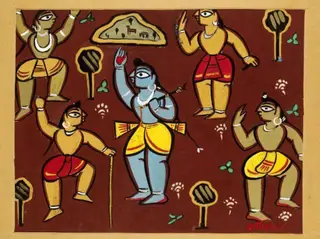
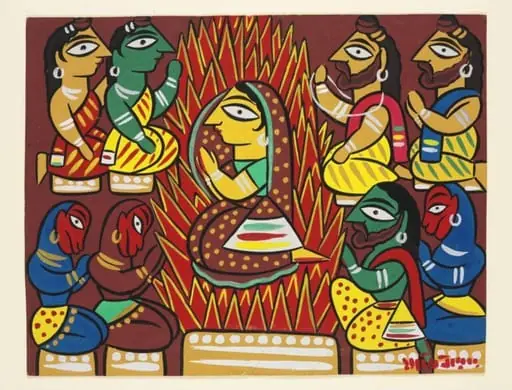
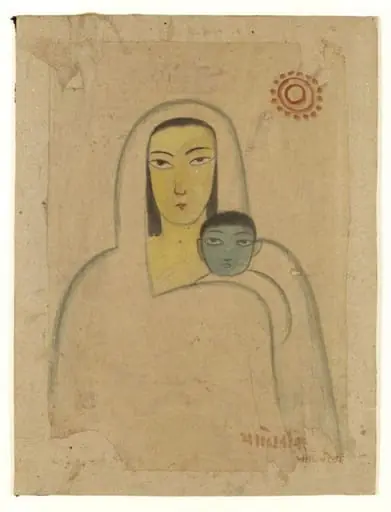
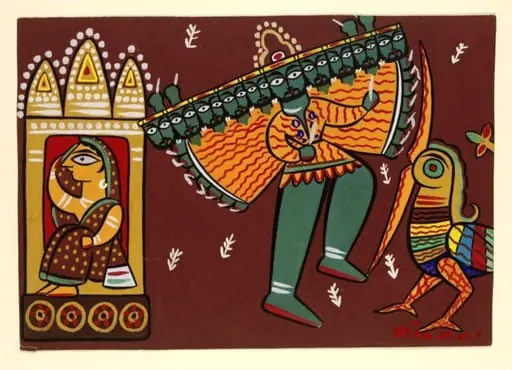
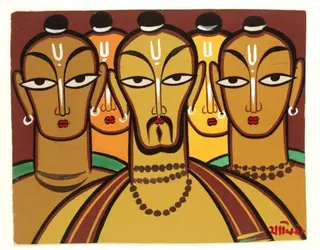
Untitled is a paint painting by the Bengal School artist Jamini Roy. It dates from 1935 and is held in the collection of the Victoria and Albert Museum.
About this work
Overview
This painting by Jamini Roy presents a seated Brahmin figure in a simplified, stylized form, rooted in Bengali folk aesthetics.
This painting by Jamini Roy presents a seated Brahmin figure in a simplified, stylized form, rooted in Bengali folk aesthetics. The composition isolates the subject against a flat, patterned backdrop of white with yellow dots and a vivid green border, emphasizing symbolic presence over naturalism. Roy’s use of indigenous materials and restrained palette reflects his deliberate turn away from Western academic traditions toward locally sourced artistic practices.
Subject & Meaning
The figure, identified as a Brahmin through his Vaishnavite tilak and mala, embodies spiritual discipline. The prayer bag with a red triangular mark may reference ritual objects tied to devotion or temple offerings. Roy’s focus on such figures reflects his interest in religious iconography drawn from everyday Hindu practice, presenting sacredness not through grandeur but through quiet, grounded ritual.
Technique & Style
Roy employed handmade canvas, lamp black outlines, and pigments derived from earth and minerals, mixed with organic tempera. His style features bold, unmodulated contours and flat areas of seven traditional colors, rejecting chiaroscuro and perspective. This approach aligns with Bengali folk art traditions, particularly Kalighat painting, prioritizing symbolic clarity and rhythmic line over illusionistic depth.
History & Provenance
Created during Roy’s mature period in the 1930s–40s, this work emerged as he systematically abandoned oil painting and academic training to embrace rural Bengali visual culture. His shift was both aesthetic and ideological, responding to nationalist sentiments and a desire to make art accessible beyond elite circles. This painting is part of a broader body of work that redefined modern Indian art through vernacular sources.
Context
Roy’s work arose amid India’s cultural renaissance, when artists sought to define a national identity distinct from colonial influences. By depicting Brahmins, Santhal women, and mythological scenes in folk idioms, he elevated local traditions as valid subjects for modern art. His paintings resonated with audiences seeking cultural authenticity during a period of political and social transformation.
Legacy
Roy’s integration of folk motifs into modernist form influenced generations of Indian artists to look beyond European models. His emphasis on material simplicity and cultural specificity helped establish a precedent for indigenous modernism. Today, his works are held in major collections as key examples of how regional traditions can inform national artistic identity without romanticization.
Artist & collection
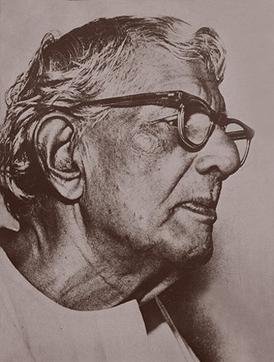
Artist
Jamini Roy was an Indian painter. He was honoured by the Government of India the award of Padma Bhushan in 1954. He remains one of the most famous pupils of Abanindranath Tagore, another praised Indian artist and…