Artwork
Untitled
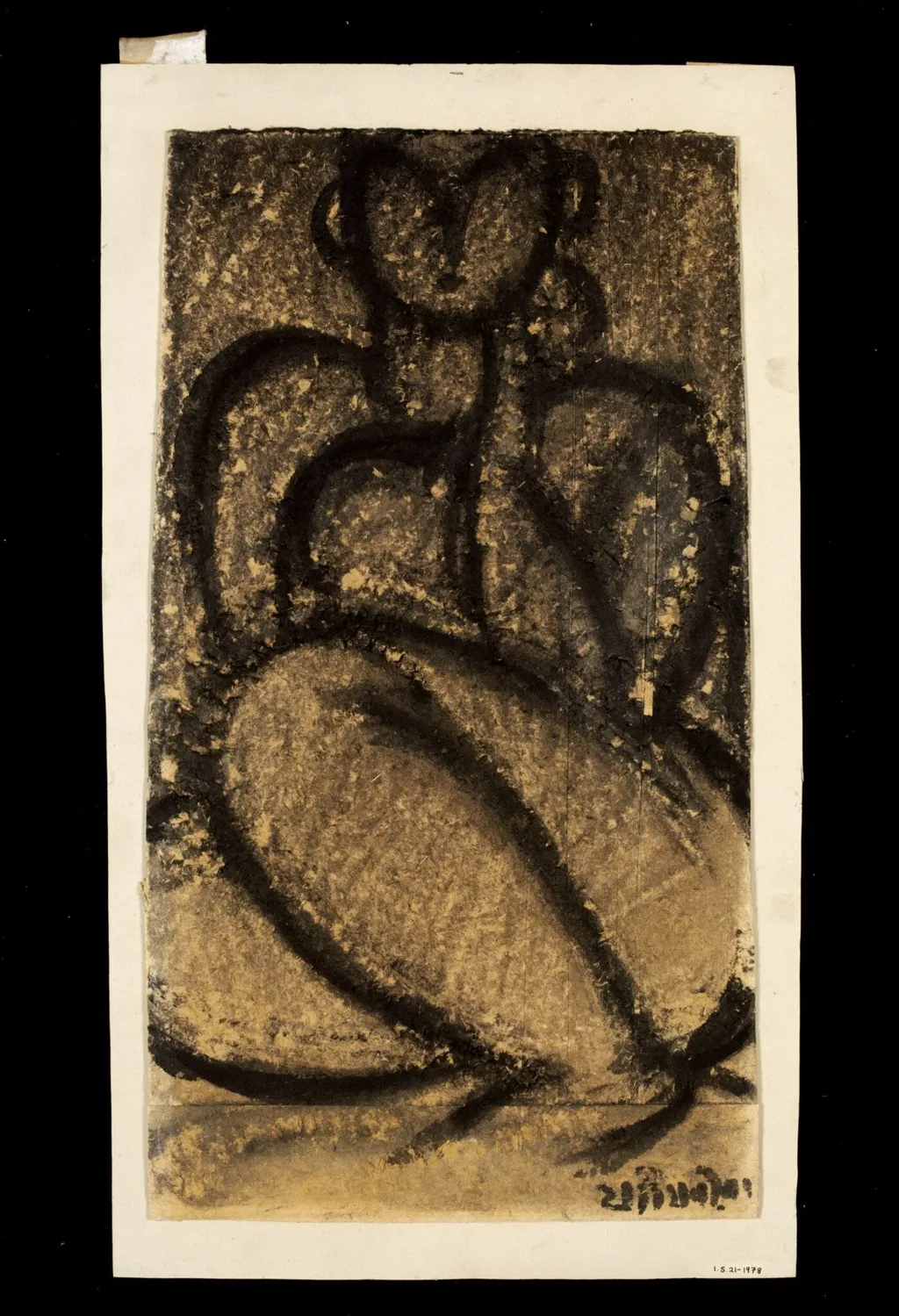
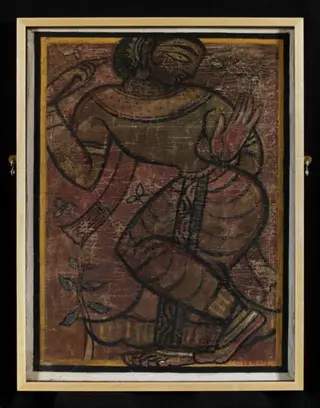
Untitled is a paint painting by the Bengal School artist Roy Jamini. It dates from 1944 and is held in the collection of the Victoria and Albert Museum.
About this work
Overview
The composition reflects the artist’s interest in everyday rural life and the visual language of folk traditions.
This painting, untitled, presents a solitary figure of a Santhal woman from rural Bengal in a crouching posture. Rendered with stark black lines against a flat, muted background, the work emphasizes the silhouette of the figure, allowing the viewer to focus on her presence without narrative distraction. The composition reflects the artist’s interest in everyday rural life and the visual language of folk traditions.
Subject & Meaning
The central figure belongs to the Santhal community, an indigenous group of eastern India, and is portrayed in a simple, dignified pose that suggests both labor and repose. By isolating the woman from any surrounding activity, the artist invites contemplation of the individual’s role within the broader cultural fabric of Bengal’s agrarian society, highlighting the quiet resilience of rural women.
Technique & Style
Executed on rough, uneven paper, the image relies on bold, black strokes reminiscent of Kalighat printmaking, a popular 19th‑century Bengal art form. The pigment, derived from lamp black collected at the base of a kettle, creates a dense, matte line quality. Flat contours and simplified forms echo the silhouette techniques of early 20th‑century modernists, while the limited palette of earthy browns and deep blues reinforces a timeless, folk aesthetic.
Context
Created by Jamini Roy (1887‑1972), a pivotal figure in Indian modernism, the work exemplifies his shift from academic training toward a self‑directed style rooted in regional folk art. Roy’s adoption of Kalighat motifs and his focus on tribal subjects were part of a broader movement to forge a national artistic identity that celebrated indigenous visual traditions over colonial influences.
Artist & collection
Artist
Roy Jamini spent years painting the same crowded corner of Varanasi, until the street itself started talking back.