Artwork
Dancing Lady
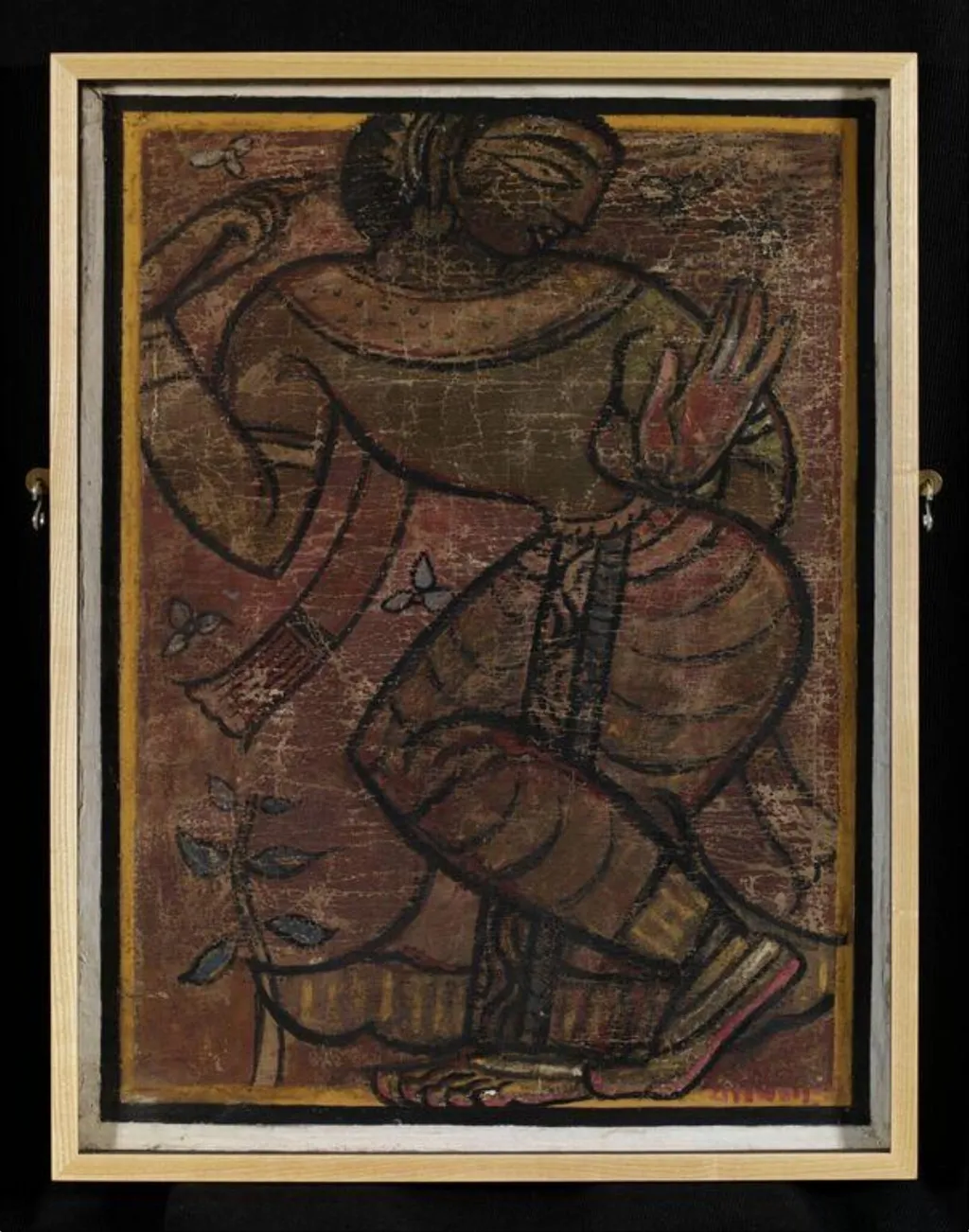
Dancing Lady is a gouache painting by the Bengal School artist Jamini Roy. It dates from 1945 and is held in the collection of the Victoria and Albert Museum.
About this work
Overview
Rejecting Western academic styles, Roy embraced indigenous materials and techniques, using handmade canvas and pigments derived from earth and minerals.
Painted in gouache on canvas, this work by Jamini Roy exemplifies his distinctive modernist approach rooted in Bengali folk traditions. Rejecting Western academic styles, Roy embraced indigenous materials and techniques, using handmade canvas and pigments derived from earth and minerals. His simplified forms and restrained palette reflect a deliberate turn toward vernacular aesthetics, aligning his practice with rural artistic heritage rather than colonial conventions.
Subject & Meaning
The figure is a dancing woman, likely drawn from the Santhal community, rendered in a dynamic pose with raised arm, bent knee, and open palm facing the viewer. Her broad smile and unadorned attire convey a sense of quiet joy and cultural authenticity. Roy’s focus on everyday rural life, particularly women in motion, elevates ordinary moments into enduring visual statements, free from mythological or religious symbolism yet rich in cultural resonance.
Technique & Style
Roy employed a limited palette of seven natural pigments, applied in flat, unmodulated planes with bold, calligraphic outlines drawn in lamp black. The use of gouache on fabric canvas, along with the deliberate flattening of space, evident in the figure’s head extending beyond the frame, enhances the two-dimensional quality. These choices echo Kalighat pat paintings, emphasizing line and rhythm over illusionistic depth.
History & Provenance
Created during the 1930s–40s, this painting emerged as Roy shifted away from academic portraiture toward folk-inspired subjects. His rejection of oil paints and European methods coincided with India’s nationalist movement, positioning his art as both aesthetic and cultural reclamation. While specific provenance details are often undocumented, such works were widely collected by Indian patrons and institutions seeking indigenous modernism.
Context
Roy’s work arose amid a broader Indian effort to redefine artistic identity beyond colonial influence. By drawing from Kalighat scrolls, village terracottas, and Santhal rituals, he aligned his practice with a growing cultural revival. His paintings were accessible and affordable, often sold directly from his studio, bridging the gap between elite art spaces and local traditions.
Legacy
Roy’s stylistic innovations influenced generations of Indian artists seeking alternatives to Western modernism. His emphasis on material simplicity, symbolic economy, and folk sources helped establish a distinct Indian modernist vocabulary. Today, his works are held in major collections as key examples of how traditional forms could be reimagined within a contemporary framework without losing cultural specificity.
Artist & collection
Artist
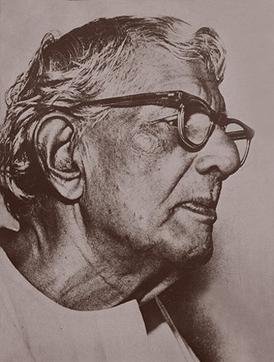
Jamini Roy was an Indian painter. He was honoured by the Government of India the award of Padma Bhushan in 1954. He remains one of the most famous pupils of Abanindranath Tagore, another praised Indian artist and…