Artwork
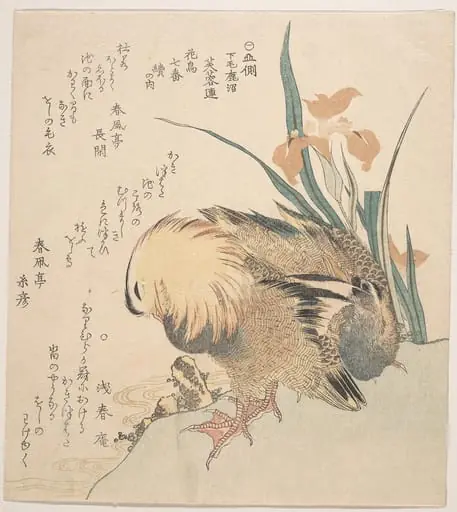
摺物帖 『春雨集』 鴨と葱|Spring Rain Collection (Harusame shū), vol. 1: Duck and Scallions
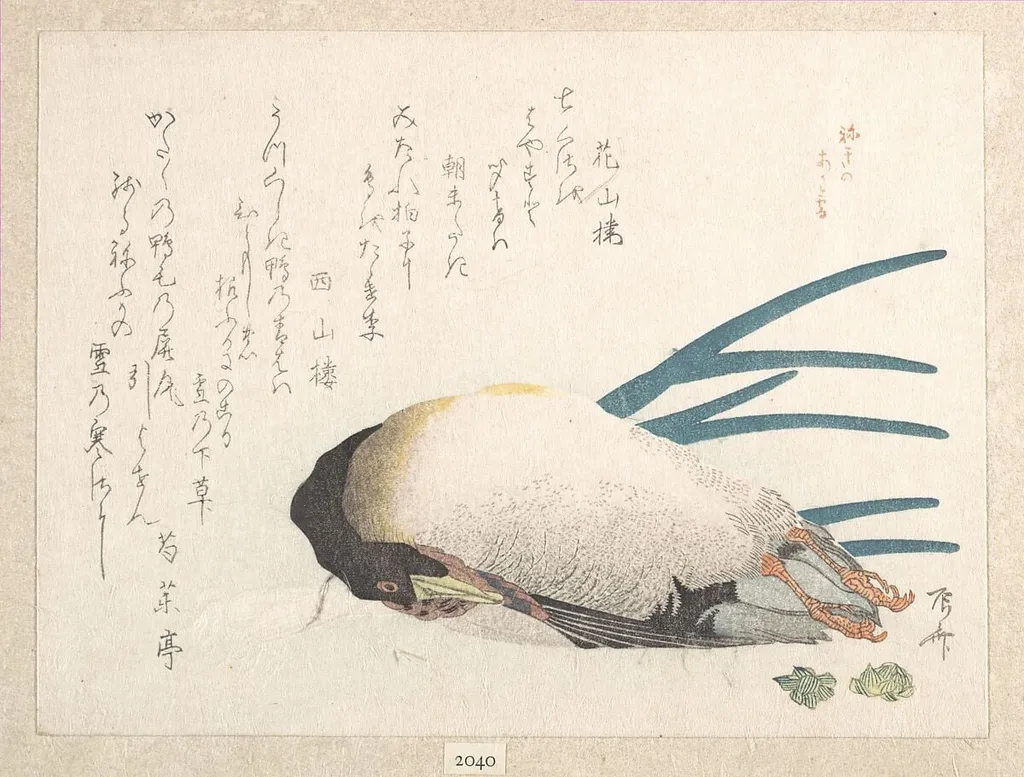
摺物帖 『春雨集』 鴨と葱|Spring Rain Collection (Harusame shū), vol. 1: Duck and Scallions is an ink print by the Romanticist artist Ryūryūkyo Shinsai. It dates from 1814 and is held in the collection of the Metropolitan Museum of Art.
About this work
Overview
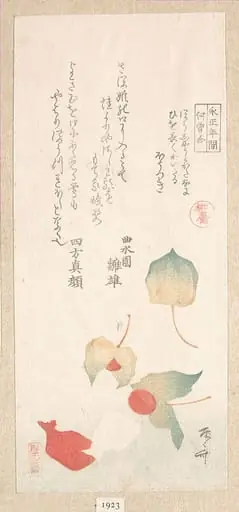
Created around 1814 by Ryūryūkyo Shinsai, this surimono print is part of a privately commissioned album titled 'Spring Rain Collection.
Created around 1814 by Ryūryūkyo Shinsai, this surimono print is part of a privately commissioned album titled 'Spring Rain Collection.' Designed as a luxury item for literary circles, it combines poetry, calligraphy, and imagery in a single sheet. The work is mounted in an album format, reflecting its intimate, refined purpose rather than mass distribution. Ink and color on paper convey a quiet elegance, typical of surimono produced for connoisseurs.
Subject & Meaning
The image depicts a duck, reclining on its side with head turned and beak slightly open, beside a cluster of scallions. The pairing evokes seasonal imagery associated with spring and culinary tradition. In Japanese poetic culture, such natural elements often allude to transience and harmony.
The duck, a symbol of grace in water, and the scallion, a humble spring vegetable, together suggest a moment of quiet observation, possibly linked to a seasonal verse in the album’s poetic sequence.
Technique & Style
Executed in woodblock printing, the design employs bold, clean outlines and a restrained palette of black ink, white paper, and muted greens and oranges. The artist uses minimal color to emphasize form and negative space, creating a sense of stillness. Fine details, such as feather texture and leaf veins, are rendered with precision.
The calligraphic inscriptions in the background are integral to the composition, blending visual and literary elements in a unified aesthetic.
History & Provenance
This print was produced as part of a limited series commissioned by a private patron, likely a member of the literati class. Surimono like this were not sold publicly but exchanged among poets and artists as gifts or tokens of appreciation. The Metropolitan Museum of Art acquired the album containing this print through documented collection efforts in the early 20th century, preserving its original binding and sequence.
Context
Surimono emerged in the late Edo period as a niche art form, often tied to poetry clubs and seasonal celebrations. Unlike commercial prints, they prioritized artistic experimentation and personal expression. Ryūryūkyo Shinsai, known for his delicate compositions and literary sensibility, contributed to this tradition by merging natural observation with poetic allusion. This print reflects the cultural value placed on subtlety and seasonal awareness in early 19th-century Japan.
Legacy
Though not widely known outside specialist circles, this work exemplifies the sophistication of Edo-period surimono. Its preservation in a major museum underscores its importance as a cultural artifact that bridges visual art, poetry, and printmaking. It continues to inform scholarly understanding of private artistic networks and the role of nature in Japanese aesthetic thought during the early 1800s.
Artist & collection

 Untitled
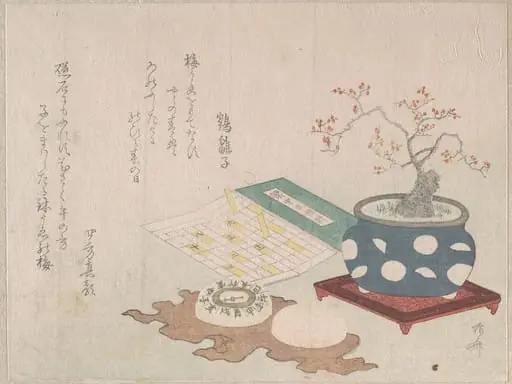 鉢梅、懐中日時計、羅針盤|Bonsai Plum, Compass, and Pocket Sundial with Design of Calendar, from Spring Rain Surimono Album (Harusame surimono-jō, vol. 3)
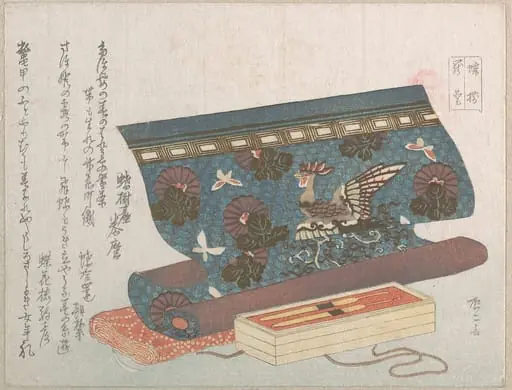 『蝶揃・寵愛』帯と簪|Roll of Cloth for an Obi and Tortoise-shell Hair Ornaments (“Presents for One’s Beloved”), from the Butterfly Series, from Spring Rain Surimono Album (Harusame surimono-jō, vol. 3)
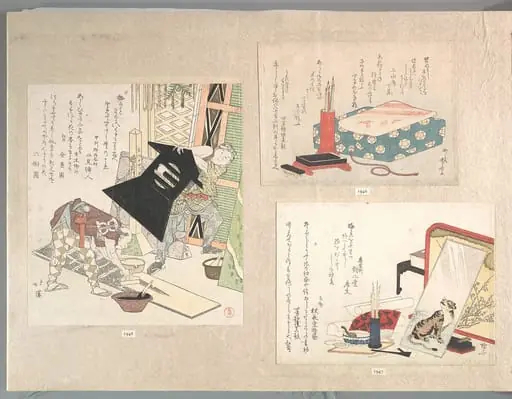 衝立、虎図、文具一式|Desk Screen, Writing Set, Painting of Tiger, and Mounting Paraphernalia, from Spring Rain Surimono Album (Harusame surimono-jō, vol. 1)
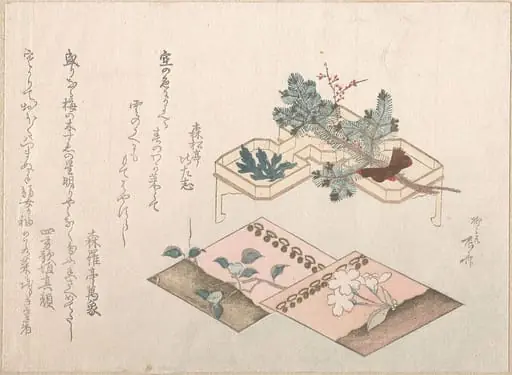 『春雨集』 摺物帖柳々居辰斎画 若松|Spring Rain Collection (Harusame shū), vol. 2: Pine Shoots and Accoutrements for New Year’s Celebrations
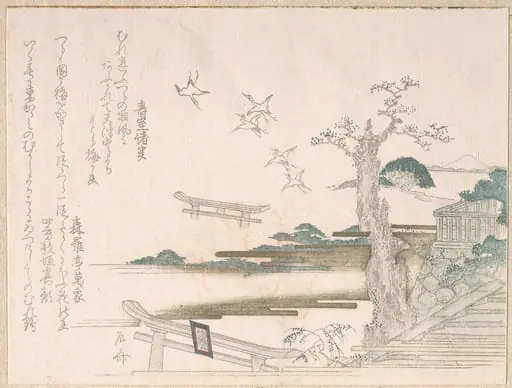 『春雨集』 摺物帖柳々居辰斎画 鎌倉の鶴岡八幡宮に鶴|Spring Rain Collection (Harusame shū), vol. 2: Cranes at Tsurugaoka Hachimangō Shrine in Kamakura
 Untitled
 Untitled