Artwork
Isaac Newton
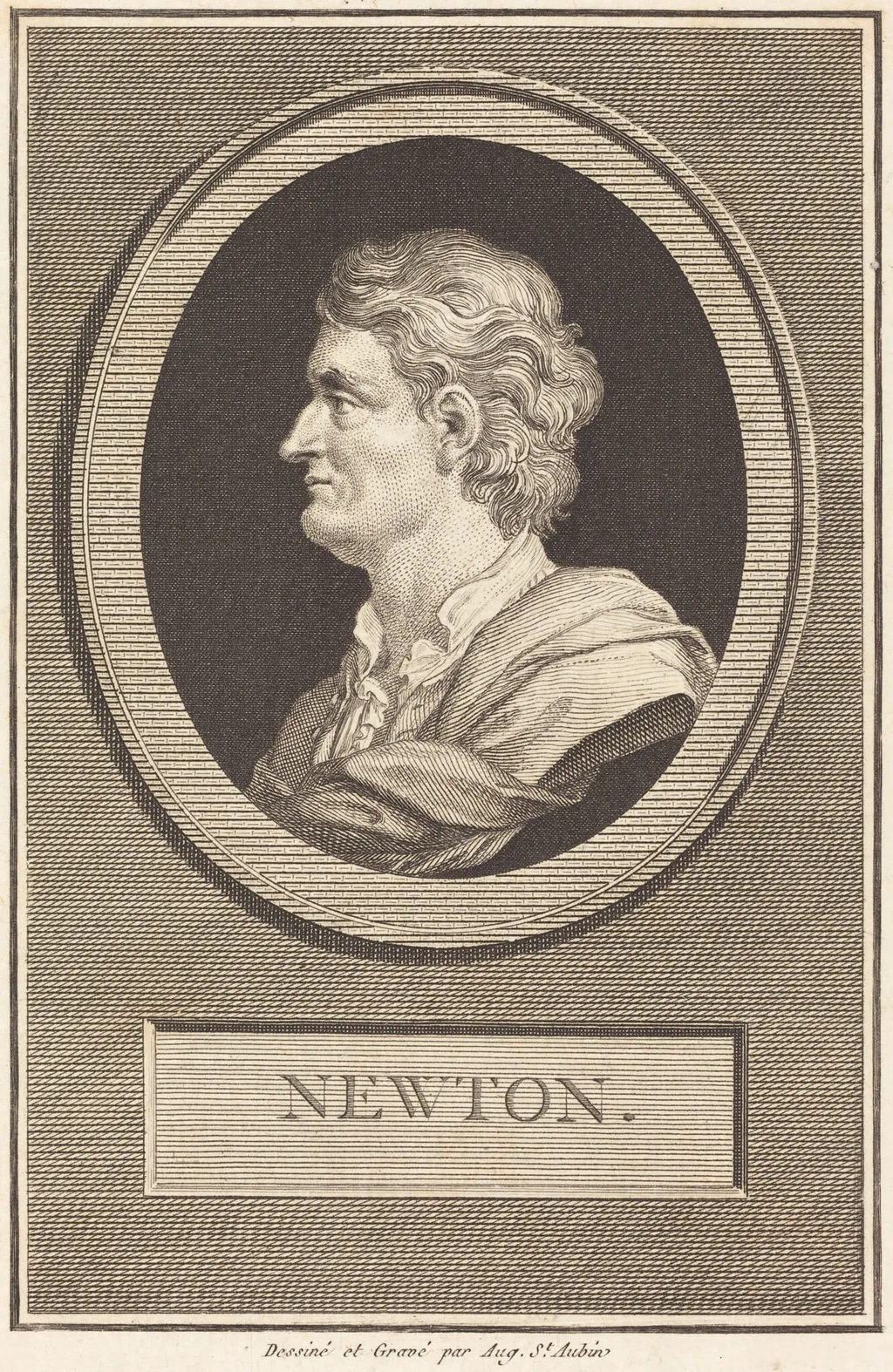
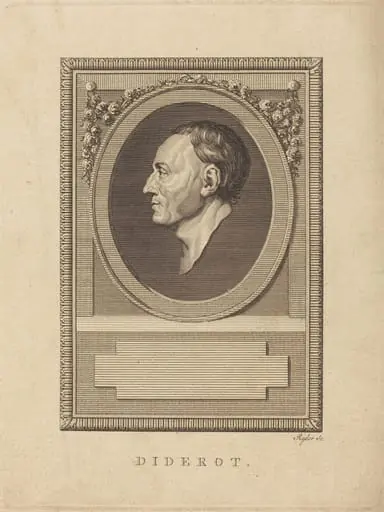
Isaac Newton is an ink print by the Romanticist artist Augustin de Saint-Aubin. It dates from 1801 and is held in the collection of the National Gallery of Art. Created in 1801, this print presents a monochrome likeness of a man identified by the inscription “Newton” beneath the image.
- Inscription
- Inscribed:lower center in plate below medallion: NEWTON.; lower center in plate below frame: Dessine et Grave par Aug.St.Aubin
About this work
Overview
Created in 1801, this print presents a monochrome likeness of a man identified by the inscription “Newton” beneath the image. The figure is rendered with a solemn expression, curly hair, and a high ruffled collar, his head turned slightly away from the viewer. The composition is confined to the face and shoulders against an unadorned background, directing attention to the sitter’s features.
Subject & Meaning
The portrait depicts the renowned scientist Isaac Newton, whose contributions to physics and mathematics were widely celebrated in the early nineteenth century.
The portrait depicts the renowned scientist Isaac Newton, whose contributions to physics and mathematics were widely celebrated in the early nineteenth century. By isolating his visage and omitting symbolic attributes, the image emphasizes Newton’s intellectual presence rather than specific achievements, inviting viewers to recognize him through his distinctive facial characteristics and dignified bearing.
Technique & Style
The work combines engraving and etching on laid paper, a common practice among French printmakers of the period. Fine, cross‑hatching lines articulate the texture of hair and fabric, while broader strokes define the collar and facial planes. The layered approach allows for delicate tonal variation, producing a crisp yet nuanced rendering typical of Augustin de Saint‑Aubin’s graphic repertoire.
History & Provenance
Executed by Augustin de Saint‑Aubin, a member of a distinguished family of French artists, the print reflects his professional activity at the turn of the nineteenth century. It was likely produced for the burgeoning market of portrait prints that circulated among collectors and scholars interested in scientific figures, though specific ownership records prior to its museum acquisition remain undocumented.
Context
The portrait belongs to the broader tradition of eighteenth‑century French graphic art, wherein portraiture served both educational and decorative purposes. During this era, engravers frequently reproduced images of eminent personalities to satisfy public curiosity and to reinforce Enlightenment ideals, positioning Newton as an emblem of rational inquiry within the visual culture of the time.
Own this work as a print
Artist & collection
Artist
Augustin de Saint-Aubin sometimes styled Auguste de Saint-Aubin (3 January 1736 – 9 November 1807), belongs to an important dynasty of French designers and engravers.

 Laban Searching for His Stolen Gods
 Parade (A Theatrical Procession in Paris)
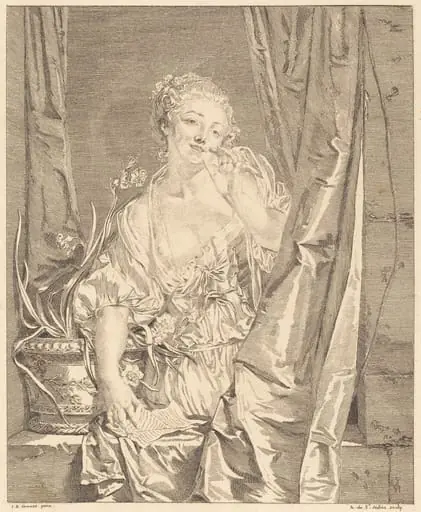 Le baiser envoyé
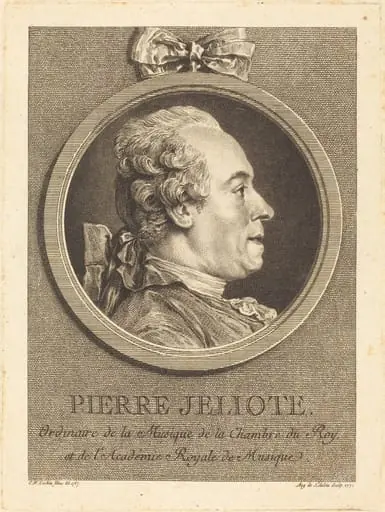 Pierre Jeliote
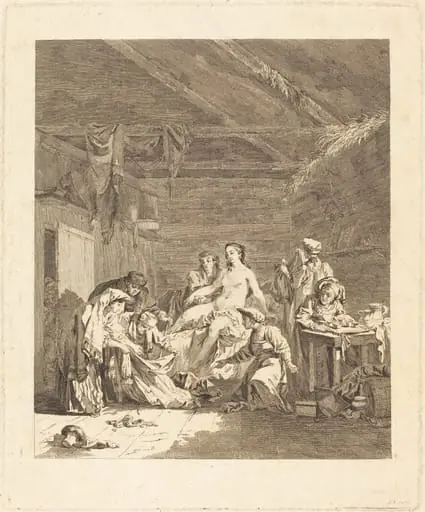 Le lever de la mariée russe (Custom of the Russians after the Marriage Ceremony and before the Wedding Feast)
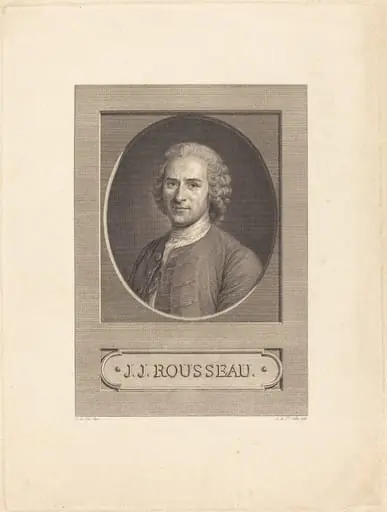 J.J. Rousseau
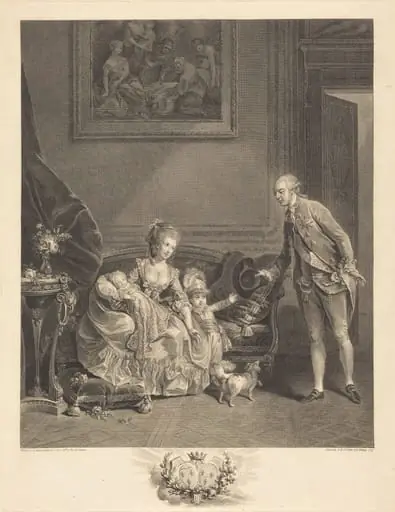 Le duc de Chartres, son epouse et ses enfants
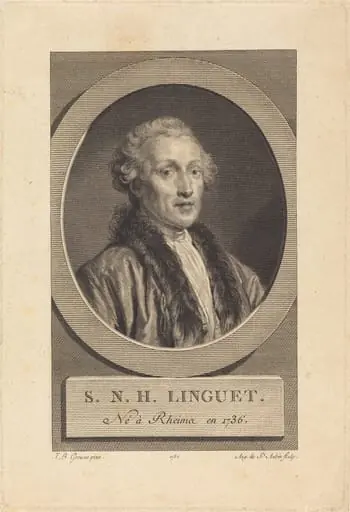 Simon-Nicolas-Henri Linguet