Artwork
Four Vases (Les quatres vases)
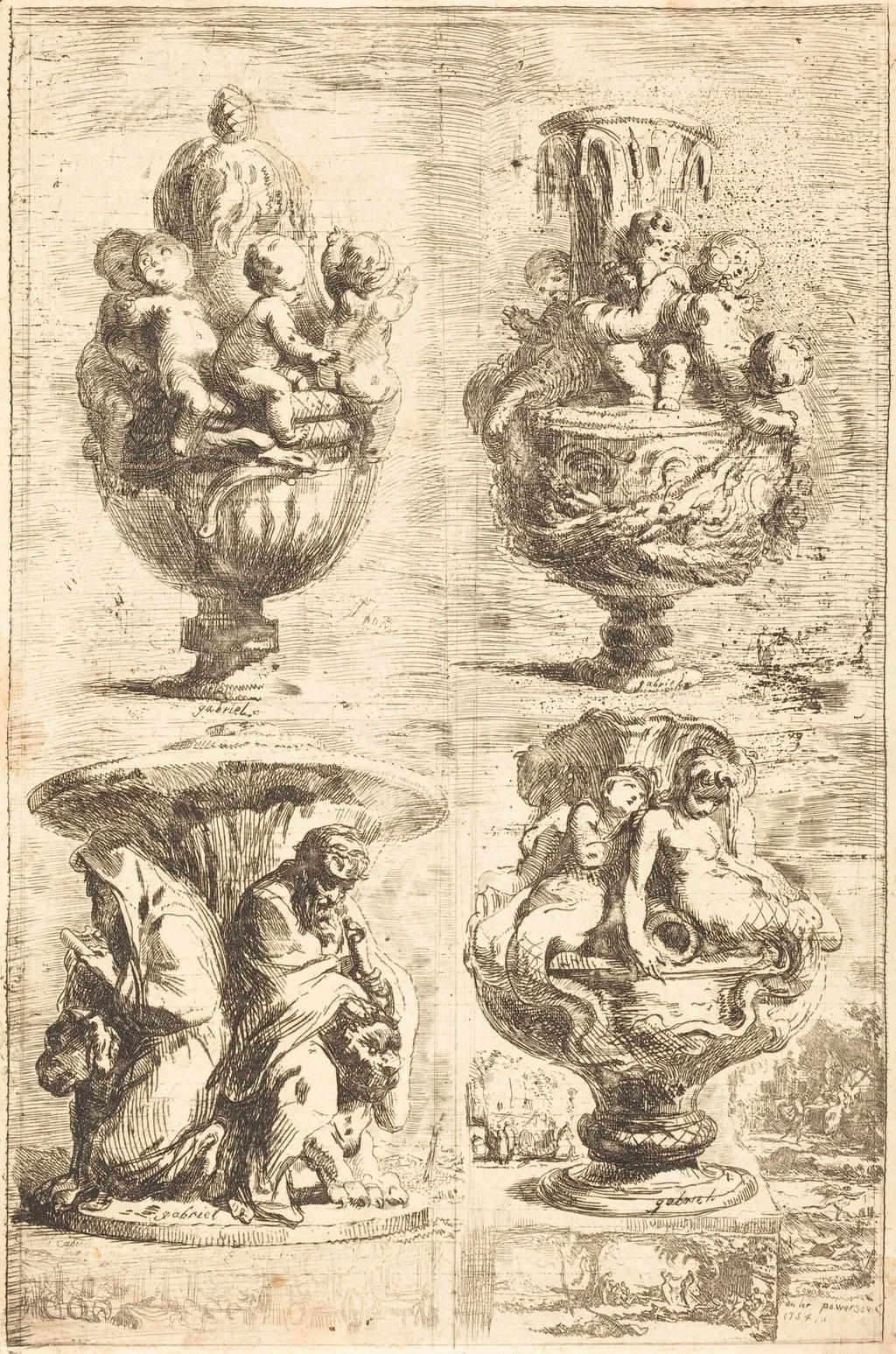
Four Vases (Les quatres vases) is an ink print by the Romanticist artist Gabriel de Saint-Aubin. It dates from 1754 and is held in the collection of the Rosenwald Collection.
- Inscription
- Inscribed:recto: in plate, on or below base of each vase: gabriel; in plate, at bottom right: 1754; verso: at lower right in brown ink in later hand: gabriel de st aubin
- Markings
- Marked:recto: none; verso: National Gallery of Art
About this work
Overview
Gabriel de Saint-Aubin created this etching in 1754, depicting four slender vases arranged in a stacked composition.
Gabriel de Saint-Aubin created this etching in 1754, depicting four slender vases arranged in a stacked composition. The work is rendered on laid paper using the etching technique, which involves incising lines into a metal plate with acid before transferring the image to paper. The resulting print carries a spontaneous, linear quality, with dense, uneven strokes that suggest rapid execution and a focus on movement rather than precision.
Subject & Meaning
The vases are populated with diminutive human figures, some perched atop the vessels, others seated within their hollow forms. The scene evokes a whimsical inversion of scale, where architecture becomes a stage for miniature activity. There is no clear narrative, but the figures’ postures suggest play, rest, or labor, inviting contemplation of human interaction with objects and space in a fantastical, almost theatrical manner.
Technique & Style
Saint-Aubin employed etching to achieve a tactile, sketch-like texture. The lines are irregular and energetic, with varying pressure creating areas of dense shadow and delicate detail. The roughness of the marks reflects the artist’s direct engagement with the plate, prioritizing immediacy over polished finish. This approach aligns with 18th-century draftsmanship that valued observation and spontaneity over idealized form.
History & Provenance
Created in 1754, the print emerged during Saint-Aubin’s active years in Paris, where he documented urban life and artistic circles. While the specific early ownership of this piece is undocumented, it belongs to a broader body of his graphic work that circulated among collectors and artists. Its survival reflects the period’s interest in prints as both artistic records and objects of private contemplation.
Context
In mid-18th-century France, etching was widely used by artists to explore informal subjects and experimental techniques. Saint-Aubin’s work stood apart from grand historical or mythological themes, instead capturing everyday scenes with wit and observation. This print reflects a growing appreciation for the decorative arts and the playful reimagining of classical forms within domestic and artistic settings.
Legacy
Though not widely exhibited today, this etching exemplifies Saint-Aubin’s role in bridging drawing and printmaking in pre-Revolutionary France. His ability to infuse ordinary subjects with imaginative detail influenced later generations of graphic artists. The work remains a quiet testament to the value of intimate, observational art in an era increasingly dominated by formal commissions.
Own this work as a print
Artist & collection

- Suite of Vases: Plate 13
 Pan Reclining before a Herm
 Ornate Goblet
 Suite of Vases: Plate 7
 Cartouche with Rams and Infant Satyrs
 The Education of Satyr Children
 Glorification of the Host
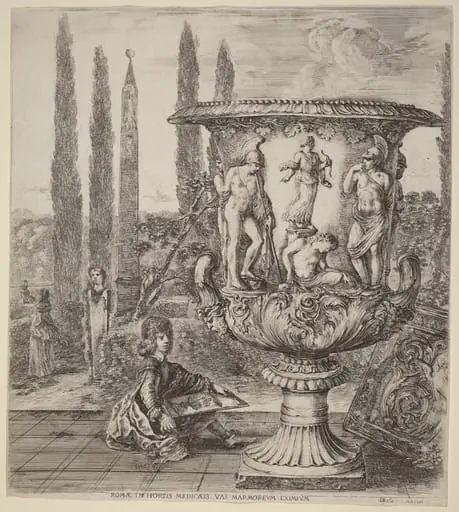 The Vase of the Medici
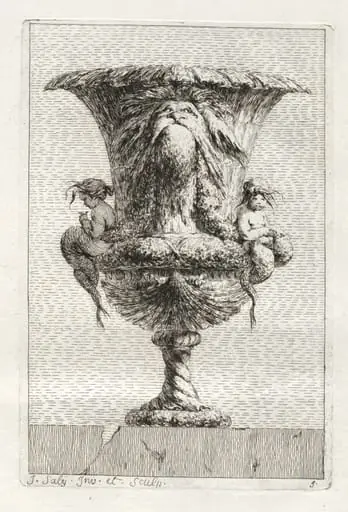 Suite of Vases: Plate 9
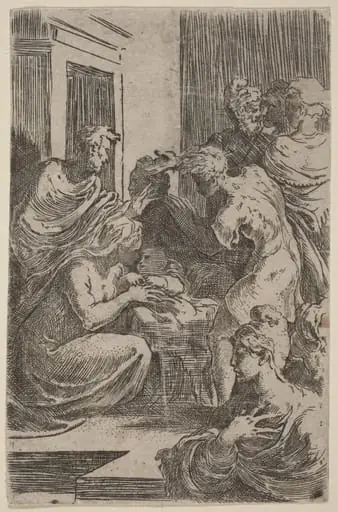 The Adoration of the Shepherds
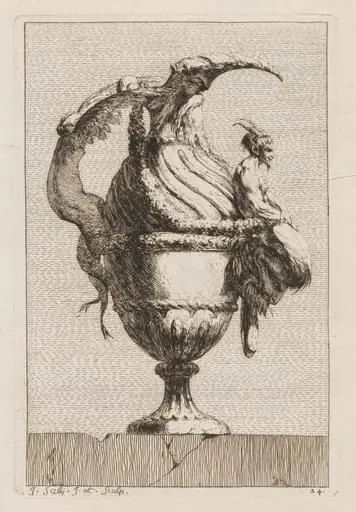 Suite of Vases: Plate 24
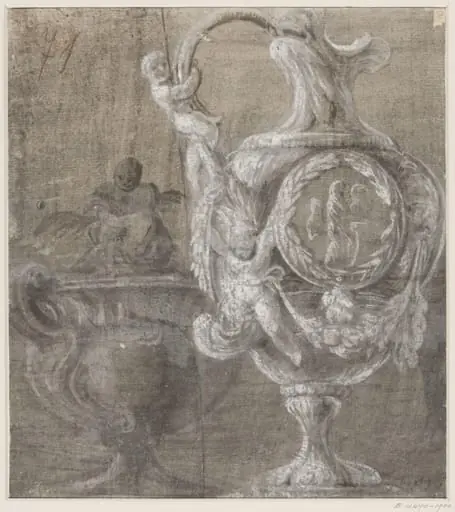 Design for a ewer and a vase