Artwork
Vue du Salon du Louvre en l'année 1753 (View of the Salon in the Year 1753)
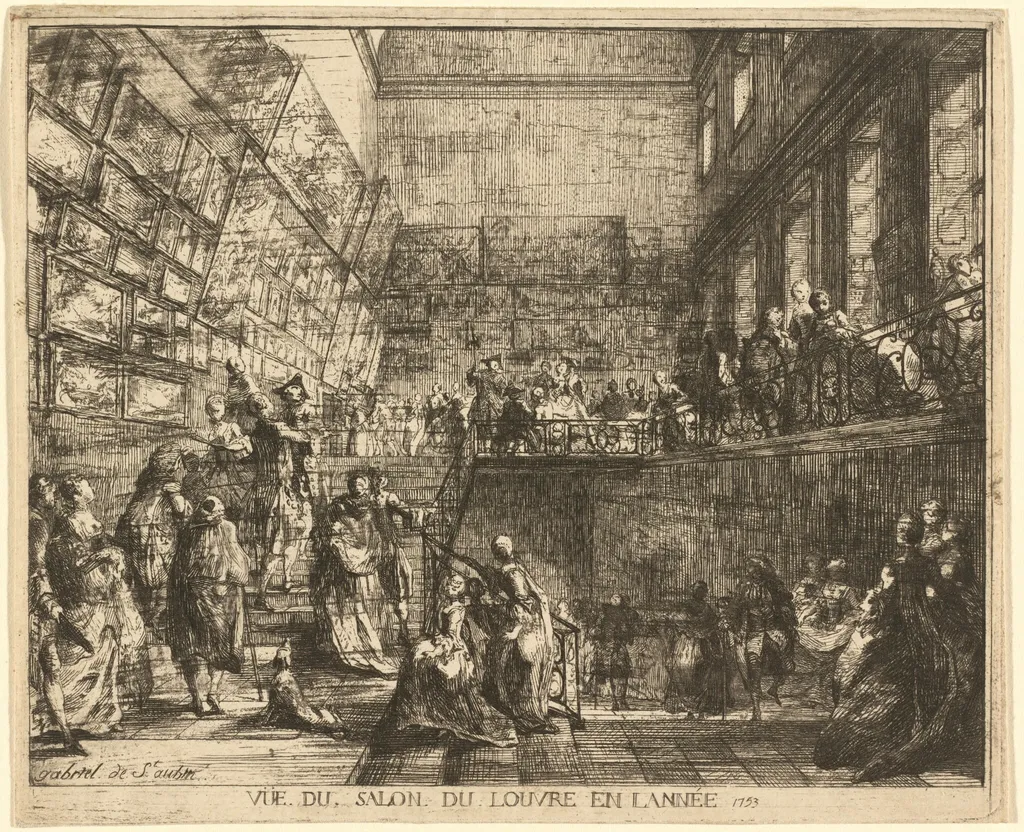
Vue du Salon du Louvre en l'année 1753 (View of the Salon in the Year 1753) is an ink print by the Romanticist artist Gabriel de Saint-Aubin. It dates from 1753 and is held in the collection of the National Gallery of Art.
- Inscription
- Inscribed:recto: in plate, in image, at lower left: gabriel de St. aubin; in plate, below image, at bottom: VÜE DU SALON DU LOUVRE EN LANNÉE 1753; verso: along top edge in graphite [to be transcribed]; at lower left in graphite in later hand: 39.; at lower right in graphite in later hand: Colnaghi Dec 185[or 9?]8 / rp [?]
- Markings
- Marked:recto: none; verso: Henri-Jean Thomas (Lugt 1378)
About this work
Overview
Rendered in fine, precise lines on laid paper, the print presents a densely populated scene filled with visitors, artworks, and architectural details.
Gabriel de Saint-Aubin’s 1753 etching captures the interior of the Salon du Louvre during the annual art exhibition. Rendered in fine, precise lines on laid paper, the print presents a densely populated scene filled with visitors, artworks, and architectural details. The composition reflects the social and cultural energy of the event, documenting not just the art on display but the public’s engagement with it.
Subject & Meaning
The scene depicts a cross-section of 18th-century Parisian society gathered to view the Royal Academy’s exhibition. Figures in elaborate attire mingle with more modestly dressed attendees, suggesting a broad public interest in art. Dogs, children, and observers on a balcony add layers of everyday life, transforming the space from a gallery into a social stage where art, class, and leisure intersect.
Technique & Style
Saint-Aubin employed etching to achieve intricate detail, using a needle to draw through a wax ground on copper, then acid-biting the exposed lines. The fine, controlled strokes render textures of fabric, facial expressions, and wall hangings with remarkable clarity. This meticulous approach reflects his training as a draftsman and his interest in recording the minutiae of contemporary life with documentary precision.
History & Provenance
Created in the year of its subject, the print was likely produced for private circulation among art patrons and connoisseurs. As one of several similar works by Saint-Aubin, it served as both a record and a commentary on Parisian cultural life. Its survival in multiple institutional collections indicates early recognition of its value as a historical document of artistic practice and public behavior.
Context
The Salon of 1753 was part of a growing tradition of public art exhibitions in Paris, organized by the Royal Academy. These events were rare opportunities for non-elites to engage with fine art, and attendance became a social ritual. Saint-Aubin’s etching aligns with a broader trend of topographical and genre prints that documented urban life, reflecting Enlightenment-era fascination with observation and civic culture.
Legacy
Saint-Aubin’s etching remains a key visual source for understanding 18th-century French art institutions and public reception of art. Its detailed portrayal influenced later artists and historians seeking to reconstruct the atmosphere of the Salon. Though not widely known outside specialist circles, it endures as a quiet testament to the democratization of art viewing in pre-revolutionary France.
Own this work as a print
Artist & collection


 The School of Rome
 Funeral Scene in Imaginary Architecture
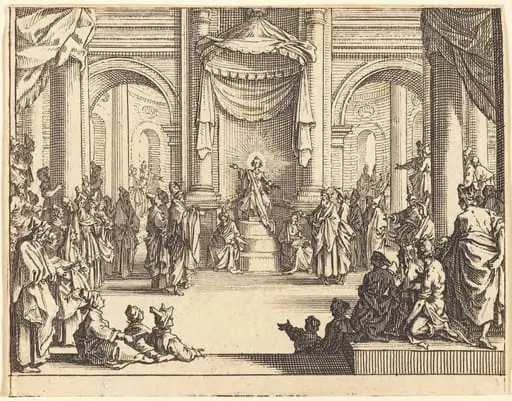 Christ Disputing with the Doctors
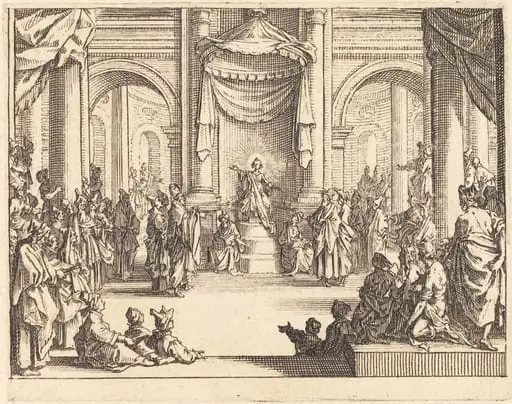 Christ Disputing with the Doctors
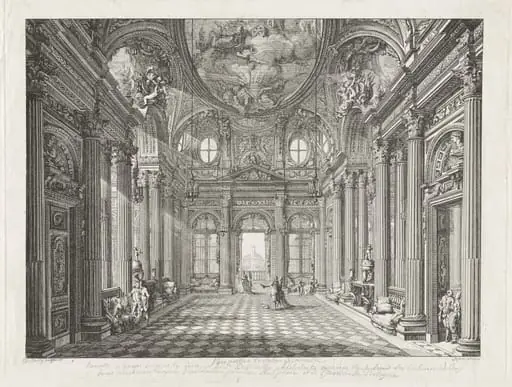 Perspectival View of the Salon of the Palazzo Spinola, Genoa
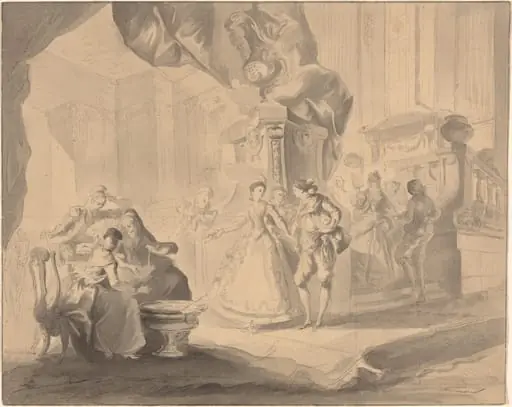 Dance in a Palace
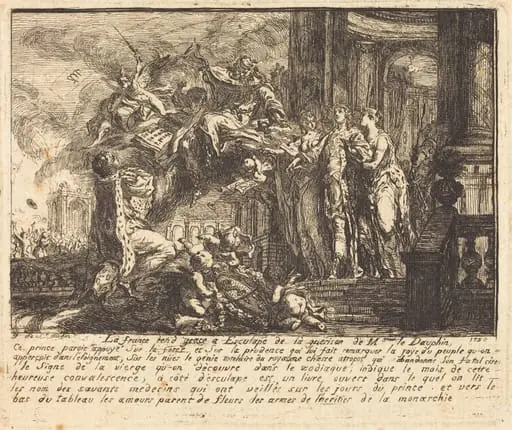 Allegory of the Dauphin's Convalescence (Allegorie sur la convalescence du Dauphin)
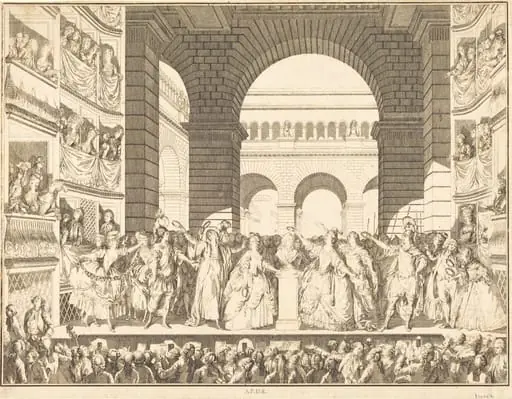 Couronnement de Voltaire (The Crowning of Voltaire)
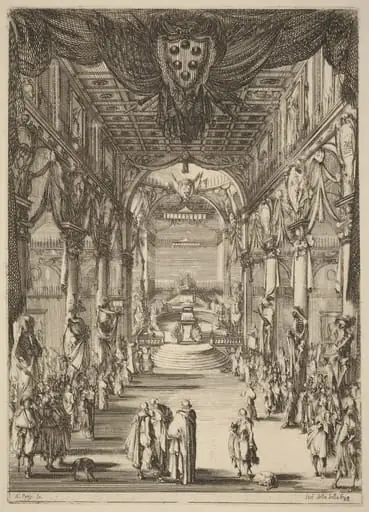 Funeral of Prince Francesco de Medici
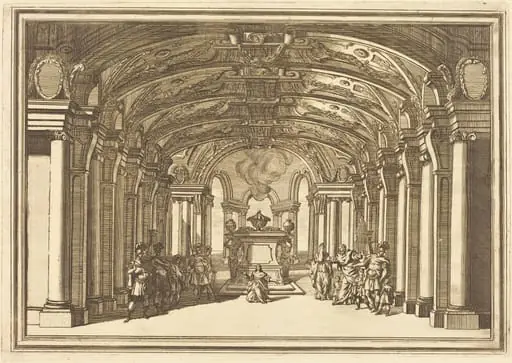 Il Greco in Troia: Plate 8
 A Pleasure House
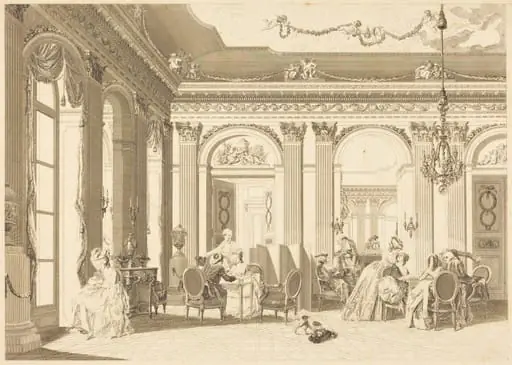
- L'assemblee au salon