Artwork
A Pleasure House
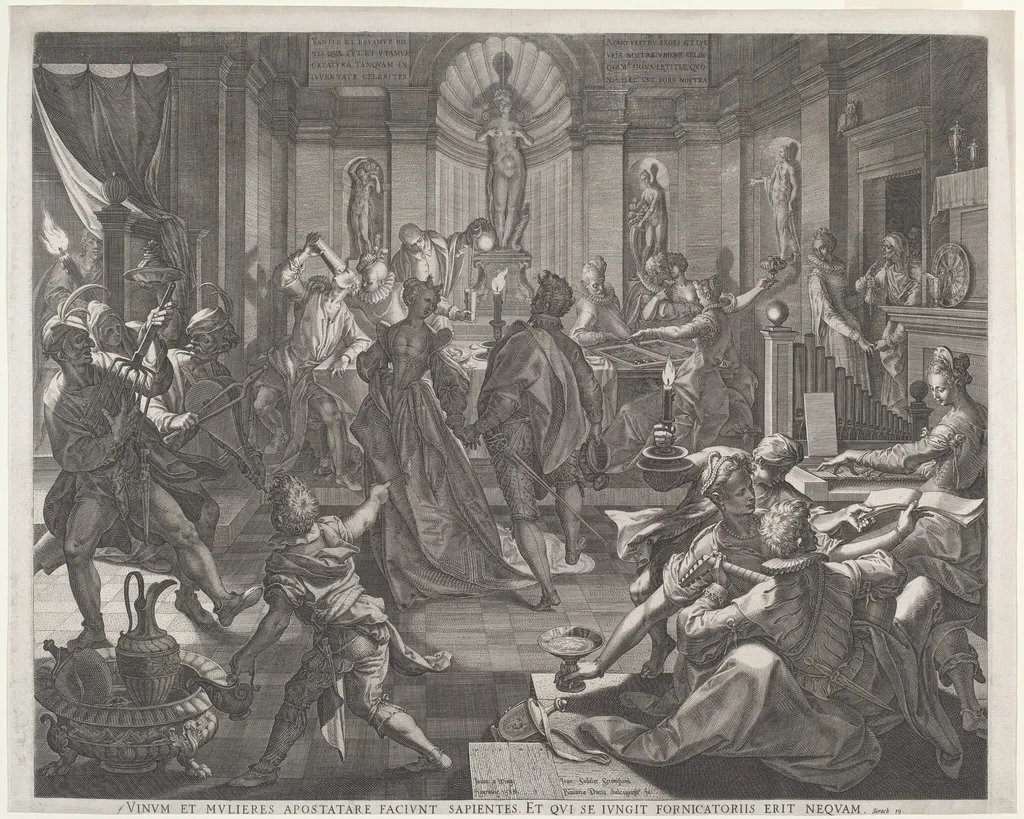
A Pleasure House is an ink print by the Renaissance artist Jan Sadeler I. It dates from 1588 and is held in the collection of the National Gallery of Art.
- Inscription
- Inscribed:in plate, in image at lower center: Jodoc a win: / figuravit , 1588; Joan sadeler serenissimis / Bavaraie Ducis chalcograph fe.; in plate, in image at upper left center: Sapie: 2 / VENITE ET FRUAMUR BO- / NIS QUAE SVT, ET UTAMUR / CREATURA TANQUAM IN/ IUVENTATE CELERITER (Come on therefore, let us enjoy the good things that are present: and let us speedily use the creatures like as in youth); in plate, in image at upper right center: Sapi: 2 / NEMO VESTRU EXORS SIT LUX / URIAE NOSTRAE: UBIQUE RELIN / QUAM SIGNA LETITIAE QUO- / NIA HAEC EST SORS NOSTRA (Let none of us go without his part of our voluptuousness: let us leave tokens of our joyfulness in every place: for this is our portion, and our lot is this); in plate, below image: VINUM ET MULIERES APOSTATARE FACIUNT SAPIENTES. ET QUI SE IUNGIT FORNICATORIIS ERIT NEQUAM. Sirach 19 (Wine and women will make men of understanding to fall away: and he that cleaveth to harlots will become impudent) [Latin translations from Eddy de Jongh & Ger Luijten, "Mirror of Everyday Life: Genreprints in the Netherlands 1550-1700." Exhibition catalogue. Amsterdam: Rijksmuseum, 1997, p.68.]
About this work
Overview
Jan Sadeler I’s 1588 engraving titled A Pleasure House presents a bustling interior filled with revelers. Executed on laid paper, the print captures a moment of unrestrained merriment, populated by figures of varied dress, scattered objects, and architectural elements that together convey a scene of excess.
Subject & Meaning
The composition depicts a crowded gathering where participants drink, argue, and lounge amid a richly appointed room. Central to the tableau, a woman raises a glass in a toast, while statues and books line the background. A Latin inscription beneath the image suggests a moralizing commentary on the dangers of overindulgence.
Technique & Style
Sadeler employed fine engraving techniques, using a burin to incise intricate lines that render textures, from the sheen of fabrics to the flicker of candlelight. The careful hatching creates depth and contrast, while the dense arrangement of figures demonstrates the artist’s skill in orchestrating complex narrative space within a single plate.
History & Provenance
The print was produced in the late sixteenth century, a period when the Sadeler family were prominent engravers active across Europe. Though specific ownership records are scarce, A Pleasure House has appeared in several early modern print collections, reflecting its circulation among connoisseurs of moralizing genre scenes.
Own this work as a print
Artist & collection


- Sardanapalus among the Concubines
 Sancho Fleeing from the Servants of the Duke
 The Massacre of the Innocents
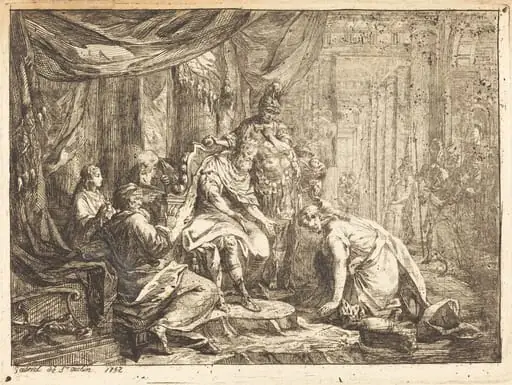 Reconciliation of Absalom and David (Réconciliation d'Absalom et de David)
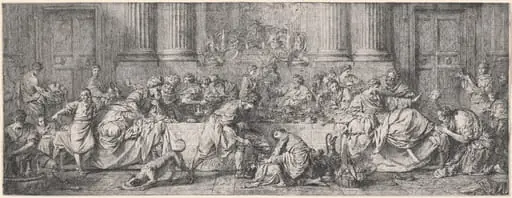 The Feast in the House of Simon
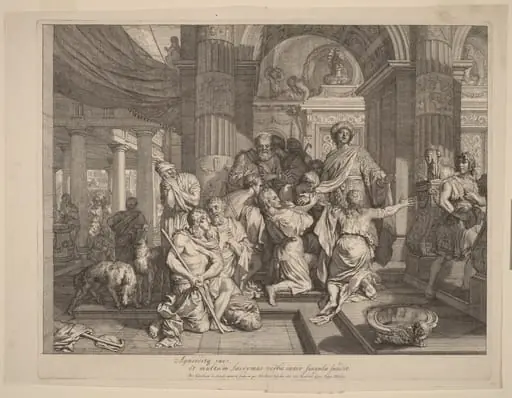 Joseph Reveals Himself to His Brothers
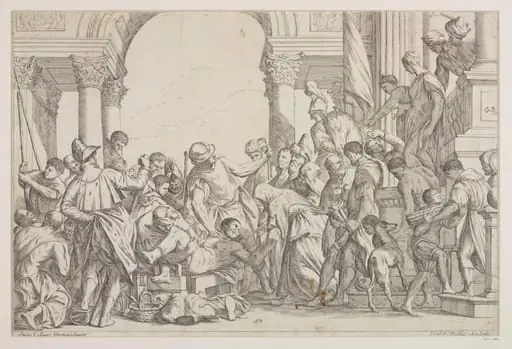 St. Lawrence
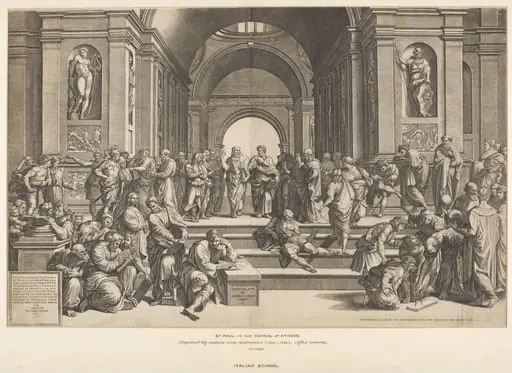 St. Paul in the School of Athens
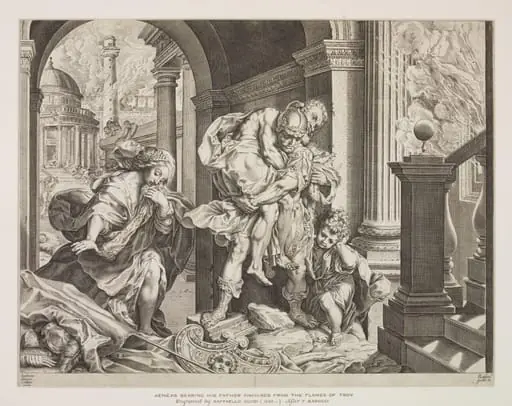 Untitled
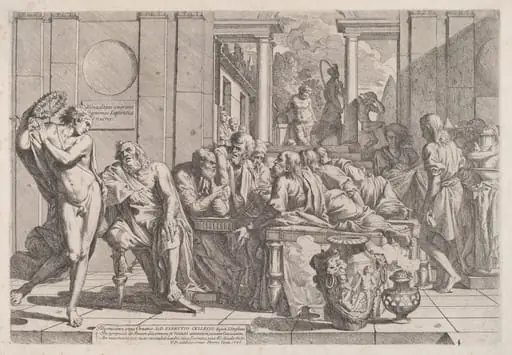 The Symposium
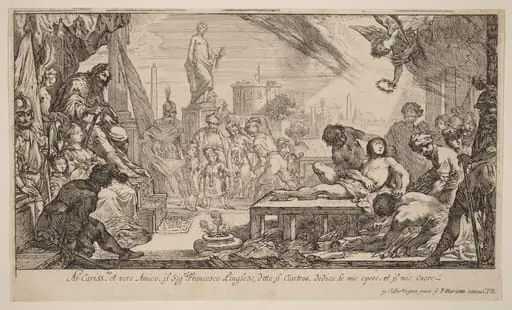 The Martyrdom of Saint Lawrence
![The Challenge [right], by Gabriel de Saint-Aubin](https://artifactworldgallery.com/img/gabriel-de-saint-aubin--the-challenge-right--75162e00e6876b27-w320.webp) The Challenge [right]
The Challenge [right]