Artwork
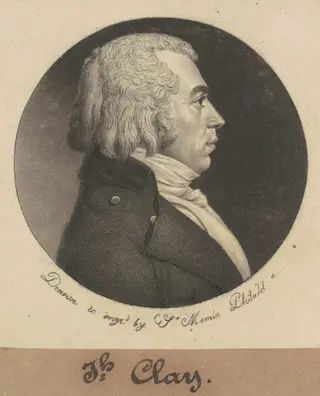
Matthew Clay
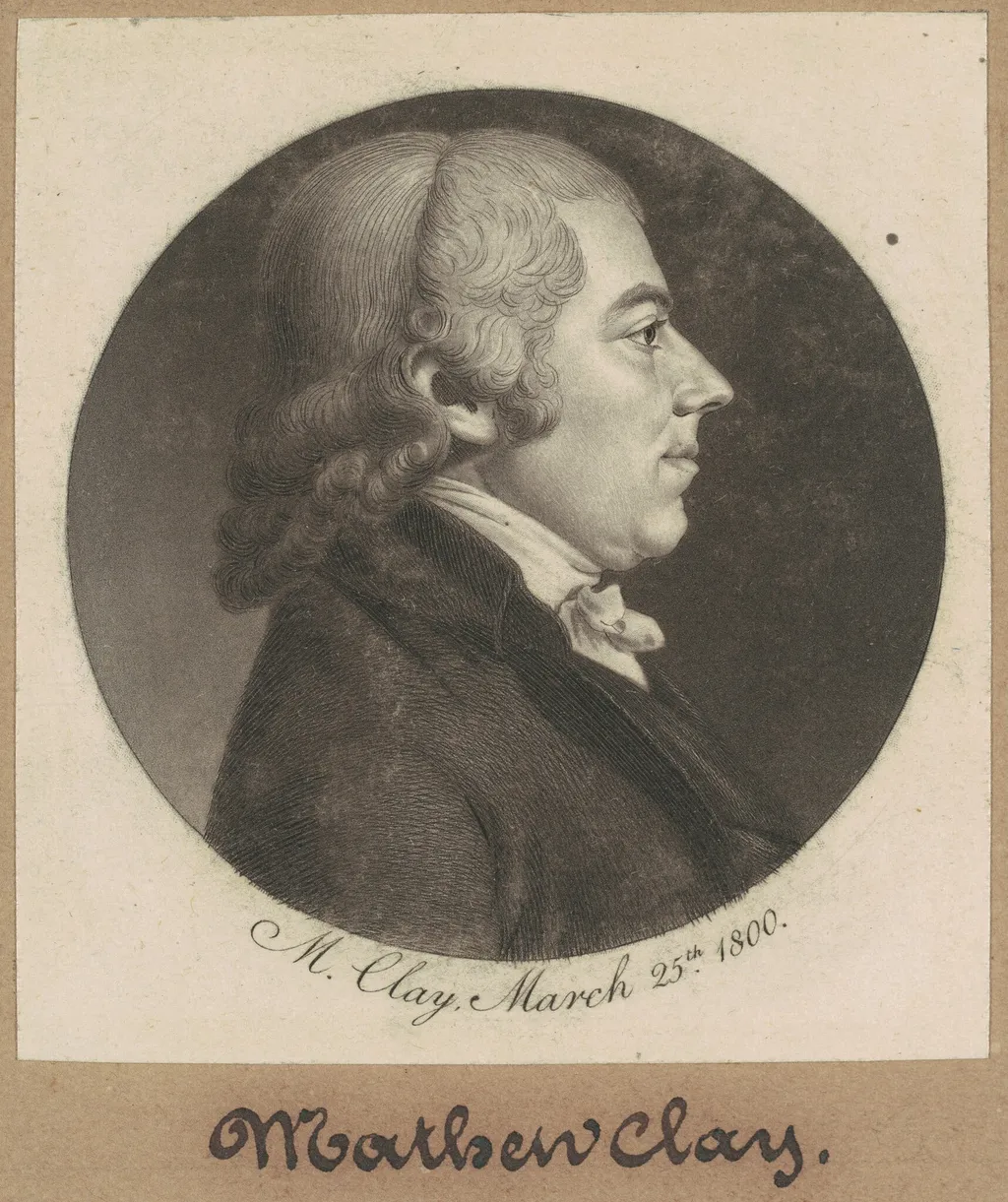
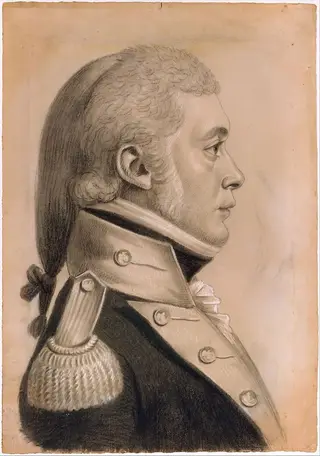
Matthew Clay is an ink print by the Romanticist artist Charles B. J. Févret de Saint-Mémin. It dates from 1800 and is held in the collection of the National Gallery of Art.
- Inscription
- Inscribed:lower center in plate: M. Clay. March 25th. 1800.; lower center mount in black ink by unknown hand: Mathew Clay.
About this work
This one shows Matthew Clay staring straight at us in 1800, his coat sharp and his gaze steady.
Portraits back then were stiff and formal. This one shows Matthew Clay staring straight at us in 1800, his coat sharp and his gaze steady. The dark background pushes his face forward, making him look alive.
Mezzotint was new then. It lets artists print rich blacks and soft shadows from metal plates. This print used cross-hatching, tiny lines, to shape Clay’s coat folds and skin.
Look up Saint-Mémin, Charles B. J. Févret de next.
Overview
This print of Matthew Clay is a combination of mezzotint and engraving techniques on wove paper, mounted to a secondary sheet of brown wove paper.
Subject & Meaning
The portrait depicts Matthew Clay in a formal pose, gazing directly at the viewer, with a dark background that accentuates his facial features and attire.
Technique & Style
The mezzotint technique, relatively new at the time, allowed for the creation of deep blacks and nuanced shadows, while cross-hatching was used to define the textures of Clay's coat and skin.
History & Provenance
The original portrait was painted by Charles B. J. Févret de Saint-Mémin in 1800, and is now part of the Corcoran Collection at the National Gallery of Art.
Own this work as a print
Artist & collection
Artist
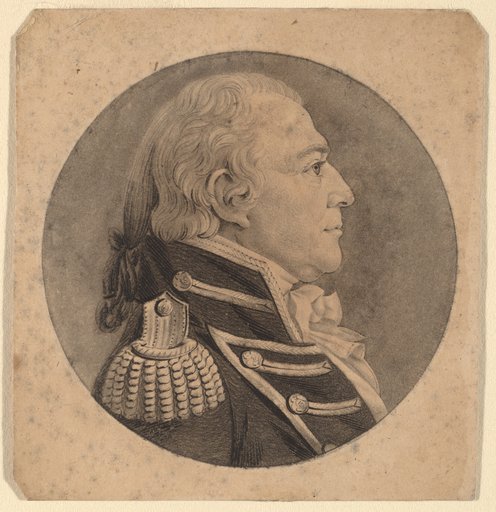
Charles B. J. Févret de Saint-Mémin
Charles Balthazar Julien Févret de Saint-Mémin (French pronunciation: ; 1770–1852) was a French portrait painter and museum director.