Artwork
Fruit and a Jug on a Table
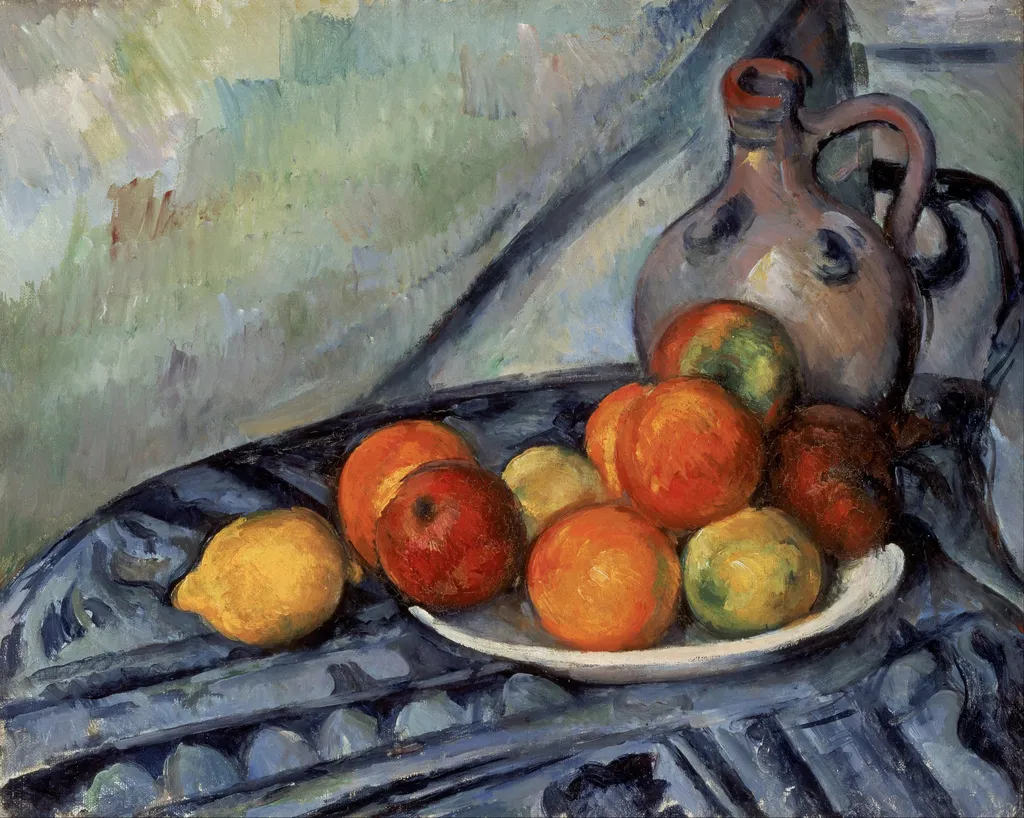
Fruit and a Jug on a Table is an oil painting by the Post-Impressionist artist Paul Cézanne. It dates from 1896 and is held in the collection of the Museum of Fine Arts Boston.
About this work
History & Provenance
The painting was catalogued under the accession number 33253, confirming its provenance from initial ownership through to its current institutional home.
Paul Cézanne painted Fruit and a Jug on a Table in 1890, an oil on canvas still life measuring 32.4 cm by 40.6 cm. The work entered the collection of Louis Eugène Blot before being acquired by the Museum of Fine Arts, Boston, where it remains on display. The painting was catalogued under the accession number 33253, confirming its provenance from initial ownership through to its current institutional home.
The painting is held by the Museum of Fine Arts, Boston, where it is inventoried as 1976.47.
It was first recorded in the collection of Louis Eugène Blot before entering the Museum of Fine Arts, Boston as a gift in 1976.
The work has not been listed in major museum exhibition catalogues, and no documented exhibitions are recorded in the provided sources.
Overview
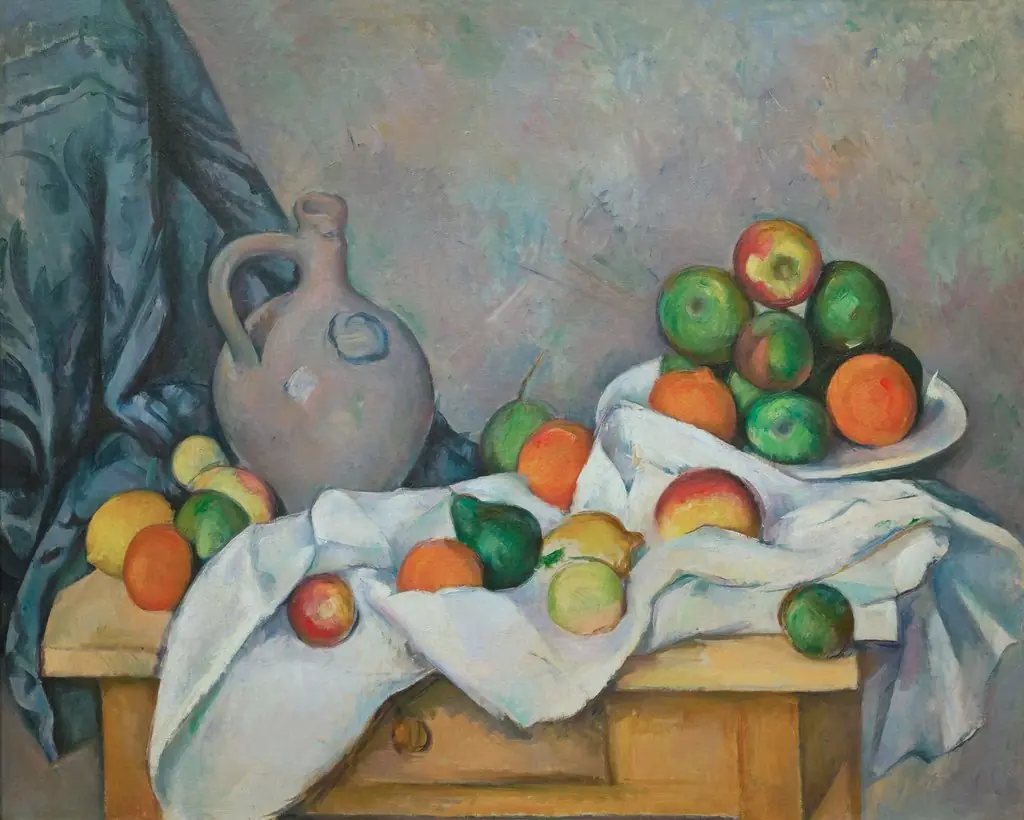
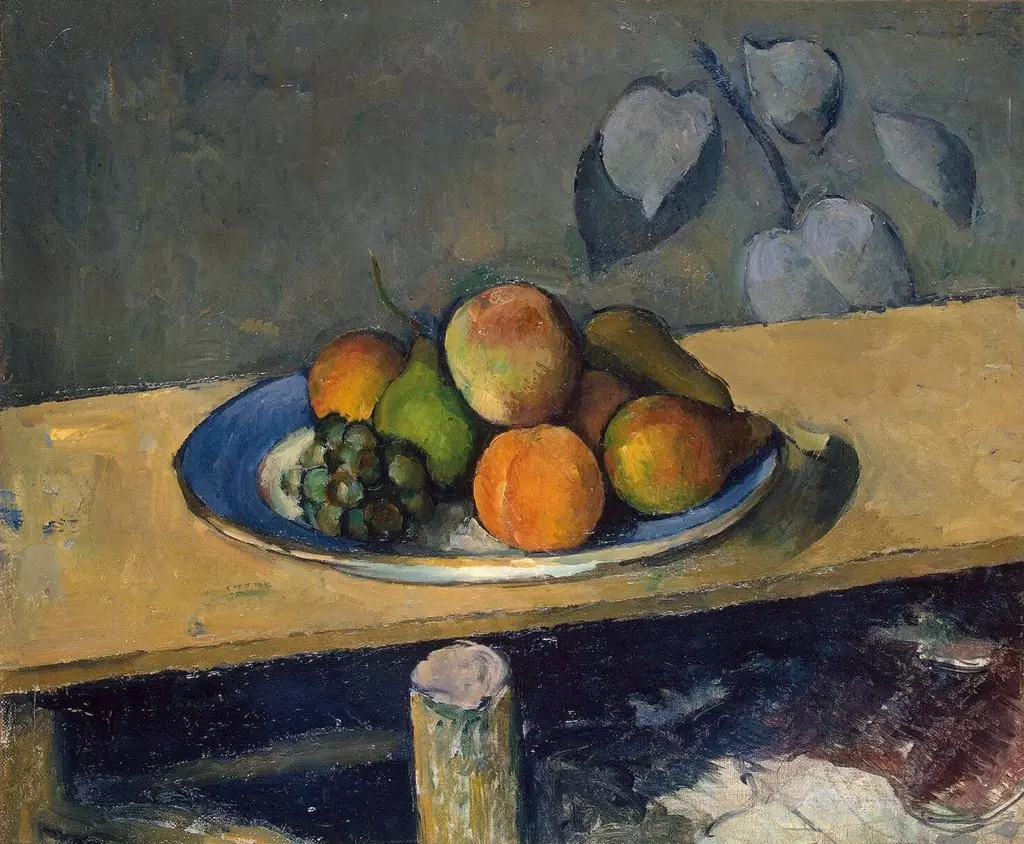
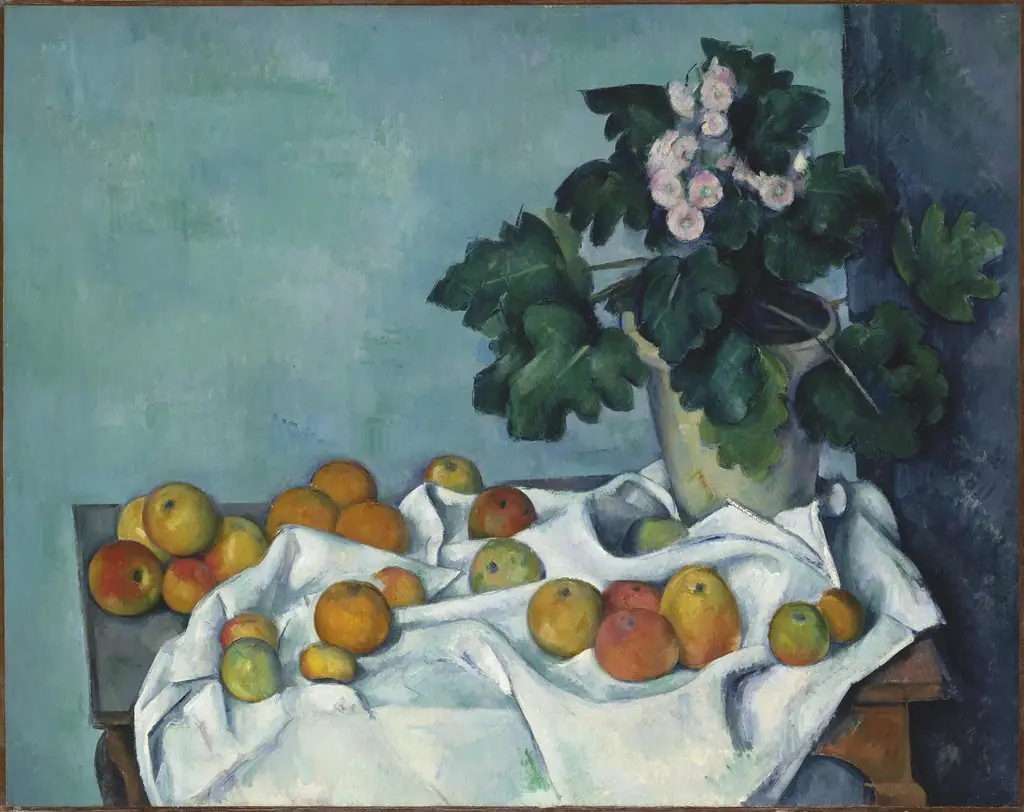
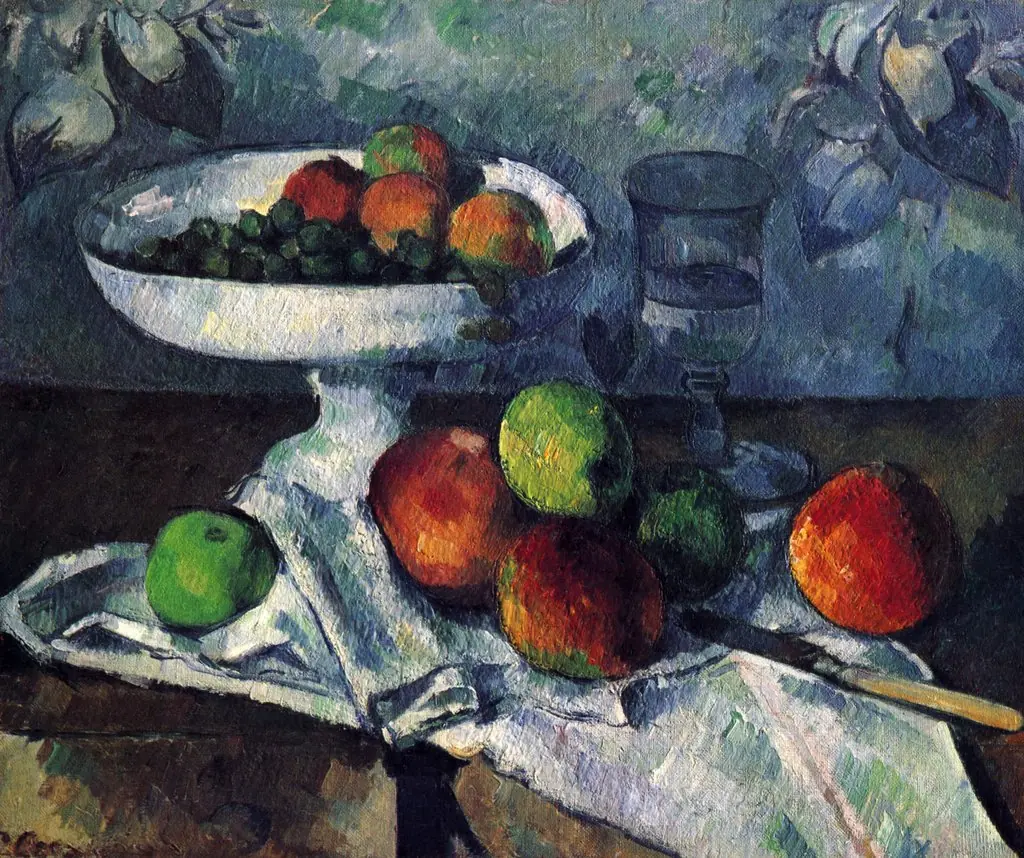
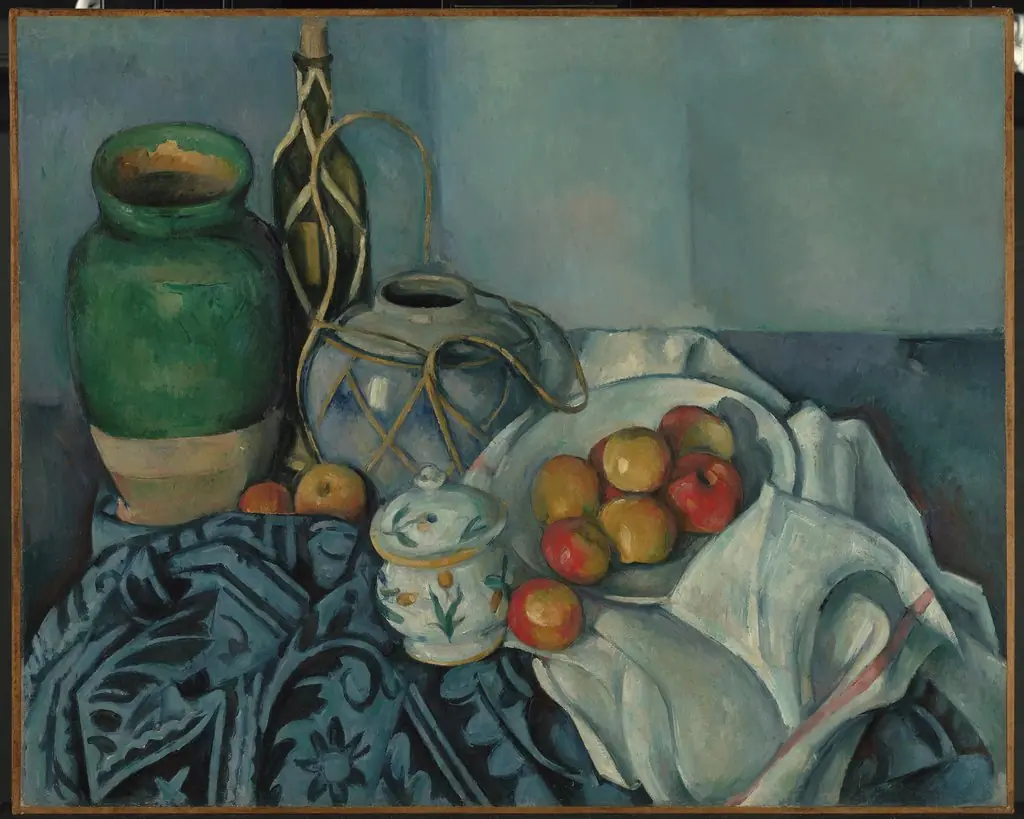
Created in 1896, this oil on canvas presents a modest still‑life composition typical of Paul Cézanne’s late work. A brown, handled jug rests on the right side of a table draped with a blue‑bordered cloth, while a cluster of apples, lemons and oranges occupies the foreground. The background is rendered in broad strokes of green, blue and white, giving the scene a tranquil, understated atmosphere.
Subject & Meaning
The painting focuses on everyday objects, a jug and assorted fruit, arranged to explore their spatial relationships and visual weight. By presenting ordinary items in a balanced, quiet setting, Cézanne invites contemplation of form and perception, emphasizing the inherent geometry of the subjects rather than narrative content.
Technique & Style
Cézanne employs his characteristic method of building form through layered brushwork and simplified geometric shapes. The surface shows visible, rhythmic strokes that modulate color and tone, while the composition relies on planar constructions that hint at a nascent cubist sensibility. The muted palette and restrained lighting reinforce a sense of structural clarity.
Own this work as a print
Artist & collection

Artist
Paul Cézanne ( say-ZAN, UK also siz-AN, US also say-ZAHN; French: ; Occitan: Pau Cesana; 19 January 1839 – 22 October 1906) was a French Post-Impressionist painter whose work introduced new modes of representation,…

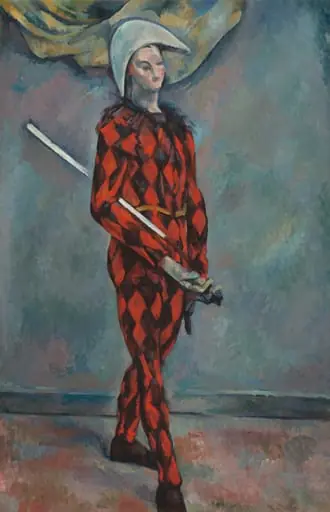 Harlequin
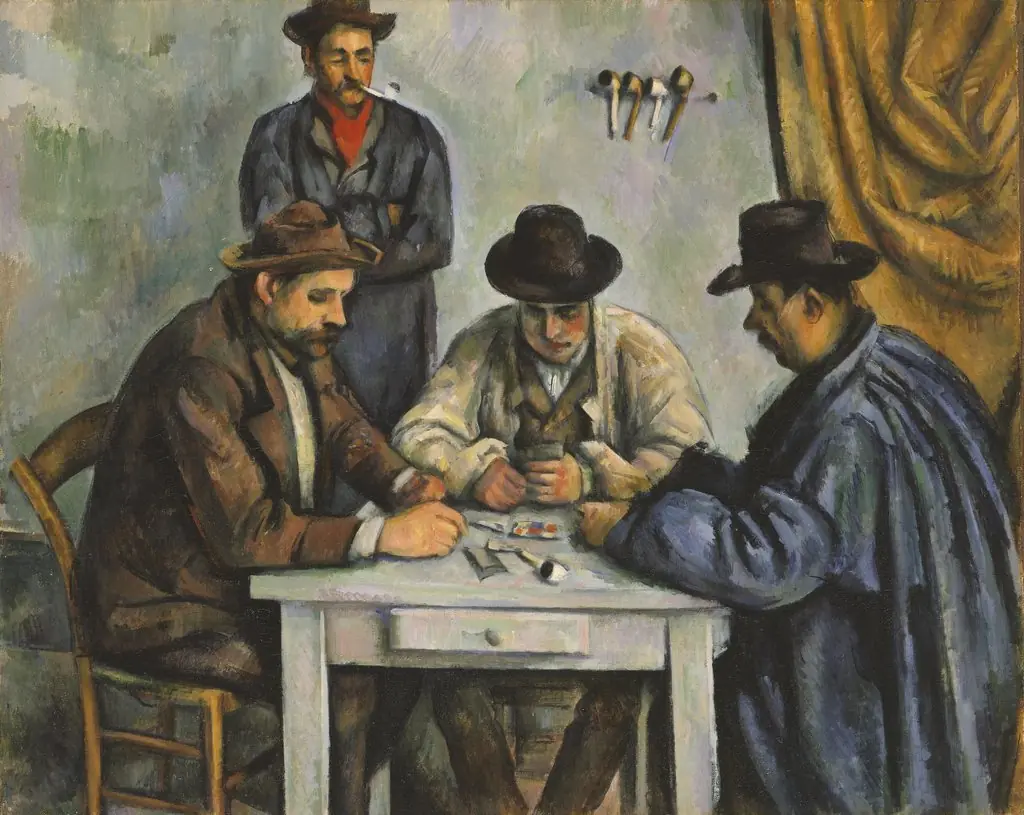 The Card Players
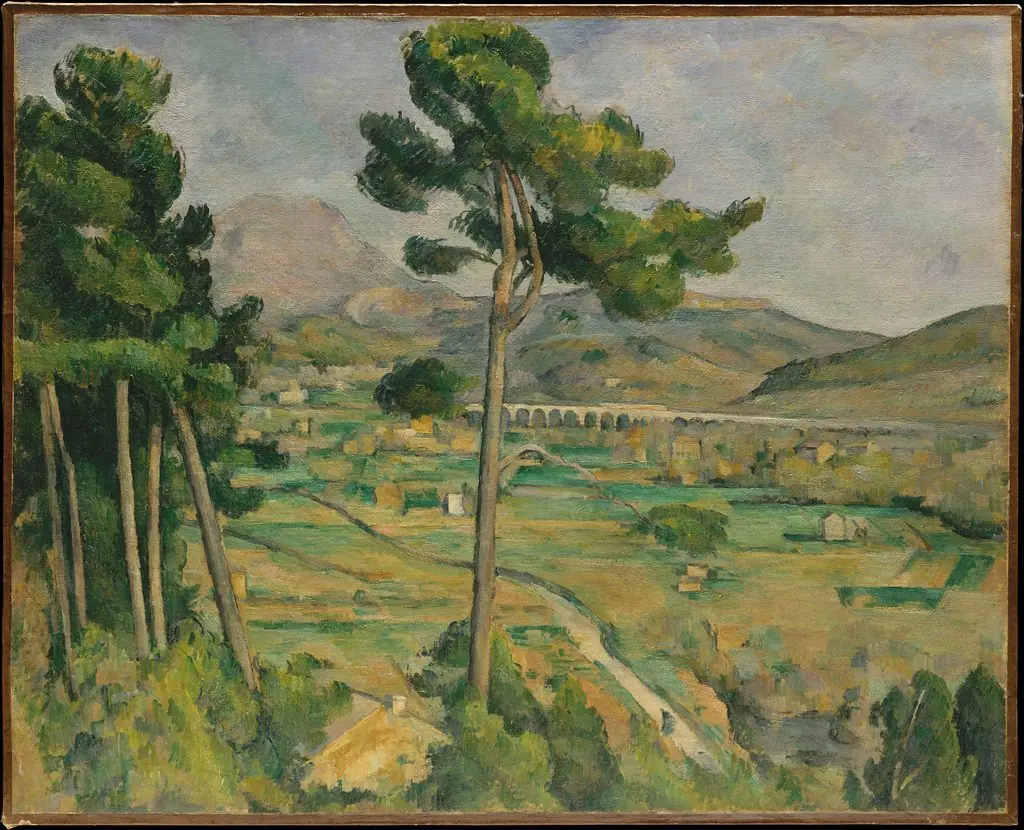 Mont Sainte-Victoire and the Viaduct of the Arc River Valley
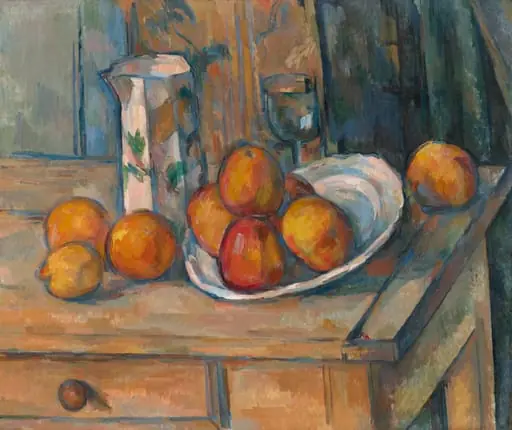 Still Life with Milk Jug and Fruit
 Le Golfe de Marseille vu de l'Estaque (The Gulf of Marseille Seen from L'Estaque)
 Houses in Provence: The Riaux Valley near L'Estaque
 Louis Guillaume
 Still Life with Jar, Cup, and Apples