Artwork
Turville Village
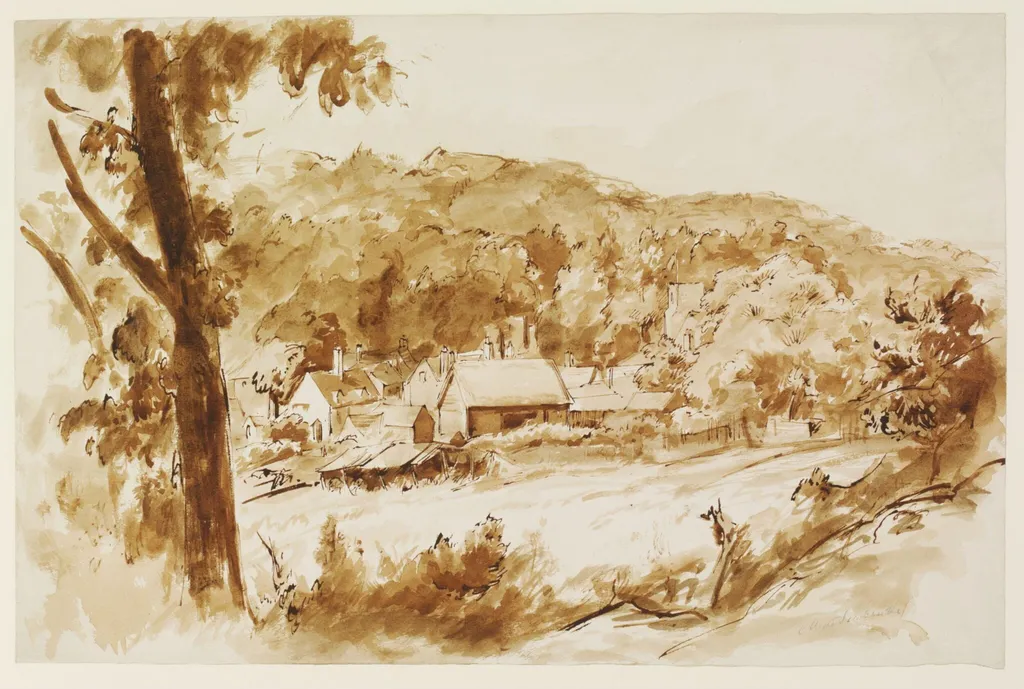
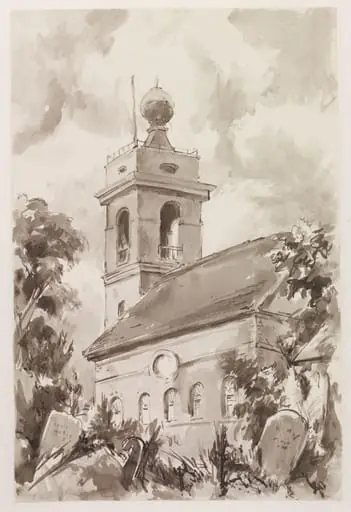
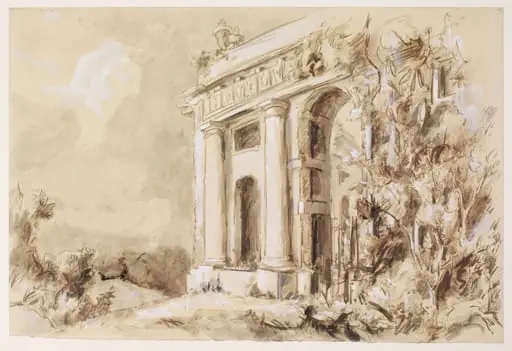
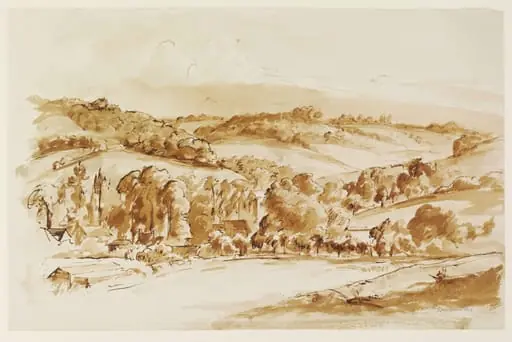
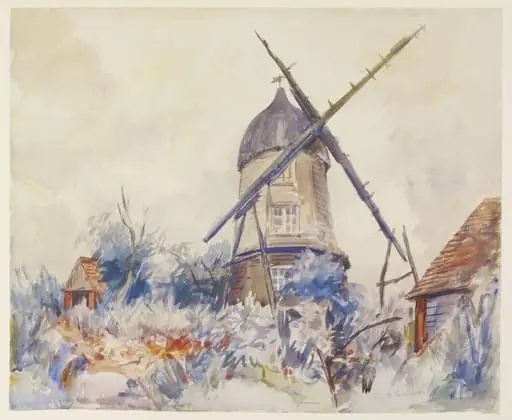
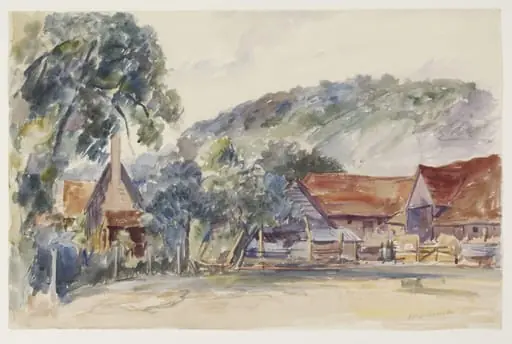
Turville Village is a watercolor work on paper by the Regionalist artist Seabrooke. It dates from 1940 and is held in the collection of the Victoria and Albert Museum.
About this work
Overview
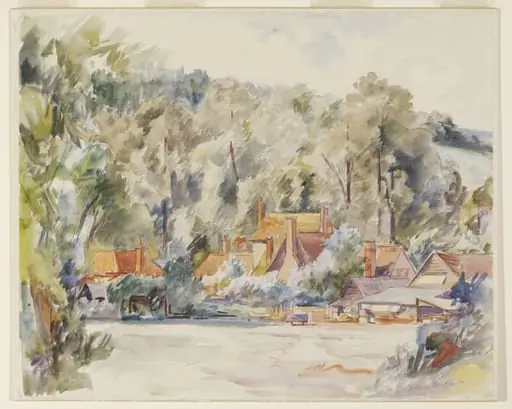
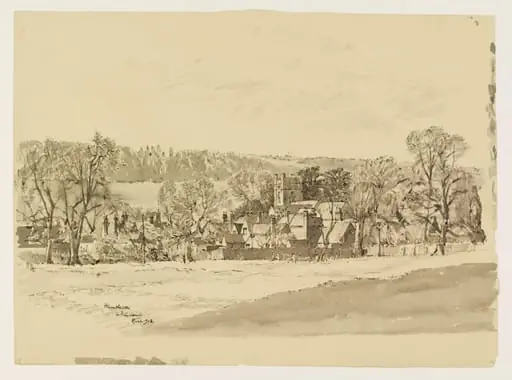
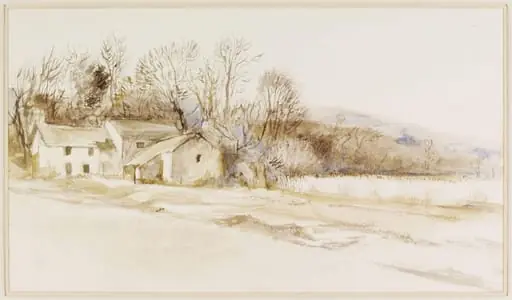
Created in 1940, this watercolour by Seabrooke captures the quiet landscape of Turville, a village nestled in a wooded valley.
Created in 1940, this watercolour by Seabrooke captures the quiet landscape of Turville, a village nestled in a wooded valley. It was made as part of the Recording Britain initiative, a wartime project commissioned by the Pilgrim Trust to visually archive English rural scenes at risk from conflict and modernization. The work is one of over 1,500 pieces produced by nearly 100 artists under the direction of Sir Kenneth Clark, aiming to preserve a sense of place during uncertain times.
Subject & Meaning
The painting presents a modest cluster of dwellings nestled against a sloping, tree-covered hill. A solitary, leafless tree dominates the foreground, its angular branches framing the scene and suggesting both resilience and transience. The absence of human activity and the muted tones convey stillness, emphasizing the quiet endurance of rural life. The subject reflects the project’s intent to honor ordinary landscapes as symbols of national continuity amid disruption.
Technique & Style
Seabrooke employed thin, fluid washes of watercolour, allowing the paper’s texture to show through and creating a soft, atmospheric haze. Brushwork is loose and economical, prioritizing form over detail, buildings and trees are suggested with minimal strokes. The palette is restrained, dominated by earthy browns and greys, reinforcing the somber mood. This restrained technique aligns with the project’s documentary ethos, favoring clarity and emotional tone over ornamentation.
History & Provenance
The work was produced under the Recording Britain scheme, which operated between 1939 and 1942. It was commissioned as part of a deliberate effort to record threatened vernacular architecture and rural views. After completion, the piece entered the collection of the Victoria and Albert Museum, where it remains today alongside other works from the initiative. Its preservation reflects the project’s success in safeguarding visual records of a vanishing England.
Context
During the Second World War, fears of aerial bombardment and rapid urban change prompted cultural institutions to document England’s countryside. Recording Britain emerged as a response to these anxieties, positioning landscape as a form of cultural memory. Artists like Seabrooke were sent across the country to capture scenes deemed representative of English identity, often overlooked, unmonumental places that carried historical weight through their simplicity.
Legacy
The Recording Britain collection endures as a significant archive of mid-20th-century British life. Seabrooke’s watercolour contributes to a broader visual record that continues to inform historical and artistic understanding of rural England during wartime. Its quiet realism offers a counterpoint to wartime propaganda, valuing observation over heroism. Today, it stands as a testament to the power of modest, deliberate art in preserving collective memory.
Artist & collection
Artist
This watercolor artist recorded the rolling hills and stone cottages of the Chilterns in the 1940s.