Artwork
Sir Johnston Forbes-Robertson as Hamlet in <i>Hamlet</i> by William Shakespeare
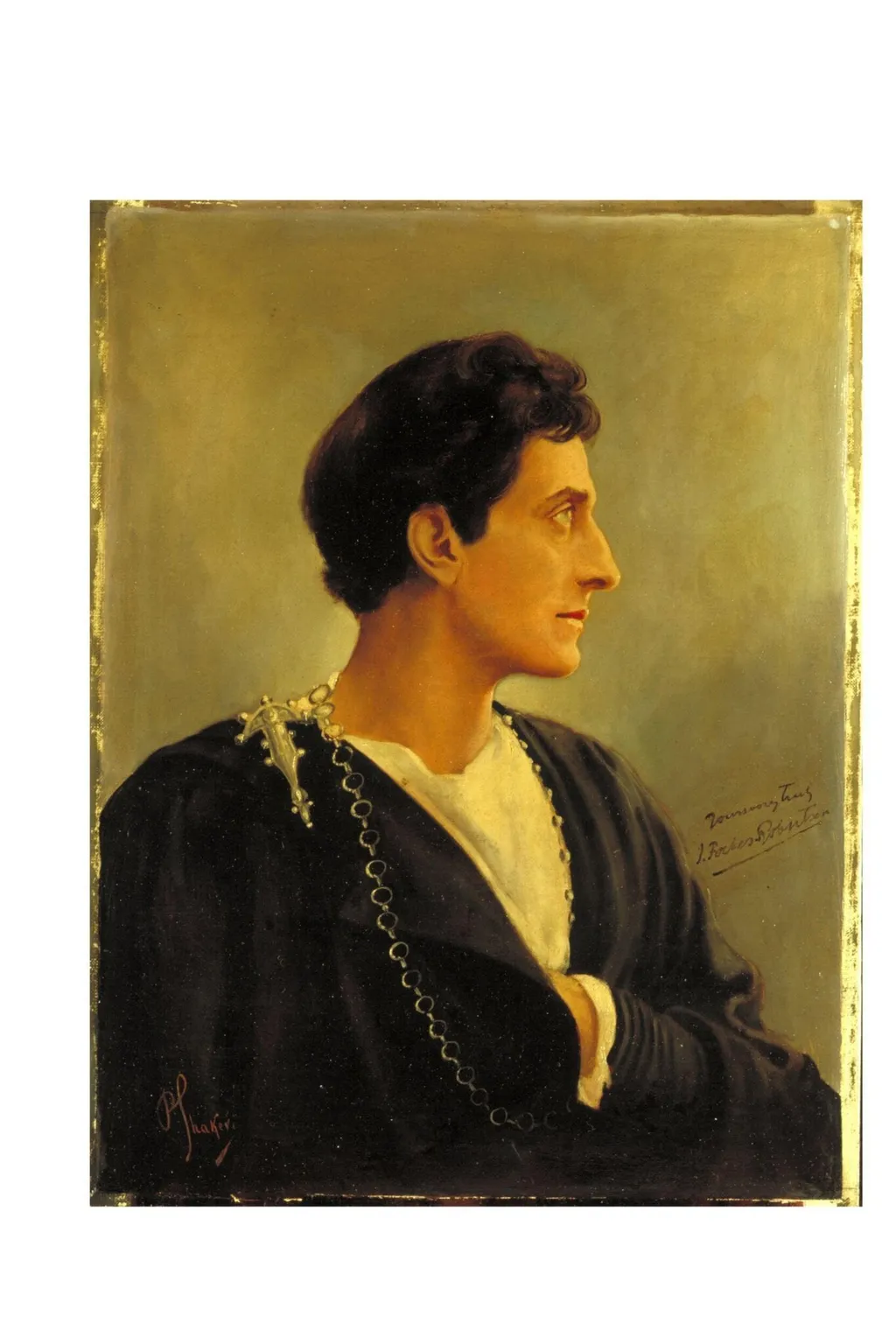
Sir Johnston Forbes-Robertson as Hamlet in <i>Hamlet</i> by William Shakespeare is a paint painting by the Impressionist artist P. Shaken. It dates from 1896 and is held in the collection of the Victoria and Albert Museum. Painted in 1896, this oil portrait captures Sir Johnston Forbes-Robertson portraying Hamlet in a half-length composition.
About this work
Overview
Set against a subdued, neutral background, the figure is rendered with quiet precision, emphasizing stillness and introspection.
Painted in 1896, this oil portrait captures Sir Johnston Forbes-Robertson portraying Hamlet in a half-length composition. Set against a subdued, neutral background, the figure is rendered with quiet precision, emphasizing stillness and introspection. The artist’s brushwork is refined, avoiding dramatic flourishes to sustain a sense of intimate realism. Both the actor and painter signed the work, affirming its dual identity as performance and portraiture.
Subject & Meaning
Forbes-Robertson, renowned for his Shakespearean roles, is depicted not as a theatrical figure in motion, but as Hamlet in contemplation. His profile gaze, slightly elevated, suggests inner deliberation rather than outward emotion. The minimal costume, black doublet, white collar, and subtle crossbow brooch, evokes the character’s noble melancholy without overt symbolism. The portrait invites reflection on the actor’s ability to embody psychological depth beyond the stage.
Technique & Style
The painting employs soft, blended brushstrokes to model form with subtlety, avoiding sharp contrasts. Light falls gently across the face and clothing, enhancing the lifelike texture of velvet and linen. The muted palette, dominated by dark tones with faint highlights, focuses attention on the sitter’s expression. Background neutrality eliminates distraction, reinforcing the portrait’s psychological tone and classical restraint.
History & Provenance
Commissioned during Forbes-Robertson’s peak as a leading Shakespearean actor, the portrait was created by a contemporary artist attuned to theatrical culture. It remained in private hands before entering the Victoria and Albert Museum’s collection, where it now serves as a record of late-Victorian performance practice. The presence of both signatures underscores its value as a collaborative artifact of actor and artist.
Context
In the late 19th century, portraits of actors in character were common among cultural elites, blending theater and fine art. Forbes-Robertson’s Hamlet was widely admired for its intellectual gravitas, and this painting reflects a broader trend of elevating stage performance to the status of high art. Unlike sensationalist depictions, this work favors quiet dignity, aligning with contemporary ideals of refined masculinity and artistic seriousness.
Legacy
The portrait endures as a document of how Shakespearean roles were visually interpreted in the Victorian era. It contributes to the study of actor-portraiture, illustrating how identity, performance, and representation intersected. While not widely reproduced, it remains a key reference in museum collections for understanding the cultural weight assigned to theatrical figures at the turn of the century.
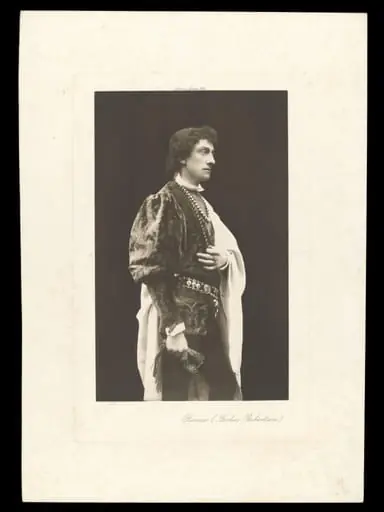
Own this work as a print
Artist & collection
Artist
P. Shaken painted a single portrait in 1896: Sir Johnston Forbes-Robertson as Hamlet in Shakespeare’s play. The painting shows the actor mid-speech, dressed in black with a dagger in hand, caught on stage. It’s the only…

 H Beard Print Collection
 Portrait of a woman
 Taiteilijan vaimon muotokuvapää, harjoitelma maalausta varten
 Guy Little Theatrical Photograph
 Portrait of madame Jolicler, née Lydie Chenoz
 Andrew W. Mellon
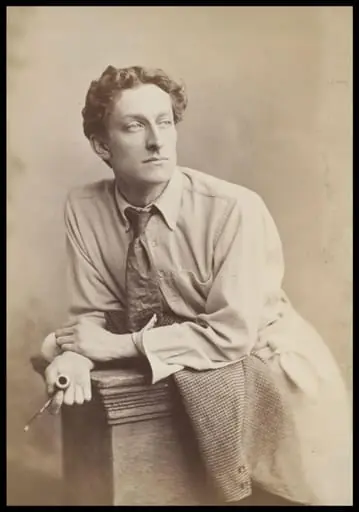 Guy Little Theatrical Photograph
 Portrait of Marie Oppermann
 H Beard Print Collection
 Portrait of Emilia Mielżyńska née Bnińska
 Print Collection
- H Beard Print Collection