Artwork
The Crossing of the Yangzi River
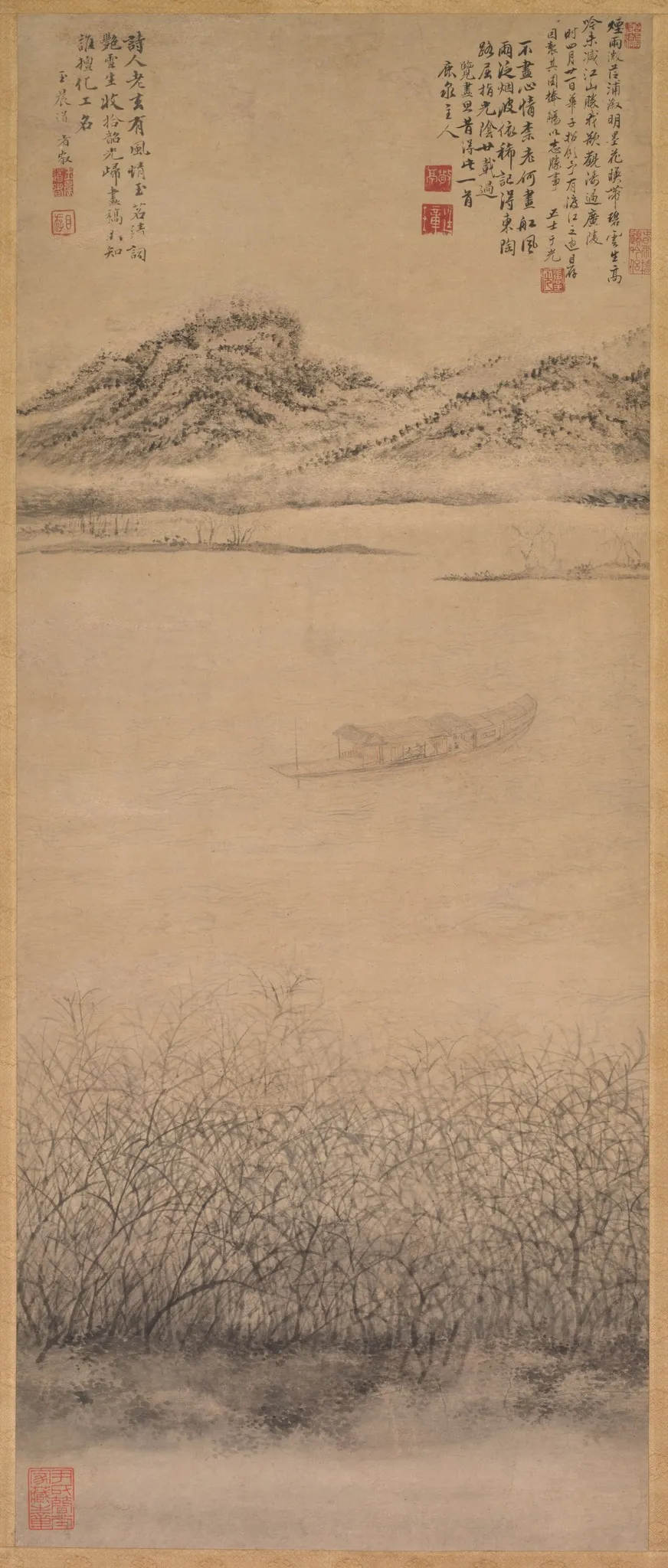
The Crossing of the Yangzi River is an unspecified painting by the Rococo painting artist Shang Rui. It dates from 1710 and is held in the collection of the Cleveland Museum of Art.
About this work
History & Provenance
The painting The Crossing of the Yangzi River is held by the Cleveland Museum of Art, where it is accessioned under inventory number 1968.
The painting The Crossing of the Yangzi River was created in 1710 by the Chinese artist Shang Rui. Produced in China during the early eighteenth century, the work is currently held in the collection of the Cleveland Museum of Art, where it is cataloged under the accession number 1968.365. While the specific circumstances of its commission and the details of its ownership prior to entering the museum's holdings are not detailed in the available records, the piece is firmly attributed to Shang Rui, who was born around 1634.
The painting The Crossing of the Yangzi River is held by the Cleveland Museum of Art, where it is accessioned under inventory number 1968.365. It entered the museum's collection in 1968 and has been exhibited there, most recently in the 1970 exhibition "Chinese Painting and Calligraphy from the Shang Dynasty to the Present".
Overview
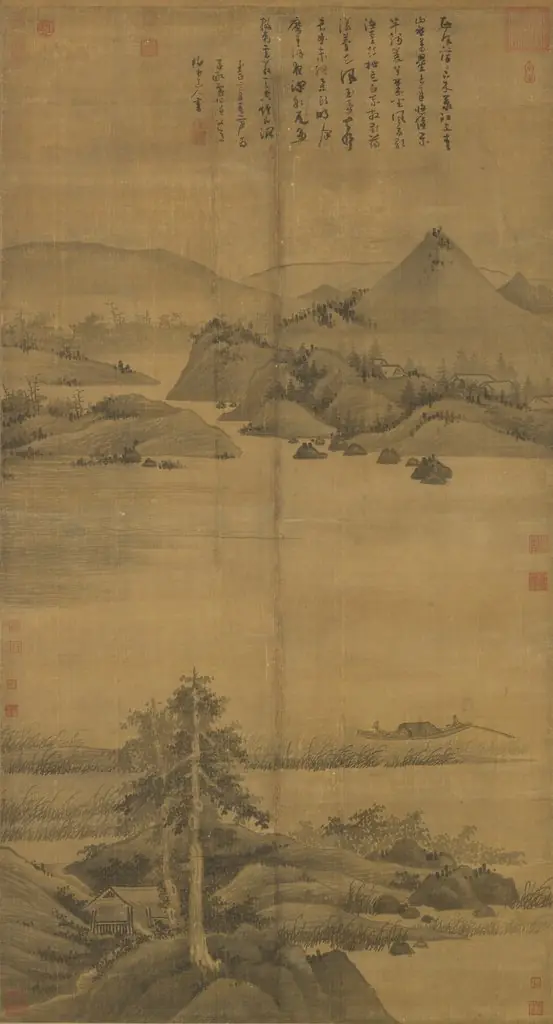
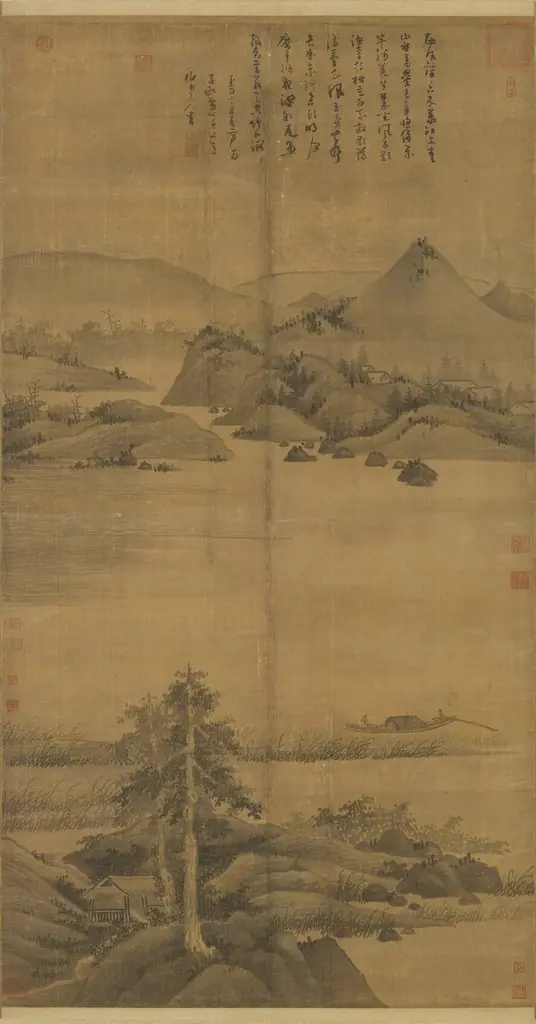
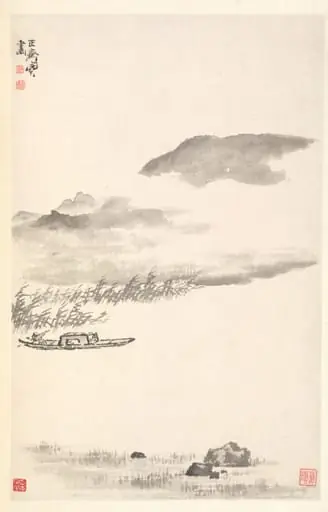
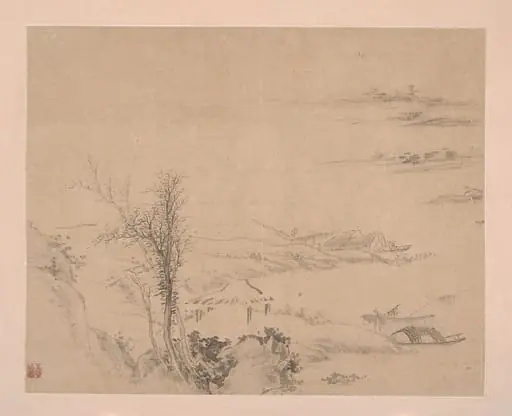
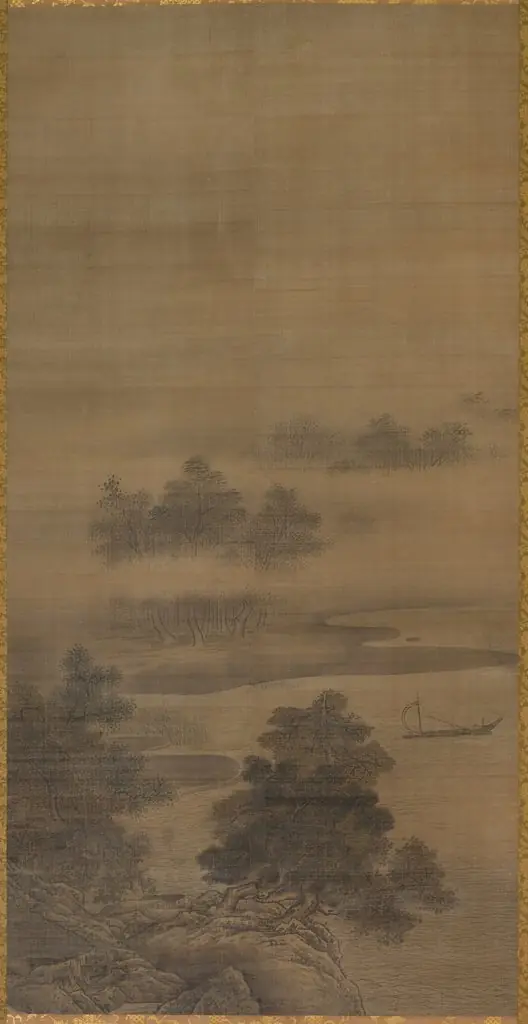
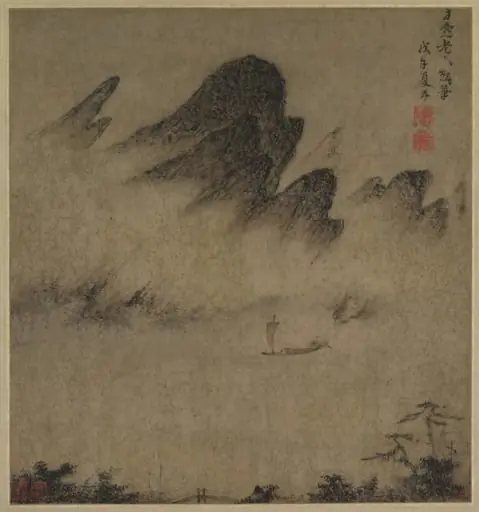
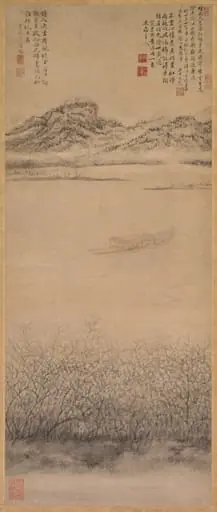
The Crossing of the Yangzi River, painted by Shang Rui in 1710, is part of the Cleveland Museum of Art’s collection. The work presents a tranquil river landscape where a solitary boat drifts amid gentle hills and sparse shoreline vegetation. Muted grays and browns dominate the palette, punctuated by darker ink strokes that define shadow and depth.
Subject & Meaning
The composition centers on a lone vessel positioned midway across the water, suggesting a moment of passage or transition. The surrounding hills recede into the distance, while the bare trees along the bank emphasize the scene’s quietude. The juxtaposition of movement in the boat with the stillness of the environment invites contemplation of travel amid a serene natural setting.
Technique & Style
Shang Rui employs restrained brushwork, using simple, flowing lines that resemble a sketch rather than a fully rendered tableau. The limited color scheme of soft grays and browns, combined with concentrated ink for shadows, creates a subtle atmospheric effect. This economy of detail highlights the artist’s focus on mood and spatial balance over decorative richness.
Context
The work belongs to a tradition of Chinese literati painting that values personal expression and the evocation of natural harmony. In the early 1700s, artists like Shang Rui often favored monochromatic ink and muted tones to convey philosophical ideas about the fleeting nature of human journeys against the enduring landscape.
Artist & collection