Artwork
元吳鎮漁父圖 軸
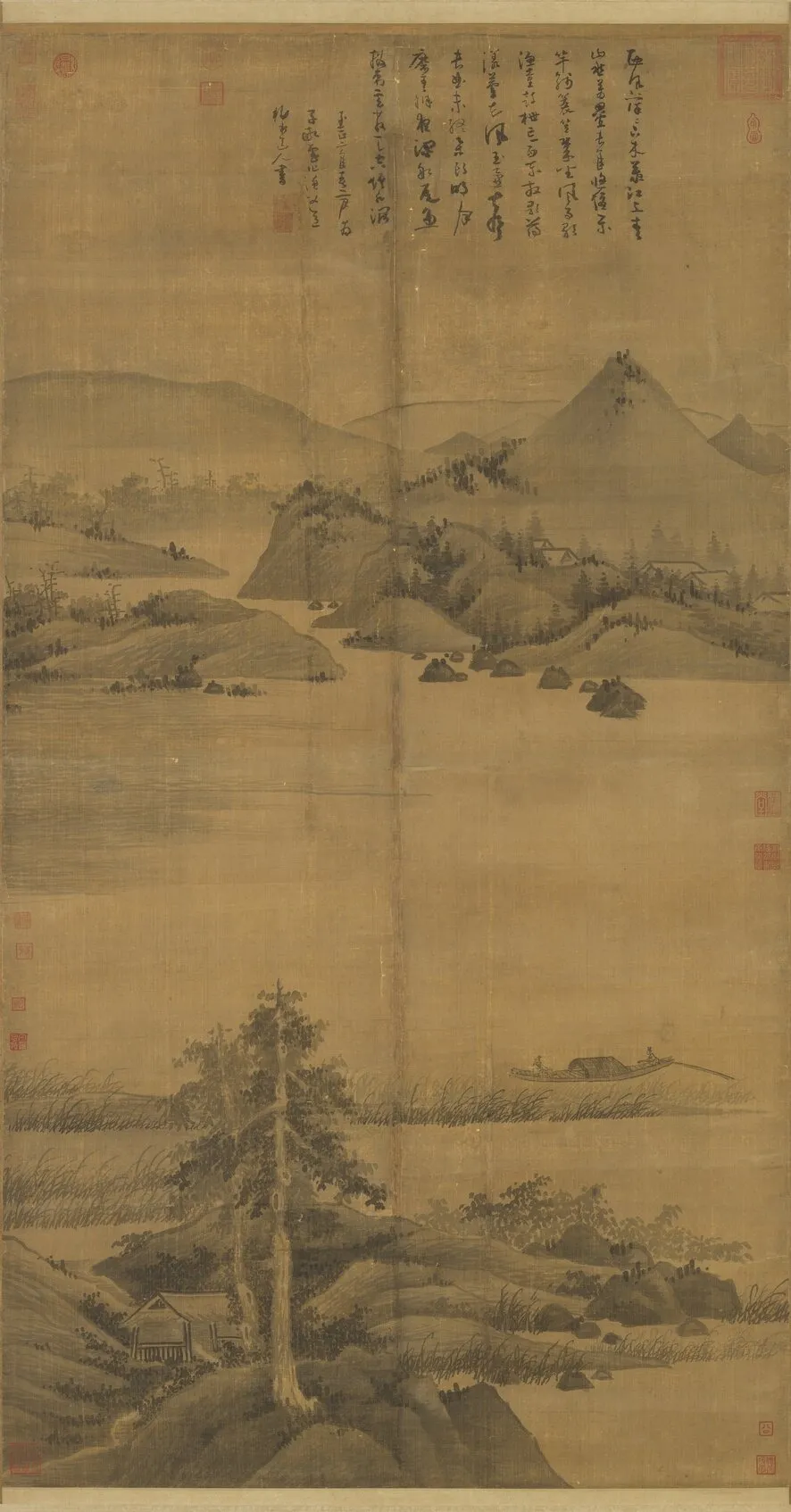
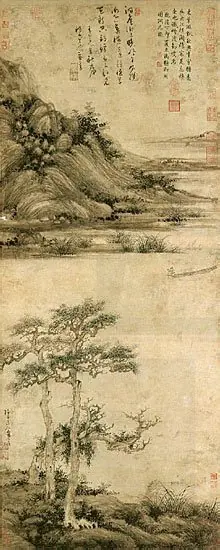
元吳鎮漁父圖 軸 is an unspecified painting by the Yōga artist Wu Zhen. It dates from 1342 and is held in the collection of the National Palace Museum.
About this work
Overview
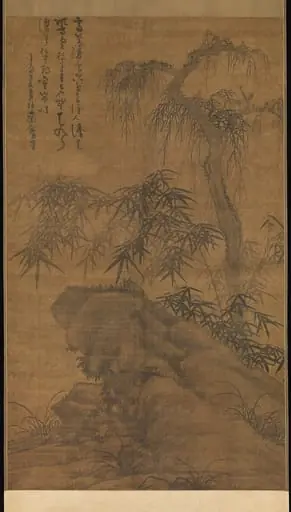
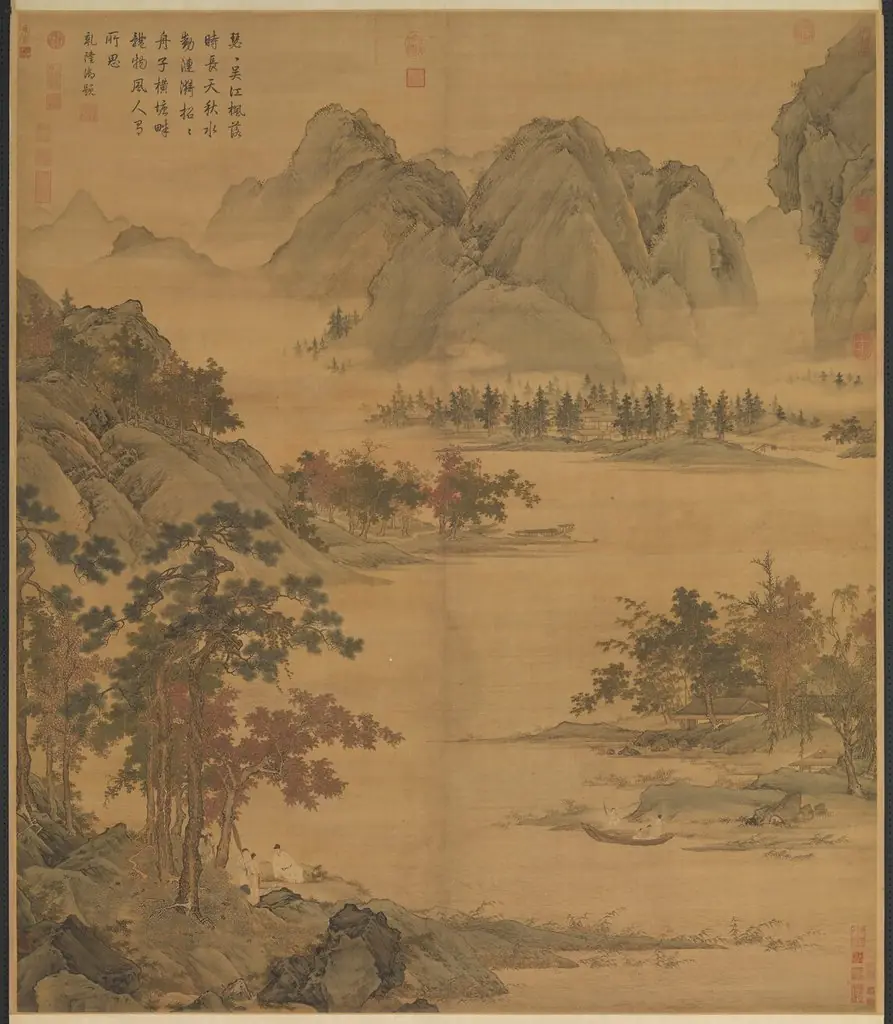
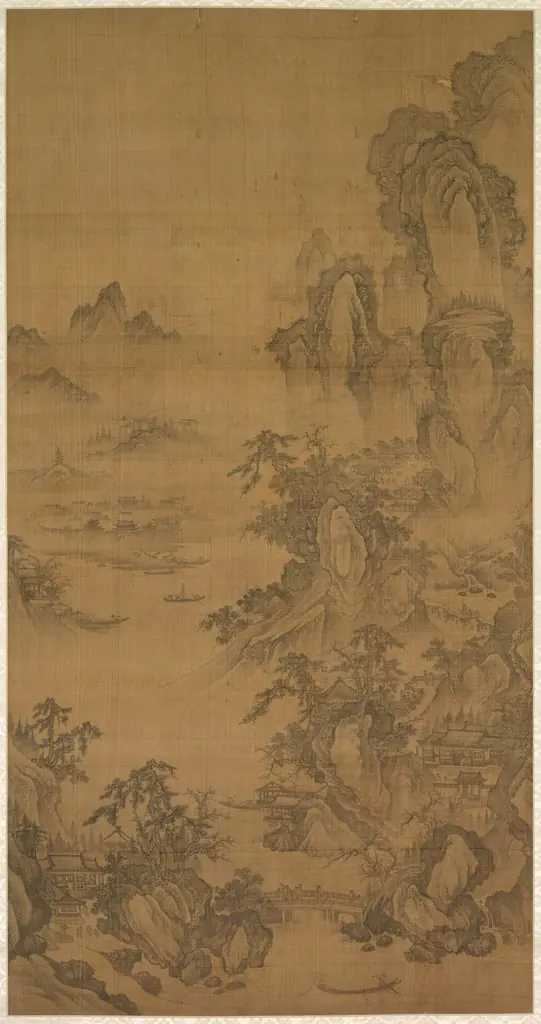
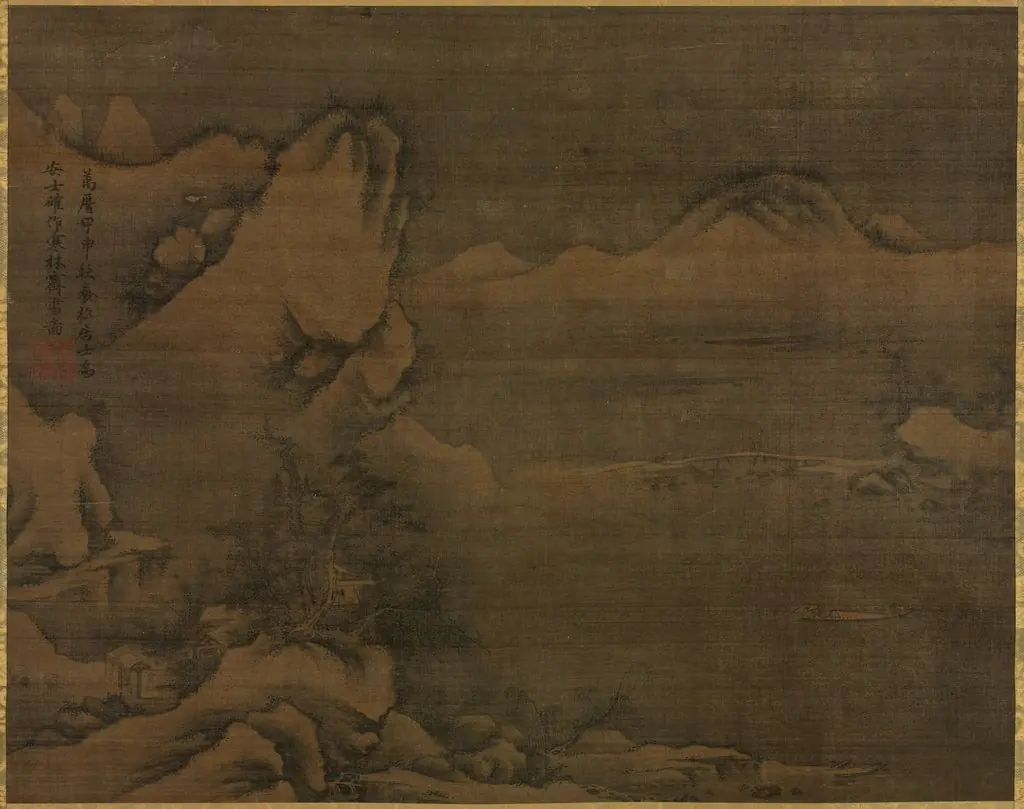
Painted in 1342 by Wu Zhen on silk, this landscape scroll belongs to the Yuan dynasty tradition of literati painting. It presents a quiet, contemplative scene of mountains, water, and sparse vegetation, rendered in monochrome ink. The smooth surface of the silk allows for subtle gradations of tone, enhancing the atmospheric depth of the composition without reliance on color.
Subject & Meaning
The painting evokes a hermit’s retreat, with a modest dwelling nestled beneath a lone tree on a hillside, overlooking still water. Though no human figure is present, the scene alludes to the recluse ideal of Daoist thought, solitude, harmony with nature, and withdrawal from worldly affairs. The absence of activity invites quiet reflection rather than narrative engagement.
Technique & Style
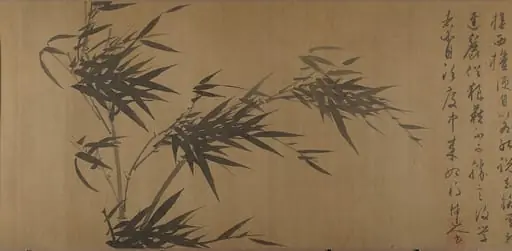
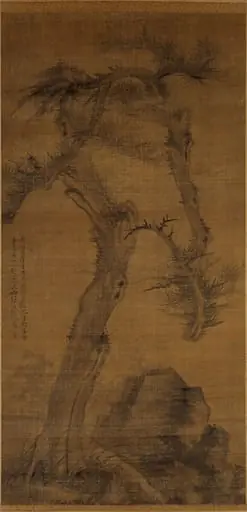
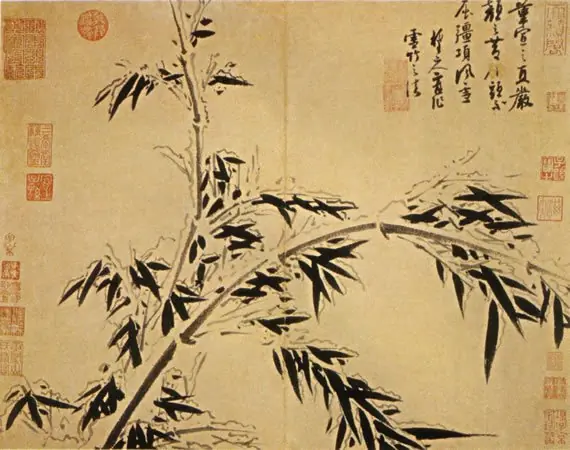
Wu Zhen employs a range of ink washes, from pale grays to deep blacks, to model form and suggest spatial recession. Brushwork is restrained yet deliberate, with dry strokes defining rock textures and wetter washes softening distant peaks. The silk support enhances the fluidity of ink, allowing for delicate transitions that unify the landscape into a cohesive, meditative whole.
History & Provenance
The painting has been in the collection of the National Palace Museum since the mid-20th century, having passed through imperial and private hands since its creation. Its survival through centuries of political upheaval reflects its status as a valued example of Yuan literati art. Documentation confirms its attribution to Wu Zhen and its date of 1342.
Context
Created during the Yuan dynasty, when many scholar-officials withdrew from government service under Mongol rule, this work reflects the cultural turn toward personal expression through ink painting. Wu Zhen, one of the Four Masters of the Yuan, aligned his art with Confucian and Daoist ideals, using landscape as a vehicle for moral and spiritual contemplation.
Legacy
Wu Zhen’s approach to ink landscape, characterized by understated composition and tonal nuance, influenced later generations of Chinese painters. This work exemplifies the literati preference for simplicity and restraint, setting a standard for monochrome ink painting that endured into the Ming and Qing dynasties as a model of scholarly aesthetic.
Artist & collection



![Summer Mountains (after Dong Yuan [active about ad 937-975]), by Huang Gongwang](https://artifactworldgallery.com/img/huang-gongwang--summer-mountains-after-dong-yuan-active-about-ad-937-975--a5e22b9ec870e011-w320.webp)