Artwork
Untitled
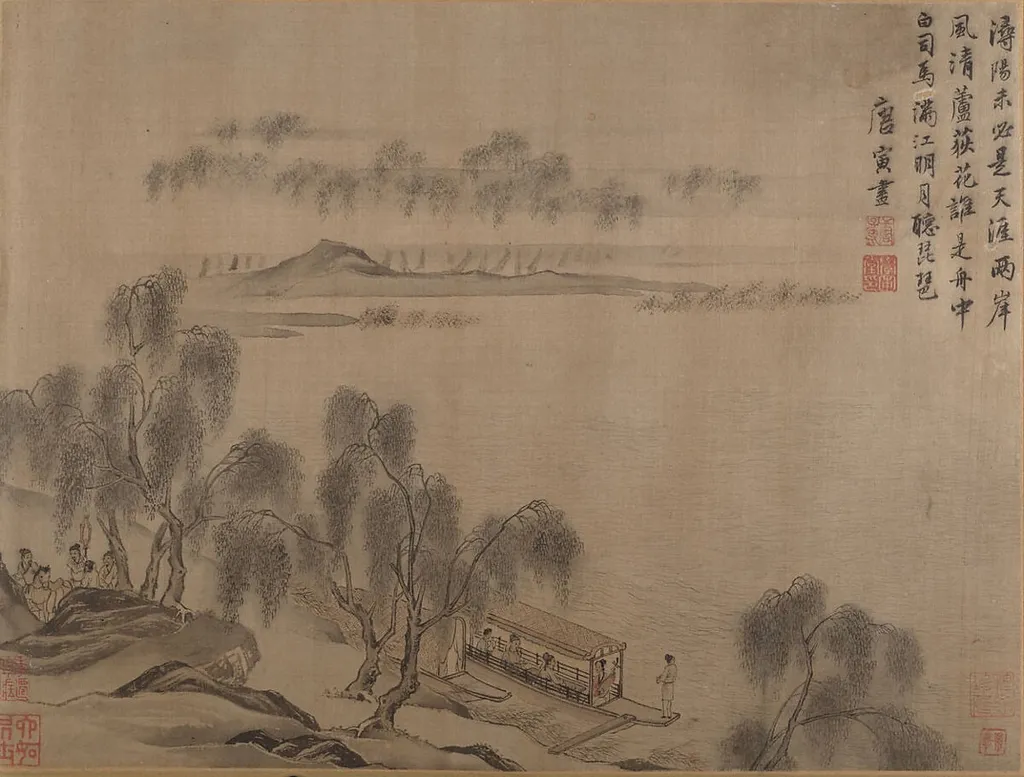
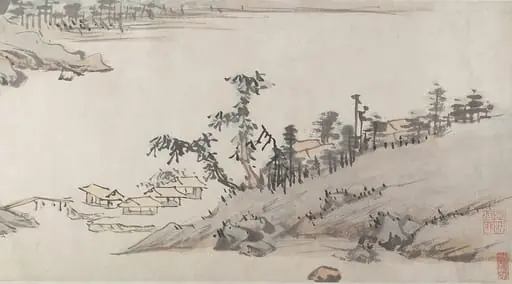
Untitled is an ink painting by the Ming dynasty painting artist Tang Yin. It dates from 1497 and is held in the collection of the Metropolitan Museum of Art.
- Accession no.
- 1980.81
- Credit line
- Ex coll.: C. C. Wang Family, Gift of Douglas Dillon, 1980
About this work
Subject & Meaning
As a landscape genre piece, the artwork focuses on these specific figures within a natural setting rather than narrative storytelling or portraiture.
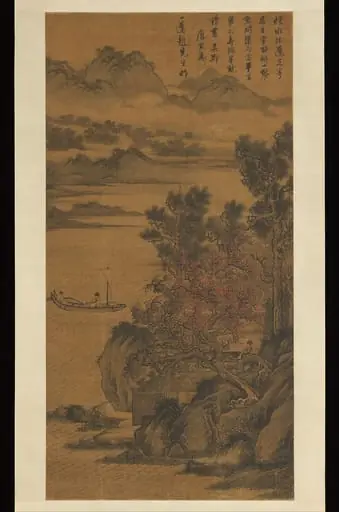
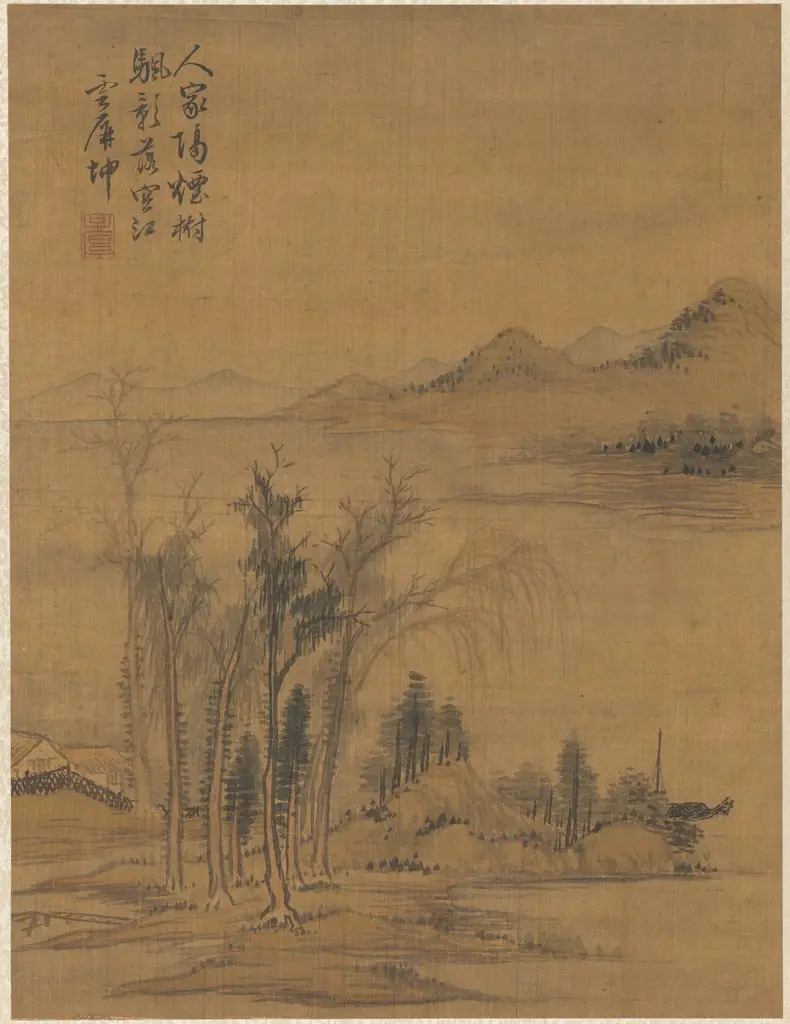
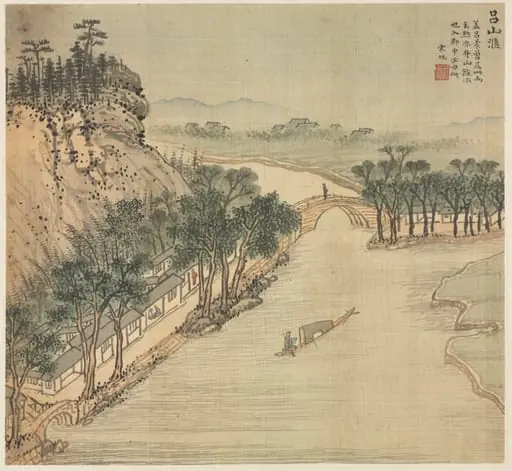
Created in 1497 by Tang Yin, the work Untitled is a landscape painting executed in ink and color on silk. The composition depicts a boat carrying a human figure, elements that define its visual subject matter. As a landscape genre piece, the artwork focuses on these specific figures within a natural setting rather than narrative storytelling or portraiture.
The presence of the solitary figure in a boat is a recurring motif in Chinese landscape art, often suggesting themes of seclusion, travel, or scholarly retreat, though the specific symbolic intent for this particular leaf is not detailed in the available records. The piece remains part of the collection at the Metropolitan Museum of Art.
Technique & Style
The work Untitled by Tang Yin (1497) is executed as a handscroll composed of eight album leaves, painted in ink and color on silk. The silk support functions as a flexible medium that allows the piece to be unrolled gradually, a traditional handling method for Chinese handscrolls. As a landscape painting, the composition features a boat and a human figure, reflecting the genre’s emphasis on natural scenery and narrative detail.
The formal qualities include restrained brushwork, subtle gradations of ink wash, and the application of mineral pigments that enhance the atmospheric depth typical of Ming‑dynasty ink‑color painting. The artwork is housed in the Metropolitan Museum of Art, though specific conservation details are not documented in the sources.
History & Provenance
Created in 1497, the artwork Untitled is a landscape painting by the Chinese artist Tang Yin. The work, executed in ink and color on silk, consists of eight album leaves mounted as a handscroll. It depicts scenes featuring boats and human figures.
The piece is currently held in the collection of the Metropolitan Museum of Art. While the specific commission details are not recorded in the available data, the work's inception is firmly dated to the year 1497. The painting originates from China and represents Tang Yin's landscape genre during the late 15th century.
Its current location at the Metropolitan Museum of Art marks its known modern ownership status, though earlier provenance owners are not detailed in the provided records.
The album leaves are held by the Metropolitan Museum of Art, as recorded in the Wikidata entry for the work. No accession number is provided in the available sources. The sources do not document any exhibition history for this painting, and none can be added without external information.
Overview
This untitled work by Tang Yin, created in 1497, comprises eight individual album leaves. Rendered with ink and subtle color on silk, these paintings are mounted together to form a continuous handscroll. The composition presents a series of serene landscape vignettes, characteristic of the artist's approach to natural scenery during the Ming dynasty. It invites viewers to experience a progression of tranquil moments.
Context
During the Ming dynasty, it was a common practice for artists like Tang Yin to create sets of paintings, often in the format of album leaves or handscrolls. This particular work exemplifies such a tradition, allowing for a sequential viewing experience. The creation of multiple, related scenes within a single artwork offered artists an opportunity to explore variations on a theme and to present a more extended visual narrative or mood.
Artist & collection

Artist
Tang Yin (Chinese: 唐寅; pinyin: Táng Yín; Cantonese Yale: Tong Yan; 6 March 1470 – 7 January 1524), courtesy name Bohu (伯虎) and Ziwei (子畏), was a Chinese painter, calligrapher, and poet of the Ming dynasty period.

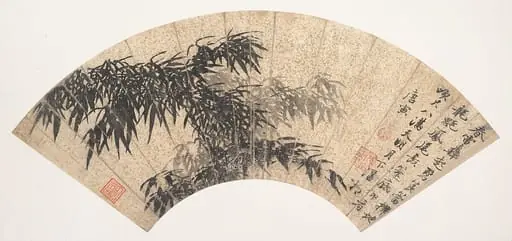
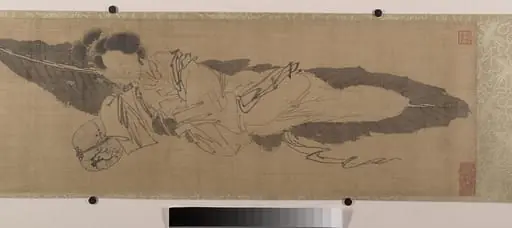
- Landscape Album in Various Styles: Landscape after Ni Zan
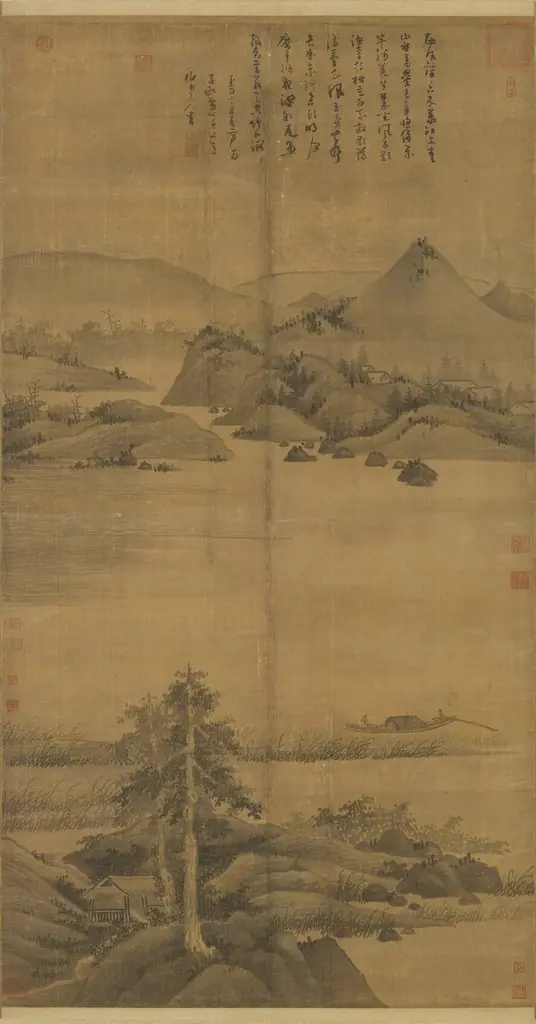 元吳鎮漁父圖 軸
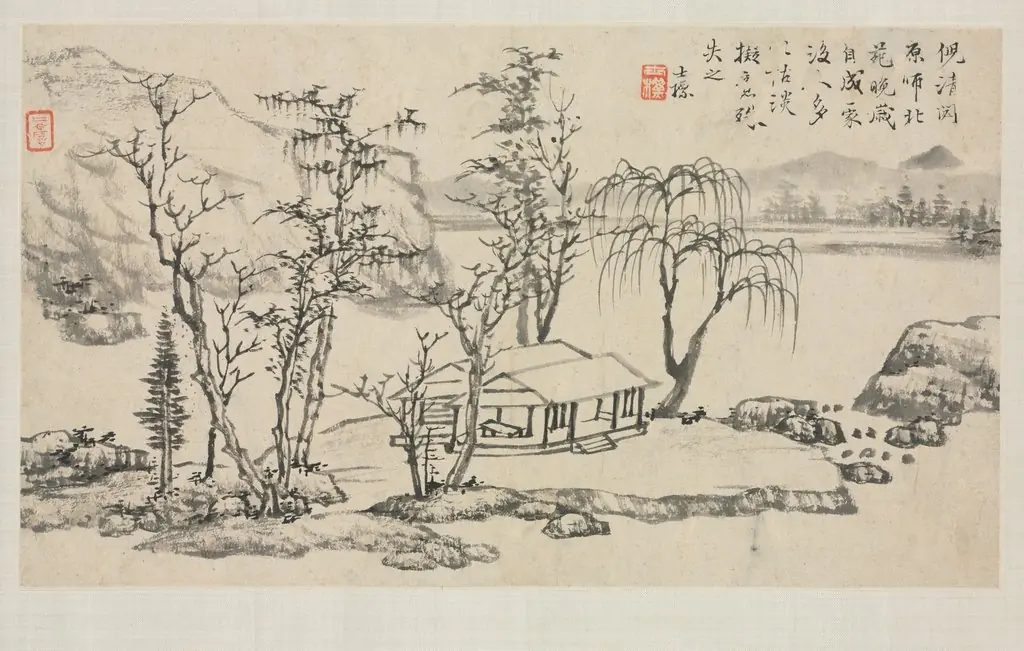 Landscape Album in Various Styles: Landscape after Ni Zan
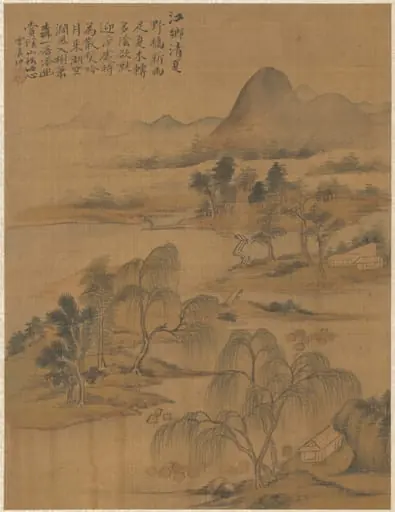 River Village in High Summer
 Landscape
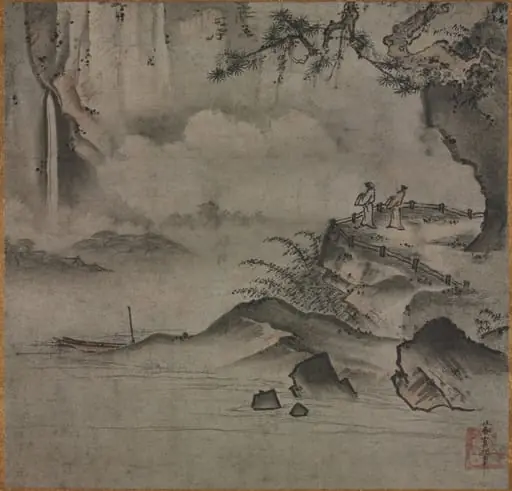 Gazing at a Waterfall
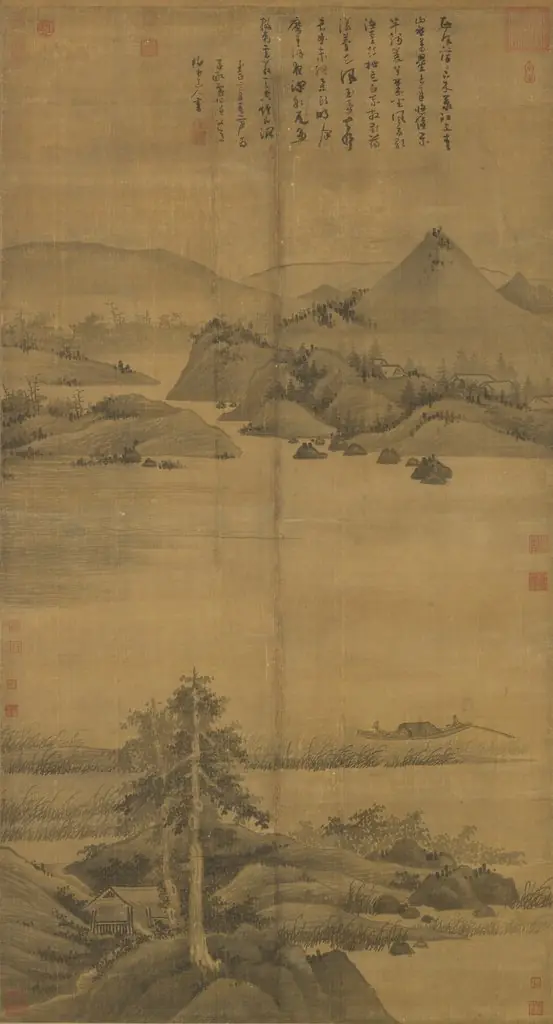 Fisherman
 明 盛茂曄 唐詩意山水圖 冊|Landscapes after Tang Poems
 Untitled
 Gazing at a Waterfall
 雪村周継筆 山水図|Landscape with Rocky Precipice
 Lüshan Hui