Artwork
The Thousand Buddha Hall and the Pagoda of the "Cloudy Cliff" Monastery, from Twelve Views of Tiger Hill, Suzhou
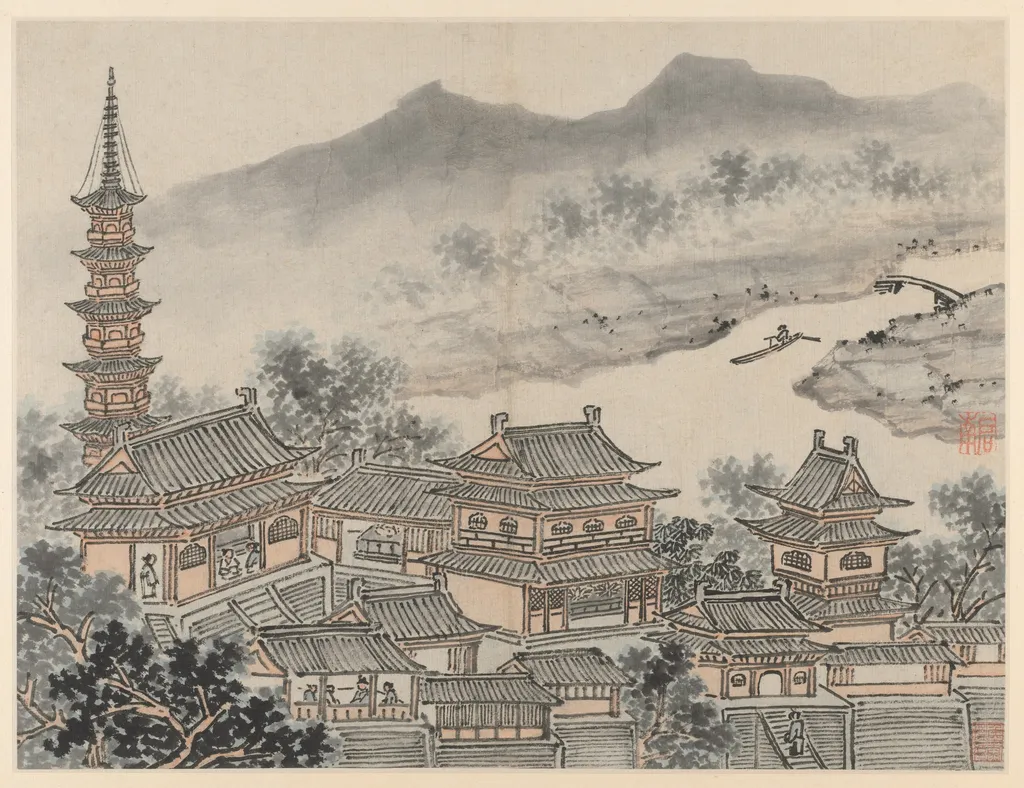
The Thousand Buddha Hall and the Pagoda of the "Cloudy Cliff" Monastery, from Twelve Views of Tiger Hill, Suzhou is an unspecified painting by the Ming dynasty painting artist Shen Zhou. It dates from 1500 and is held in the collection of the Cleveland Museum of Art.
About this work
Subject & Meaning
Created in 1500 by Shen Zhou, this landscape painting depicts specific architectural and natural features of Tiger Hill in Suzhou.
Created in 1500 by Shen Zhou, this landscape painting depicts specific architectural and natural features of Tiger Hill in Suzhou. The composition focuses on the Thousand Buddha Hall and the prominent pagoda associated with the "Cloudy Cliff" Monastery. As part of the larger series titled Twelve Views of Tiger Hill, the work functions as a visual record of this renowned location, highlighting its religious structures and residential elements.
The imagery centers on the interplay between the built environment, represented by the house and temple complex, and the surrounding landscape, capturing the site's distinct character during the Ming dynasty.
History & Provenance
The painting titled "The Thousand Buddha Hall and the Pagoda of the 'Cloudy Cliff' Monastery, from Twelve Views of Tiger Hill, Suzhou" was created in 1500 in China by the Ming‑dynasty artist Shen Zhou. It belongs to the series of Twelve Views of Tiger Hill, Suzhou, depicting a house and the Tiger Hill Pagoda. According to the Cleveland Museum of Art records, the work entered the museum’s collection (accession number 1964.371.7) and remains on display there.
Its creation history is tied to Shen Zhou’s landscape practice in the late 15th–early 16th century, and the dating is explicitly recorded as 1500.
Overview
This painting by Shen Zhou, created around 1500, captures a specific scene from Suzhou's renowned Tiger Hill. Titled The Thousand Buddha Hall and the Pagoda of the "Cloudy Cliff" Monastery, it is one of a series of twelve views depicting this significant cultural and natural site. The artwork is currently housed in The Cleveland Museum of Art, offering a glimpse into Ming dynasty landscape artistry.
Technique & Style
Shen Zhou employs a sophisticated approach to perspective, rendering foreground elements like buildings and trees with sharp clarity, while features in the distance appear softer and more indistinct. This technique creates a sense of spatial depth and layering, drawing the viewer's eye through the scene. The artist utilizes a varied palette, from the warm hues of the architecture to the cool blues and greens of the natural environment, to enhance texture and dimension.
Context
This particular work belongs to a larger set known as Twelve Views of Tiger Hill, Suzhou. Such series were common among literati painters, allowing them to explore different facets and moods of a celebrated location. Tiger Hill itself was a popular destination for scholars and artists, known for its picturesque scenery and historical associations, making it a fitting subject for Shen Zhou's artistic exploration.
Own this work as a print
Artist & collection
Artist
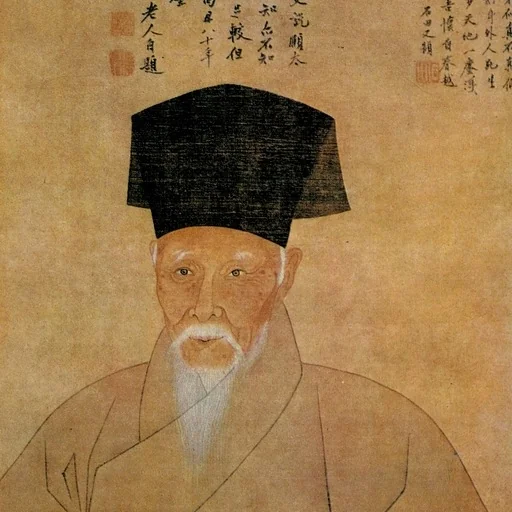
Shen Zhou spent his life in the Suzhou region of China, where his family’s money and connections mattered more than art, until it did.

 Untitled
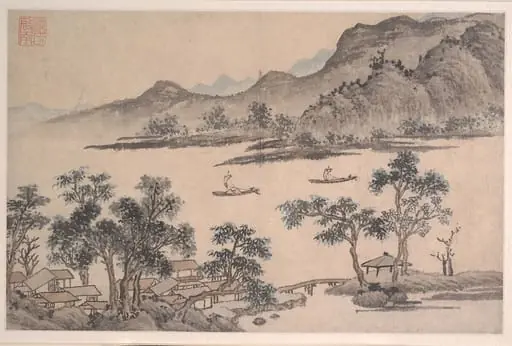 Untitled
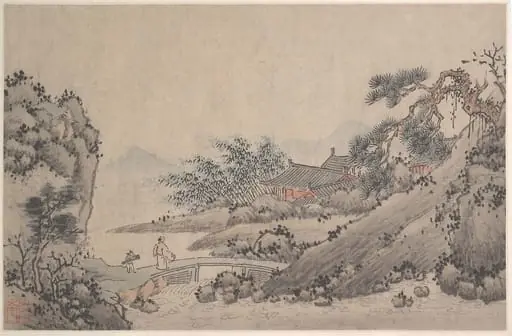 Untitled
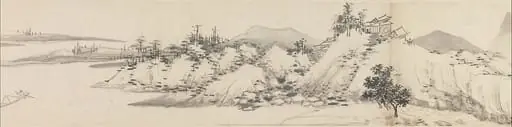 明 沈周 溪山秋色圖 卷|明 沈周 溪山秋色圖 卷明 楷書溪山秋色圖 引首|Autumn Colors among Streams and Mountains
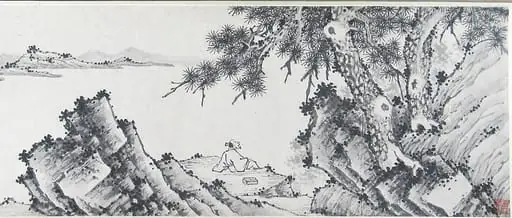 明 (倣)沈周 怡松圖 卷|Enjoying the Pines
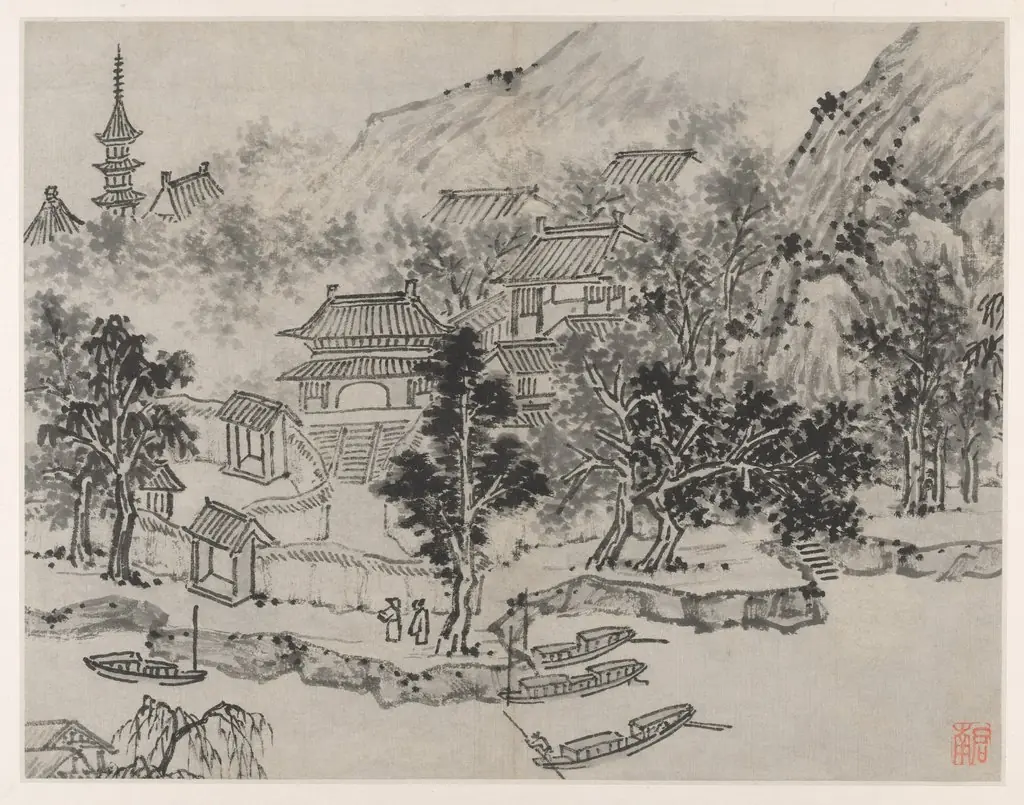 Distant View of Tiger Hill from the Canal Mooring, from Twelve Views of Tiger Hill, Suzhou
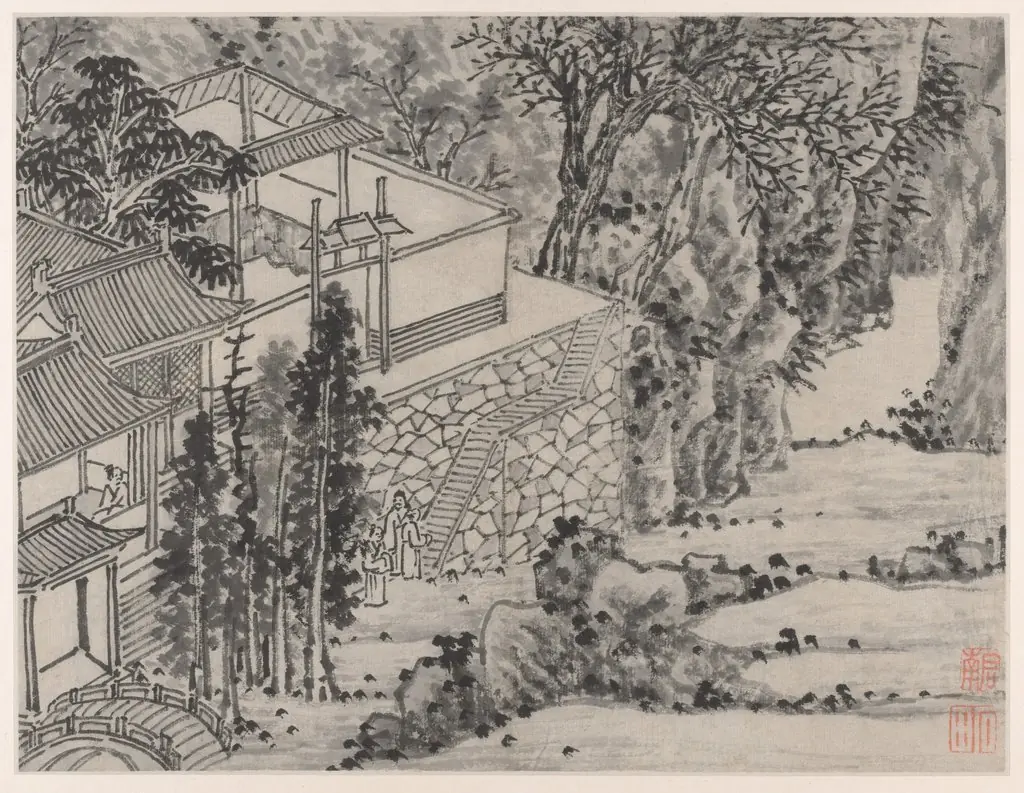 The Enlightened Stone Retreat, from Twelve Views of Tiger Hill, Suzhou
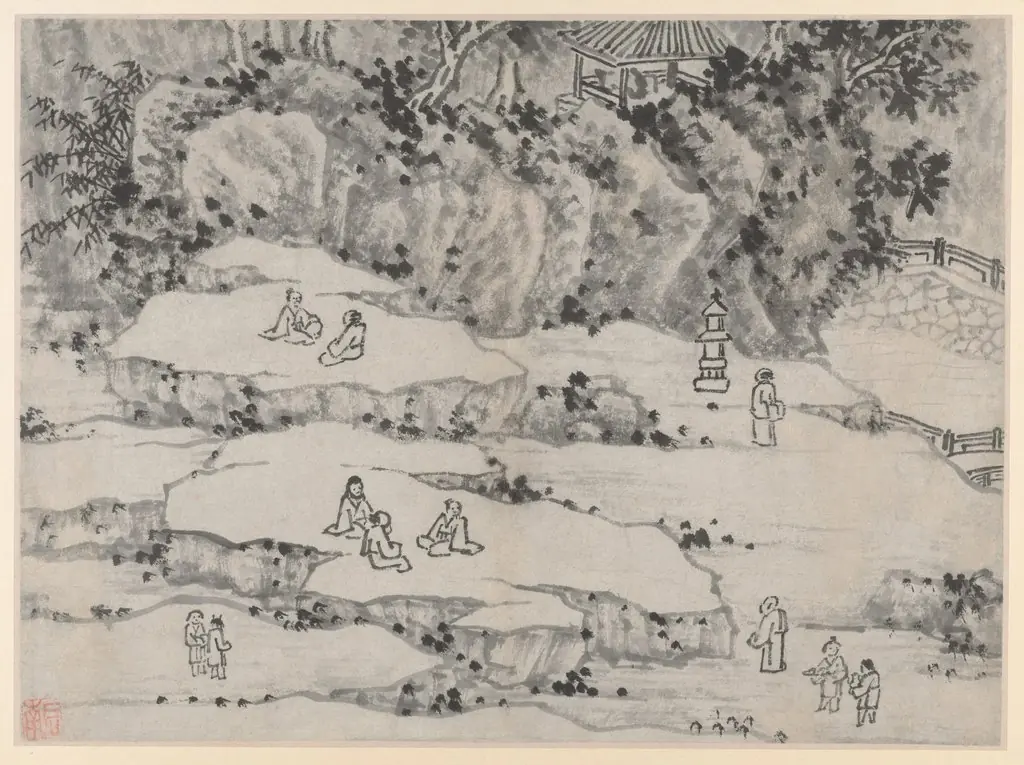 The Nodding Stone Terrace, Tiger Hill, and the Thousand-Man Seat, from Twelve Views of Tiger Hill, Suzhou
- The Five Sages Terrace, from Twelve Views of Tiger Hill, Suzhou
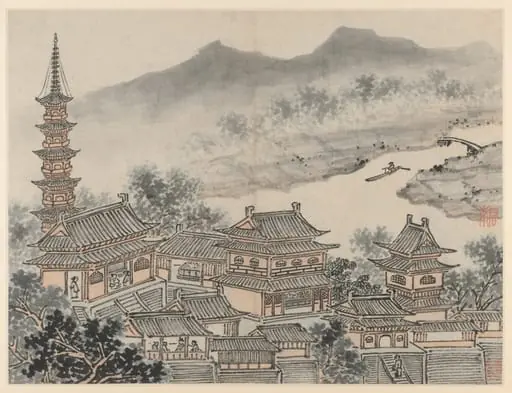 The Thousand Buddha Hall and the Pagoda of the "Cloudy Cliff" Monastery, from Twelve Views of Tiger Hill, Suzhou
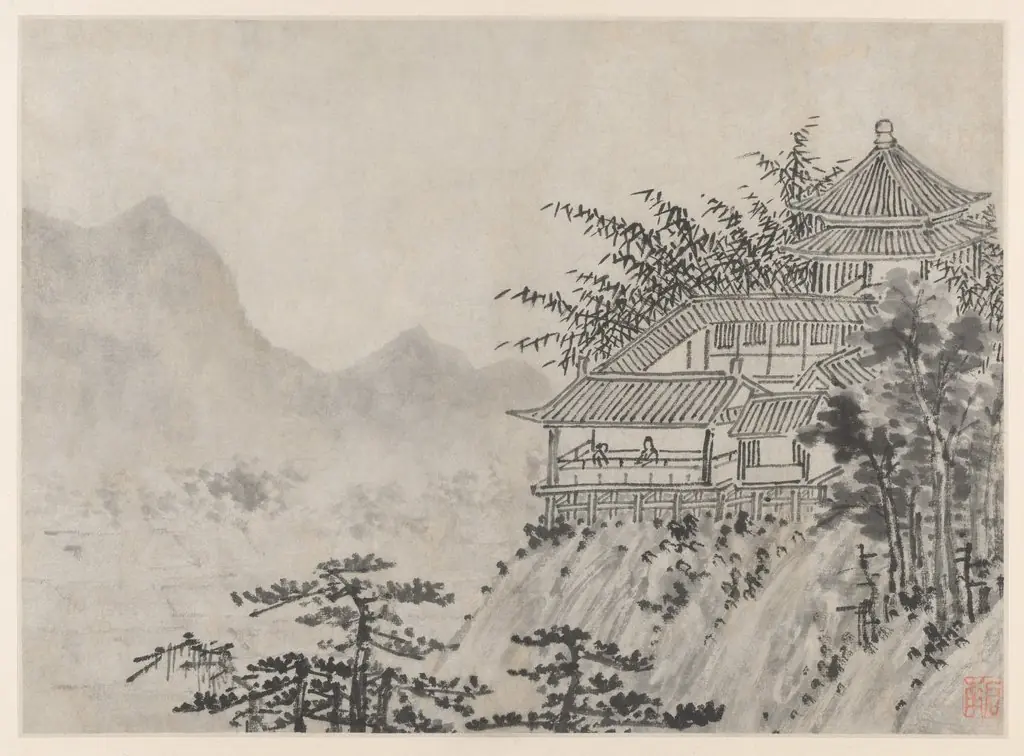 The Thousand Acres of Clouds, from Twelve Views of Tiger Hill, Suzhou
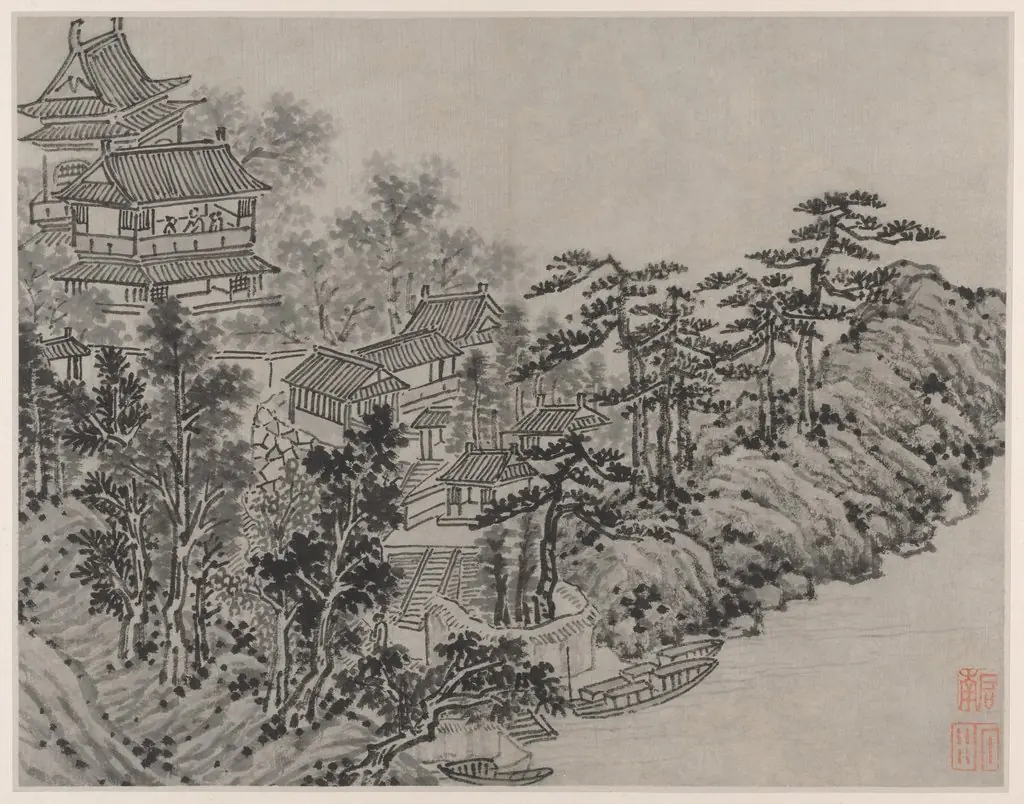 Cloud-Climbing Pavilion, from Twelve Views of Tiger Hill, Suzhou
 Cloud-Climbing Pavilion, from Twelve Views of Tiger Hill, Suzhou
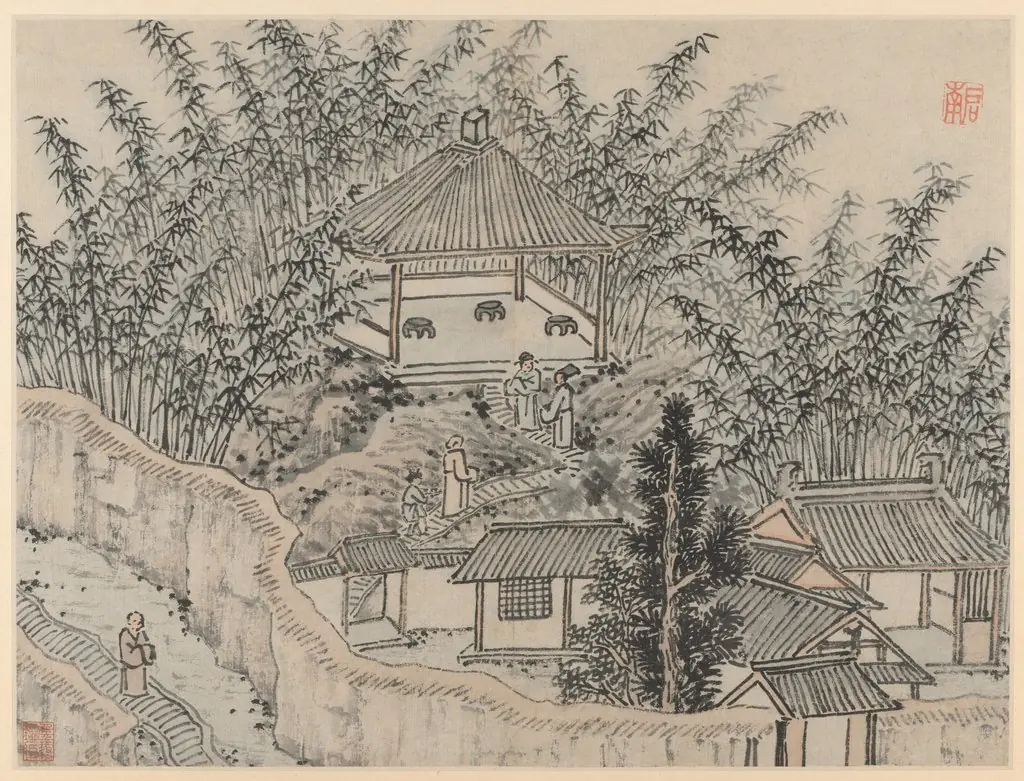 Bamboo Pavilion, Tiger Hill, from Twelve Views of Tiger Hill, Suzhou
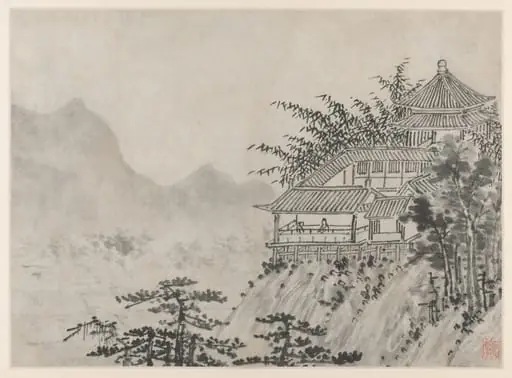 The Thousand Acres of Clouds, from Twelve Views of Tiger Hill, Suzhou
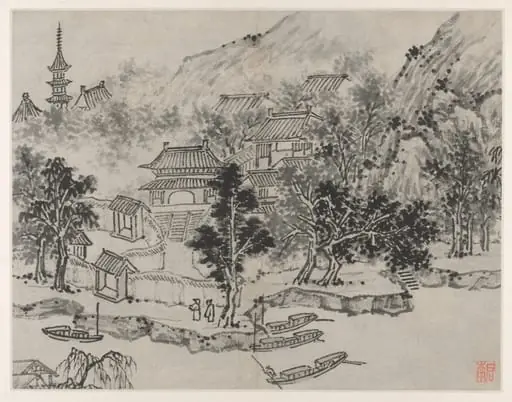 Distant View of Tiger Hill from the Canal Mooring, from Twelve Views of Tiger Hill, Suzhou
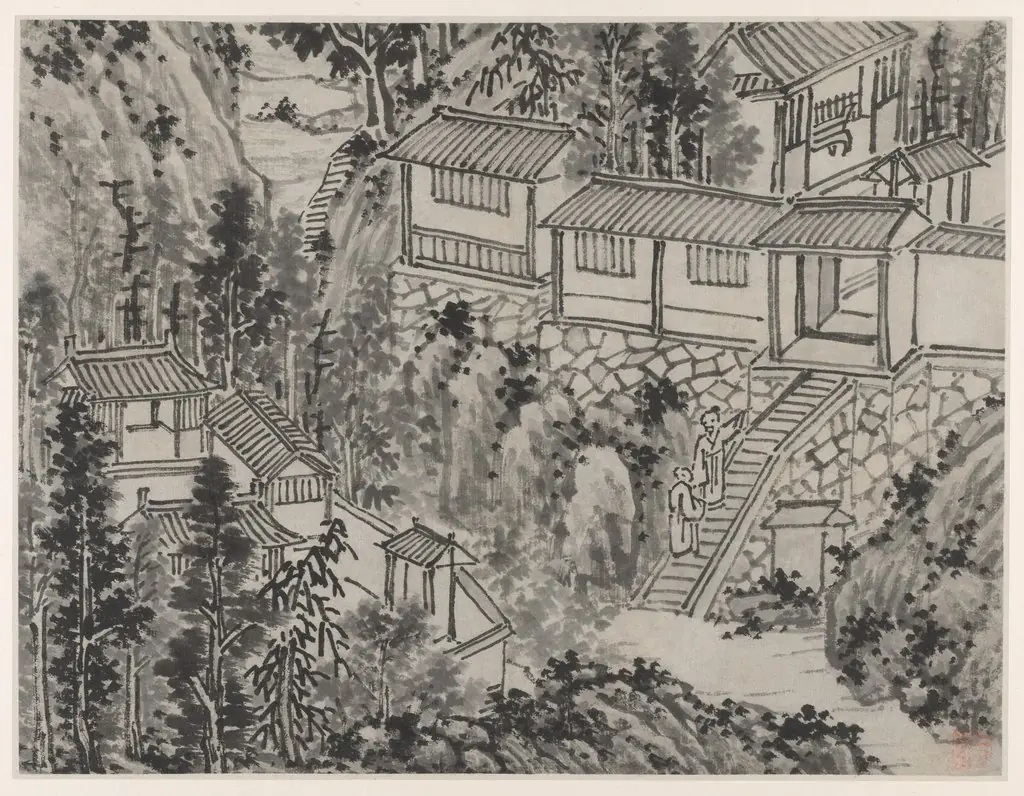 The Pine Retreat, from Twelve Views of Tiger Hill, Suzhou
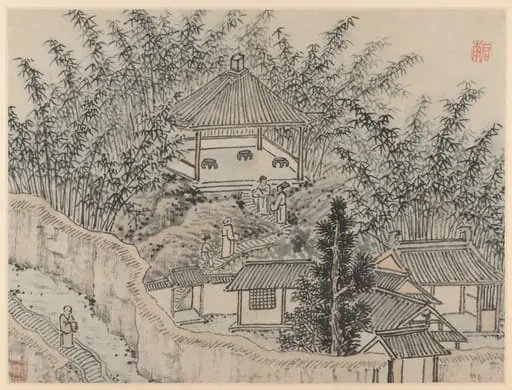 Bamboo Pavilion, Tiger Hill, from Twelve Views of Tiger Hill, Suzhou