Artwork
H Beard Print Collection
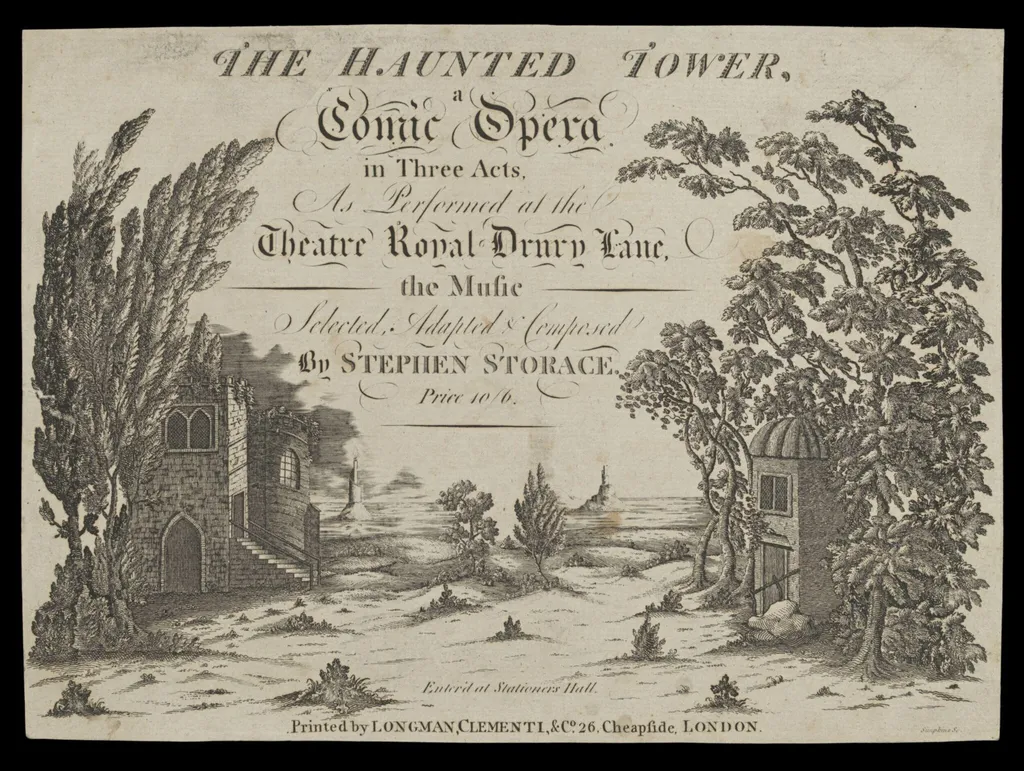
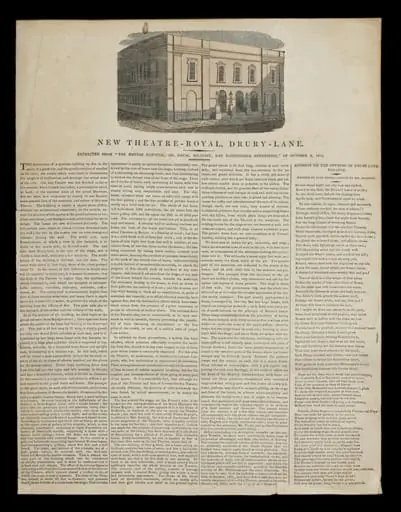
H Beard Print Collection is a print by William Simpkins. It dates from 1750 and is held in the collection of the Victoria and Albert Museum.
About this work
Overview
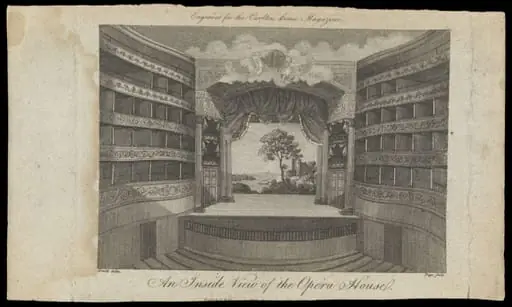
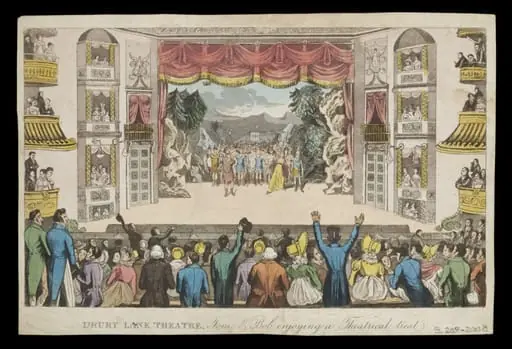
It functions as a visual document of contemporary stagecraft, illustrating the spatial arrangement and decorative scheme intended for the original production.
This late‑18th‑century print, executed by William Simpkins, records a theatrical set for Stephen Storace’s opera The Haunted Tower. Produced for the Theatre Royal, Drury Lane, the image was issued by the publishing house Longman, Clementi & Co. It functions as a visual document of contemporary stagecraft, illustrating the spatial arrangement and decorative scheme intended for the original production.
Subject & Meaning
The illustration depicts the interior of a Gothic‑styled stage, complete with towering arches, faux stonework, and atmospheric lighting cues that evoke the play’s supernatural theme. By foregrounding the haunted tower itself, the design reinforces the narrative’s emphasis on mystery and suspense, guiding the audience’s focus toward the central dramatic action.
Technique & Style
Simpkins employed line engraving on paper, a common reproductive method for disseminating theatrical designs in the period. The composition balances precise architectural detailing with broader tonal washes, allowing the viewer to discern both structural elements and the intended mood of the set. The style reflects the neoclassical taste of the era while accommodating the romantic gothic subject matter.
History & Provenance
Published by Longman, Clementi & Co., a prominent London music and print firm, the print was likely distributed to patrons, theatre professionals, and collectors shortly after the 1790s staging of The Haunted Tower. It has since entered public collections, including the Victoria and Albert Museum, where it serves as a reference for scholars of 18th‑century British theatre.
Context
The Haunted Tower premiered at Drury Lane, one of London’s leading venues, during a period when opera and melodrama were increasingly staged with elaborate scenery. Stephen Storace, a prolific composer of the time, supplied the music, while designers like Simpkins contributed visual concepts that aligned with the era’s growing interest in spectacle and immersive environments.
Own this work as a print
Artist & collection
Artist
William Simpkins spent his life chasing after the perfect print, ink on paper, pressed and pulled, again and again.