Artwork
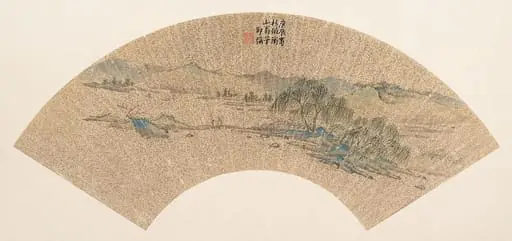
明 宋旭 書法 扇|Landscape
明 宋旭 書法 扇|Landscape is an ink painting by the Renaissance artist Song Xu. It dates from 1587 and is held in the collection of the Metropolitan Museum of Art.
About this work
Technique & Style
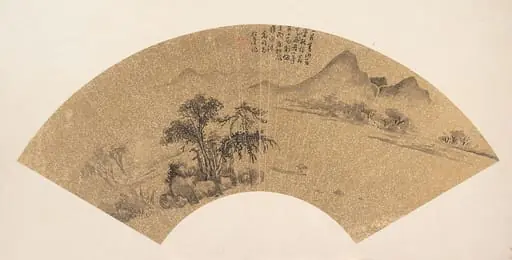
The work is a fan that was later mounted as an album leaf, executed in ink and subtle color washes on a gold‑ground surface.
The work is a fan that was later mounted as an album leaf, executed in ink and subtle color washes on a gold‑ground surface. Its support consists of a silk fan that has been re‑assembled as a leaf, a format typical of album leaf mounting. The landscape depiction measures 19.1 cm in height and 55.2 cm in width, and was produced in China around 1587.
The composition relies on delicate brushstrokes and a muted palette that allow the metallic background to shimmer, giving the scene a luminous, atmospheric quality characteristic of Song Xu’s landscape style.
Context
The fan leaf titled Landscape, executed by Song Xu in 1587, exemplifies late Ming court painting through its delicate ink washes and restrained color on gold paper. Its composition, characterized by a sweeping mountain vista, reflects the artist’s integration of literati brushwork with decorative fan formats. Scholars have noted the work’s significance as a bridge between scholarly landscape traditions and the decorative arts of the period, situating Song Xu within the broader network of Ming painters active in the imperial capital.
The piece is part of the Metropolitan Museum of Art’s collection, documented in both primary catalogues and contemporary scholarship.
Legacy
The fan-mounted album leaf titled 明 宋旭 書法 扇|Landscape, created in 1587 by Song Xu, exemplifies Ming‑dynasty landscape painting through its ink and color application on gold paper. Its inclusion in the Metropolitan Museum of Art's collection provides scholarly visibility and public access, reinforcing the artist’s standing within the canon of Chinese landscape masters. By being displayed as part of the museum’s Asian art holdings, the work contributes to ongoing assessments of Song Xu’s influence on later landscape traditions and informs curatorial narratives that trace the development of the genre from the 16th century to contemporary interpretations.
Overview
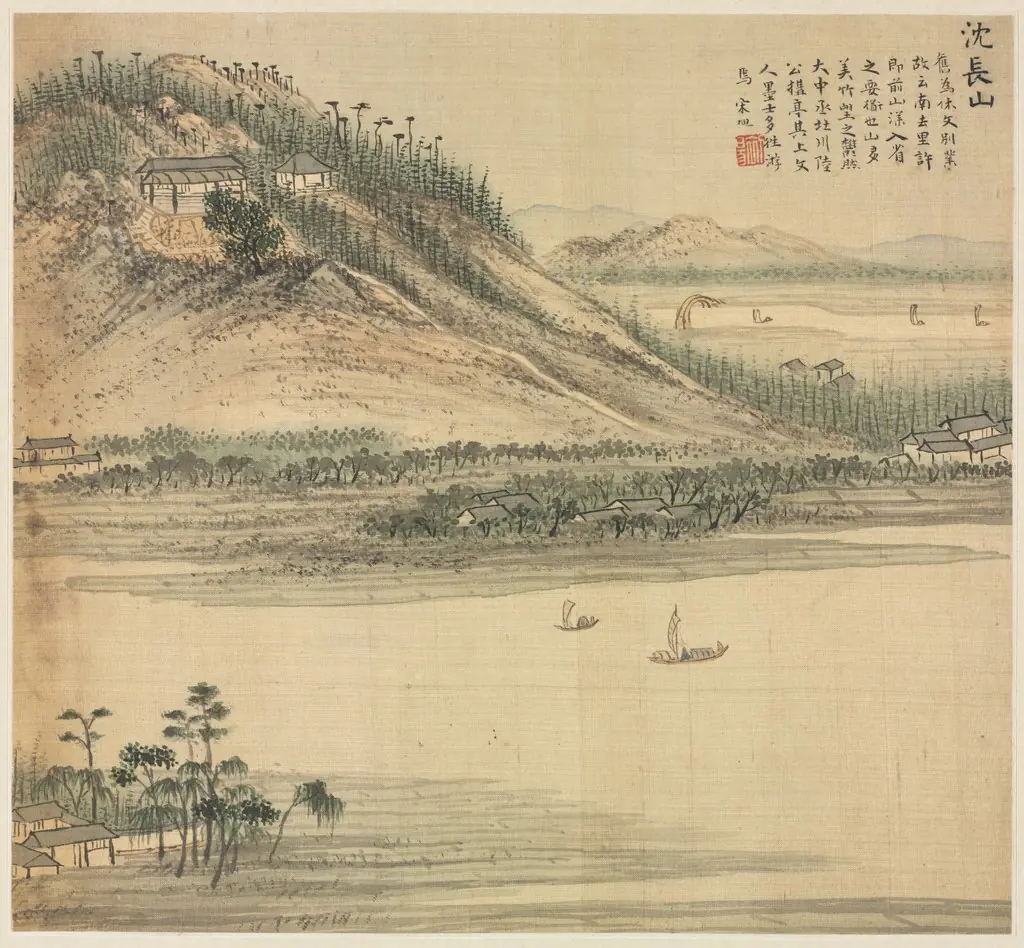
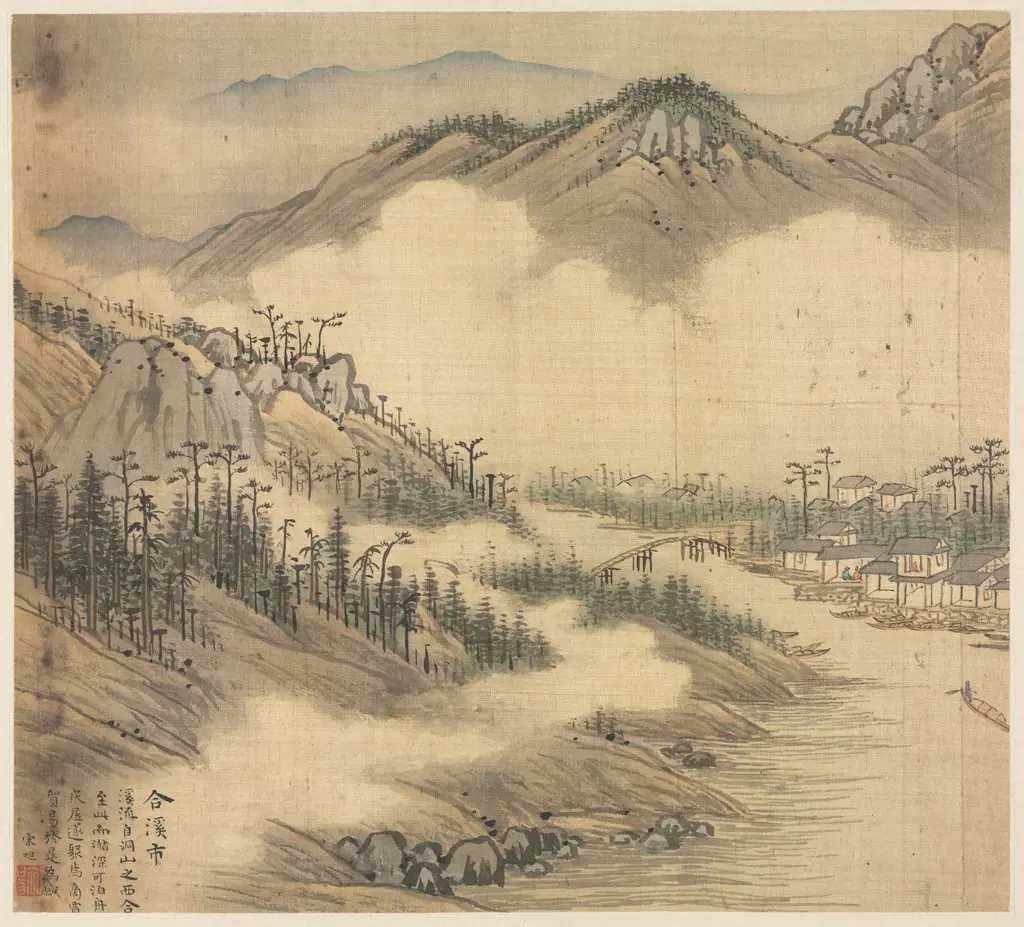
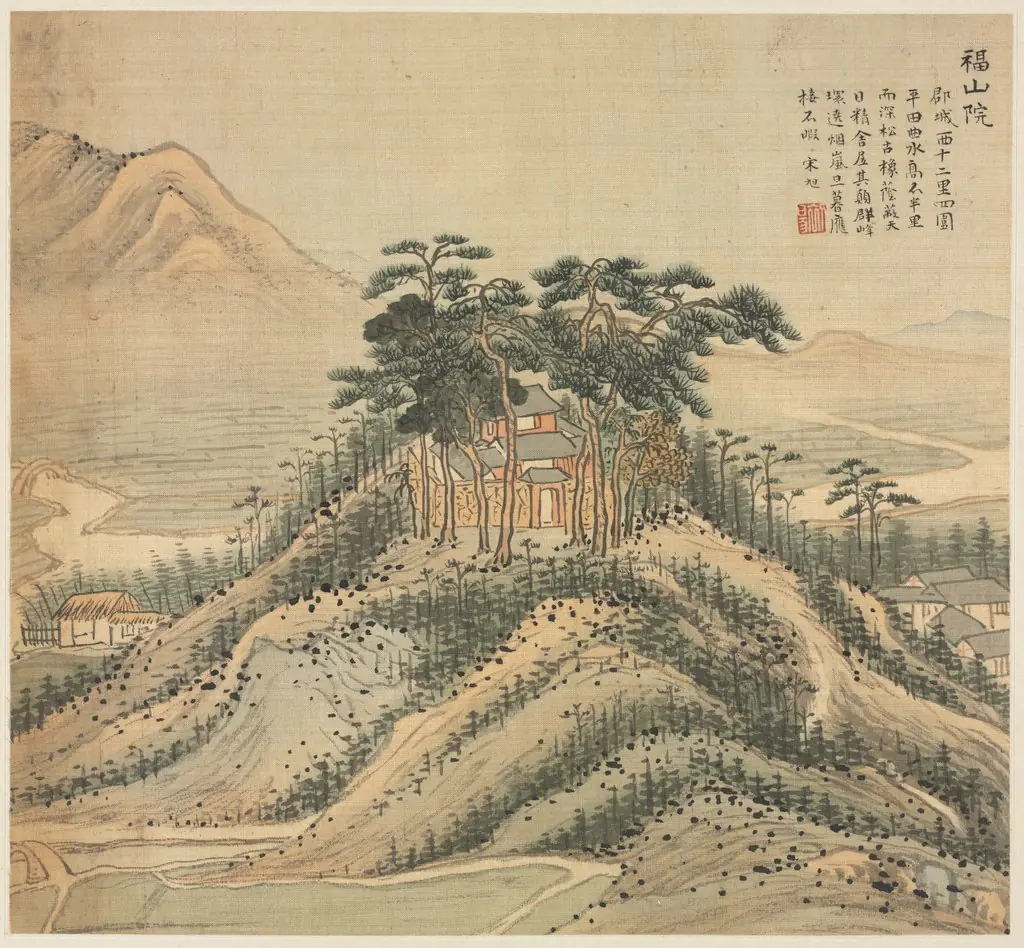
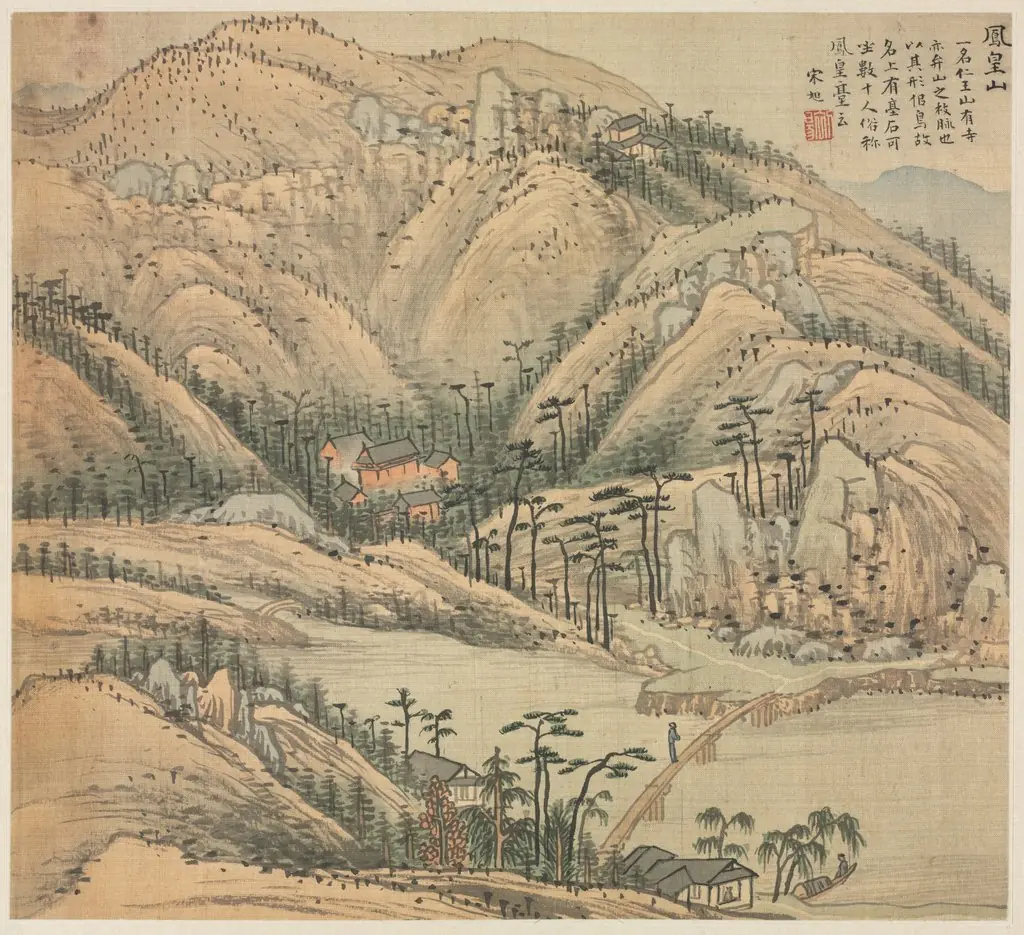
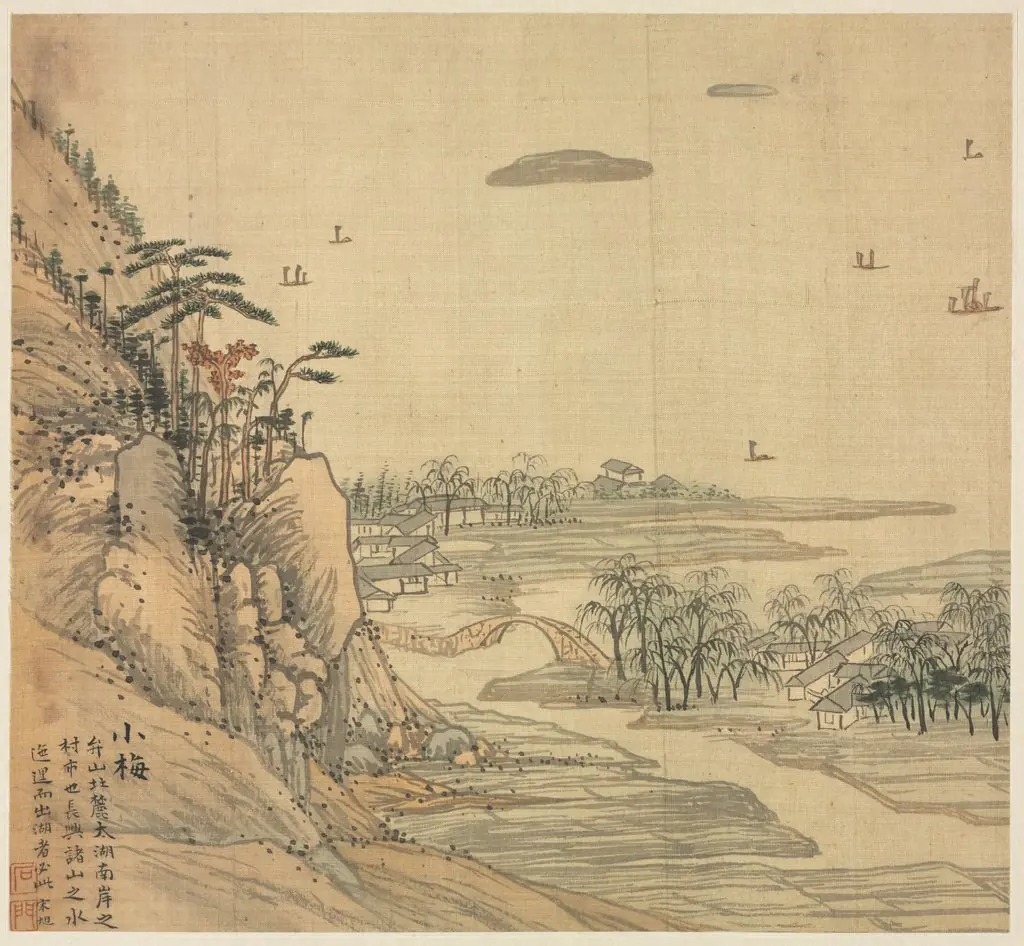
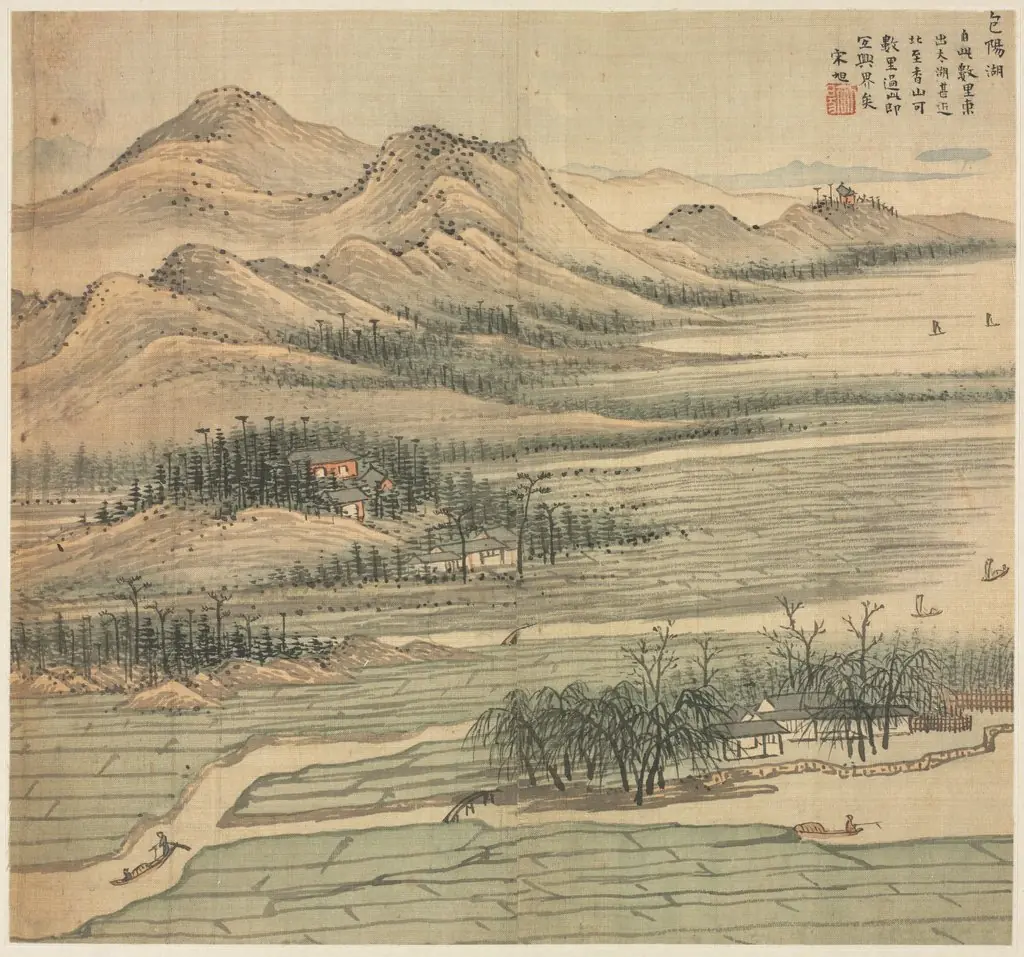
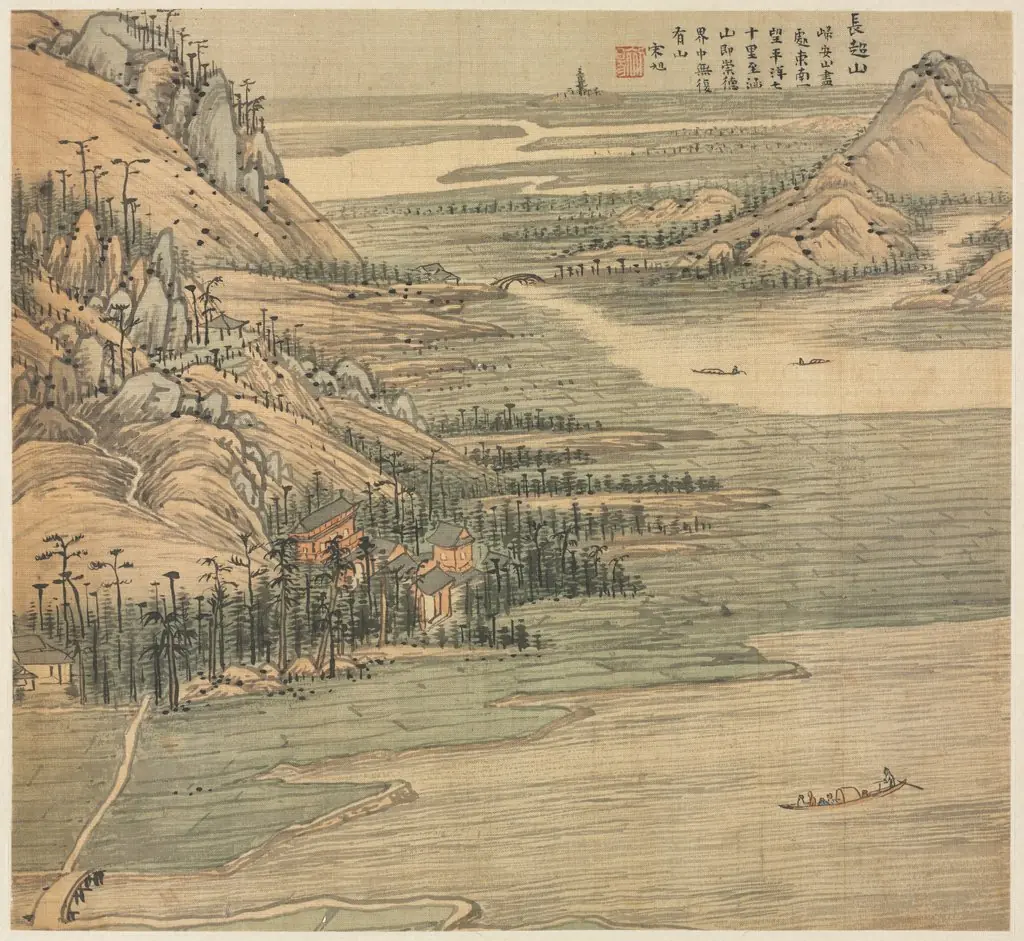
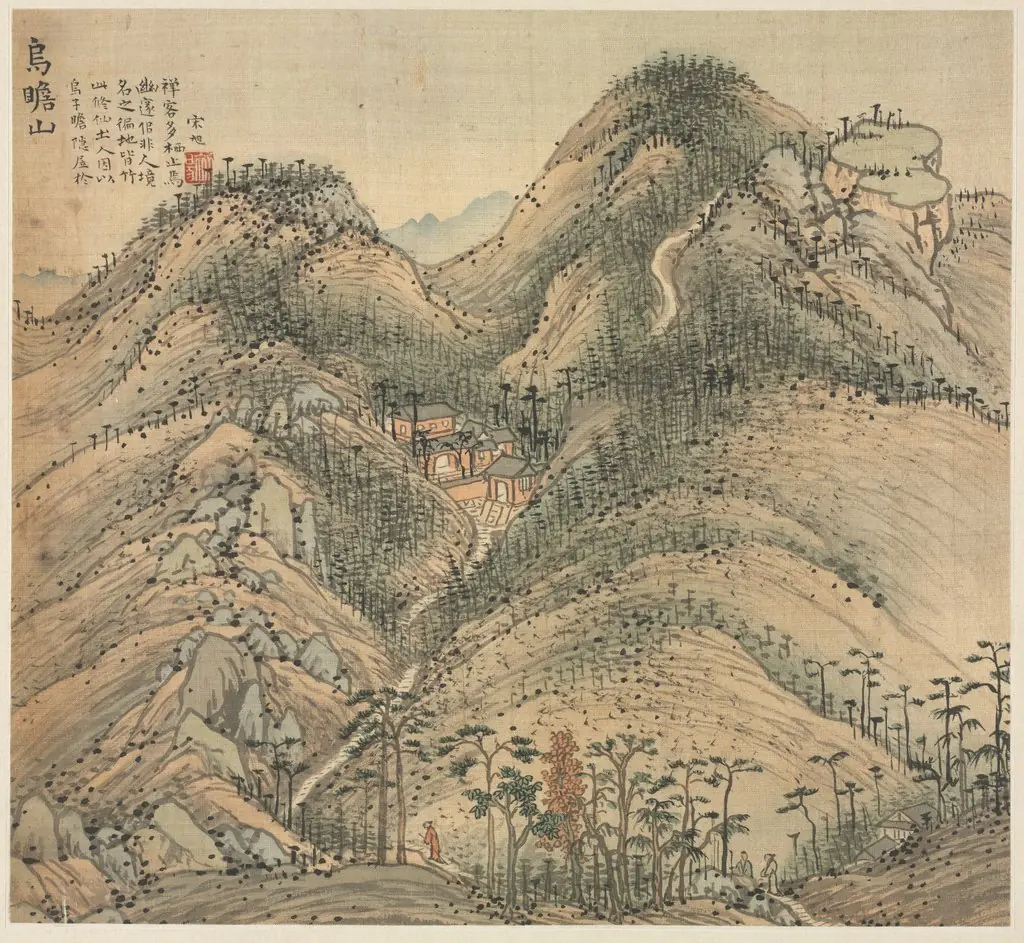
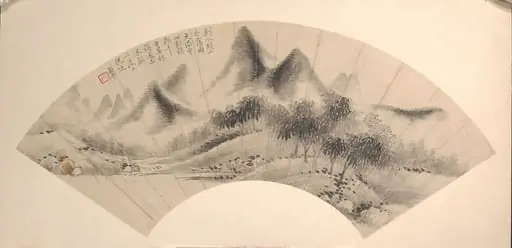
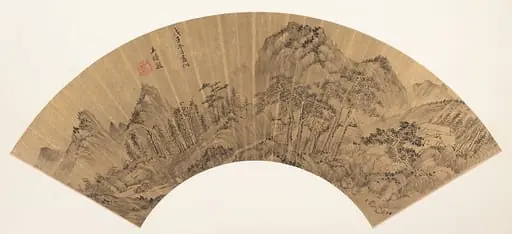
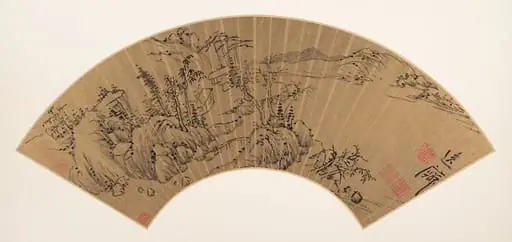
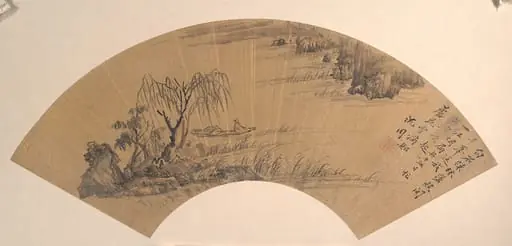
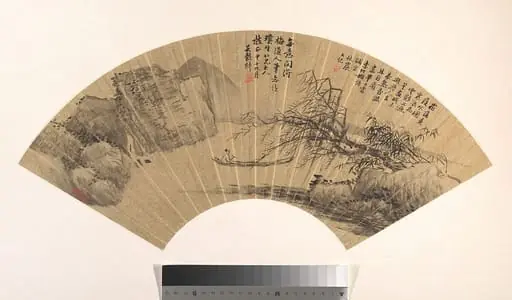
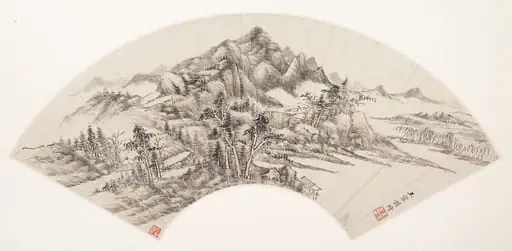
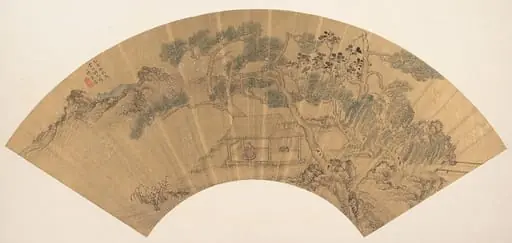
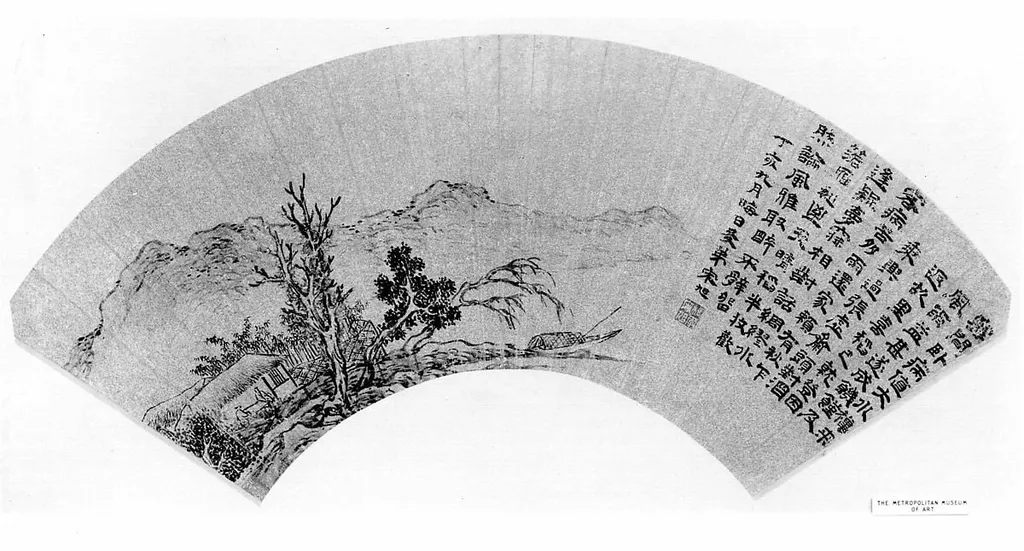
Created in 1587 by Song Xu (1525–1606), a prominent Ming dynasty painter and Buddhist monk, this work depicts a landscape rendered in ink and color on gold paper. Originally executed as a folding fan, it has been remounted as an album leaf, a format that preserves the intimate scale typical of literati hand-held objects. The composition features rugged mountains, dense foliage, and a small architectural structure nestled within the natural setting, characteristic of Song Xu's synthesis of the Wu School tradition with his own monastic perspective.
The artist employs the shimmering gold ground to enhance the luminosity of the ink washes and mineral pigments, creating a contrast between the dark, textured brushwork and the metallic surface. On the right side, Chinese characters are inscribed, integrating calligraphy with the pictorial space to provide poetic context or a dedication, a standard convention in scholar-official art. This piece exemplifies Song Xu's mature style, where he balanced the rigorous structuralism of earlier masters with a more expressive, spiritual approach to nature, reflecting his dual identity as a painter and a religious figure during the late Ming period.
Subject & Meaning
The composition features a tranquil landscape, characterized by towering mountains, verdant trees, and a solitary, modest building nestled within the natural setting. On the right side of the painting, Chinese characters are incorporated into the design. These inscriptions serve to enrich the artwork, providing an additional dimension of interpretation beyond the visual elements of the depicted scene.
Artist & collection