Artwork
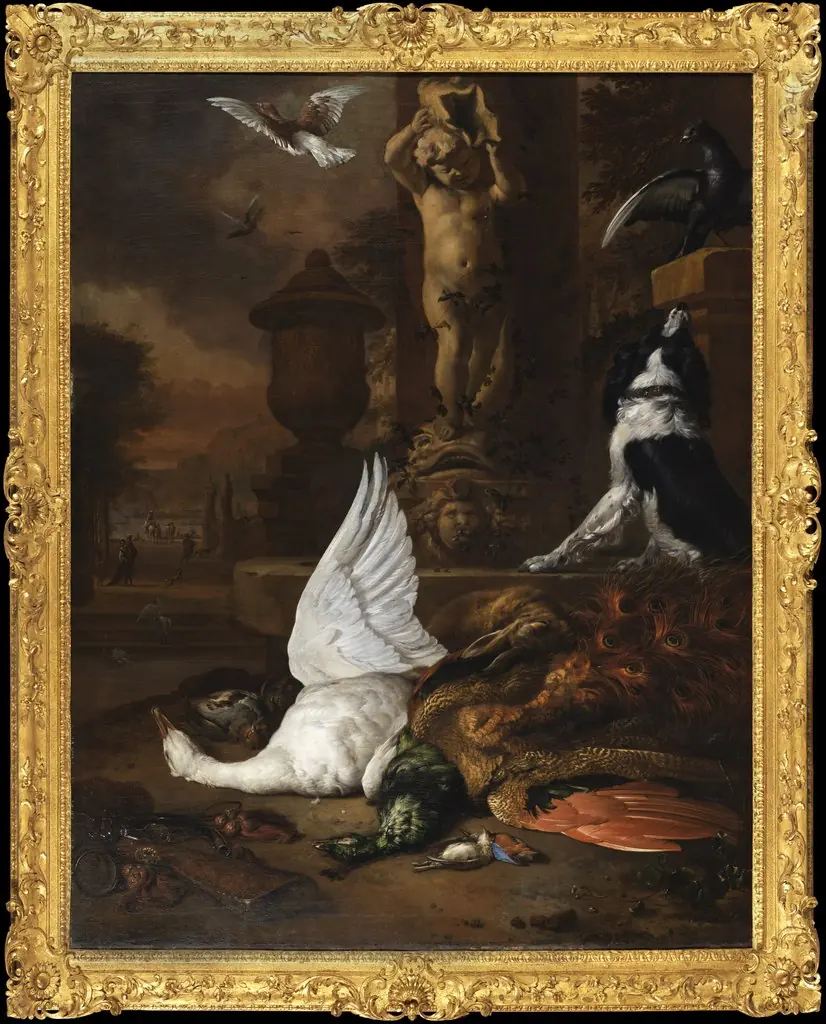
Still Life with Dead Game and Fruit beside a Garden Vase, with a Monkey, a Dog and Two Pigeons; in the Background Rijksdorp near Wassenaar, the Estate of Jonkheer Jacob Emmery, Baron of Wassenaar
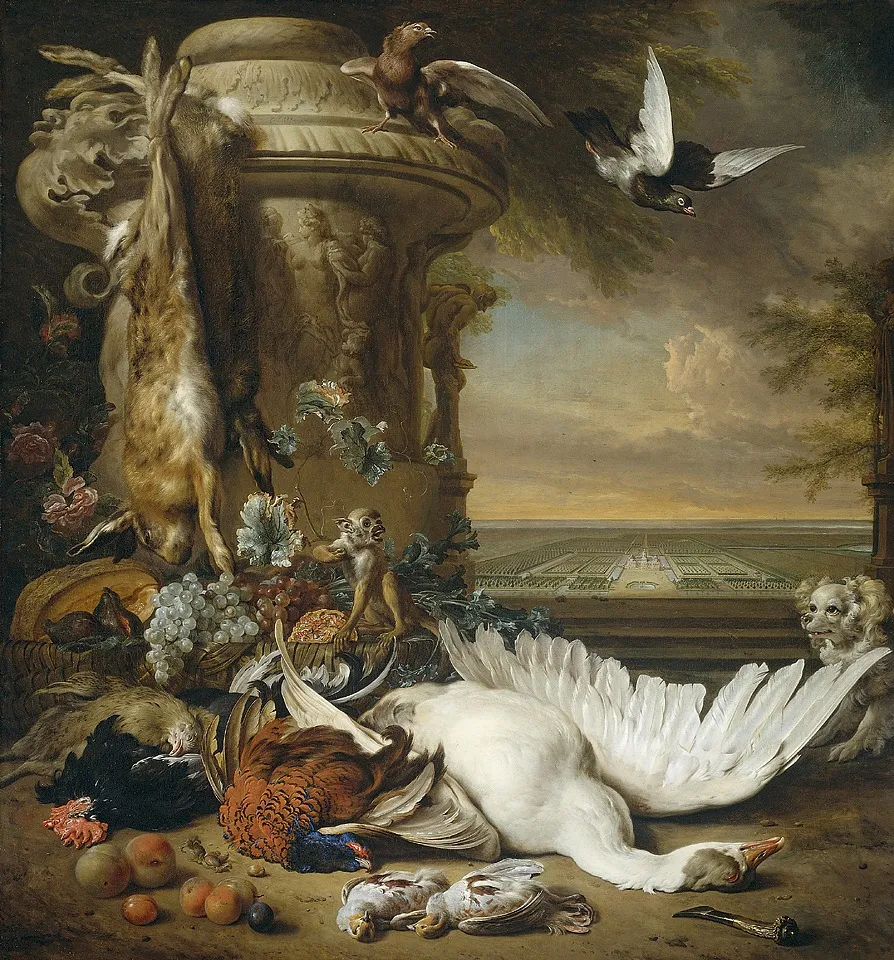
Still Life with Dead Game and Fruit beside a Garden Vase, with a Monkey, a Dog and Two Pigeons; in the Background Rijksdorp near Wassenaar, the Estate of Jonkheer Jacob Emmery, Baron of Wassenaar is an oil painting by the Rococo painting artist Jan Weenix. It dates from 1714 and is held in the collection of the Rijksmuseum.
About this work
Technique & Style
The work is executed in oil paint on canvas, a combination characteristic of Jan Weenix's ambitious still-life compositions of the early eighteenth century.
The work is executed in oil paint on canvas, a combination characteristic of Jan Weenix's ambitious still-life compositions of the early eighteenth century. The canvas support measures 172 cm in height by 160 cm in width, providing a generous field for the layered arrangement of dead game, fruit, a monkey, a dog, and pigeons set against a landscape background. Weenix's handling deploys the highly polished, finely detailed brushwork associated with his mature game-piece production, in which richly painted foreground objects are juxtaposed with a more atmospheric, recessive landscape vista.
Stylistically, the painting belongs to the decorative still-life tradition in which Weenix specialized, combining a meticulously rendered foreground display of game and fruit with an expansive estate view, here identified as Rijksdorp near Wassenaar.
History & Provenance
Jan Weenix painted Still Life with Dead Game and Fruit beside a Garden Vase, with a Monkey, a Dog and Two Pigeons; in the Background Rijksdorp near Wassenaar, the Estate of Jonkheer Jacob Emmery, Baron of Wassenaar in 1714. The work entered the collection of the Rijksmuseum and remains on display there. It was created as an oil painting on canvas, measuring 172 cm by 160 cm.
Legacy
The painting's reputation grew within 18th‑century Dutch still‑life circles for its vivid animal symbolism and meticulous rendering of fruit and game, influencing later artists who explored similar motifs in the genre. Its inclusion in the Rijksmuseum collection cemented its standing as a benchmark example of Jan Weenix's decorative compositions, inspiring subsequent still‑life works that emphasized narrative detail and naturalistic texture.
Overview
Jan Weenix’s 1714 oil painting combines a densely arranged still‑life with a modest landscape. On a table lie a collection of game birds, apples and a decorative vase overgrown with ivy and blossoms. A monkey clings to the vase, a small dog peers from the edge, and two pigeons flutter above. In the distance, a stylised garden of the Wassenaar estate unfolds beneath a subdued sky.
Subject & Meaning
The composition juxtaposes the transience of hunted game with the vitality of domestic animals, suggesting a meditation on mortality and abundance. The careful placement of the dead birds and fruit evokes a fleeting banquet, while the curious monkey and attentive dog introduce a playful, almost narrative element that softens the otherwise solemn tableau.
Context
Weenix, trained by his father, the animal painter Jan Baptist Weenix, continued the Dutch tradition of elaborate game pieces that flourished in the late seventeenth and early eighteenth centuries. This painting situates itself within a broader European fascination with opulent banquet scenes, while also integrating a modest landscape that alludes to the owner’s country estate, a common practice among affluent patrons of the period.
Artist & collection

Artist
Jan Weenix or Joannis Wenix (between 1641/1649 – 19 September 1719 (buried)) was a Dutch painter.

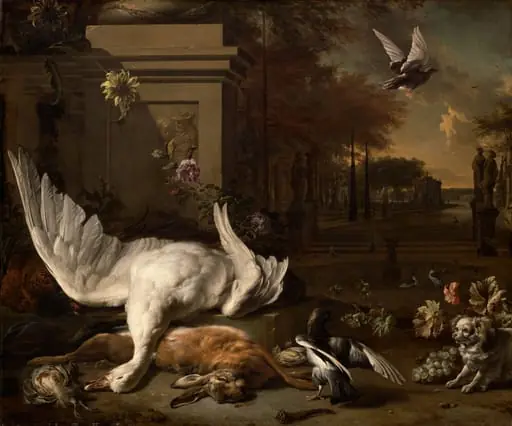 Still Life with Goose and Game before a Country Estate
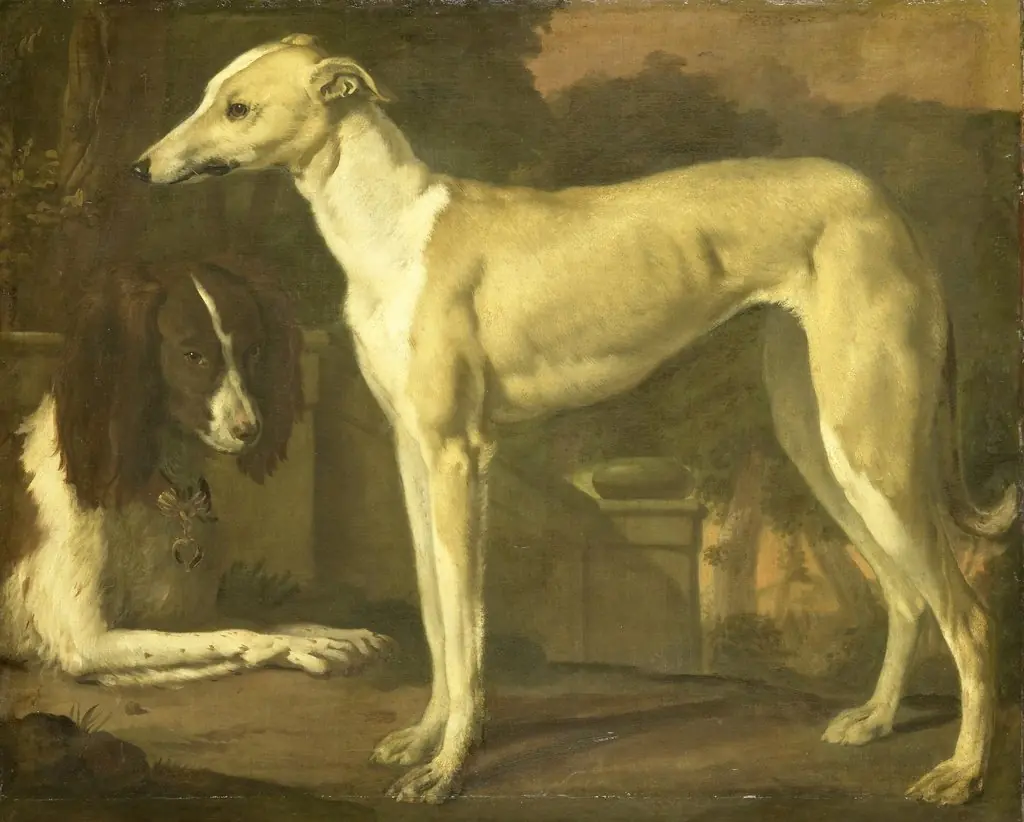 Portrait of a greyhound and a spaniel
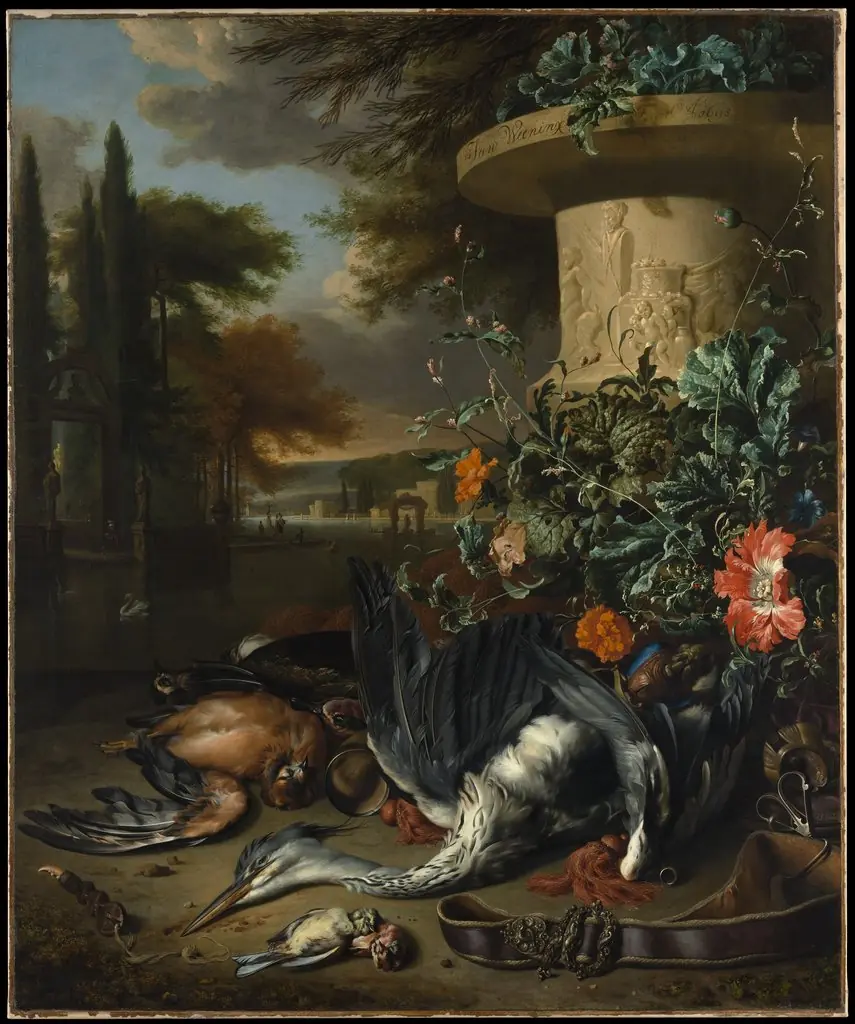 Gamepiece with a Dead Heron ("Falconer's Bag")
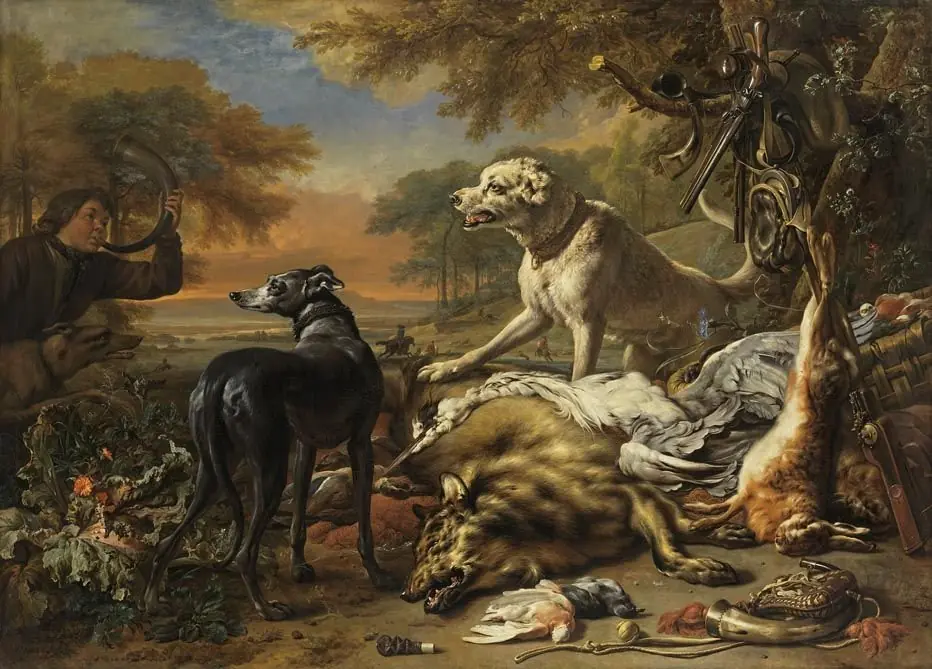 Hunting still life with wolf
- A monkey and a dog beside dead game and fruits, with the estate of Rijxdorp near Wassenaar in the background
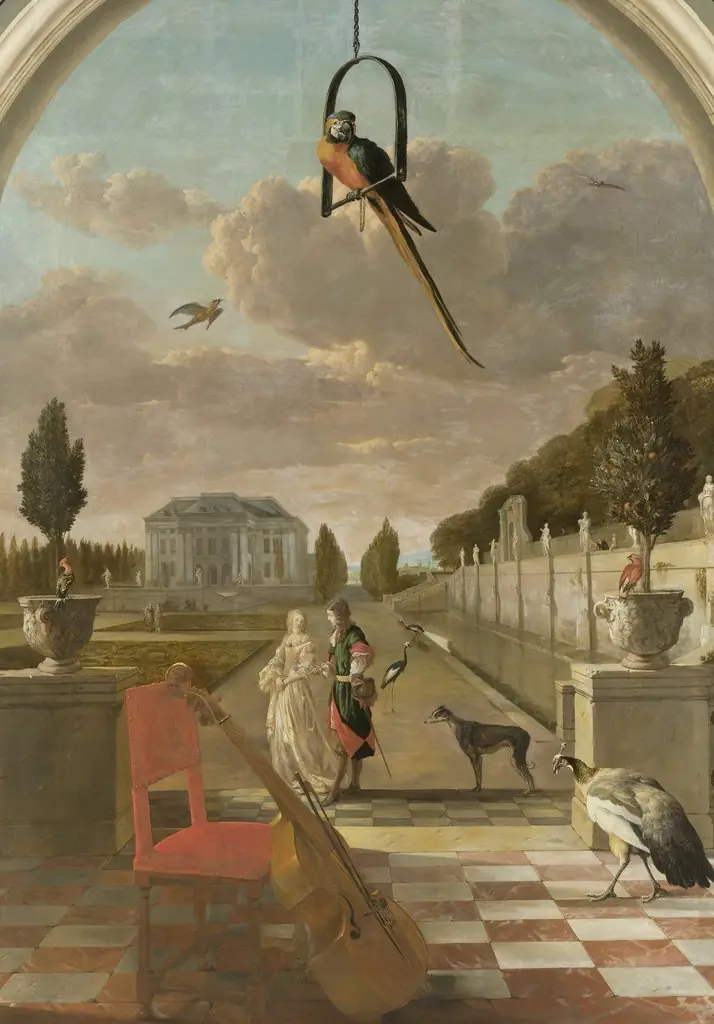 Park with country home
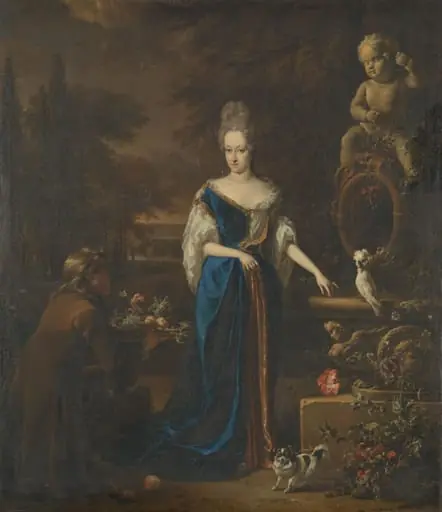 Portrait of Maria Cornelisz, Wife of Silvester van Tongeren
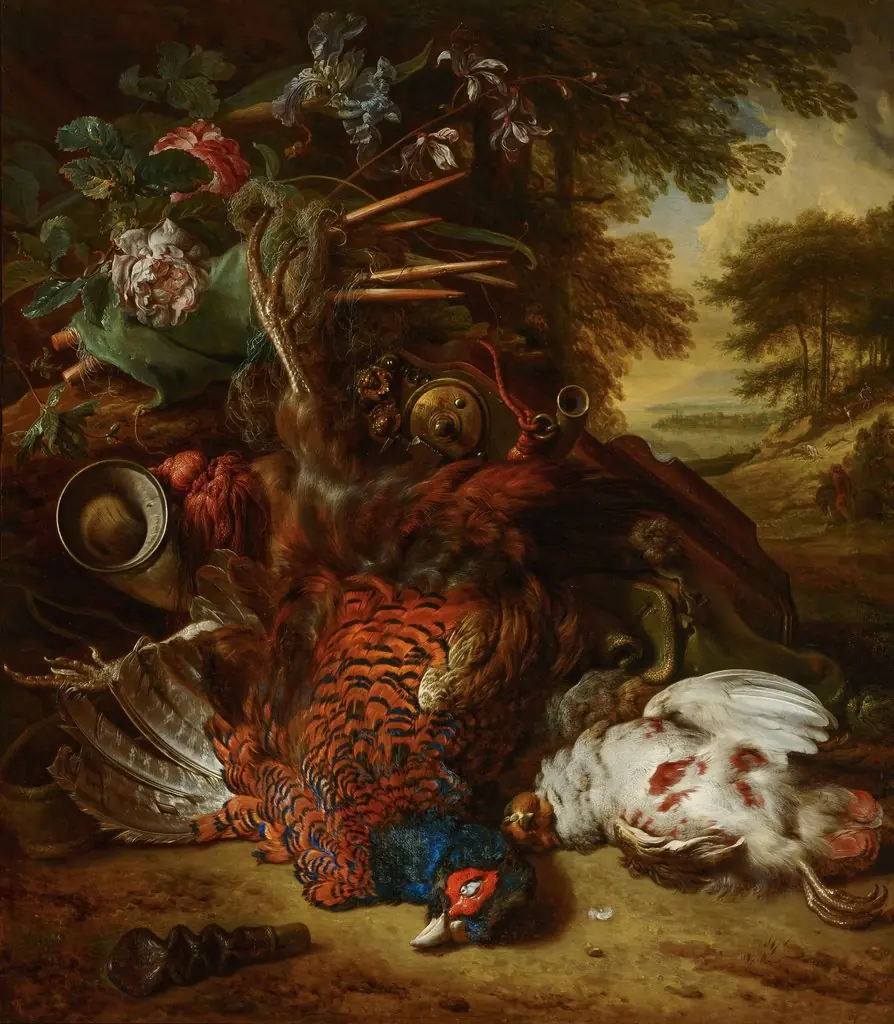 Hunting Still Life