Artwork
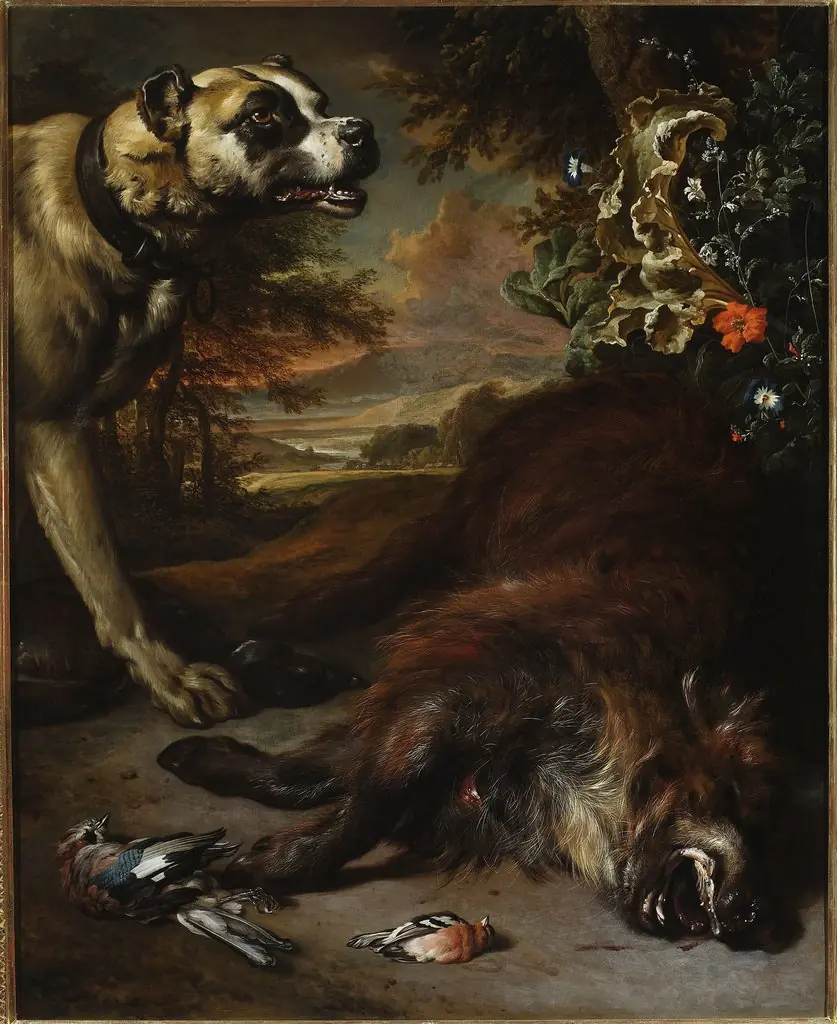
Hunting still life with wolf
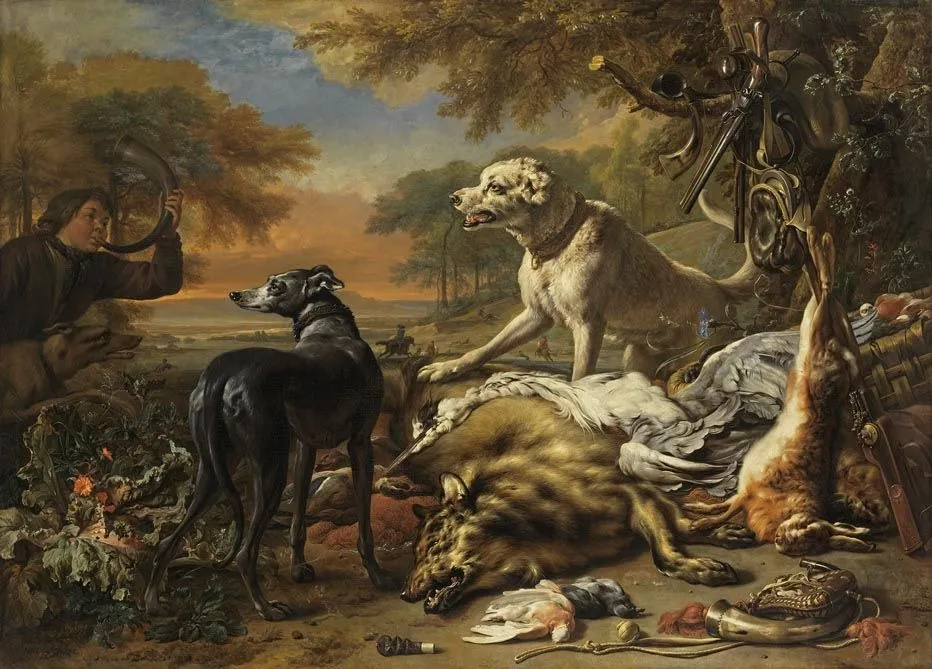
Hunting still life with wolf is an oil painting by the Dutch Golden Age artist Jan Weenix. It dates from 1702 and is held in the collection of the Bavarian State Painting Collections.
About this work
Subject & Meaning
Jan Weenix's 1702 painting presents a hunting still life populated by a wolf (Canis lupus), a hare, a bird, and a dog, arranged as the spoils of a hunt.
Jan Weenix's 1702 painting presents a hunting still life populated by a wolf (Canis lupus), a hare, a bird, and a dog, arranged as the spoils of a hunt. The inclusion of a wolf alongside more conventional quarry such as hare and game birds signals a particular kind of aristocratic chase, the wolf hunt being associated with prestige and danger in early modern European hunting culture. The dog, a traditional companion in such imagery, reinforces the theme of the chase and the cooperation between hunter and hound in bringing down predators and game.
By concentrating on dead animals and hunting accoutrements rather than the act of hunting itself, the composition transforms the violent pursuit into a static display of abundance, celebrating the success and status of the patron while showcasing Weenix's skill in rendering fur, feathers, and flesh.
Technique & Style
Jan Weenix created Hunting still life with wolf in 1702 using oil paint applied to a canvas support. The work measures 180.5 cm in height and 250 cm in width, presenting a substantial scale typical of the genre. As a still life, the painting formally depicts an assembly of hunting spoils, including a wolf, hare, various birds, and a dog.
The composition serves as a detailed record of the hunt, arranged within the framework of the Alte Pinakothek's holdings.
History & Provenance
Jan Weenix executed this hunting still life in 1702 for the collection of Johann Wilhelm von der Pfalz, forming part of the holdings at the Electoral Gallery in Düsseldorf. It subsequently entered the Bavarian State Painting Collections and remains today at the Alte Pinakothek in Munich. The oil-on-canvas work measures 180.5 cm by 250 cm and is classified as a still life within the museum's European Baroque holdings, depicting a wolf, hare, dog, and bird in a hunting scene. No separate accession number is listed in the available documentation.
Overview
Jan Weenix, a Dutch painter active in the early 18th century, created Hunting still life with wolf in 1702. This oil painting depicts a forest clearing after a hunt, featuring various animals and hunting implements. It showcases Weenix's characteristic focus on game still lifes, a genre in which he specialized. The work is currently housed in the collection of the Alte Pinakothek.
Context
Weenix was a notable figure in Dutch art, particularly recognized for his contributions to the still life genre. His work frequently featured elaborate arrangements of dead game and hunting trophies, reflecting a popular taste for such subjects among patrons of the Dutch Golden Age. These compositions often combined elements of landscape and animal painting.
Artist & collection

Artist
Jan Weenix or Joannis Wenix (between 1641/1649 – 19 September 1719 (buried)) was a Dutch painter.

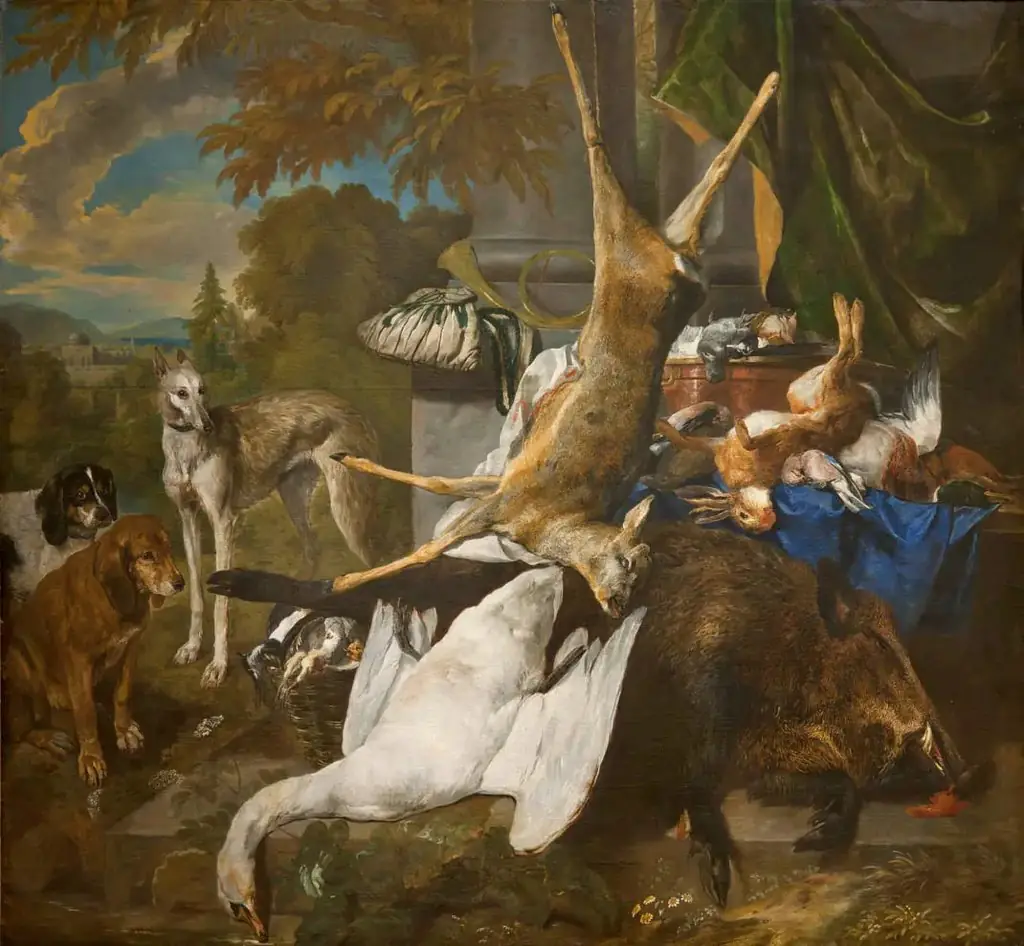
 Still Life with Goose and Game before a Country Estate
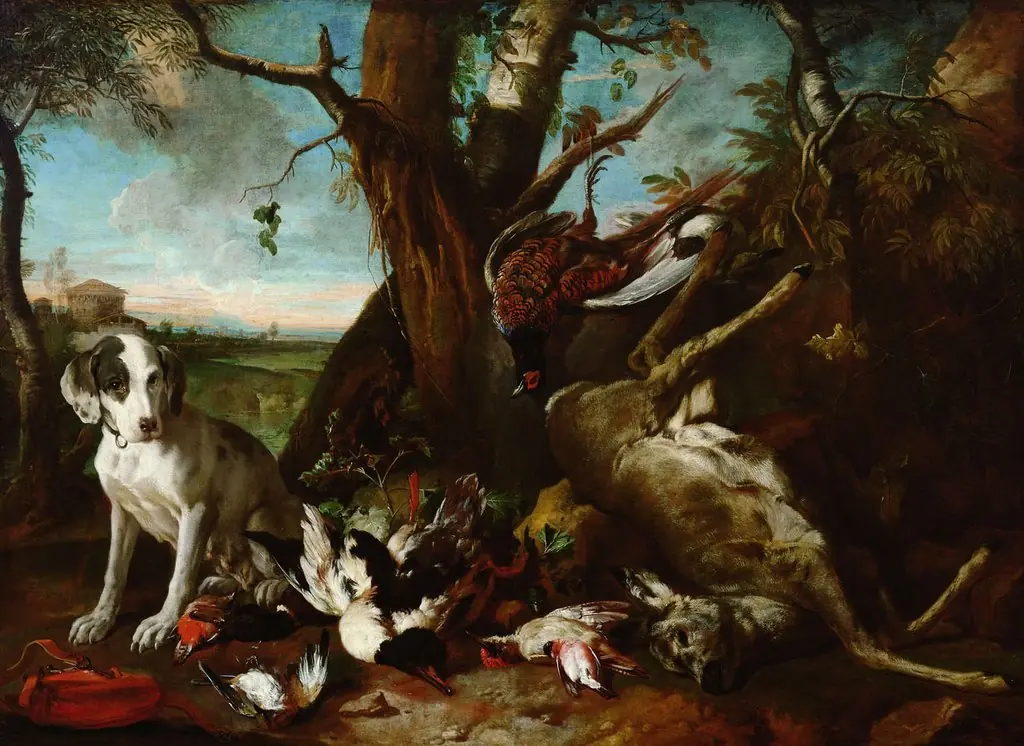
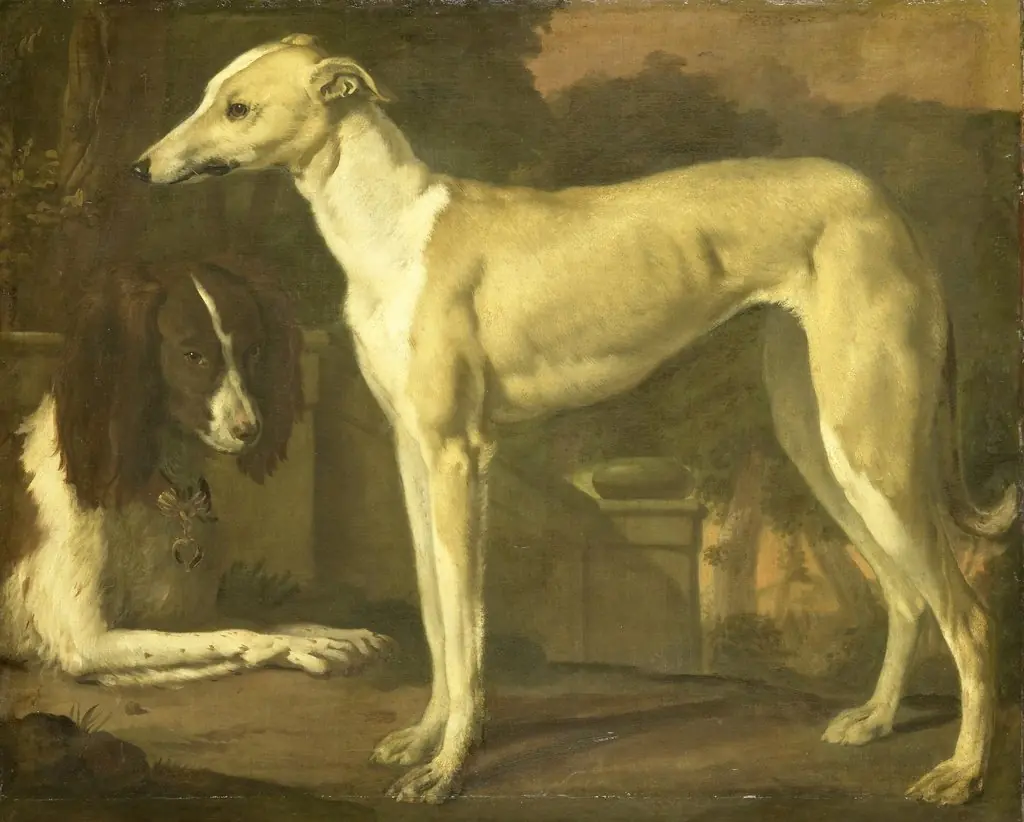 Portrait of a greyhound and a spaniel
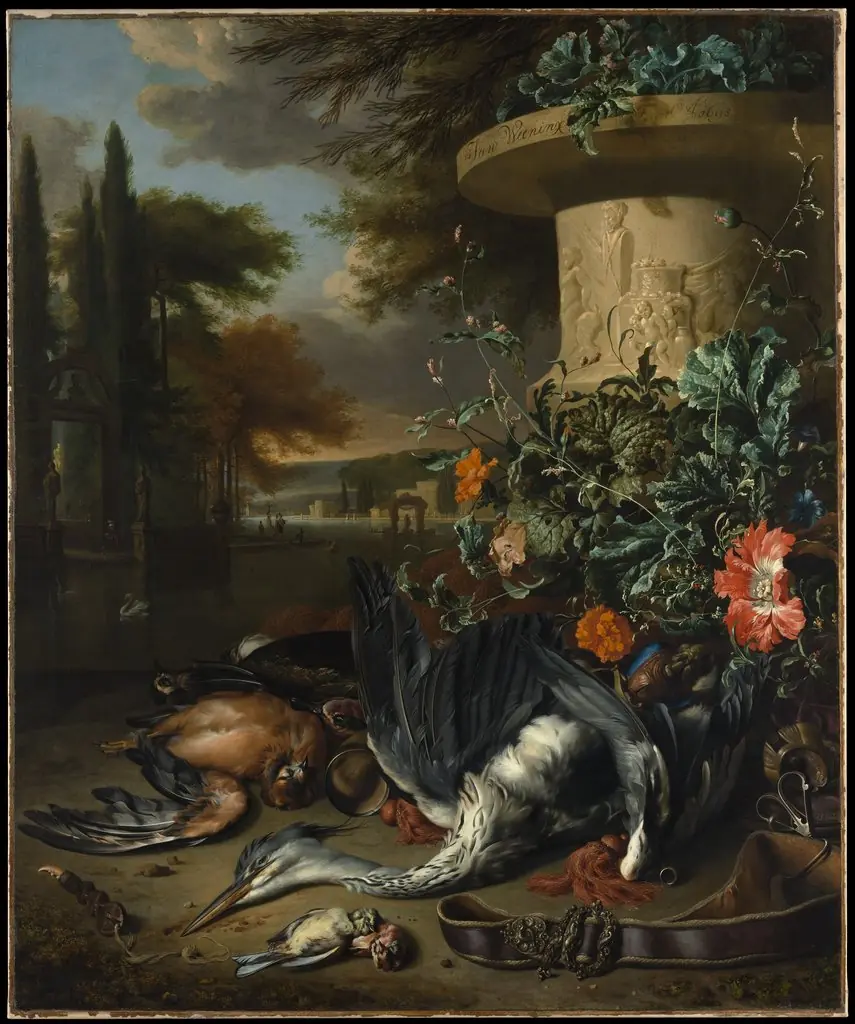 Gamepiece with a Dead Heron ("Falconer's Bag")
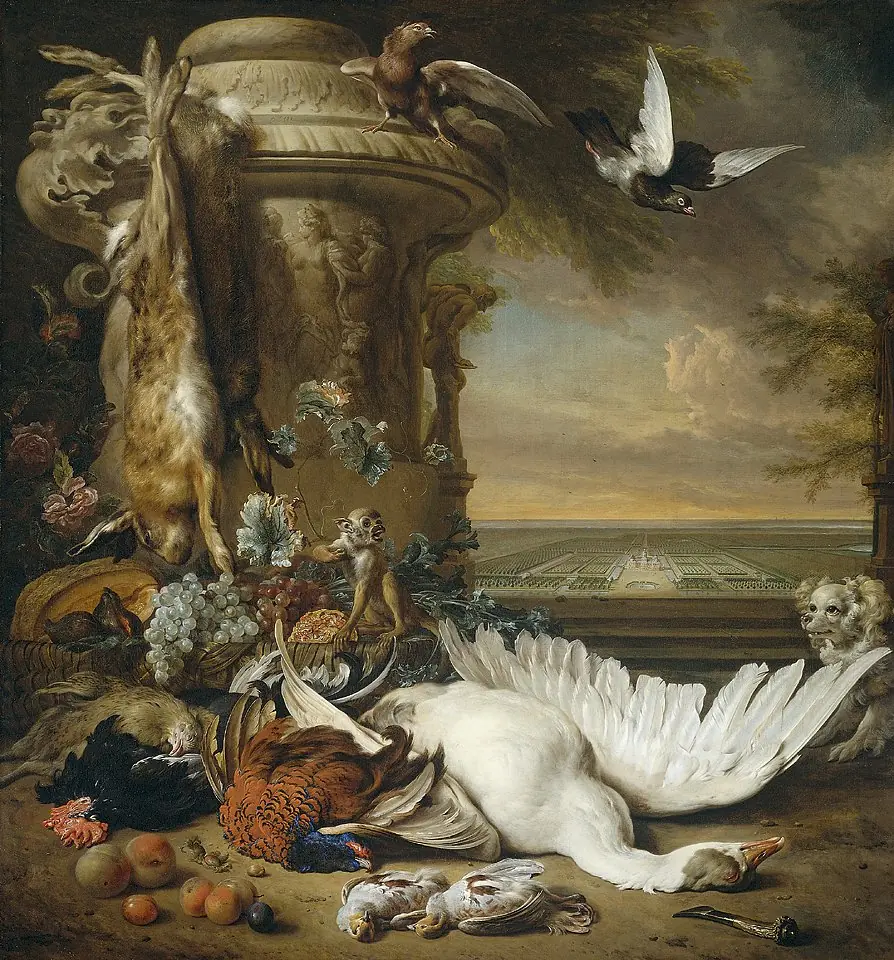 Still Life with Dead Game and Fruit beside a Garden Vase, with a Monkey, a Dog and Two Pigeons; in the Background Rijksdorp near Wassenaar, the Estate of Jonkheer Jacob Emmery, Baron of Wassenaar
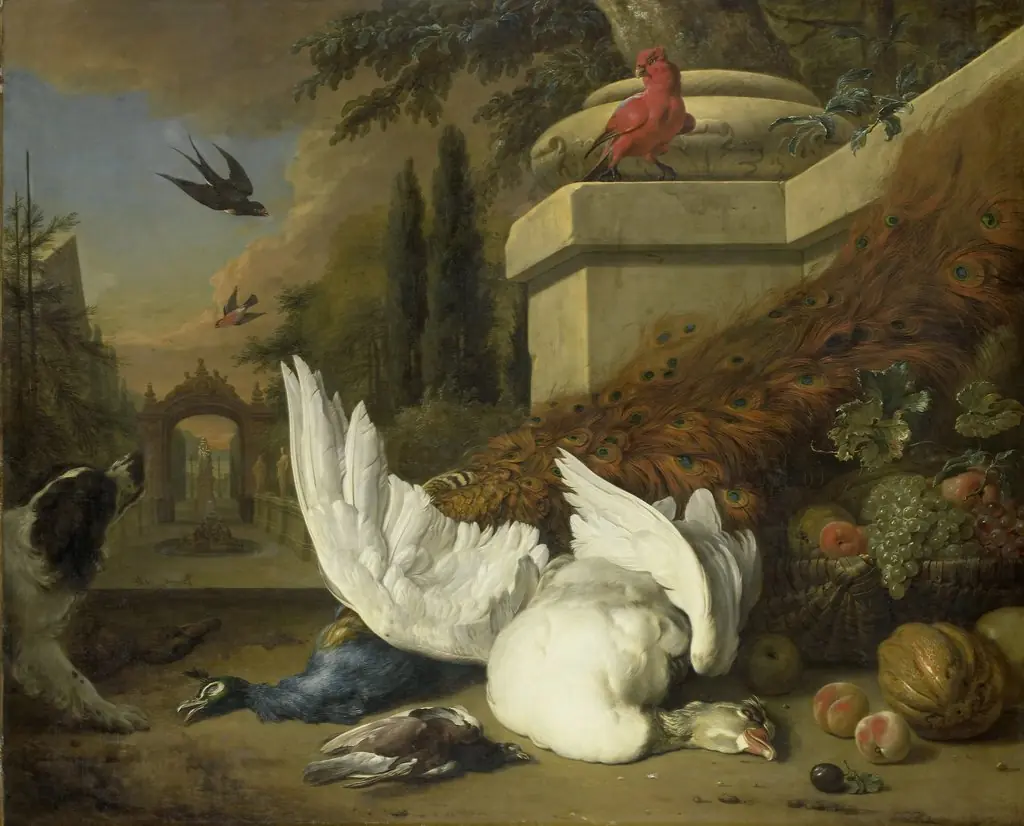 A monkey and a dog beside dead game and fruits, with the estate of Rijxdorp near Wassenaar in the background
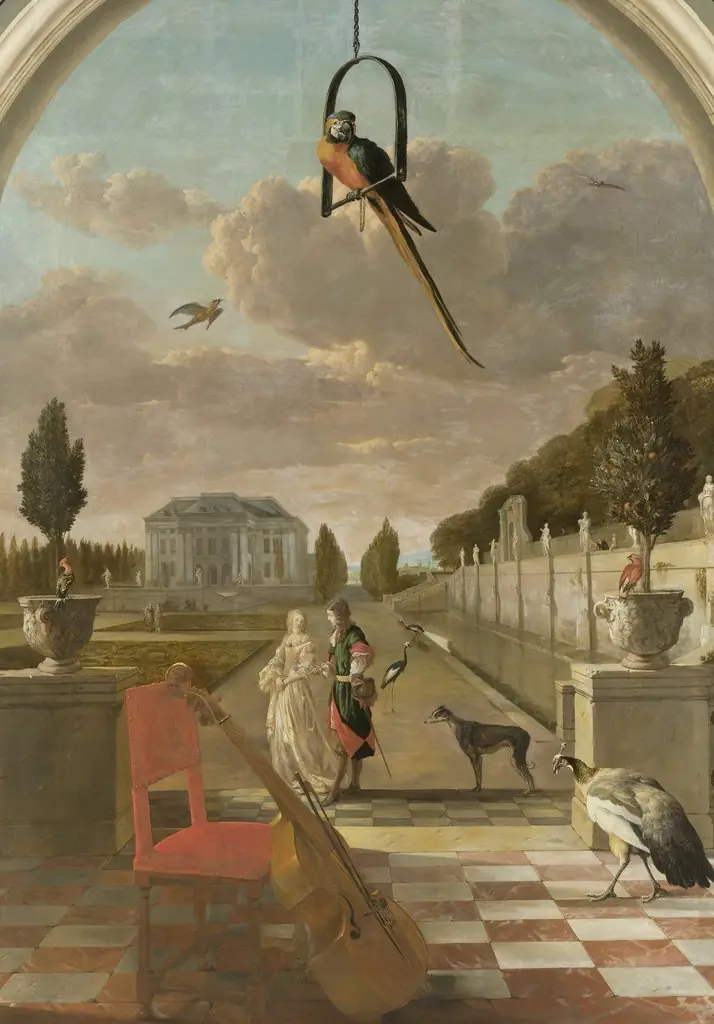 Park with country home
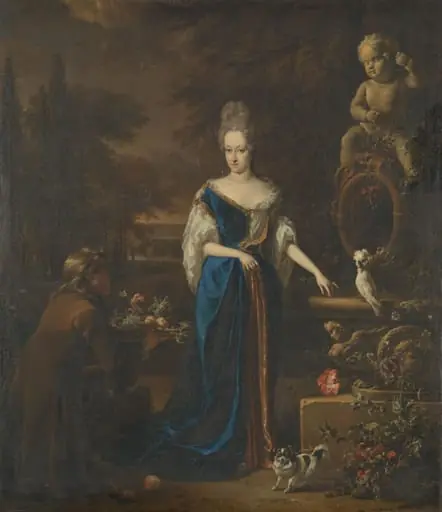 Portrait of Maria Cornelisz, Wife of Silvester van Tongeren
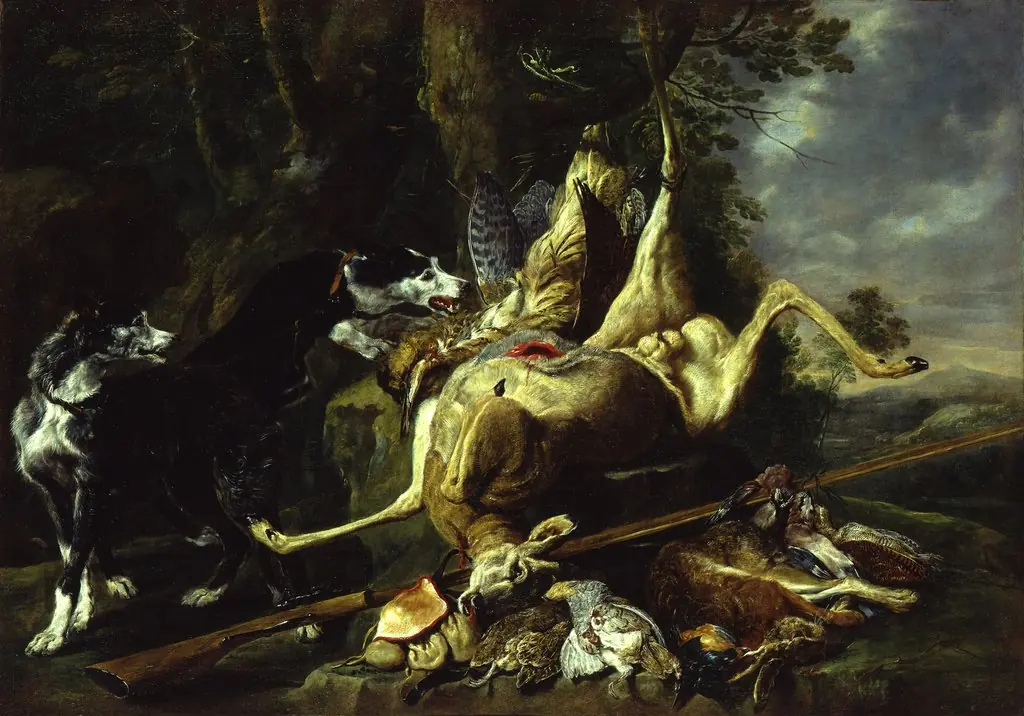
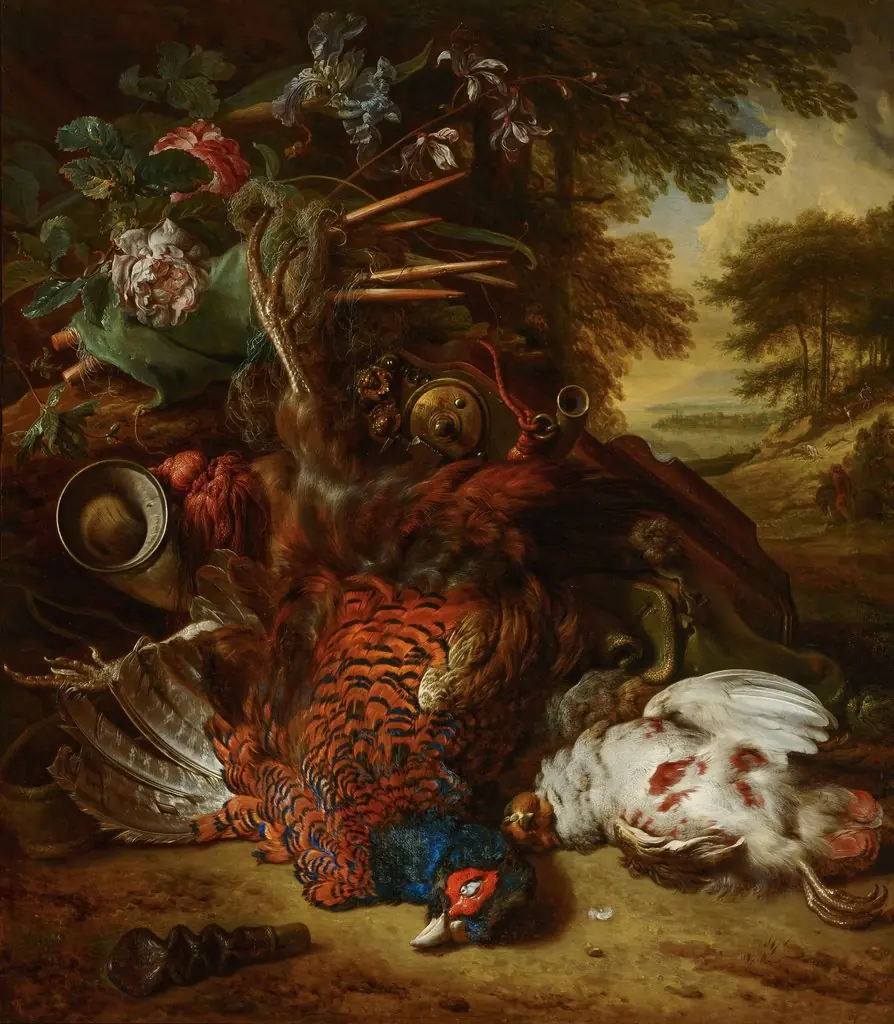 Hunting Still Life