Artwork
Gamepiece with a Dead Heron ("Falconer's Bag")
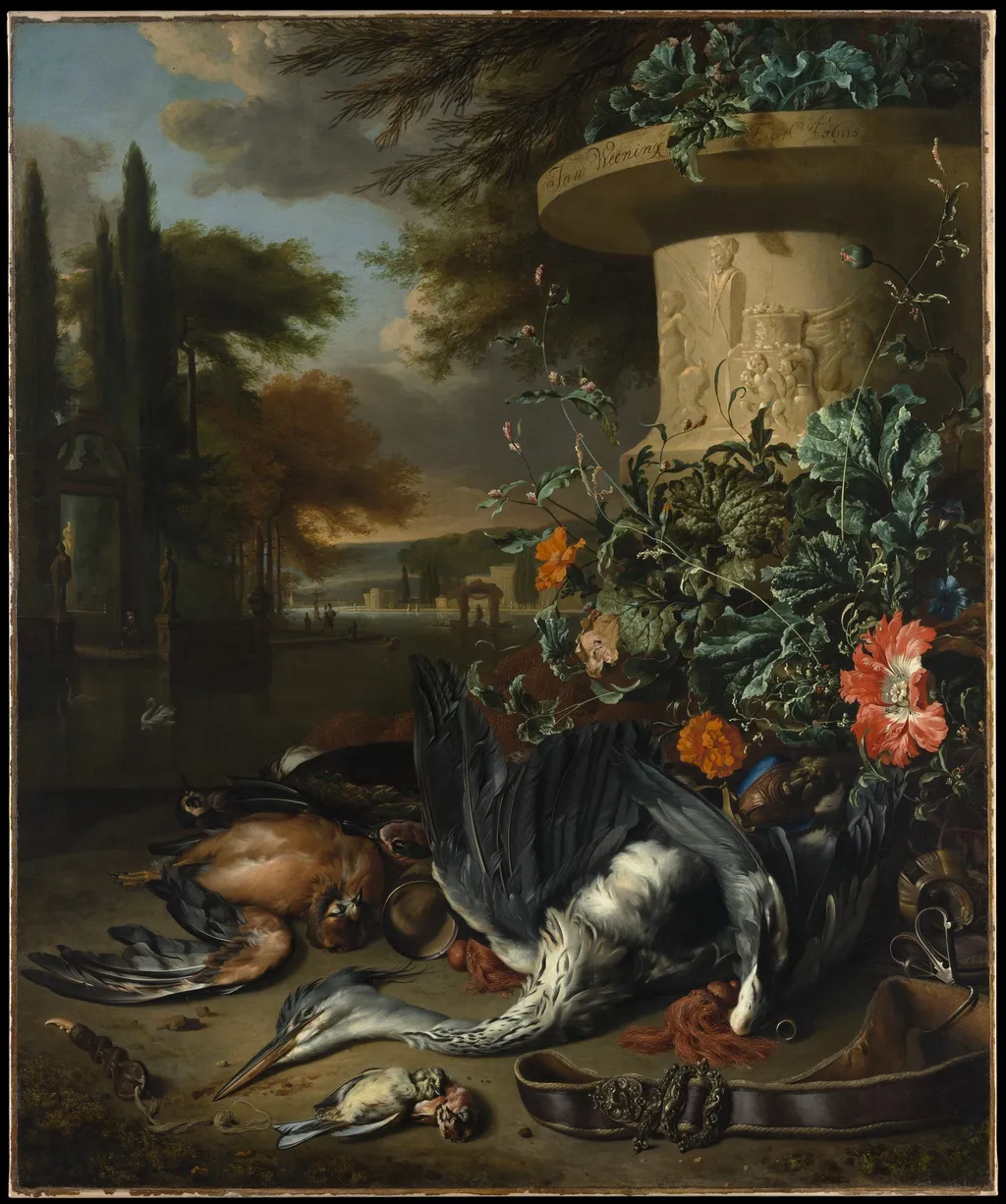
Gamepiece with a Dead Heron ("Falconer's Bag") is an oil painting by the Dutch Golden Age artist Jan Weenix. It dates from 1698 and is held in the collection of the Metropolitan Museum of Art.
About this work
Subject & Meaning
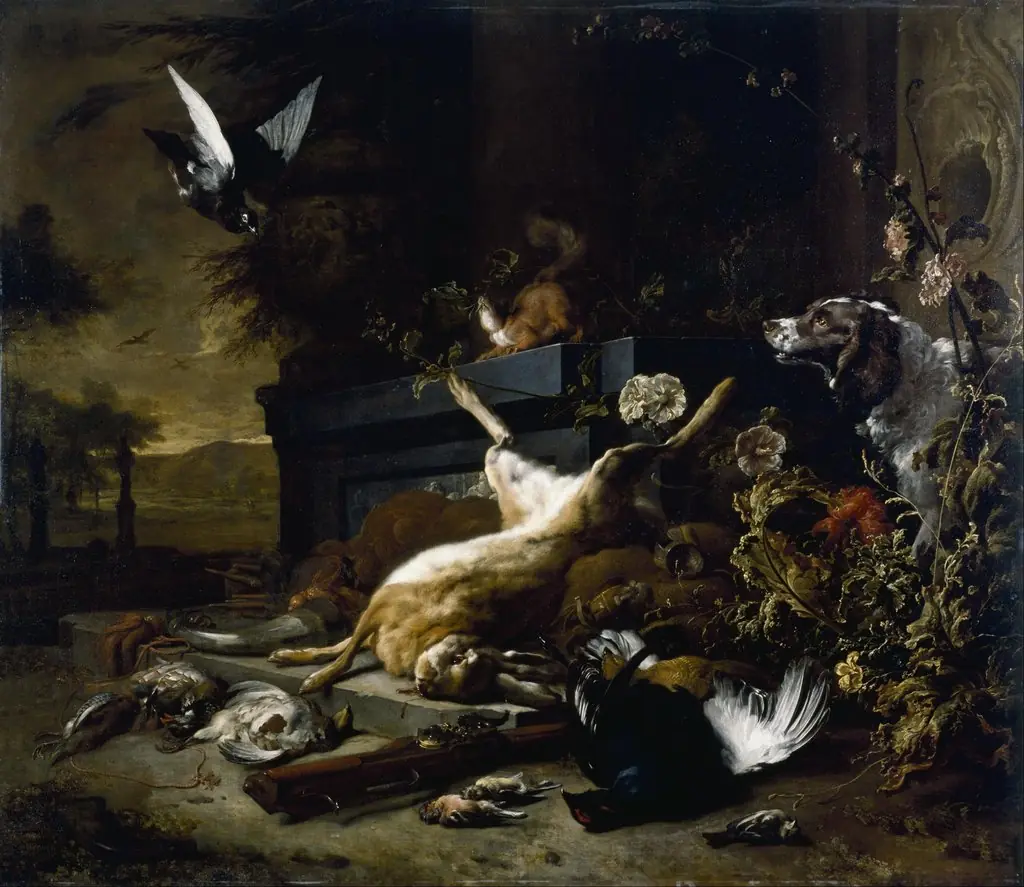
The painting shows a dead heron placed inside a falconer's bag, accompanied by a small flower, combining a realistic bird study with symbolic elements of mortality. The inclusion of a lifeless bird and a floral motif aligns with vanitas traditions that emphasize the transience of life, while the falconer's bag references the practice of hunting and the capture of game. Executed in oil on canvas in 1698, the work exemplifies the Dutch bird-piece genre and uses iconography to convey themes of death and the fleeting nature of existence.
Technique & Style
Jan Weenix employed oil paint to render a detailed composition depicting a dead heron, flowers, and other elements associated with death and falconry.
Created in 1698, Gamepiece with a Dead Heron is an oil painting on a canvas support. The work measures 134 cm in height and 111.1 cm in width. Jan Weenix employed oil paint to render a detailed composition depicting a dead heron, flowers, and other elements associated with death and falconry.
The formal qualities of the piece are defined by its realistic depiction of natural subjects, characteristic of the artist's approach to gamepieces. The medium allows for the textural nuances required to portray the plumage of the bird and the organic forms of the accompanying flora. The painting is held in the Metropolitan Museum of Art.
History & Provenance
Jan Weenix created the oil-on-canvas painting Gamepiece with a Dead Heron (also known as Falconer's Bag) in 1698. The work measures 134 cm in height and 111.1 cm in width and is currently held in the collection of the Metropolitan Museum of Art. While the specific circumstances of its original commission and the detailed chain of ownership prior to its museum acquisition are not recorded in the available sources, its creation is firmly dated to the close of the seventeenth century.
The painting depicts themes of death through its representation of birds and flowers, characteristic of Weenix's gamepiece genre. No accession number or exhibition history is documented in the available sources.
Legacy
Gamepiece with a Dead Heron (Falconer's Bag) is an oil-on-canvas painting by Jan Weenix dated 1698, documented as a bird still-life in Dutch Golden Age art. The work portrays a heron that has just been killed, emphasizing themes of mortality and the fleeting nature of life. It entered the collection of the Metropolitan Museum of Art, where it is studied as a representative example of Weenix's fascination with dead game birds. Its presence in a major museum underscores its continued relevance in scholarship on seventeenth-century animal painting.
Overview
Jan Weenix, a Dutch painter active during the Dutch Golden Age, created Gamepiece with a Dead Heron ("Falconer's Bag") in 1698. This oil painting exemplifies the artist's specialization in still lifes featuring hunting trophies. The work is currently part of the collection at The Metropolitan Museum of Art, showcasing a characteristic example of the genre popular in the late 17th century.
Context
Jan Weenix received his artistic training within the Dutch Republic, learning from his father and cousin. He became particularly recognized for his contributions to the genre of gamepieces and hunting scenes. This painting reflects his established practice of composing still lifes that combine dead birds with botanical elements, a popular subject during the Dutch Golden Age that allowed for both detailed observation and symbolic arrangements.
Own this work as a print
Artist & collection

Artist
Jan Weenix or Joannis Wenix (between 1641/1649 – 19 September 1719 (buried)) was a Dutch painter.

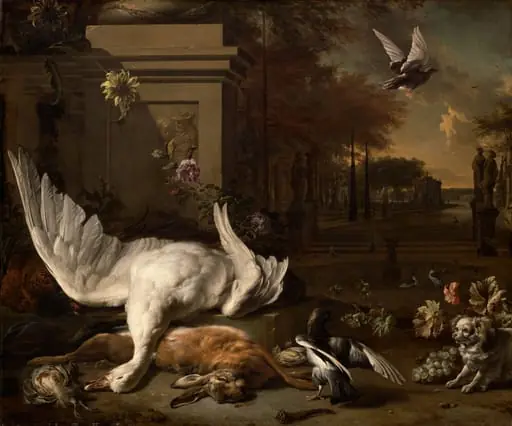 Still Life with Goose and Game before a Country Estate
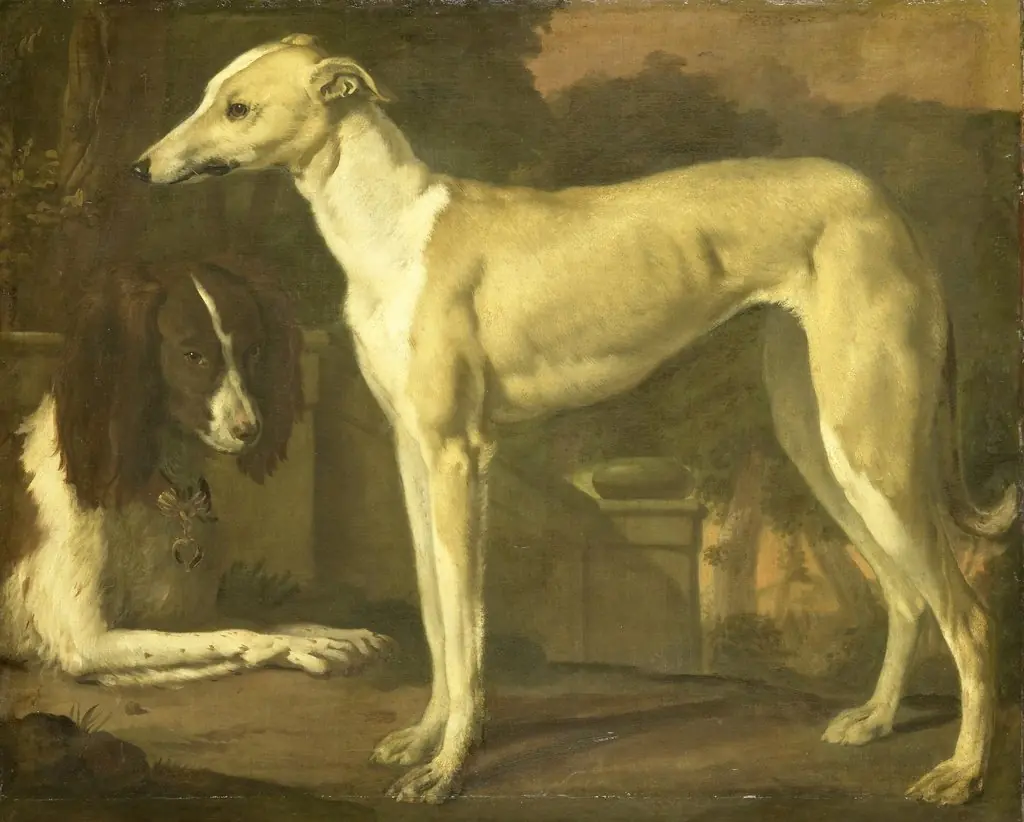 Portrait of a greyhound and a spaniel
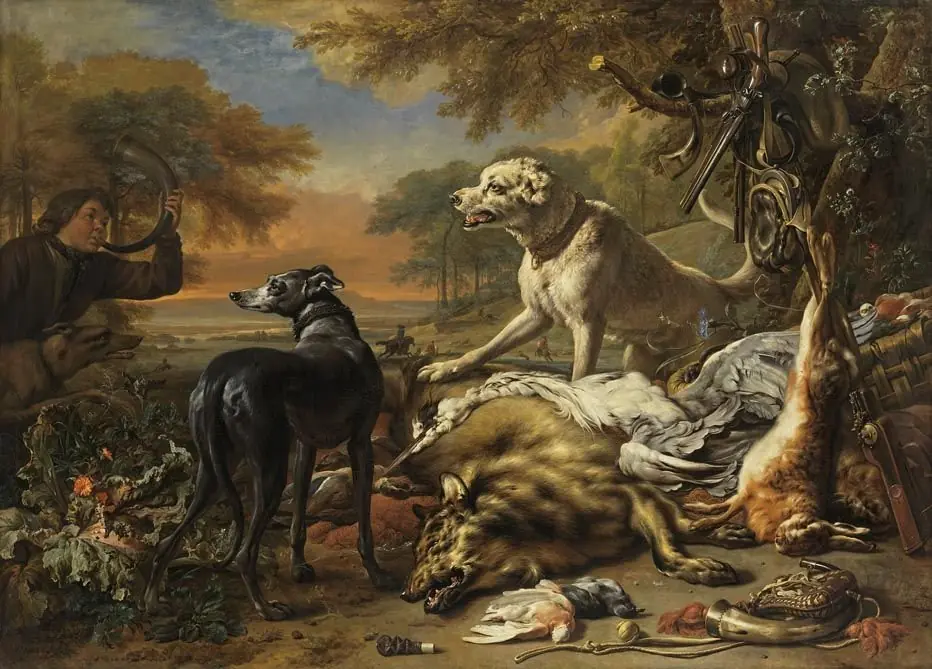 Hunting still life with wolf
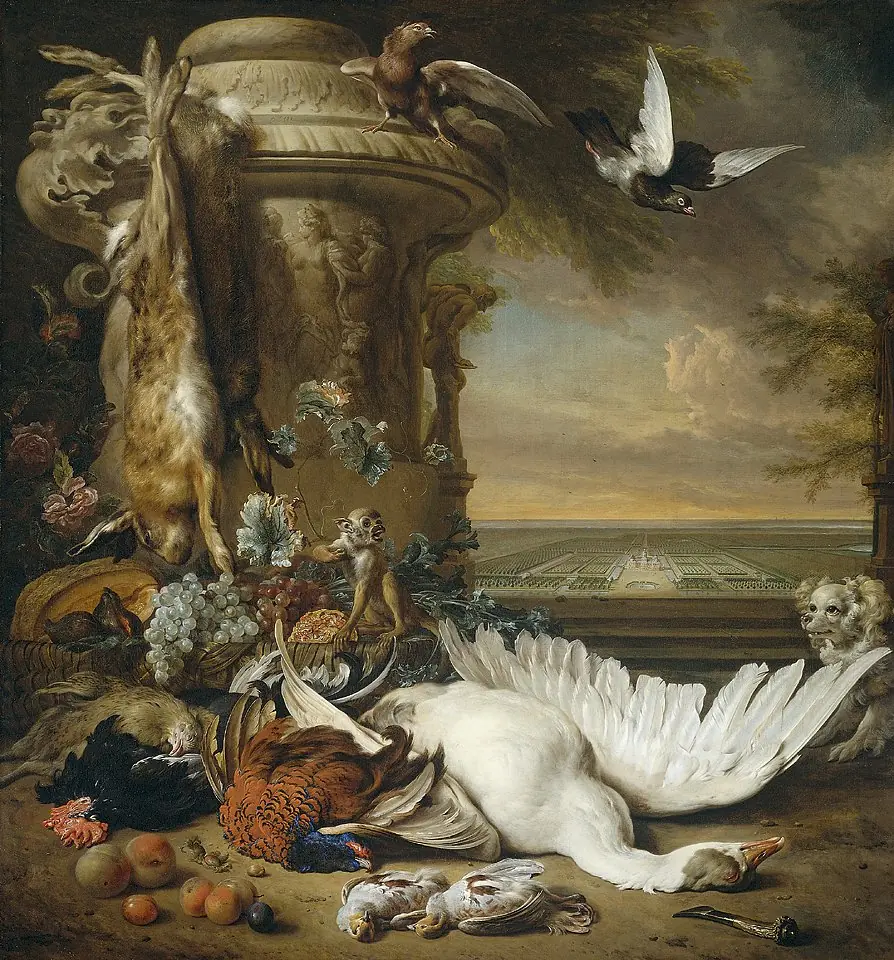 Still Life with Dead Game and Fruit beside a Garden Vase, with a Monkey, a Dog and Two Pigeons; in the Background Rijksdorp near Wassenaar, the Estate of Jonkheer Jacob Emmery, Baron of Wassenaar
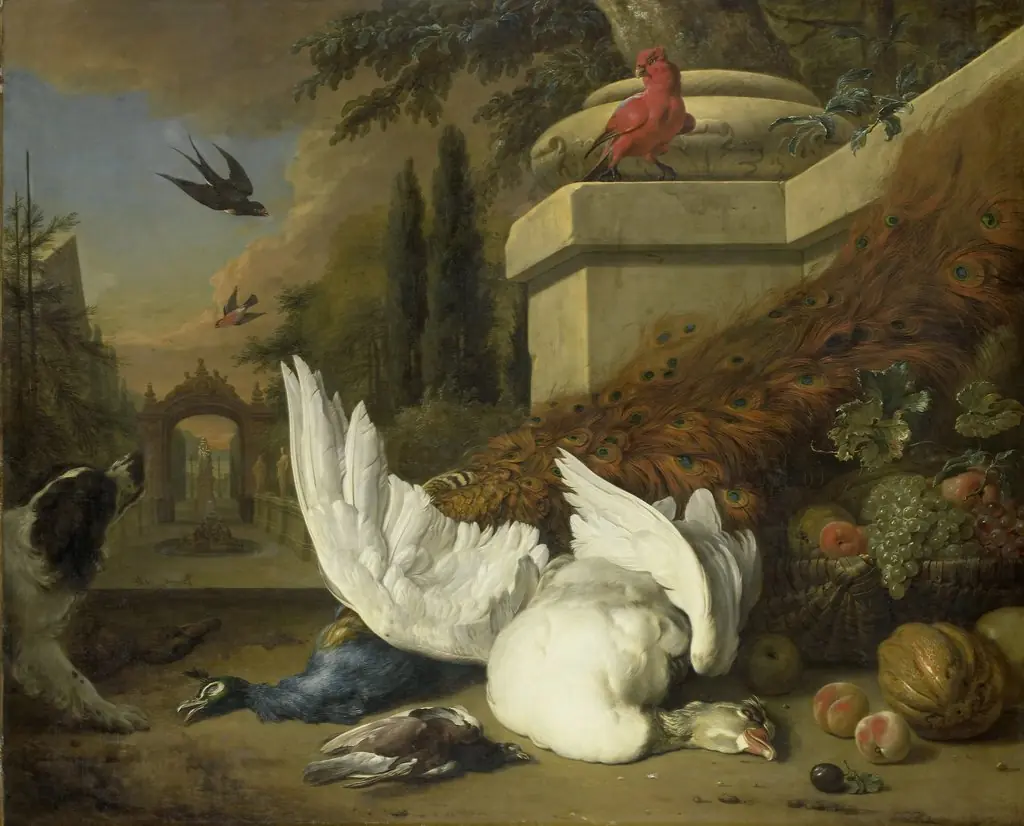 A monkey and a dog beside dead game and fruits, with the estate of Rijxdorp near Wassenaar in the background
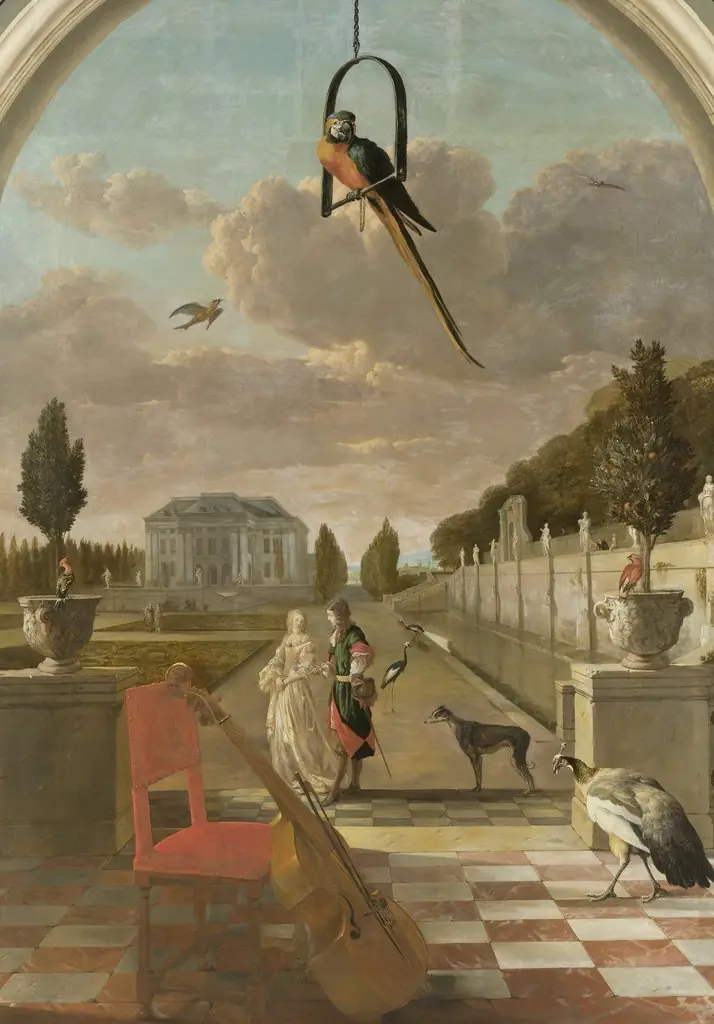 Park with country home
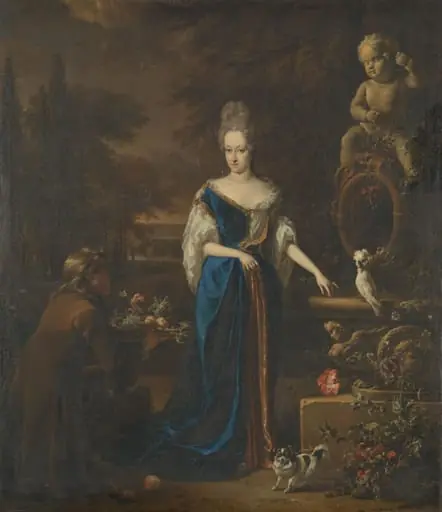 Portrait of Maria Cornelisz, Wife of Silvester van Tongeren
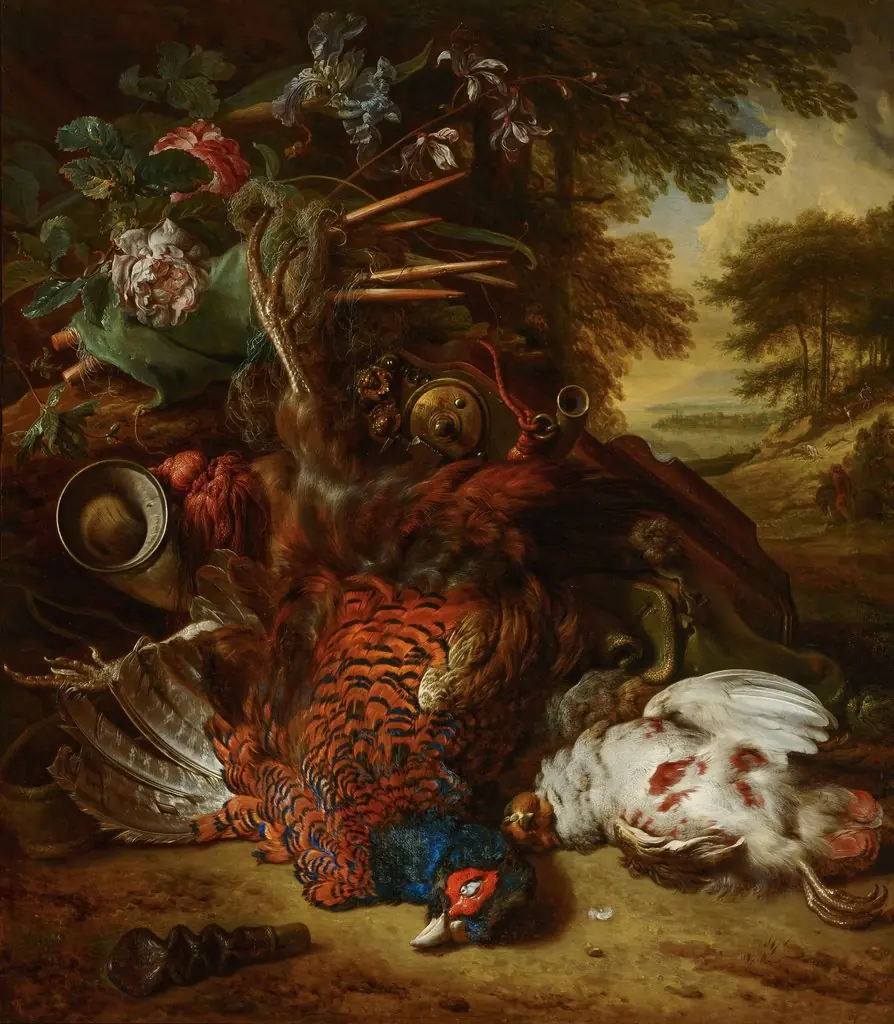 Hunting Still Life