Artwork
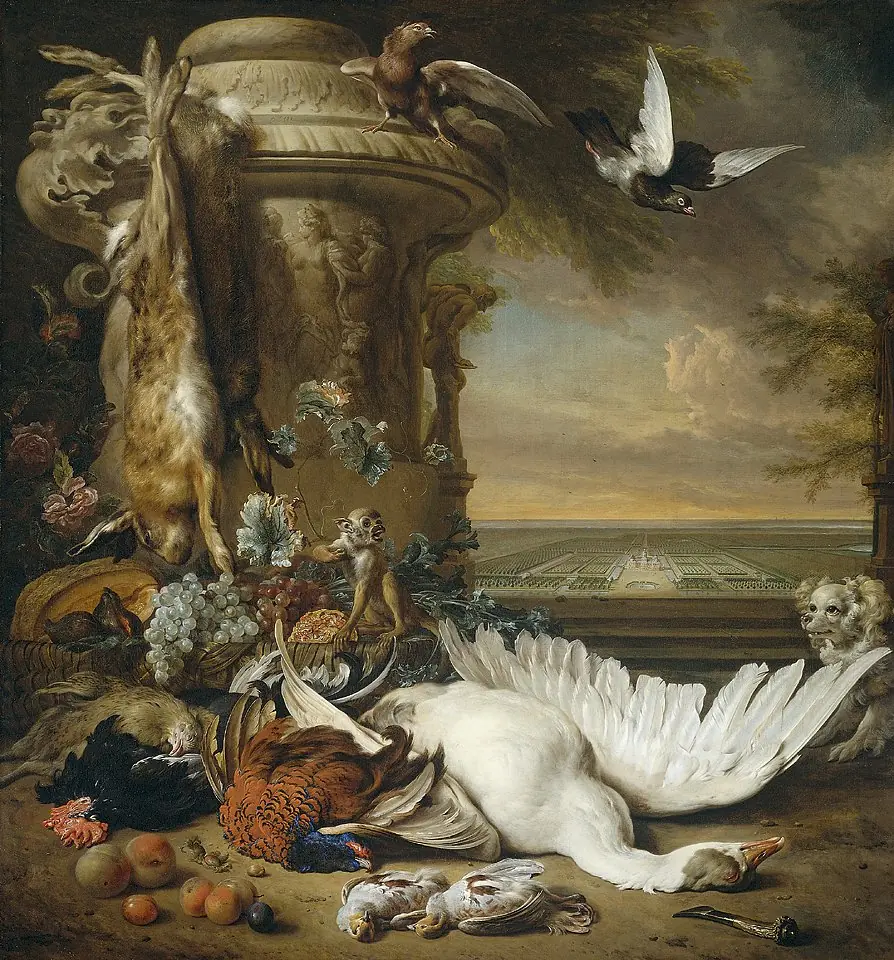
A monkey and a dog beside dead game and fruits, with the estate of Rijxdorp near Wassenaar in the background
A monkey and a dog beside dead game and fruits, with the estate of Rijxdorp near Wassenaar in the background is an oil painting by the Dutch Golden Age artist Jan Weenix. It dates from 1700 and is held in the collection of the Rijksmuseum.
About this work
Subject & Meaning
This work combines animal figures with hunted birds and produce, characteristic of the still-life genre practiced by Jan Weenix.
The painting depicts a still life arrangement featuring a monkey and a dog positioned beside dead game and various fruits. In the background, the composition includes a view of the estate of Rijxdorp near Wassenaar. This work combines animal figures with hunted birds and produce, characteristic of the still-life genre practiced by Jan Weenix.
The inclusion of the specific estate suggests a connection to a particular location or patron, while the juxtaposition of living animals with dead game and fruit creates a traditional vanitas theme, though the sources do not explicitly detail further symbolic interpretations.
Technique & Style
Executed in 1700, this work is an oil painting on canvas by Jan Weenix. The piece functions as a still life, depicting a composition of dead game, fruits, a monkey, and a dog, with the estate of Rijxdorp near Wassenaar visible in the background. The handling of the medium combines detailed rendering of animal fur and organic textures with a broader treatment of the landscape elements.
Measuring 139 cm in height and 170 cm in width, the large-scale support allows for a complex arrangement of figures within a spacious setting.
History & Provenance
The work was created in 1700 by Jan Weenix as an oil painting on canvas. It entered the collection of Adriaan van der Hoop and later became part of the holdings of the Rijksmuseum and the Amsterdam Museum. The composition shows a monkey and a dog beside dead game and fruit, with the estate of Rijxdorp near Wassenaar in the background.
The painting is held by the Rijksmuseum in Amsterdam. According to the available records, it forms part of the collection Adriaan van der Hoop, indicating its provenance through that distinguished Dutch private collection before entering the museum's holdings. No specific inventory or accession number is documented in the provided sources, and no exhibition history is recorded.
Legacy
The painting influenced later Dutch still-life artists who incorporated fauna and flora in compositions as allegorical symbols of transience. Its composition informed 19th-century Dutch genre painters who adopted similar juxtapositions of wildlife and bounty. The work remained in the Adriaan van der Hoop collection and was displayed at the Rijksmuseum and Amsterdam Museum.
The piece is part of the still-life genre with wildlife elements.
The painting is attributed to Jan Weenix and is classified as a still-life work.
Overview
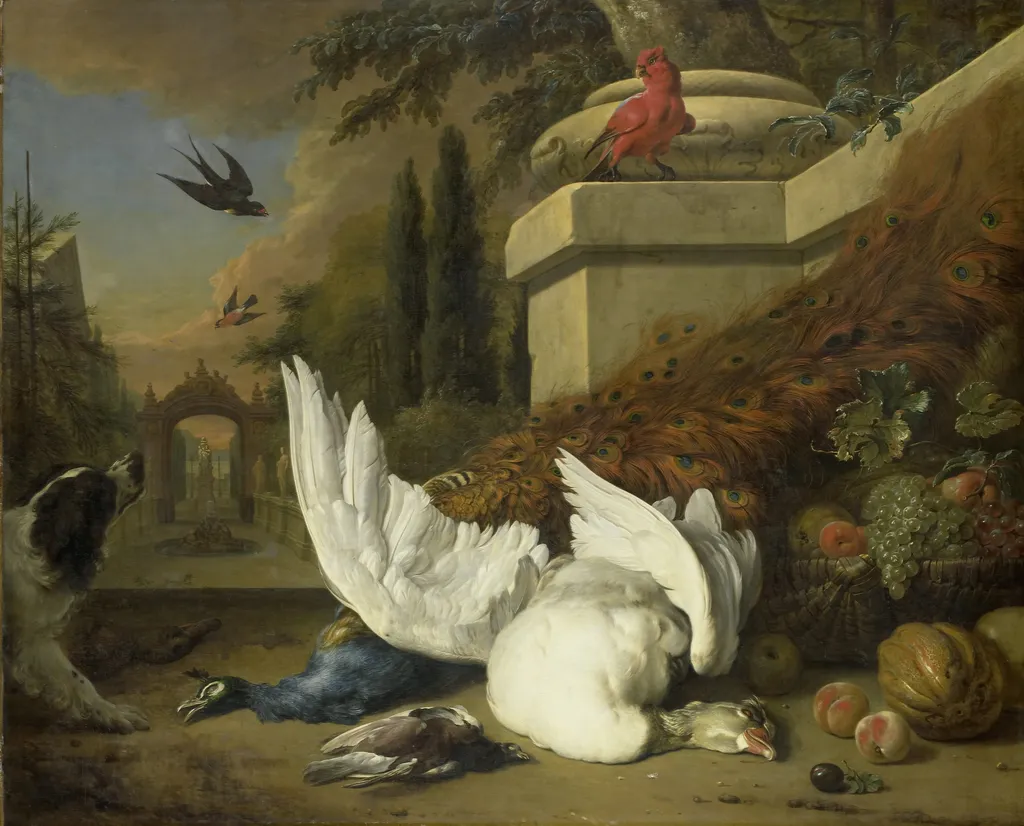
Created in 1700, this oil painting by Jan Weenix combines a still‑life arrangement with a landscape view of the Rijxdorp estate near Wassenaar. The composition centers on a dead peacock, a perched red bird, a curious monkey on a stone plinth, and a dog, surrounded by scattered apples, pears, and other game. In the distance, trees and a modest building suggest a country manor.
Context
The piece belongs to a broader Dutch tradition of lavish still‑life and hunting tableaux that celebrated wealth, domestic abundance, and the skill of the artist in rendering material detail. Such works often served as status symbols for affluent patrons who owned country estates like Rijxdorp, linking the painting’s background to its intended audience.
Own this work as a print
Artist & collection

Artist
Jan Weenix or Joannis Wenix (between 1641/1649 – 19 September 1719 (buried)) was a Dutch painter.

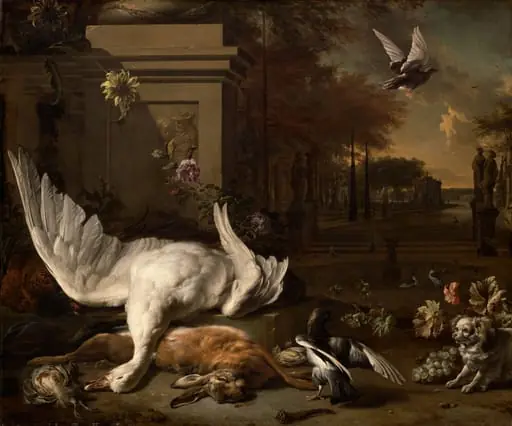 Still Life with Goose and Game before a Country Estate
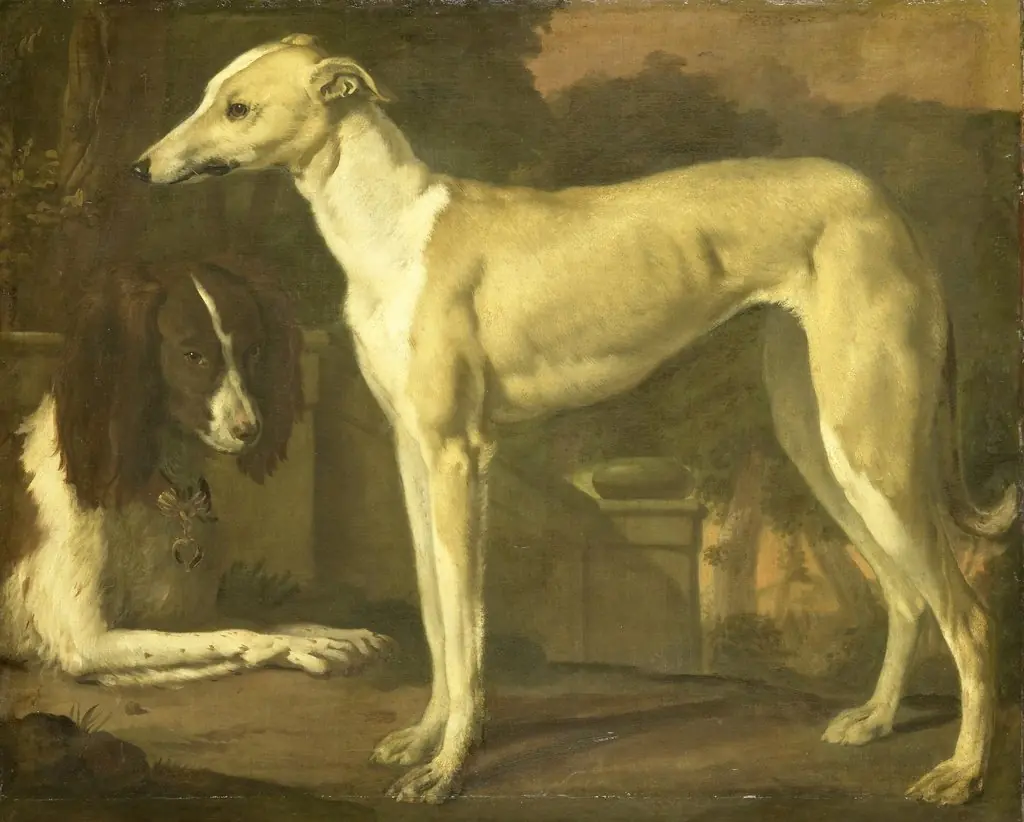 Portrait of a greyhound and a spaniel
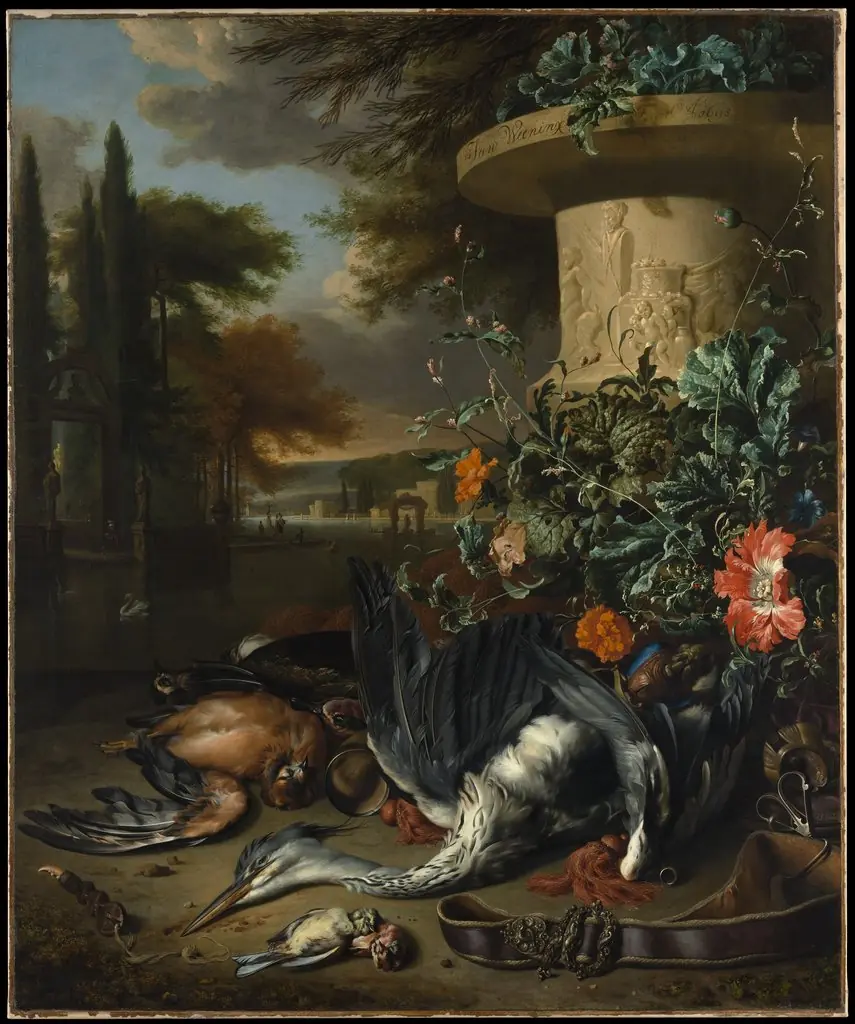 Gamepiece with a Dead Heron ("Falconer's Bag")
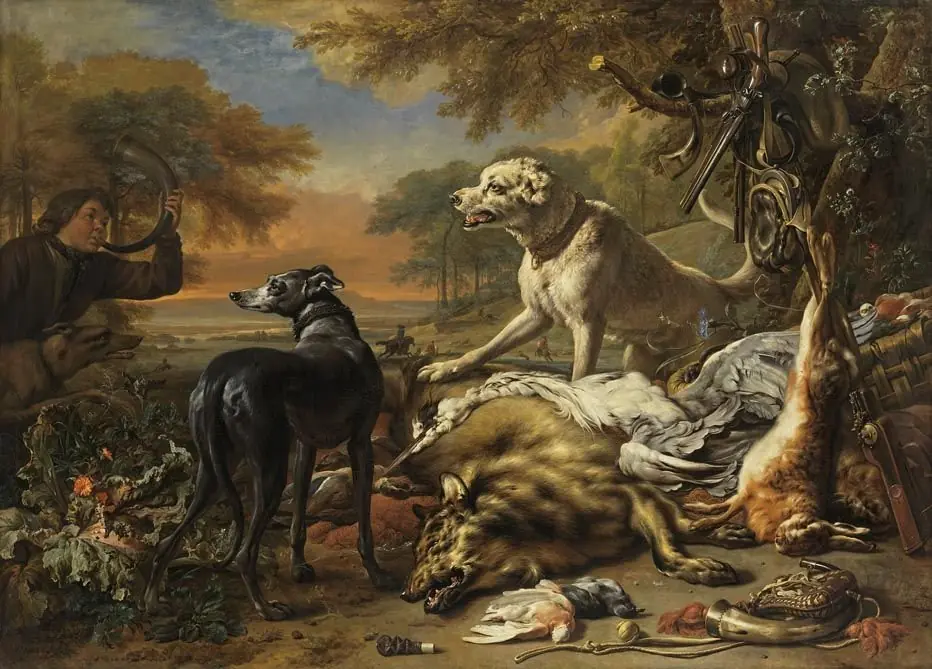 Hunting still life with wolf
- Still Life with Dead Game and Fruit beside a Garden Vase, with a Monkey, a Dog and Two Pigeons; in the Background Rijksdorp near Wassenaar, the Estate of Jonkheer Jacob Emmery, Baron of Wassenaar
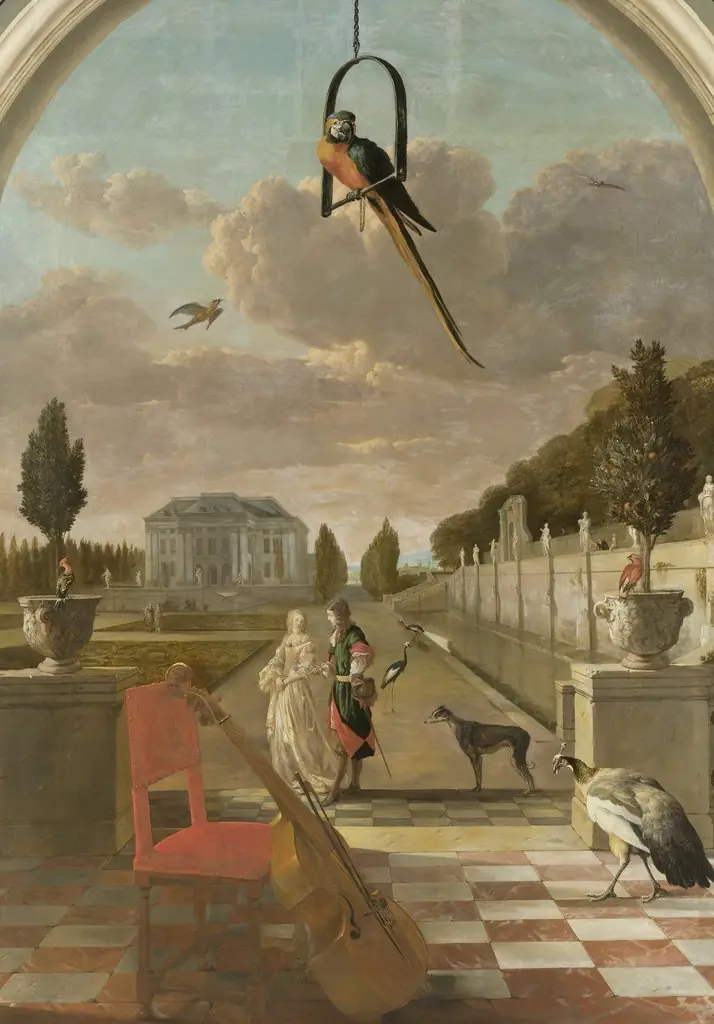 Park with country home
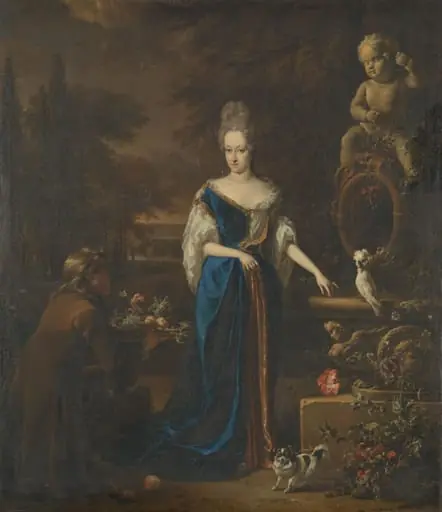 Portrait of Maria Cornelisz, Wife of Silvester van Tongeren
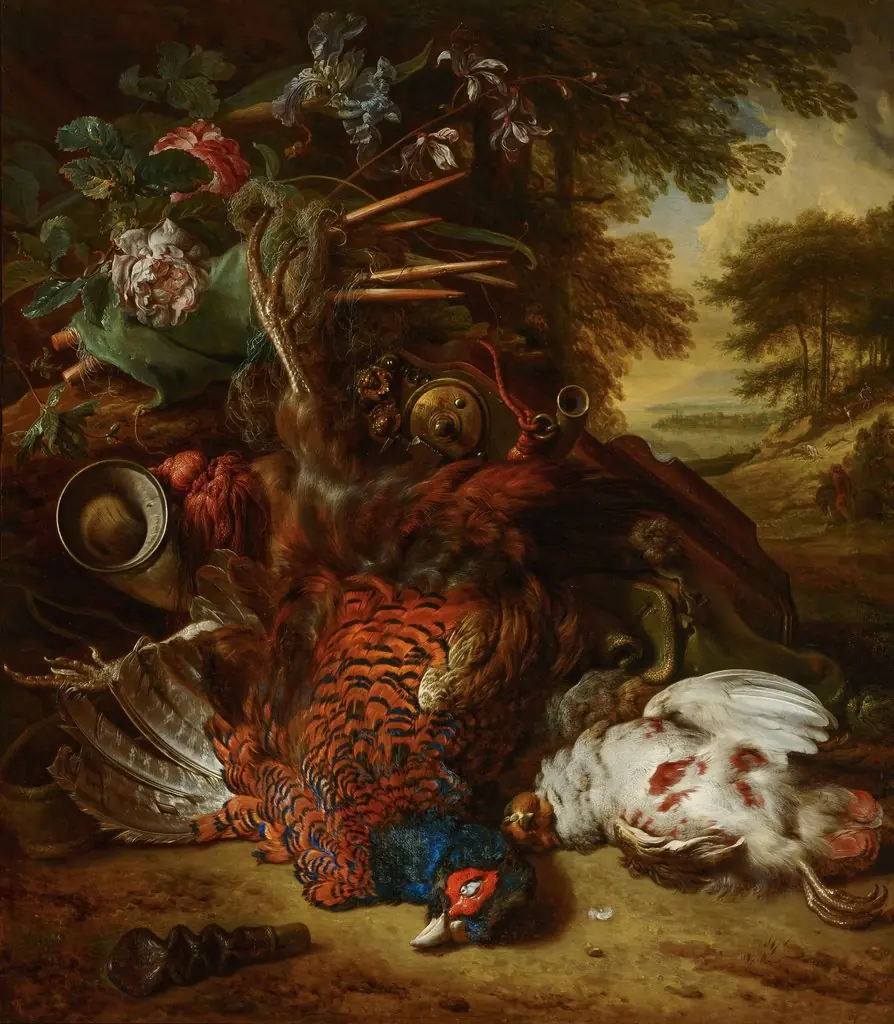 Hunting Still Life
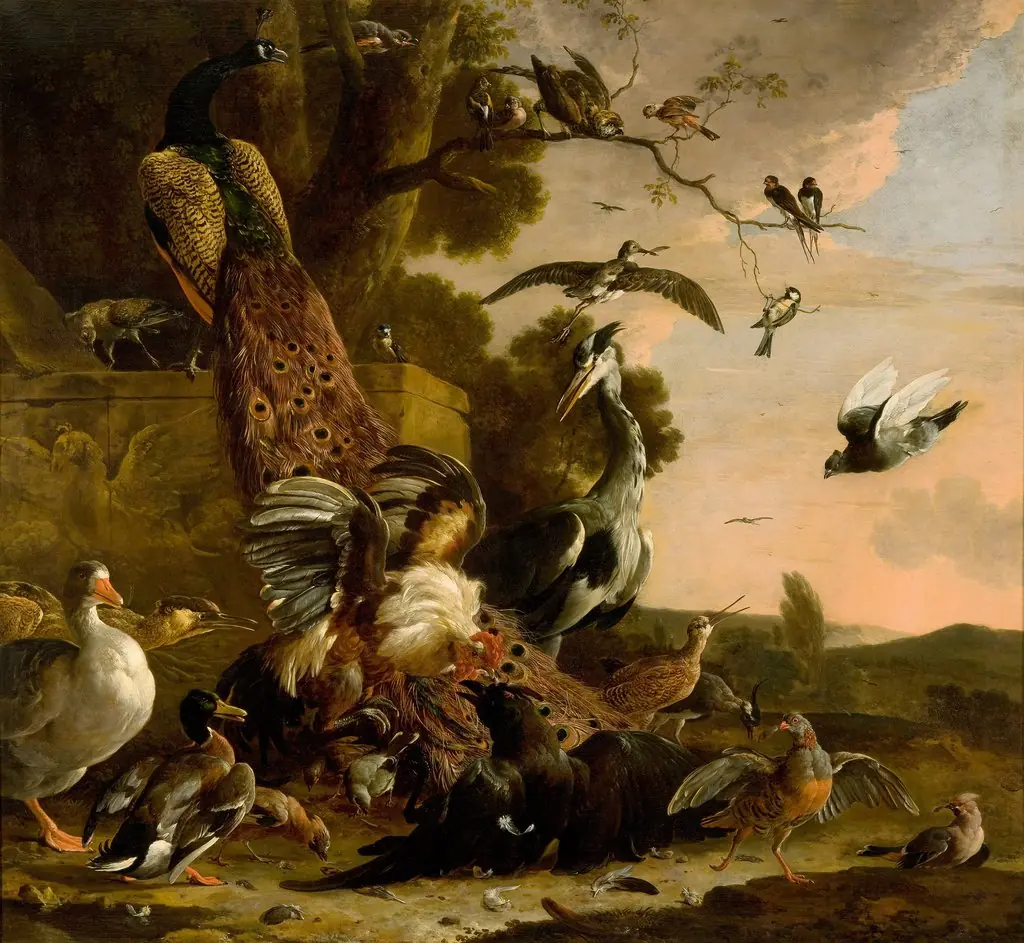 The Raven Robbed of the Feathers He Wore to Adorn Himself
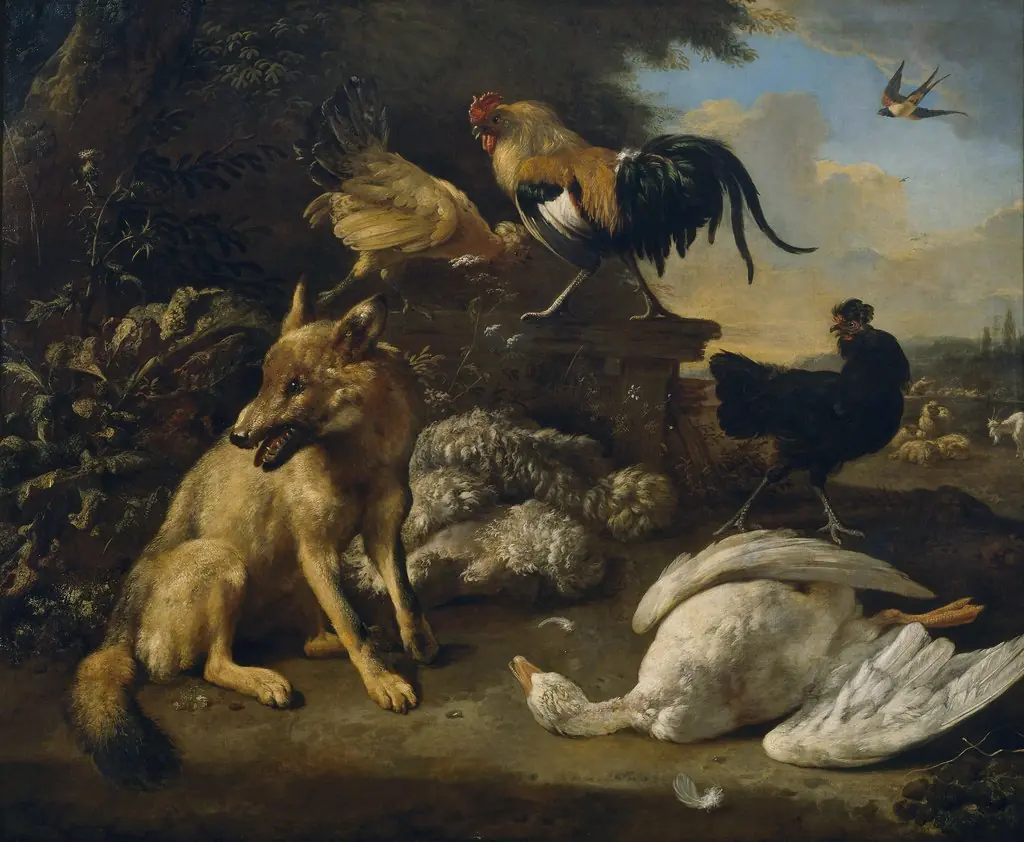 Still Life with Animals
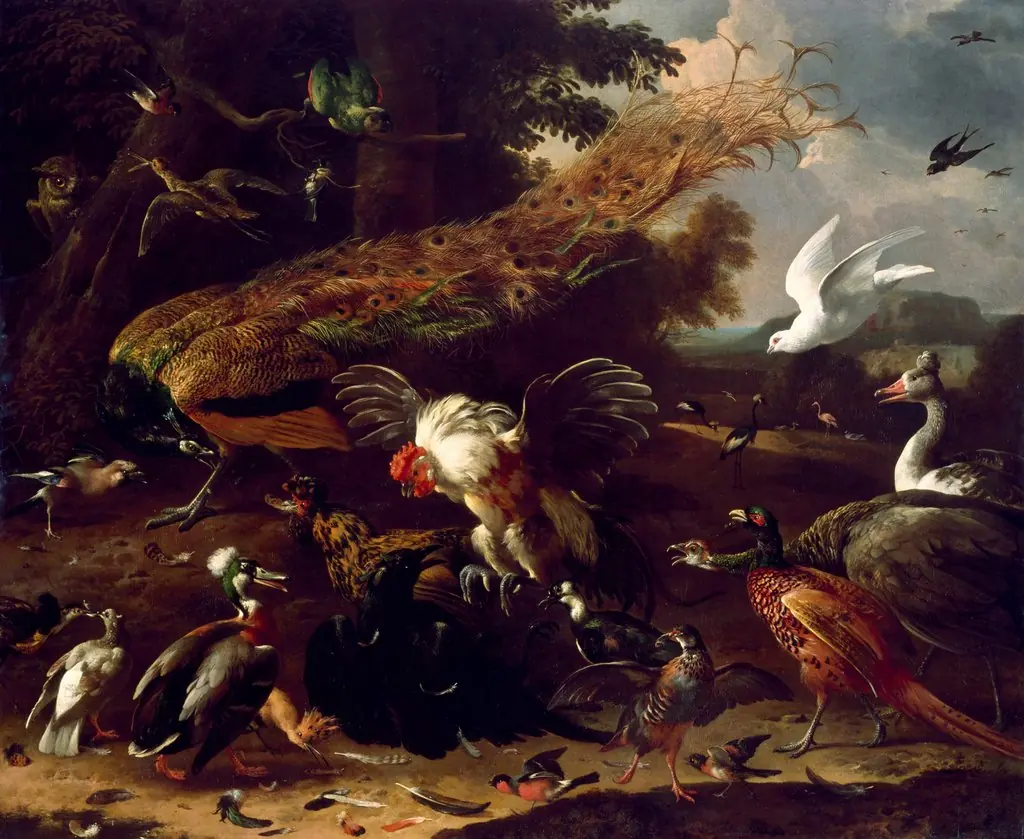 The Crow Exposed
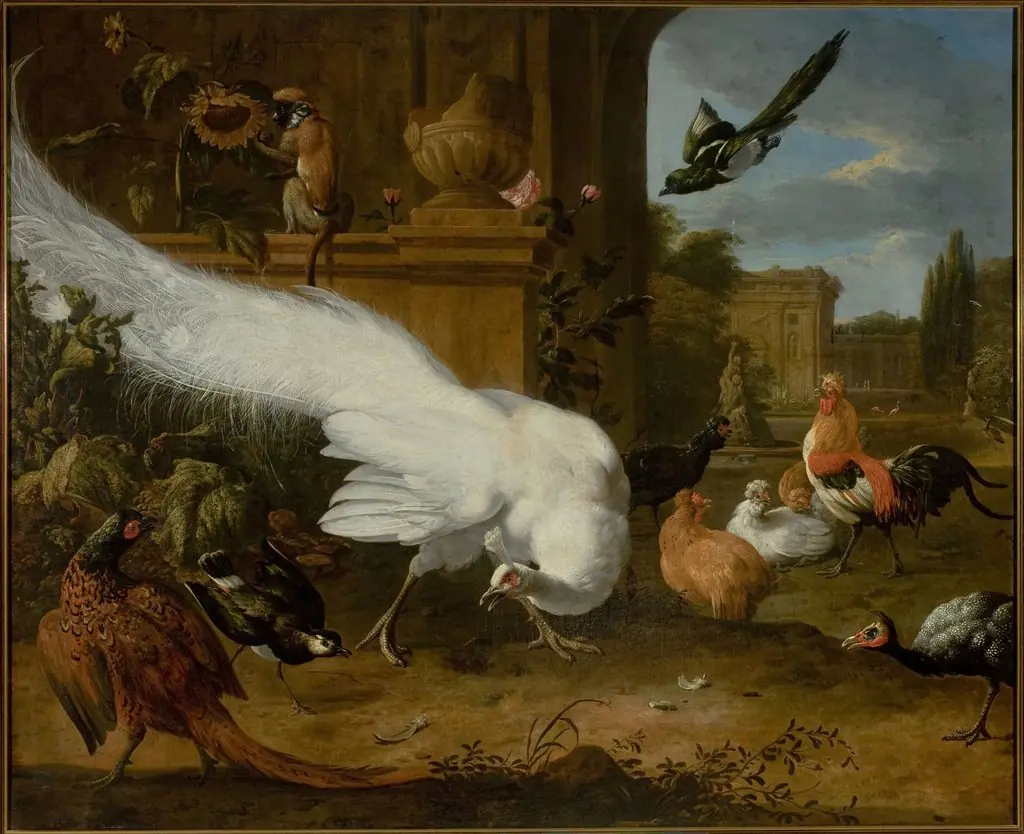 Fowls and a white peacock
 Slaughtered Birds
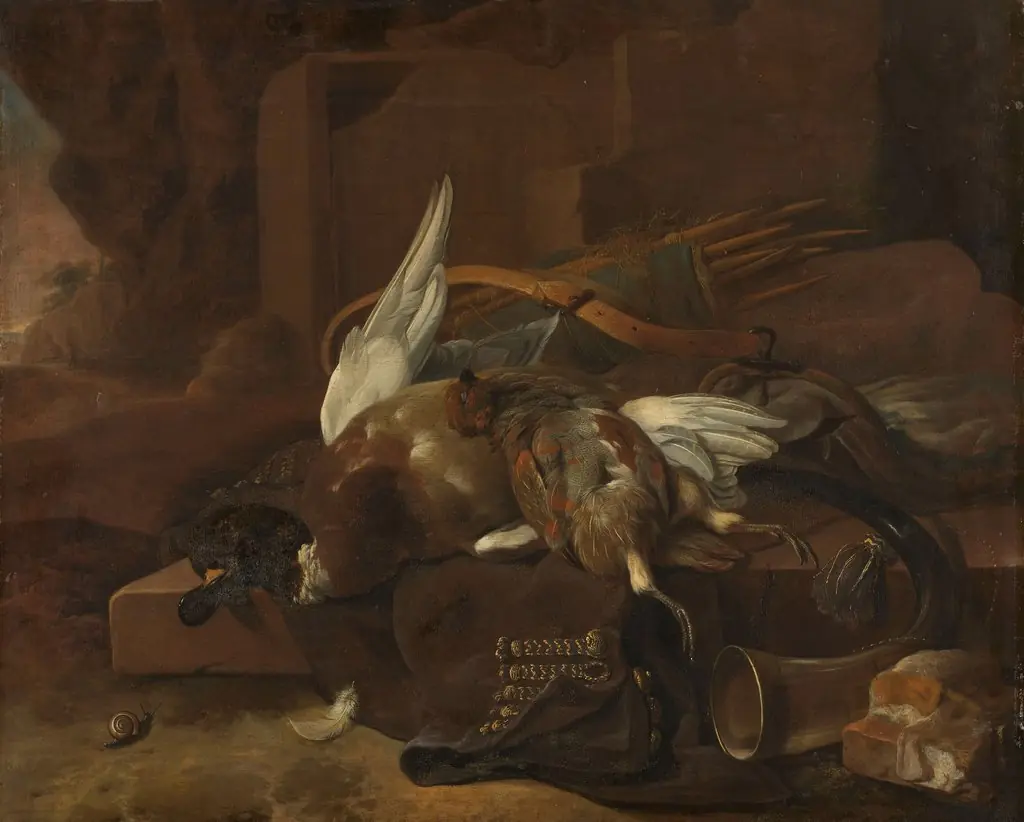 A hunter's bag
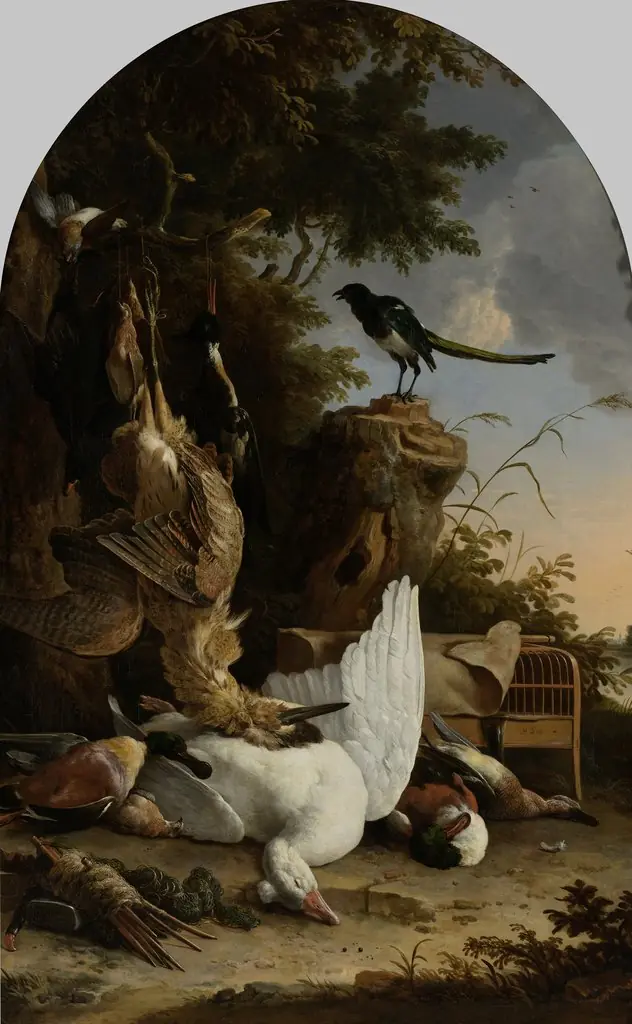 A Hunter’s Bag near a Tree Stump with a Magpie, Known as ‘The Contemplative Magpie’
 Portrait of a Woman with a Photograph of a Man
 Stilleben med död svan, en påfågel och en hund vid en trädgårdsfontän