Artwork
A Monumental Portrait of a Monkey
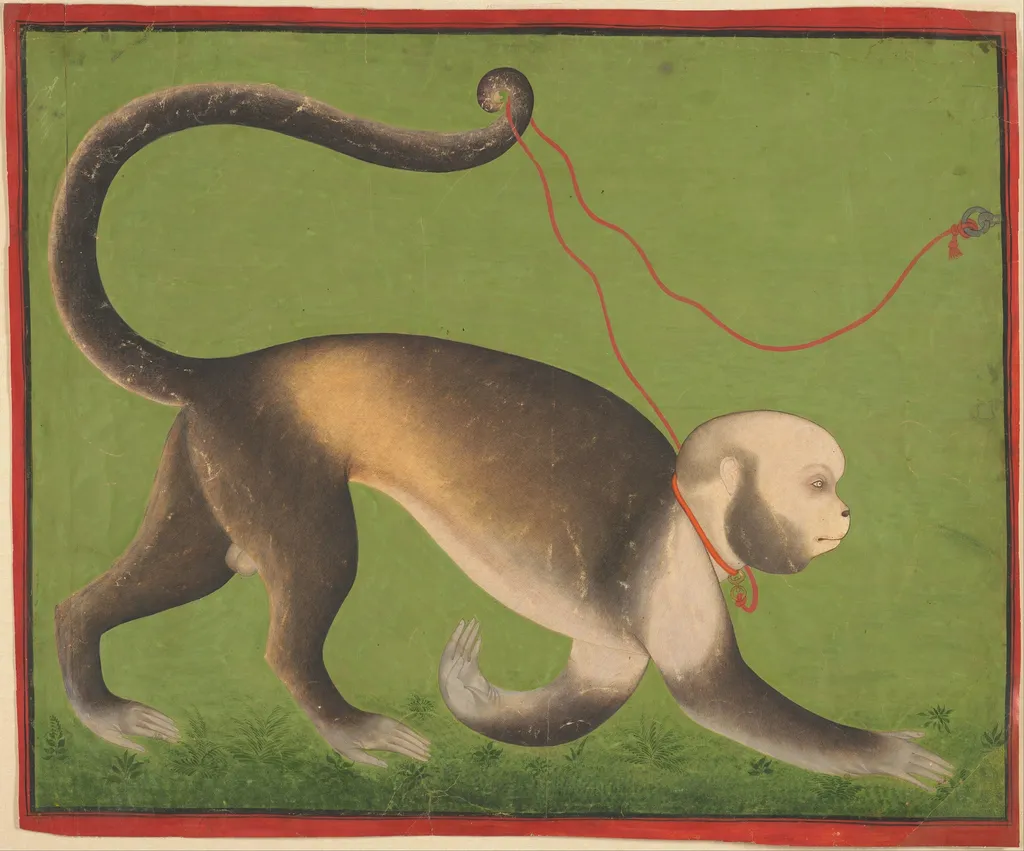
A Monumental Portrait of a Monkey is an unspecified painting by the Mughal Painting artist Stipple Master. It dates from 1705 and is held in the collection of the Art Institute of Chicago. Painted in 1705, this work presents a life-sized monkey rendered with meticulous detail, standing in profile against a flat green field.
About this work
Overview
Painted in 1705, this work presents a life-sized monkey rendered with meticulous detail, standing in profile against a flat green field. The subject is framed by a narrow red border, emphasizing its isolation and formal presentation. Though unconventional as a portrait subject, the composition treats the animal with the dignity typically reserved for human figures in portraiture of the period.
Subject & Meaning
The monkey, depicted with a red collar and calm demeanor, appears neither as a pet nor a curiosity but as a figure of quiet presence.
The monkey, depicted with a red collar and calm demeanor, appears neither as a pet nor a curiosity but as a figure of quiet presence. Its posture, front limbs extended, hind legs flexed, suggests stillness rather than motion. The choice of a non-human subject, elevated to portrait status, may reflect contemporary fascination with natural order or the blurring of human and animal hierarchies in early Enlightenment thought.
Technique & Style
The artist employs fine, controlled brushwork to differentiate fur textures: light tones on the face and chest contrast with darker, layered strokes along the back and tail. The green background lacks depth, focusing attention on the animal’s form. The red collar and border introduce subtle chromatic emphasis, reinforcing the subject’s importance without ornamental excess, aligning with restrained aesthetic values of the era.
History & Provenance
The painting entered the collection of the Art Institute of Chicago in the early 20th century, though its earlier ownership remains undocumented. Its attribution to an artist known as Stipple Master is based on stylistic parallels with other works from the same hand, though no definitive biographical records of the artist exist. The painting’s survival suggests it was valued by collectors despite its unconventional subject.
Context
In early 18th-century Europe, exotic animals were increasingly displayed in private collections and royal menageries. Depictions of monkeys in art often carried symbolic weight, representing mimicry, folly, or natural philosophy. This painting diverges from caricature, instead offering a composed, almost reverent study, possibly reflecting a growing interest in empirical observation over allegory.
Legacy
The work stands as an early example of non-human subjects being treated with the formal gravity of portraiture. While not widely known, it contributes to a quiet tradition in Western art that challenges anthropocentric norms. Its preservation in a major institution underscores its role as a historical artifact of shifting perceptions toward animals in visual culture.
Own this work as a print
Artist & collection


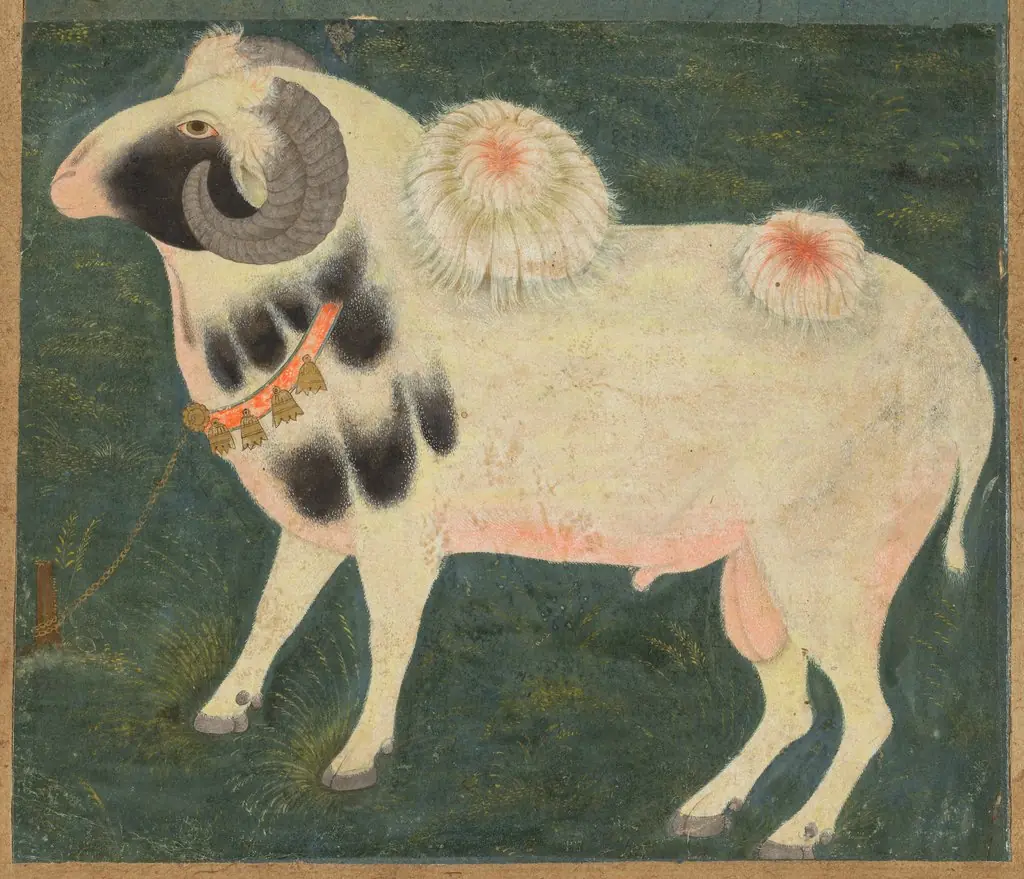 A royal ram with a gold chain
 A royal ram with a gold chain
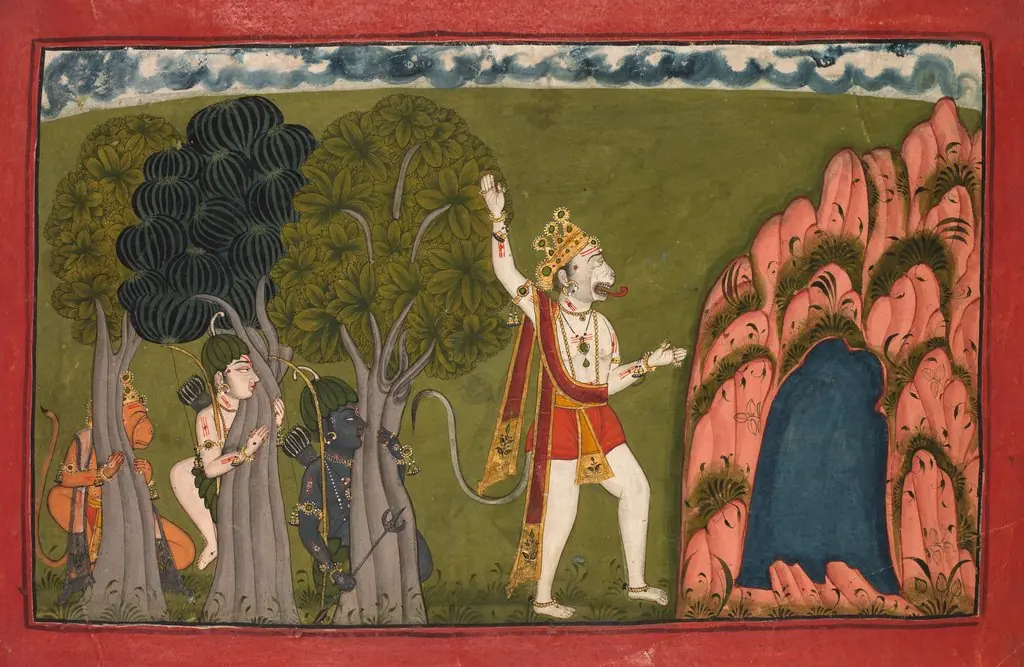 Sugriva challenges his brother Vali, King of the Forest Dwellers, to a duel, folio 10 from the Kishkindha Kanda (Book of Kishkindha) of a Ramayana (Rama’s Journey)
 Hanuman, Rama and Lakshmana
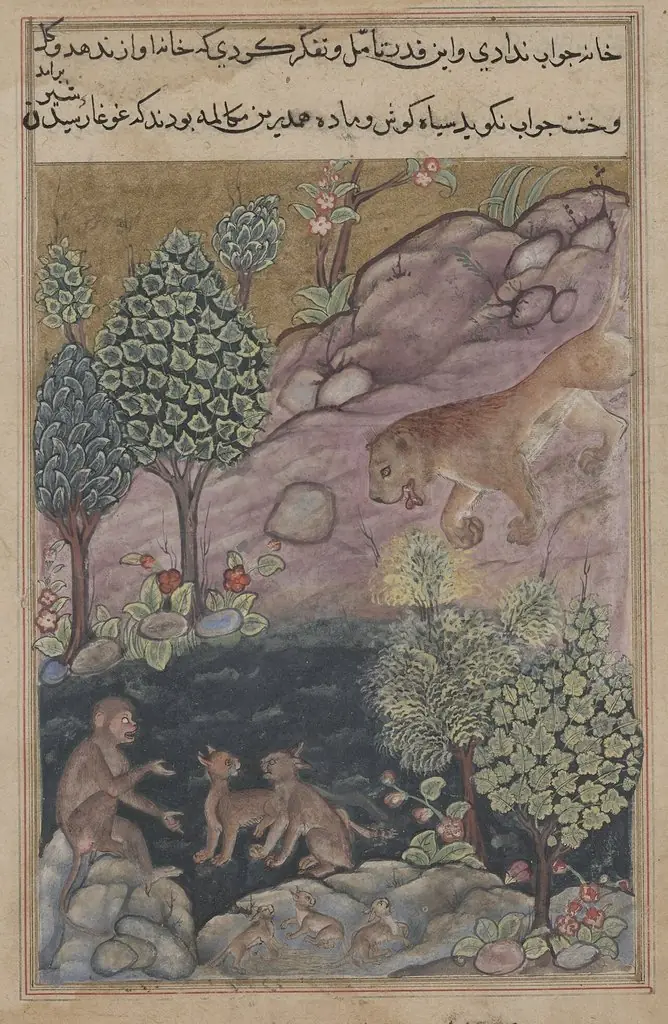 The lion returns to his territory and sees the monkey conversing with the lynx, from a Tuti-nama (Tales of a Parrot): Twenty-ninth Night
 Devagandhari Ragini
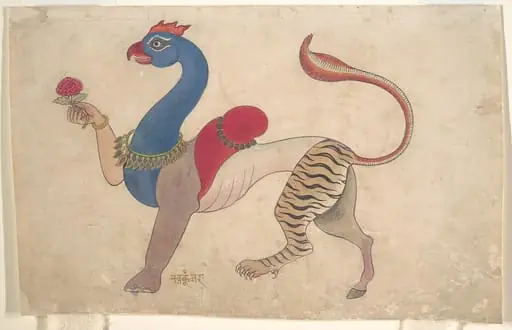 Untitled
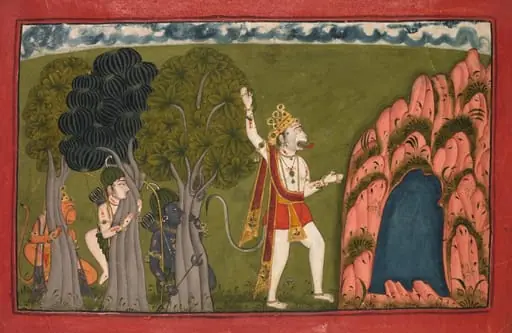 Sugriva challenges his brother Vali, King of the Forest Dwellers, to a duel, folio 10 from the Kishkindha Kanda (Book of Kishkindha) of a Ramayana (Rama’s Journey)
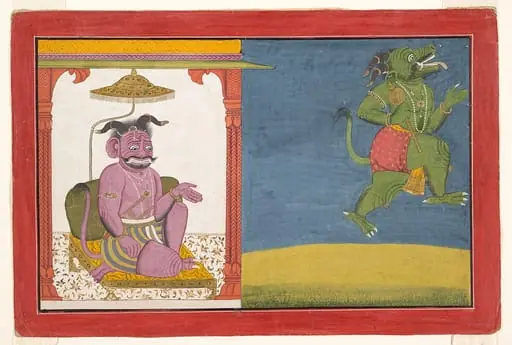 Untitled
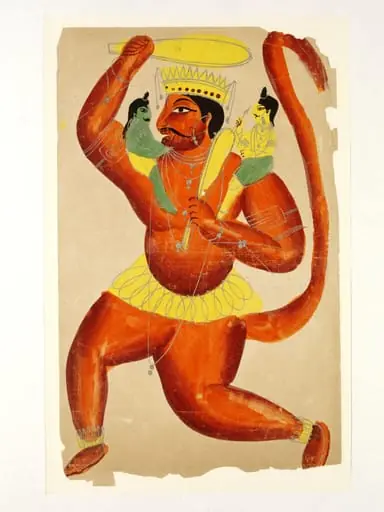 Mahabir. Rama and Lakshmana
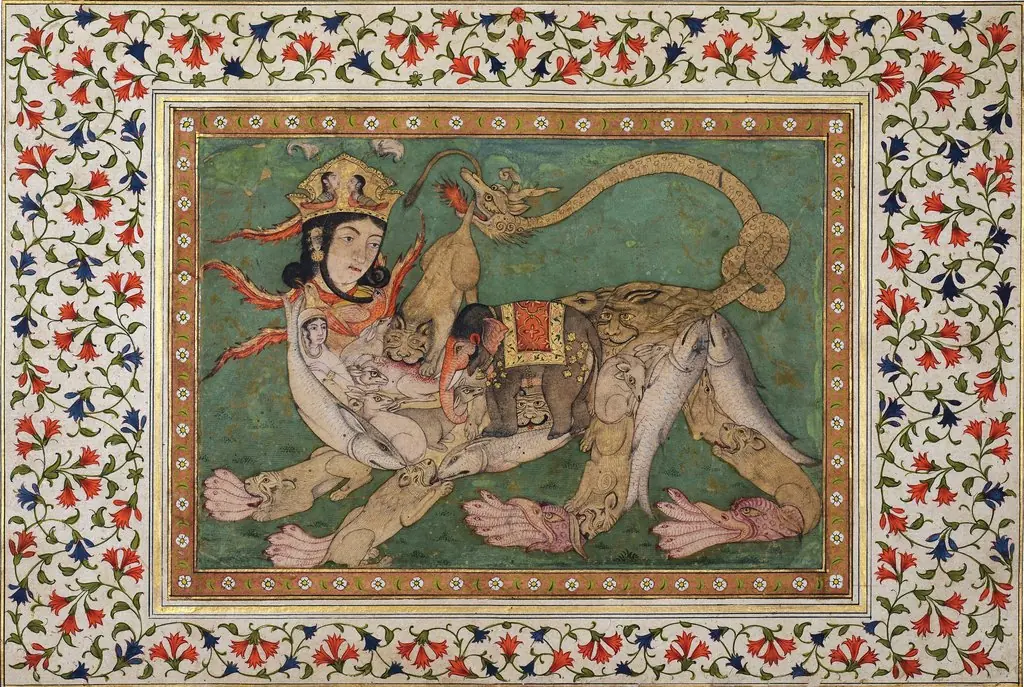 Al Buraq
- A Monumental Portrait of a Monkey