Artwork
Prince Amar Singh (1672–1710) Drives His Own Elephant
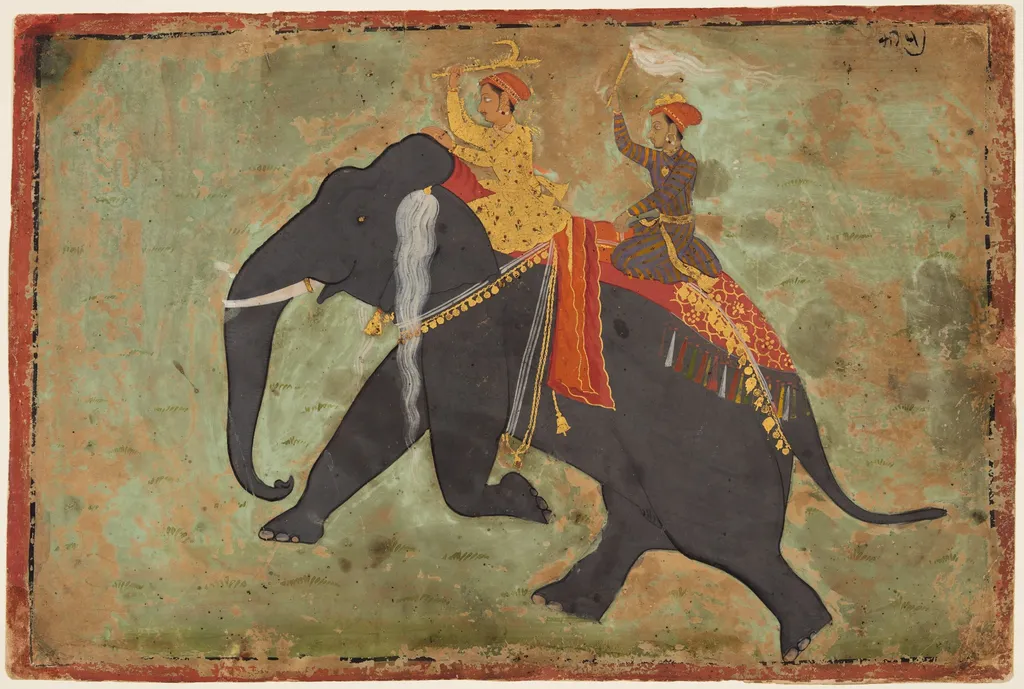
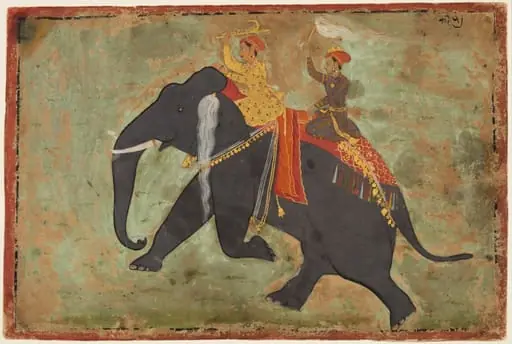
Prince Amar Singh (1672–1710) Drives His Own Elephant is an unspecified painting by the Patna School of Painting artist Stipple Master. It dates from 1698 and is held in the collection of the Cleveland Museum of Art. Created in 1698, this painting portrays Prince Amar Singh, a Mughal royal who lived from 1672 to 1710, guiding his own elephant.
About this work
Overview
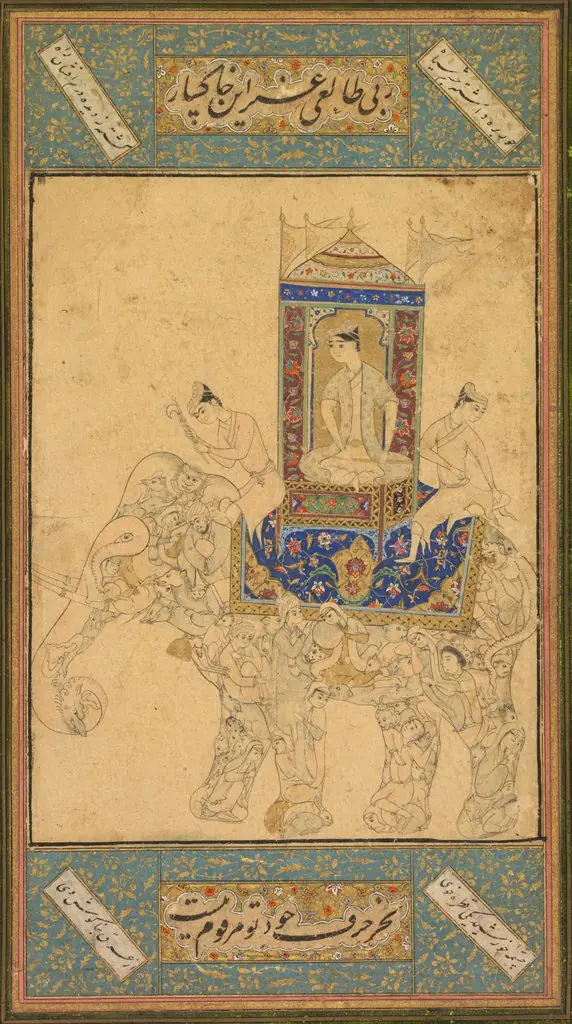
Created in 1698, this painting portrays Prince Amar Singh, a Mughal royal who lived from 1672 to 1710, guiding his own elephant. The composition centers on two figures mounted on a dark‑grey elephant, its long ivory tusk and richly colored saddle blanket drawing the eye. The work is part of the collection of the Cleveland Museum of Art in Ohio.
Subject & Meaning
The scene captures a ceremonial procession in which the prince, dressed in a bright yellow garment and a red headdress, leads the animal, while a companion in blue and gold follows, each holding a staff or ceremonial object. The depiction emphasizes royal authority and the prestige associated with elephant riding, a traditional symbol of power in South Asian courts.
Technique & Style
Executed by an artist known as the Stipple Master, the painting employs fine stippling to render texture and depth, a method characteristic of late‑17th‑century Indian court art. The palette combines muted earth tones in the background with vivid reds, golds, and yellows for the figures, creating a contrast that highlights the central action while echoing the decorative aesthetics of the period.
History & Provenance
Since its creation, the work has remained within the sphere of Indian miniature painting before entering Western collections. It was acquired by the Cleveland Museum of Art, where it now serves as an example of Mughal-era portraiture and the cross‑cultural exchange of artistic techniques during the late 1600s.
Own this work as a print
Artist & collection


- The Elephant of Maharana Jai Singh of Mewar (r. 1680–98) Catches a Horse by the Tail
 Prince Amar Singh (1672–1710) Drives His Own Elephant
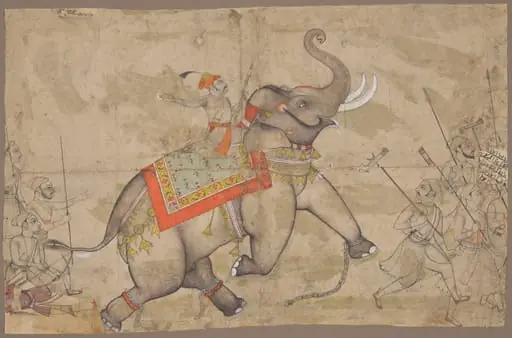 A Raja on an Elephant
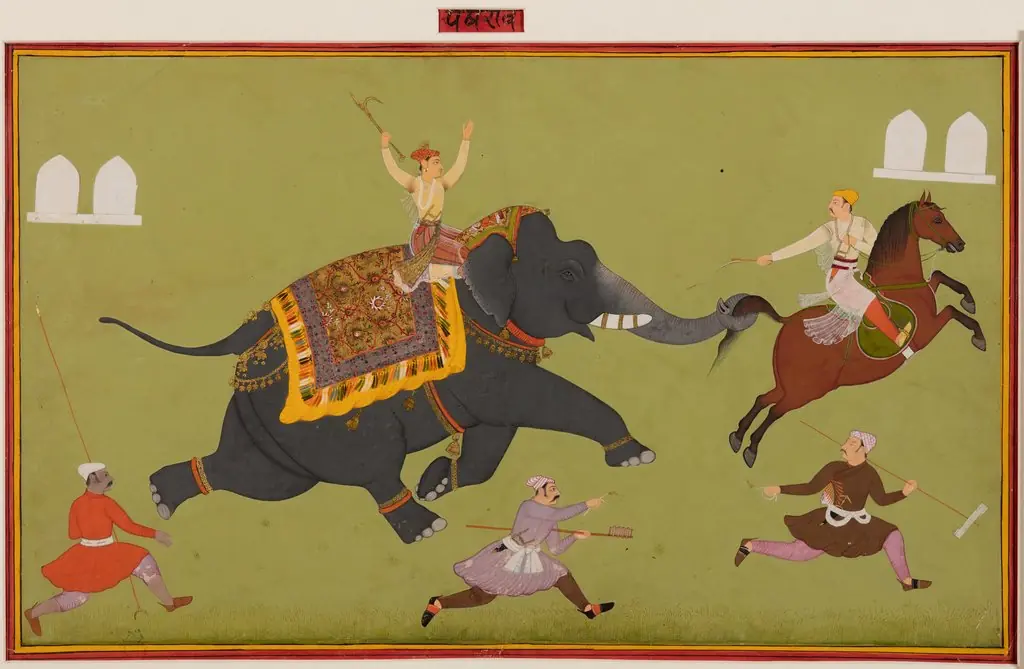
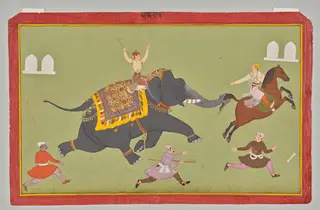 The Elephant of Maharana Jai Singh of Mewar (r. 1680–98) Catches a Horse by the Tail
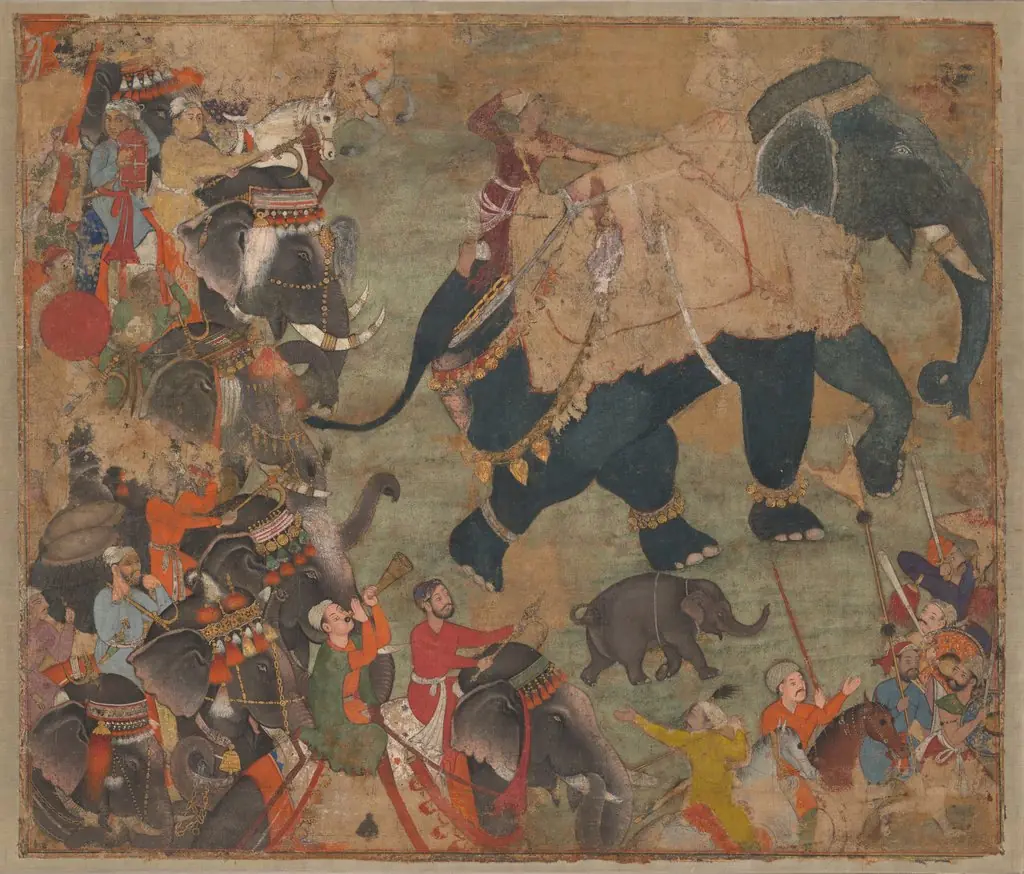 A Prince Riding an Elephant in Procession
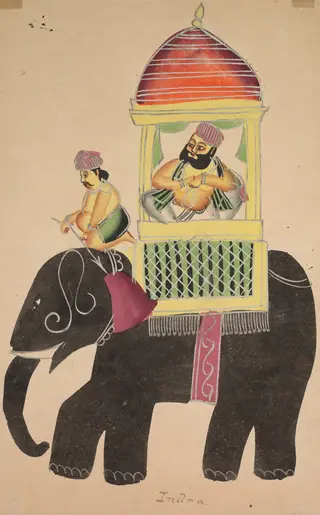 Mahant of Tarakeshwar Rides on an Elephant
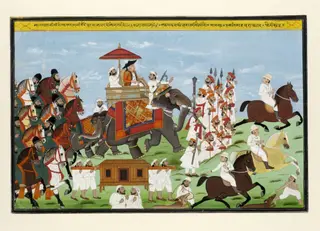 Captain James Tod riding an elephant with his companions and escort
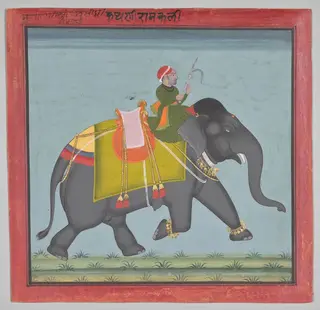 Royal Elephant Ramkali with a Mahout
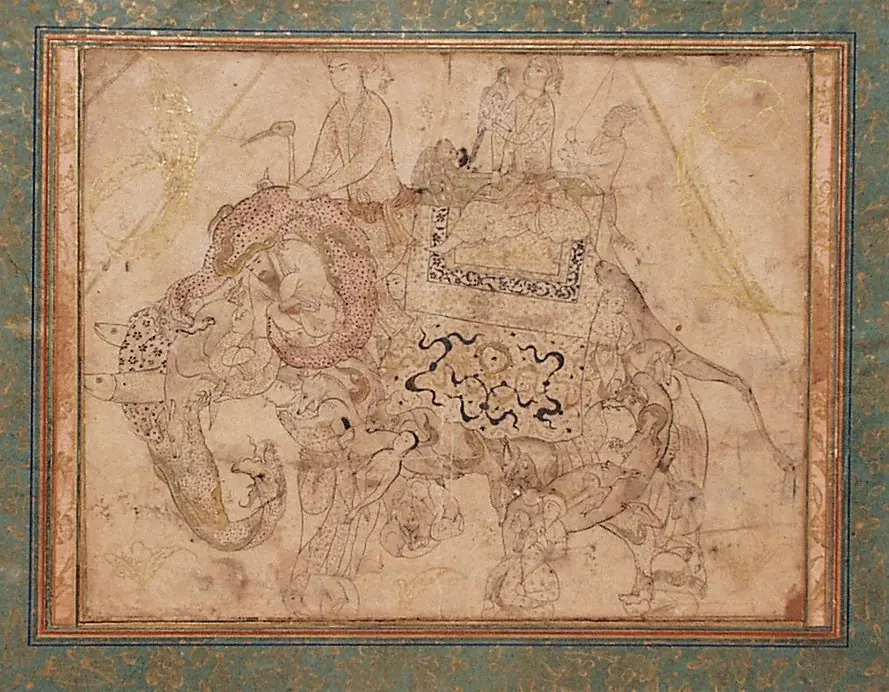 A composite elephant ridden by a prince - 17th century
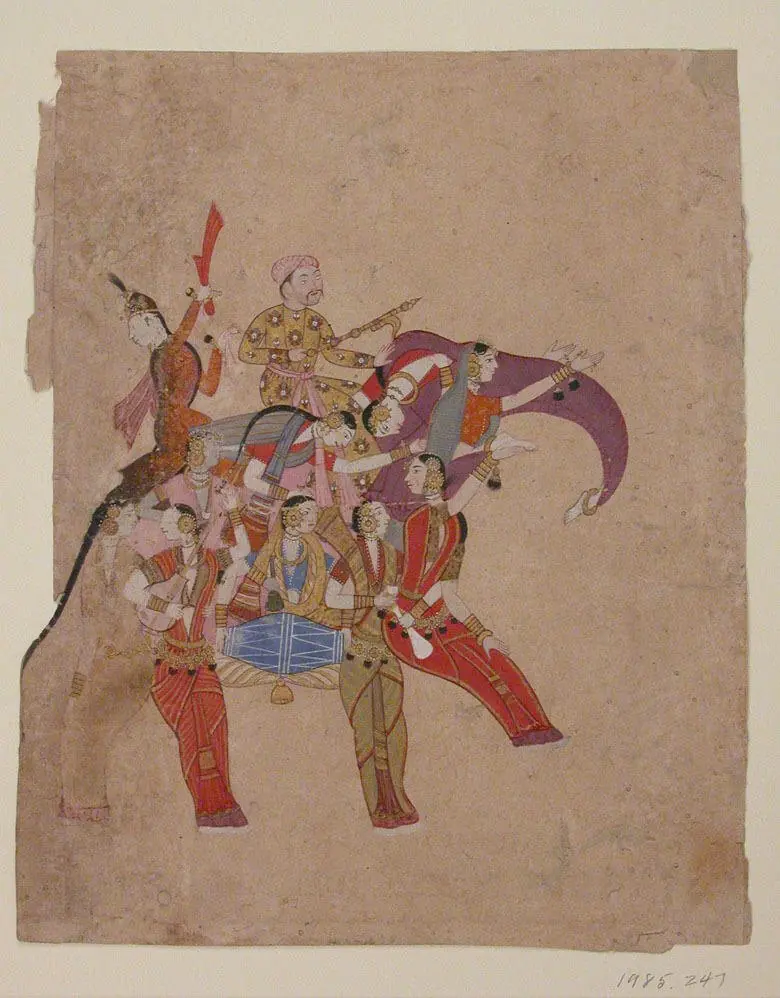 Composite Elephant - Deccan Painting Early 17th Century
 A prince riding a composite elephant
 A prince riding a composite elephant