Artwork
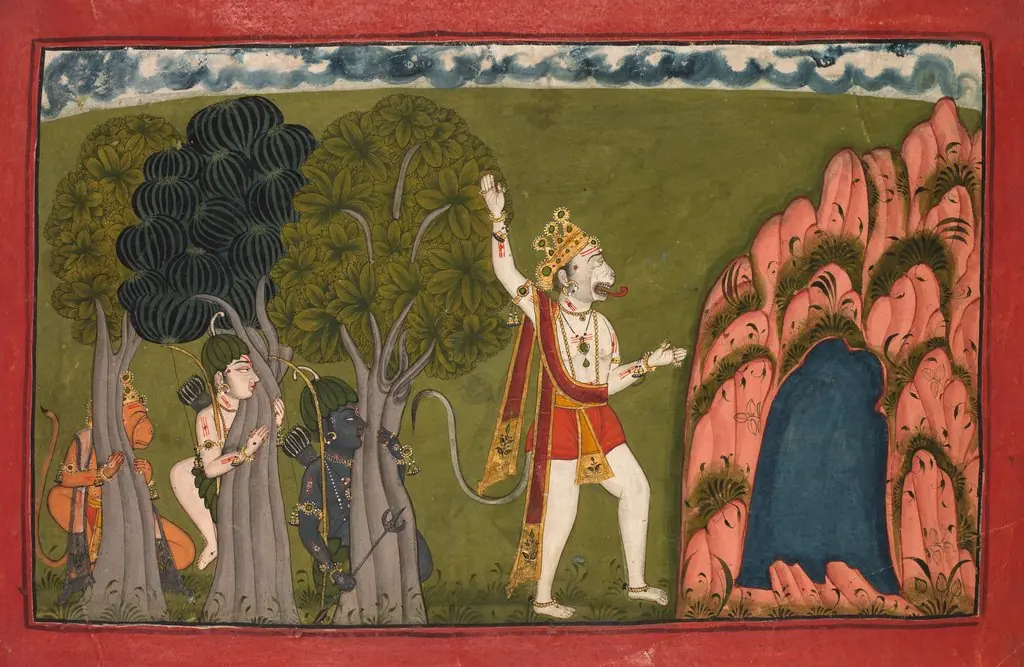
Sugriva challenges his brother Vali, King of the Forest Dwellers, to a duel, folio 10 from the Kishkindha Kanda (Book of Kishkindha) of a Ramayana (Rama’s Journey)
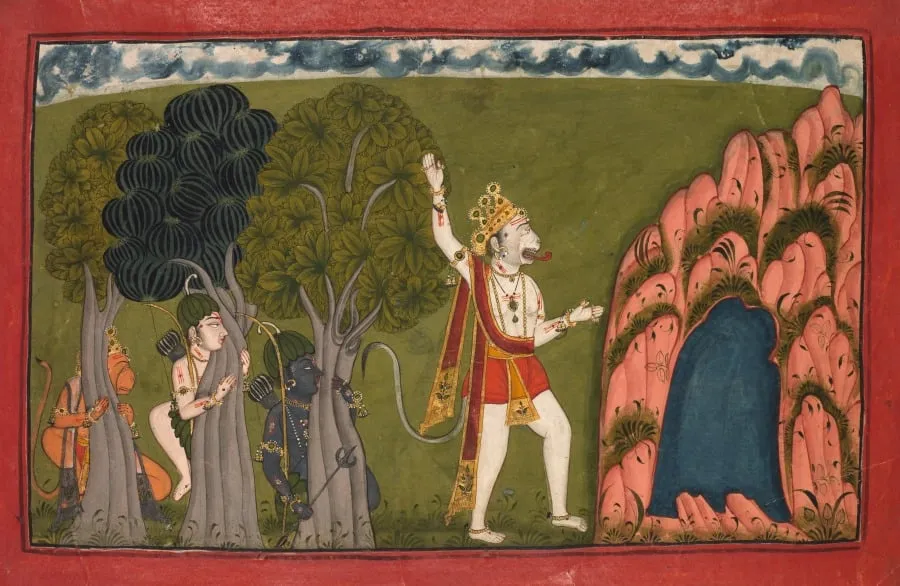
Sugriva challenges his brother Vali, King of the Forest Dwellers, to a duel, folio 10 from the Kishkindha Kanda (Book of Kishkindha) of a Ramayana (Rama’s Journey) is an unspecified painting by the Baroque artist Unknown. It dates from 1710 and is held in the collection of the Cleveland Museum of Art.
- Accession no.
- 1973.103
- Credit line
- Purchase from the J. H. Wade Fund
About this work
Overview
The painting depicts a dramatic episode from the Kishkindha episode of the Ramayana, where the white‑furred monkey Sugriva confronts his brother Vali, the reigning monarch of the forest dwellers, at the mouth of a cavern. Behind Sugriva, the blue‑skinned hero Rama, accompanied by his ally Hanuman, readies a three‑pronged arrow, poised to strike Vali and secure Sugriva’s ascent to the throne.
Subject & Meaning
The composition captures a morally complex moment: Rama intervenes in a fraternal conflict, supporting Sugriva’s challenge to Vali in order to enlist the former’s aid in locating Sita. The scene underscores themes of loyalty, betrayal, and the strategic use of divine power to reshape political alliances within the epic narrative.
Technique & Style
Rendered in the distinctive Pahari aesthetic of the Himalayan region, the work blends stylised rock formations that curl like living forms with textile patterns derived from Mughal court painting. The figures are outlined with bright pigments, the monkeys rendered in stark white against a dark cave interior, while Rama’s skin is painted in a vivid blue, emphasizing his divine nature.
History & Provenance
The piece belongs to a series illustrating a local Himalayan version of the Ramayana, likely produced in the Nurpur court during the summer months when Mughal emperors retreated to the hills. The incorporation of Mughal motifs suggests direct artistic exchange between the imperial workshop and the Pahari kingdoms.
Context
Set within the broader tradition of northern Indian Pahari painting, the work reflects the syncretic visual language that emerged from the interaction of indigenous mountain styles and the refined techniques of Mughal art. Its narrative focus on the Kishkindha episode aligns with regional devotional interests in the heroic exploits of Rama and his monkey allies.
Artist & collection









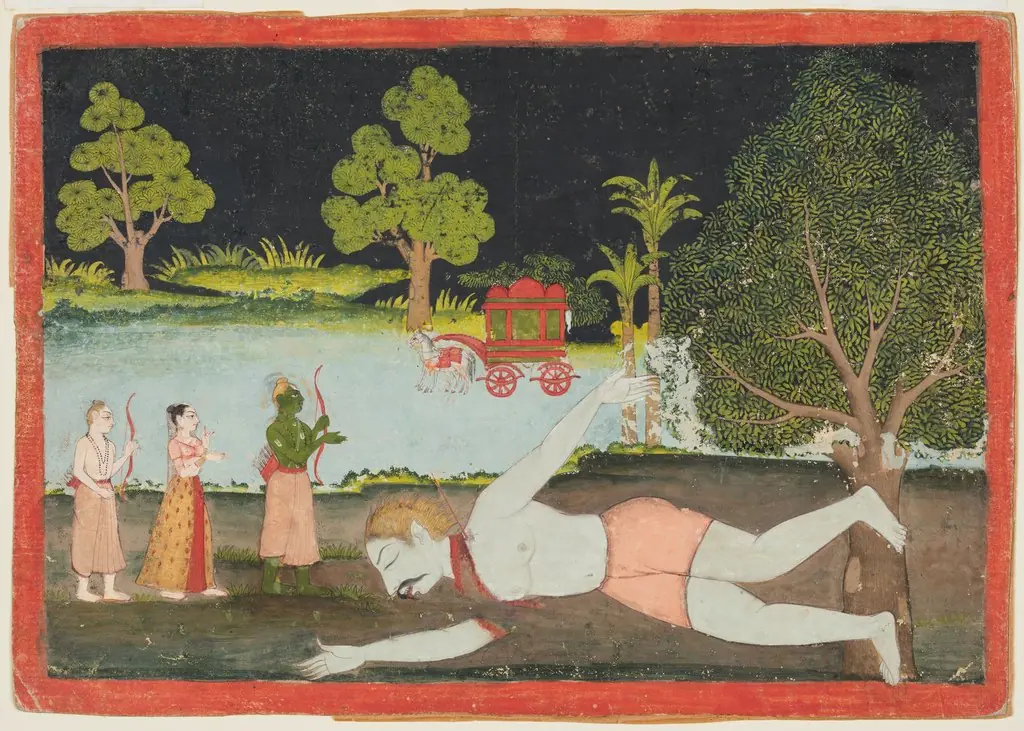 Rama and Lakshmana slay the demon giant Viradha, from Chapters 2 through 4 of the Aranya Kanda (Book of the Forest) of a Ramayana (Rama’s Journey)
 Hanuman spies Sita in the Ashoka Grove, from the “Shangri” Ramayana
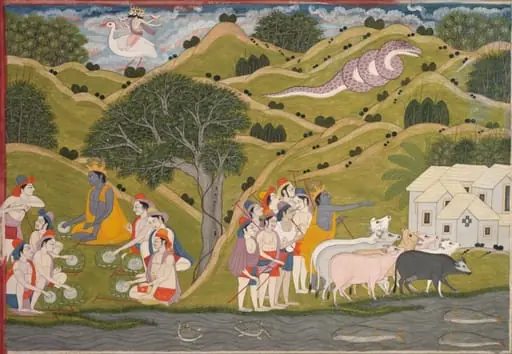 Krishna returns with the cowherds to Braj, from a Bhagavata Purana
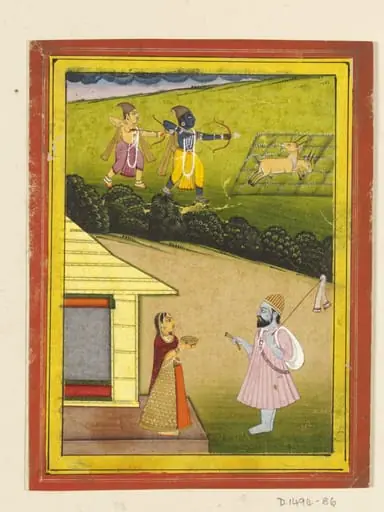
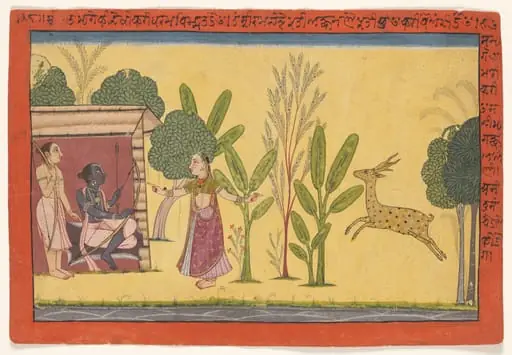 Sita asks Rama to fetch the golden deer, from the “Shangri” Ramayana
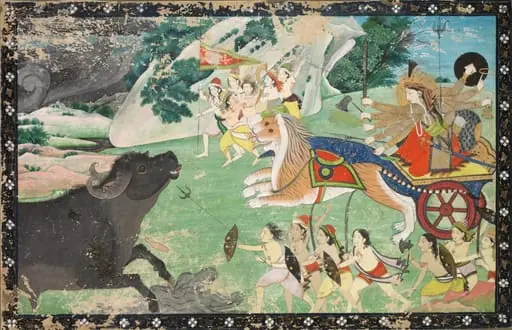 Durga Slaying Mahisha
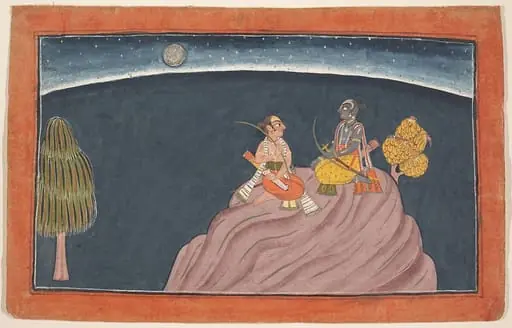 Untitled
 Sita
Sita Untitled
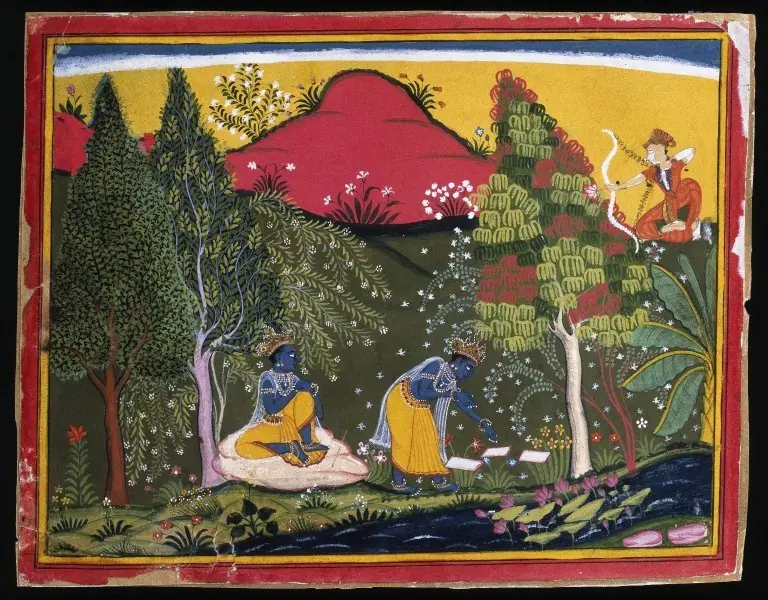 Cupid Disturbs Krishna's Penance, Page from a Gita Govinda