Artwork
Old House at Bulmer
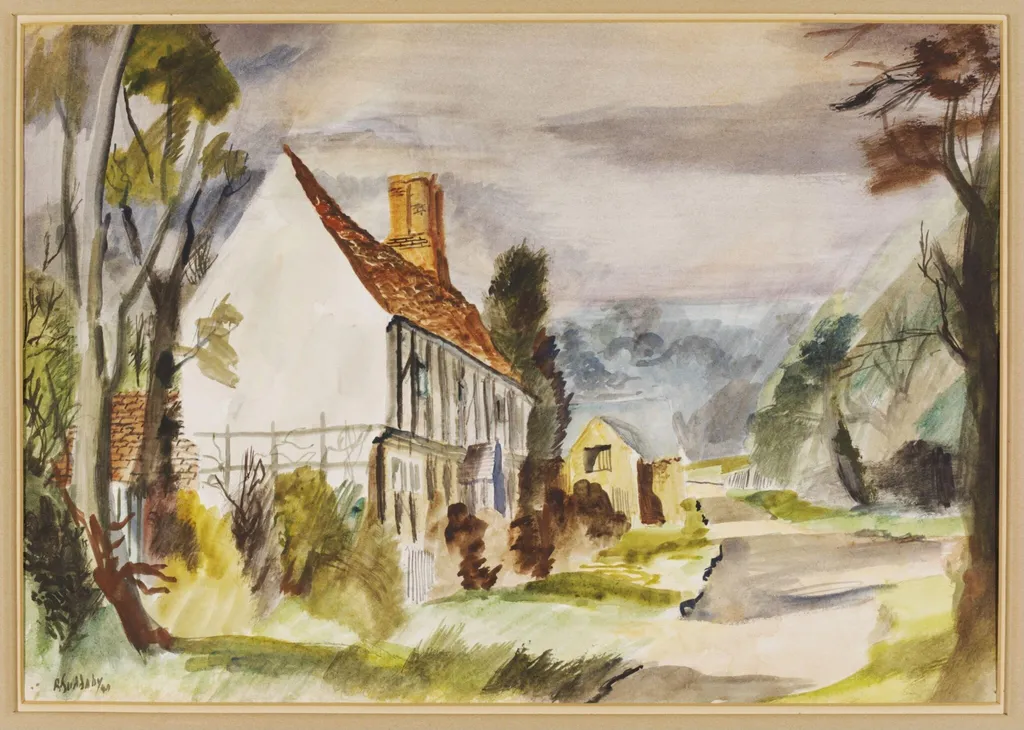
Old House at Bulmer is a watercolor work on paper by the Regionalist artist Suddaby. It dates from 1940 and is held in the collection of the Victoria and Albert Museum.
About this work
Overview
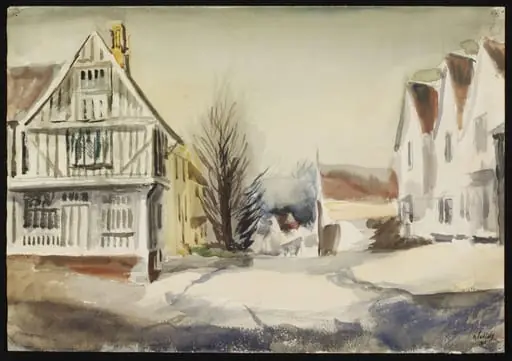
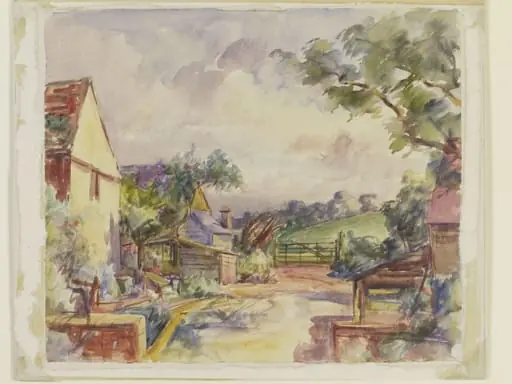
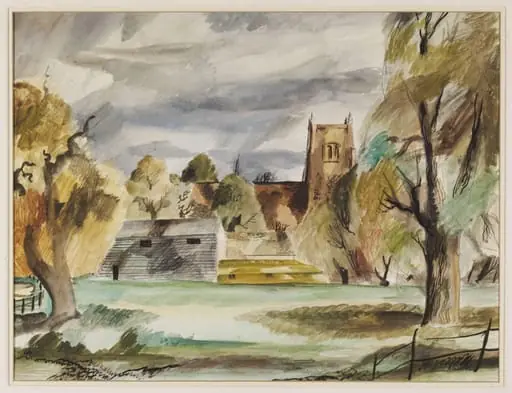
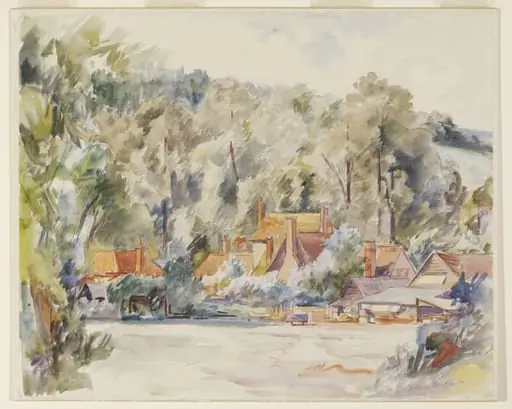
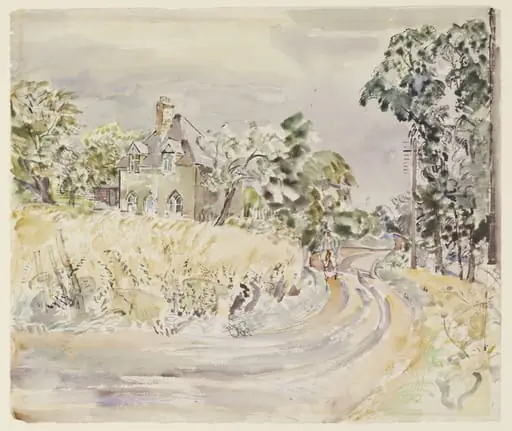
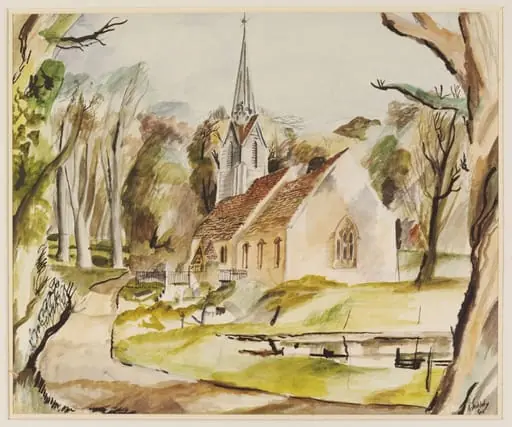
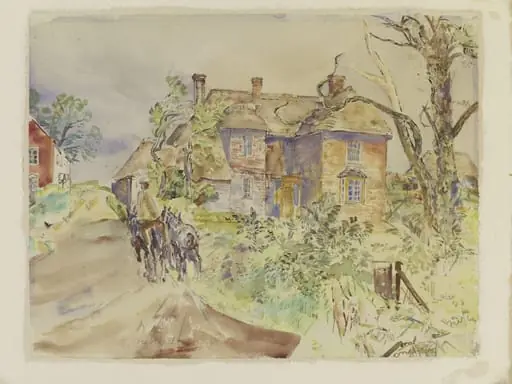
Old House at Bulmer is a watercolour painted in 1940 by Suddaby, capturing a modest half-timbered farmhouse in the Essex village of Bulmer.
Old House at Bulmer is a watercolour painted in 1940 by Suddaby, capturing a modest half-timbered farmhouse in the Essex village of Bulmer. Created during World War II, the work was part of the Recording Britain project, which sought to visually archive rural architecture and landscapes perceived as emblematic of English heritage. The piece reflects a quiet, contemplative approach to everyday scenes, emphasizing texture and atmosphere over detail.
Subject & Meaning
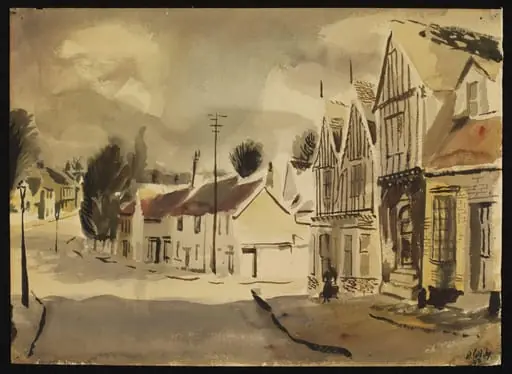
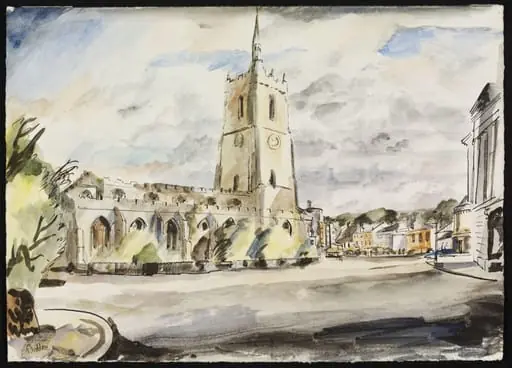
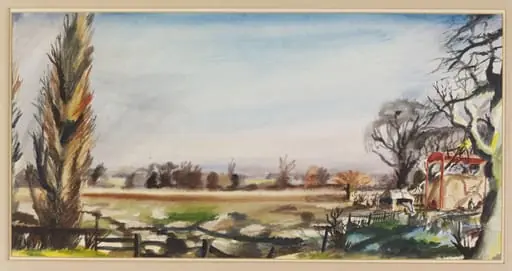
The painting depicts a two-storey farmhouse with a small outbuilding, framed by bare trees and a low fence. A winding path leads the eye toward distant hills, suggesting continuity beyond the immediate scene. The absence of human figures and the stillness of the landscape convey a sense of quiet endurance.
The house, unadorned and weathered, stands as a symbol of rural continuity amid wartime uncertainty and societal transformation.
Technique & Style
Suddaby employed loose, translucent watercolour washes to evoke subtle shifts in light and season. The palette is restrained, pale blues, muted greens, and earthy browns, creating a soft, atmospheric tone. Bare branches and textured rooflines are suggested with minimal strokes, avoiding sharp definition.
The technique prioritizes mood over precision, using the paper’s natural whiteness to suggest sunlight and the watercolour’s fluidity to imply wind and space.
History & Provenance
Commissioned under the Recording Britain initiative, the work was produced with support from the Pilgrim Trust and administered by the Committee for the Employment of Artists in Wartime. The project aimed to document vulnerable rural structures before they disappeared due to neglect or conflict. Suddaby’s painting entered the Victoria and Albert Museum’s collection as part of this broader archival effort, preserving a visual record of pre-war English countryside life.
Context
During the early 1940s, Britain faced widespread anxiety over the loss of cultural landmarks to bombing and modernization. The Recording Britain project responded to this by mobilizing artists to record vernacular architecture and rural scenes. Suddaby’s depiction of Bulmer reflects a deliberate focus on unremarkable, enduring structures, those that embodied continuity rather than grandeur, offering a quiet counterpoint to the turmoil of the era.
Legacy
The Recording Britain collection, including this watercolour, remains a vital historical archive of mid-20th-century English landscapes. Suddaby’s work contributes to a broader understanding of how artists documented everyday environments during times of upheaval. Today, the painting is studied not only for its aesthetic qualities but also as a testament to the cultural priorities of a nation seeking to preserve its identity through art.
Artist & collection
Artist
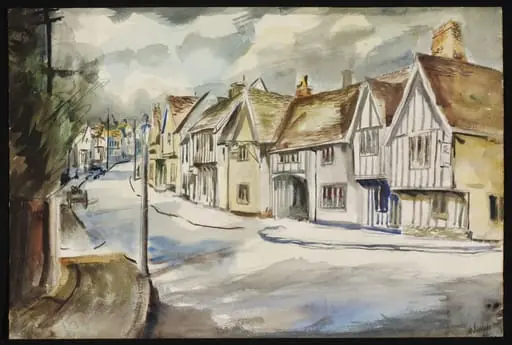
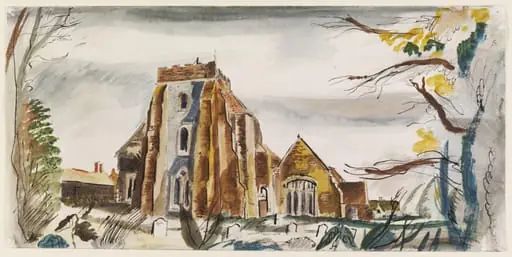
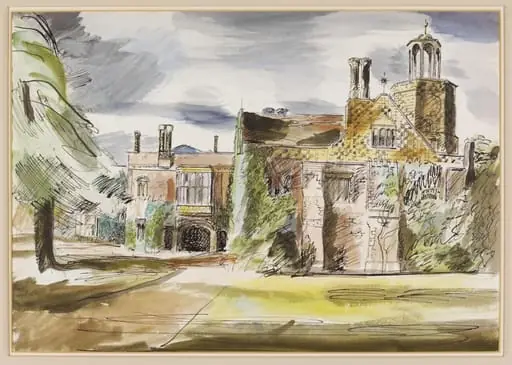
A British watercolor artist from the mid-20th century, Suddaby painted quiet, detailed scenes of East Anglia’s streets and churches in the 1940s.