Artwork
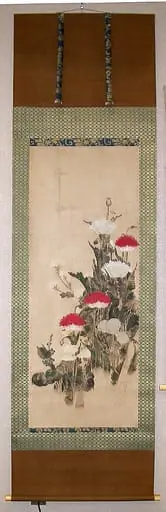
鈴木其一筆 芥子図|Poppies
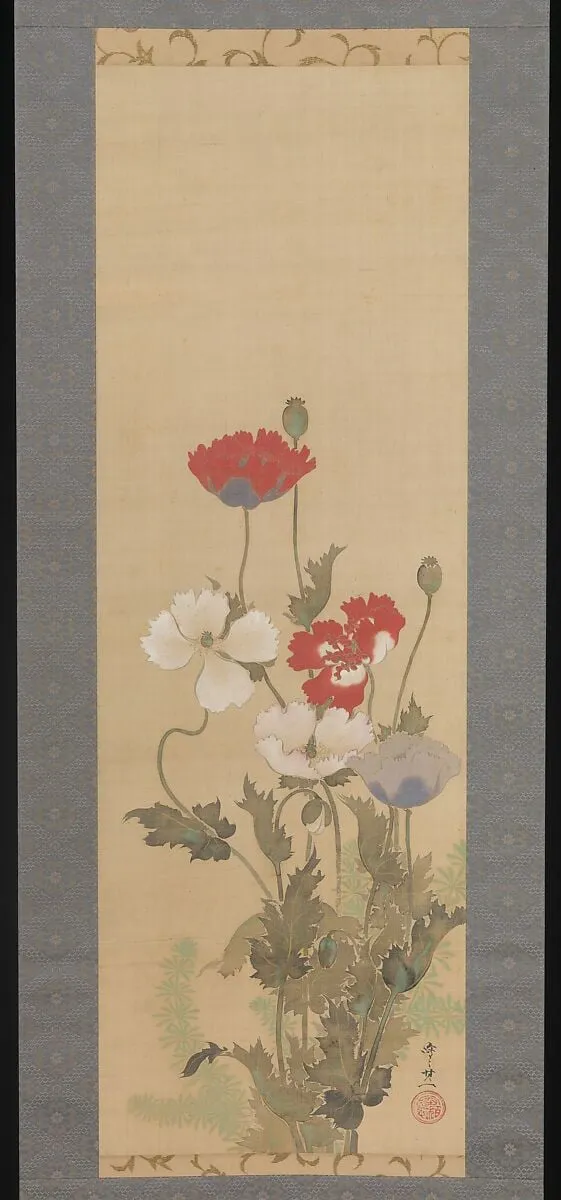
鈴木其一筆 芥子図|Poppies is an ink painting by the Nihonga artist Suzuki Kiitsu. It dates from 1850 and is held in the collection of the Metropolitan Museum of Art.
- Accession no.
- 2012.522.3
- Credit line
- Fishbein-Bender Collection, Gift of T. Richard Fishbein and Estelle P. Bender, 2012
About this work
Subject & Meaning
Kiitsu's rendering aligns with this tradition, using the poppy's delicate form to evoke themes of impermanence and the fleeting nature of beauty.
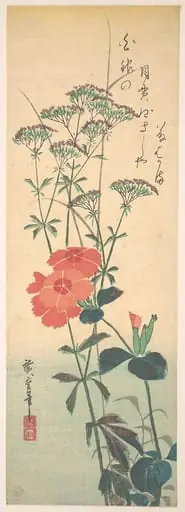
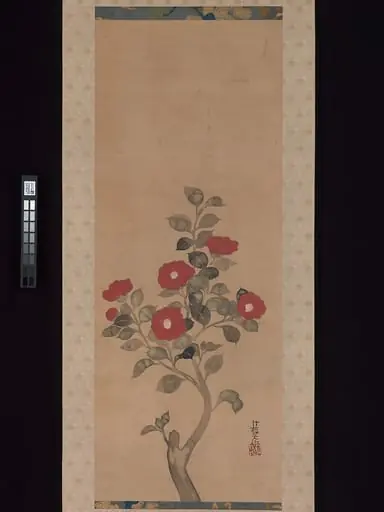
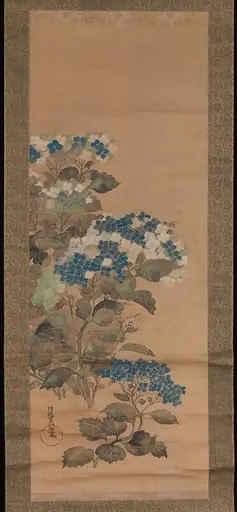
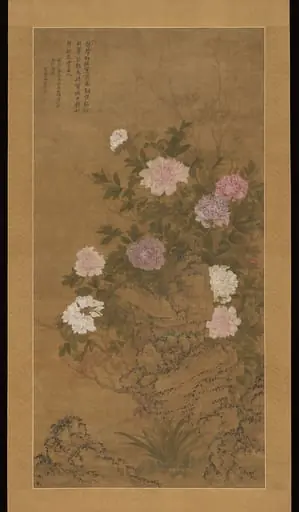
The painting depicts a single poppy in full bloom, rendered with delicate ink and color on silk in a hanging scroll format. The composition centers on the flower's vivid red petals and dark center, surrounded by slender stems and leaves that extend into the surrounding negative space.
In Japanese art, poppies have historically been associated with summer and seasonal transience, often appearing in still-life genres that emphasize natural beauty and ephemeral life. Kiitsu's rendering aligns with this tradition, using the poppy's delicate form to evoke themes of impermanence and the fleeting nature of beauty.
Technique & Style
Created in 1850, Poppies by Suzuki Kiitsu is executed as a hanging scroll utilizing ink and color applied directly onto a silk support. The work belongs to the still-life genre and focuses formally on the depiction of poppies. As a Japanese painting from the mid-nineteenth century, the piece demonstrates the artist's handling of traditional materials where pigment and ink interact with the textile surface to render the floral subject.
History & Provenance
Created in 1850 by the Japanese artist Suzuki Kiitsu, this hanging scroll depicts poppies rendered in ink and color on silk. It currently resides in the collection of the Metropolitan Museum of Art. No exhibition history or provenance details regarding previous ownership are recorded in the available documentation.
Overview
Suzuki Kiitsu's 'Poppies' (1850) is a hanging scroll executed in ink and color on silk, exemplifying the late Edo period Rinpa school's mastery of decorative naturalism. The composition features three poppies arranged vertically against an unadorned background, capturing distinct stages of bloom: one fully open, one partially closed, and one as a tight bud. Kiitsu employs a distinctive technical approach to render the petals, utilizing a dual-brush method where a wet brush creates soft, fluid edges while a dry brush simultaneously deposits fine white flecks.
This technique simulates the play of light on the flower's surface, lending the flora a sense of immediacy and vitality. Created during the final decade of the artist's life, this work reflects Kiitsu's mature style, which synthesizes the bold compositional rhythms of his teacher, Sakai Hoitsu, with a refined attention to botanical detail. The piece stands as a significant example of Japanese flower painting, demonstrating how Rinpa artists transformed simple still-life subjects into dynamic, rhythmic studies of nature through innovative brushwork and a focus on surface texture.
Artist & collection