Artwork
Untitled
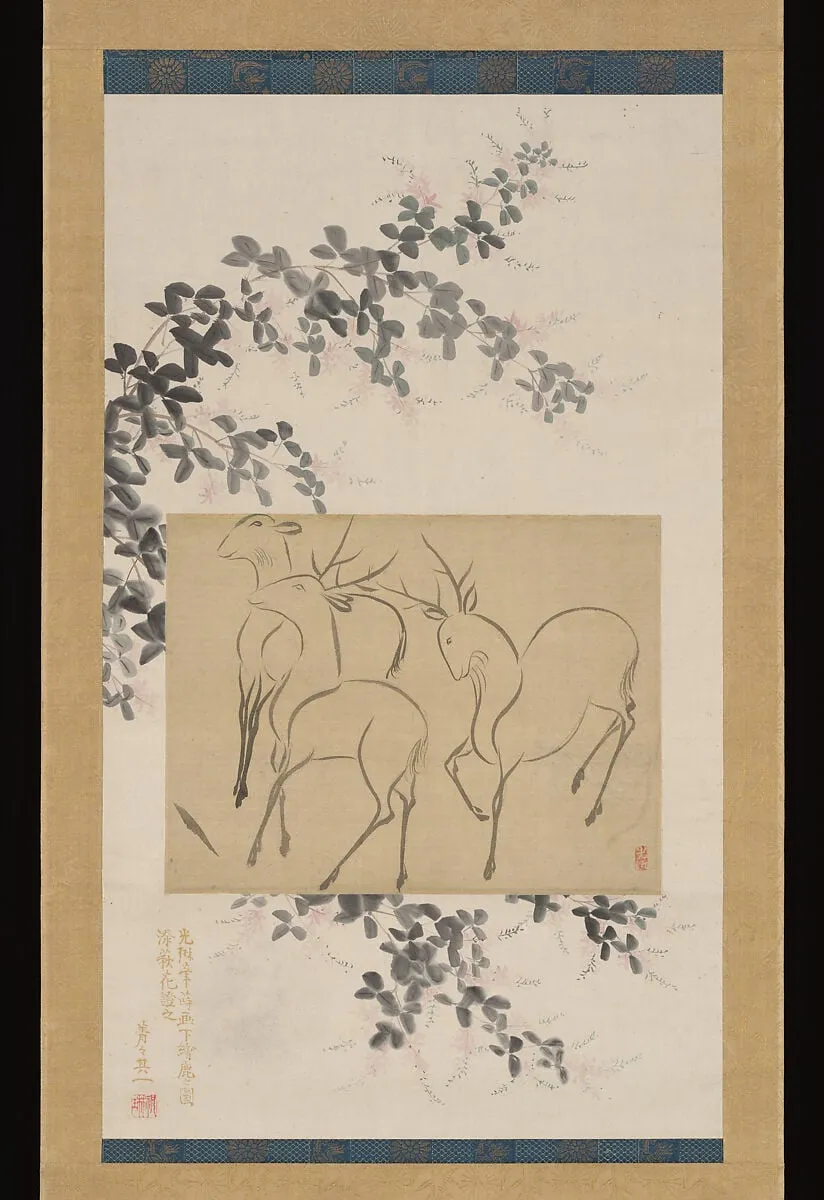
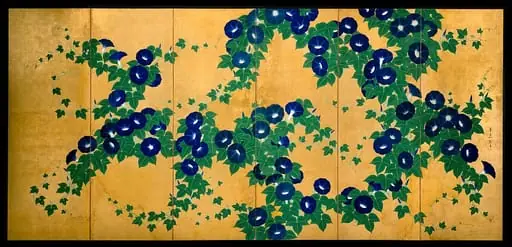
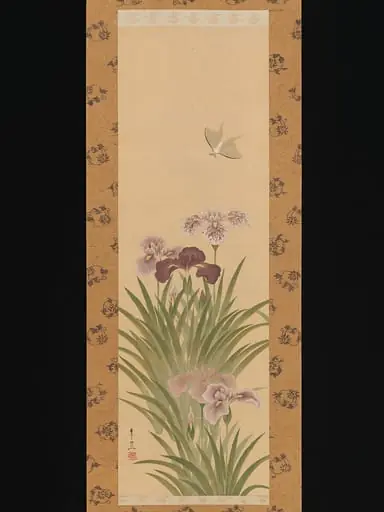
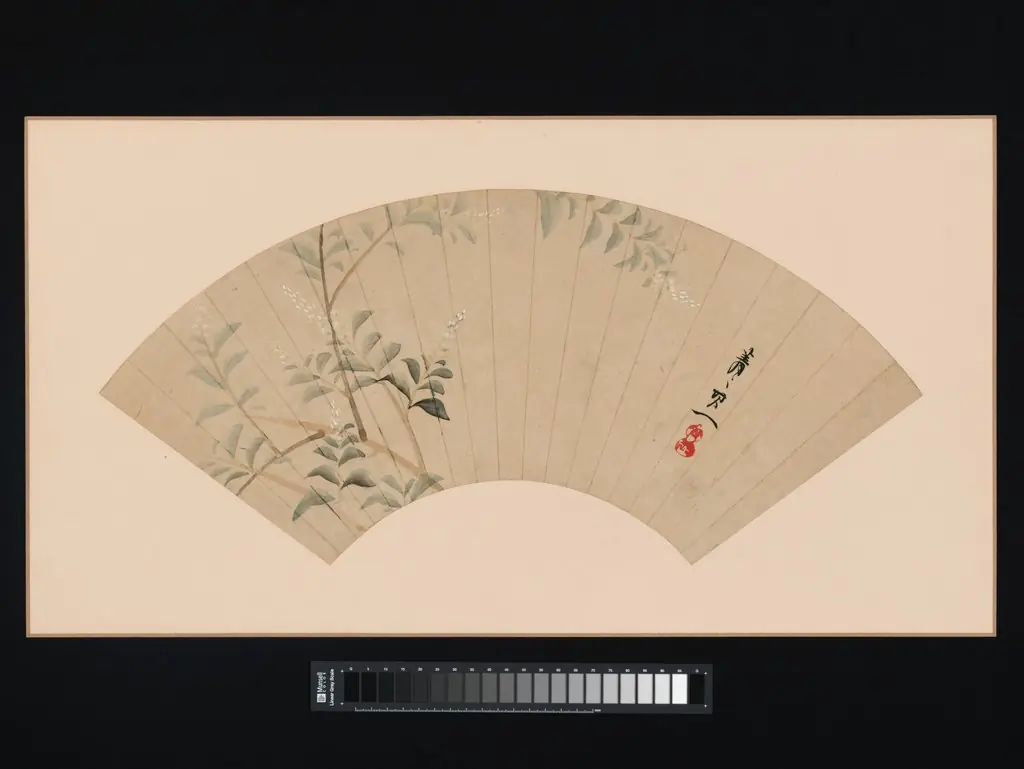
Untitled is an ink painting by the Baroque artist Suzuki Kiitsu. It dates from 1766 and is held in the collection of the Metropolitan Museum of Art.
About this work
Technique & Style
The work is executed as a hanging scroll using ink, color, and gold pigment on paper, a combination characteristic of Japanese decorative painting traditions.
The work is executed as a hanging scroll using ink, color, and gold pigment on paper, a combination characteristic of Japanese decorative painting traditions. The medium places the piece within the conventions of scroll-mounted works intended for vertical display and contemplation. Its classification as a painting and its landscape genre indicate a focus on pictorial representation rendered through layered ink washes, applied color, and the luminous accents that gold pigment provides on the paper ground.
History & Provenance
The work is held by the Metropolitan Museum of Art, where it is catalogued under the accession number 2023.123.456. It was created in 1766 in Japan and is classified as a hanging scroll painting. The artwork has been exhibited in the museum’s Japanese Paintings gallery as part of the "Early Modern Japanese Art" presentation.
Overview
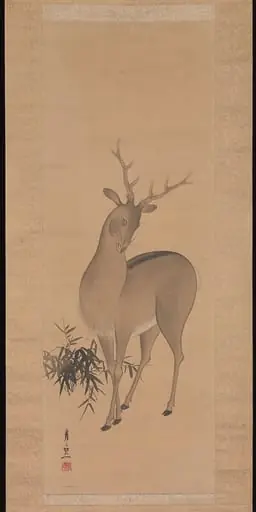
Created in 1766 by Suzuki Kiitsu, this hanging scroll presents a quiet woodland scene rendered with ink, color and gold pigment on paper. The composition centers on three deer positioned within a lightly suggested forest clearing, their forms defined by confident brushwork. The work exemplifies the restrained elegance typical of Edo‑period Japanese painting, inviting contemplation of nature’s subtle rhythms.
Subject & Meaning
The three deer, rendered with minimal detailing, convey a sense of tranquil coexistence within their environment. Their poised stance amid foliage suggests a moment of peaceful grazing, reflecting traditional Japanese reverence for wildlife as symbols of purity and the fleeting beauty of the natural world.
Context
Produced during the later phase of the Rinpa movement, the painting reflects the school’s characteristic synthesis of decorative richness and naturalistic observation. Kiitsu’s approach merges the bold decorative motifs of earlier Rinpa masters with a more intimate, lyrical treatment of fauna, aligning with contemporary tastes for refined yet accessible works.
Artist & collection


- Untitled
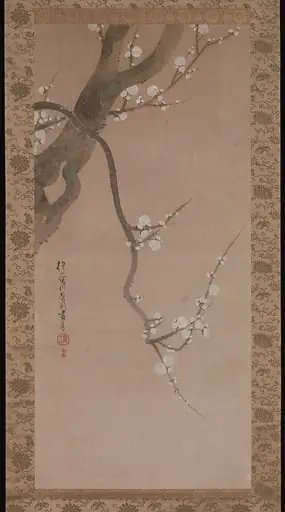 Untitled
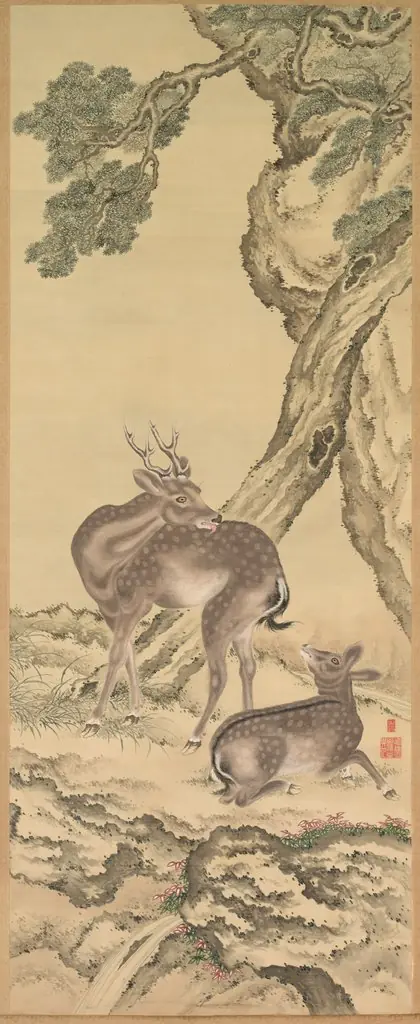 Symbols of Longevity: Deer under Peach and Pine (Peach) (left)
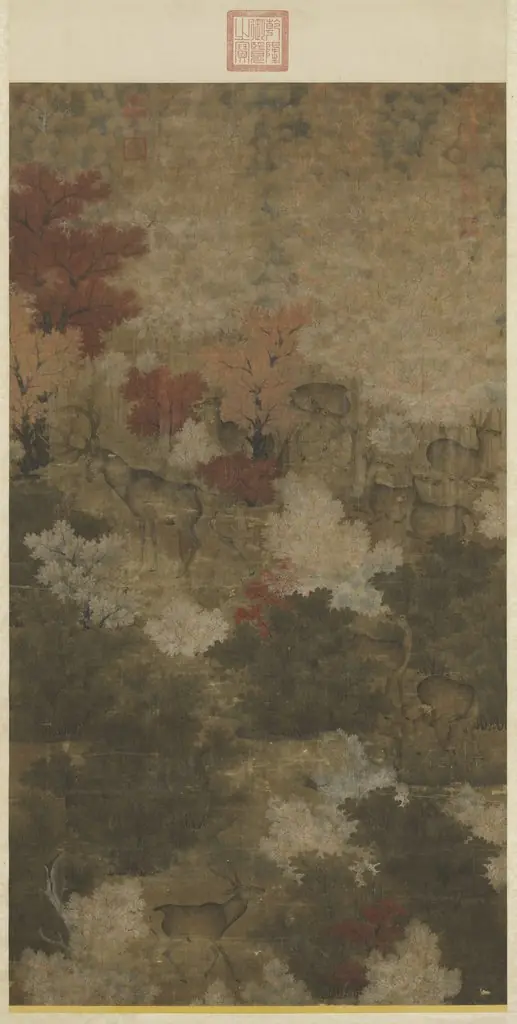 Herd of Deer in an Autumnal Grove
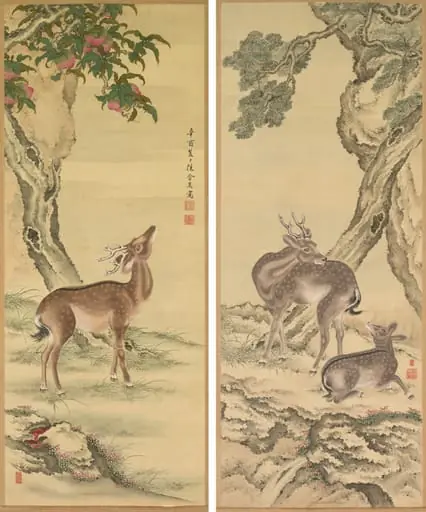 Symbols of Longevity: Deer under Peach and Pine
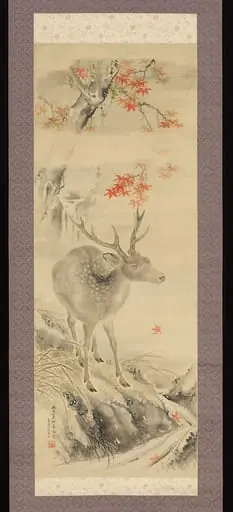
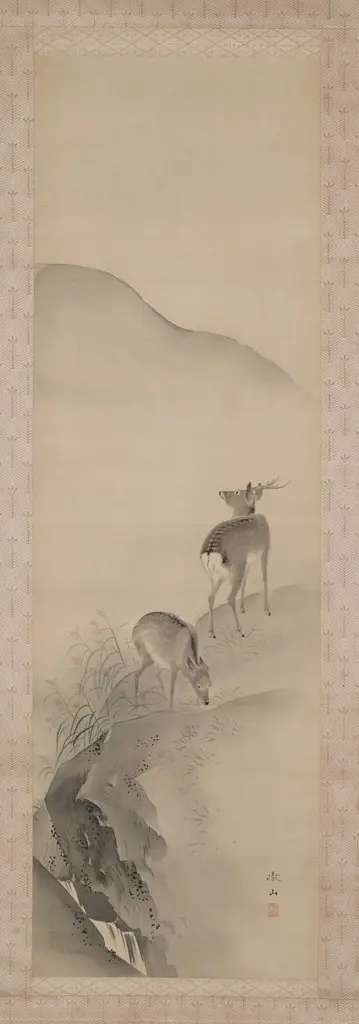 Deer in an Autumn Landscape
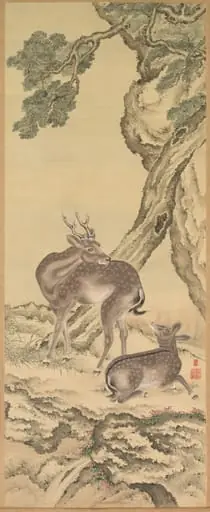 Symbols of Longevity: Deer under Peach and Pine (Peach) (left)
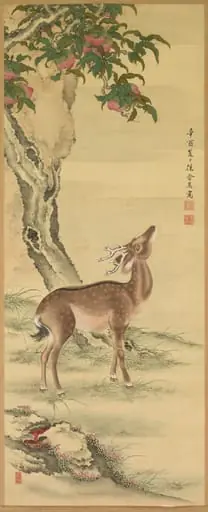 Symbols of Longevity: Deer under Peach and Pine (Pine) (right)
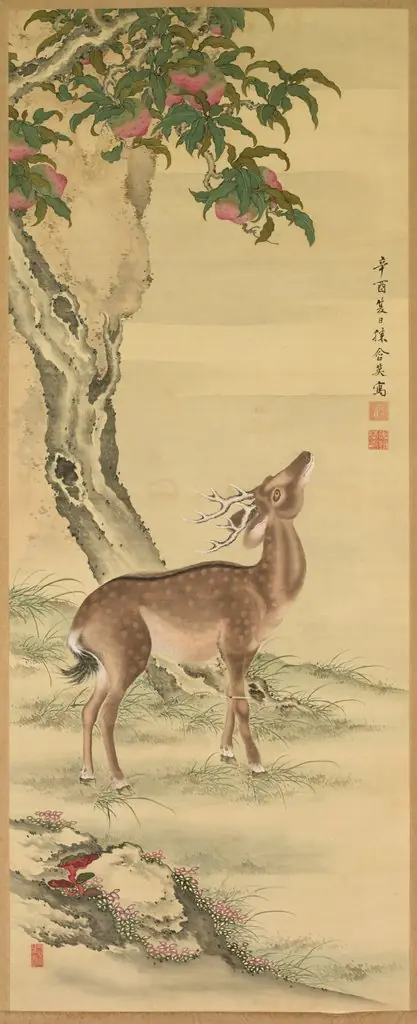 Symbols of Longevity: Deer under Peach and Pine
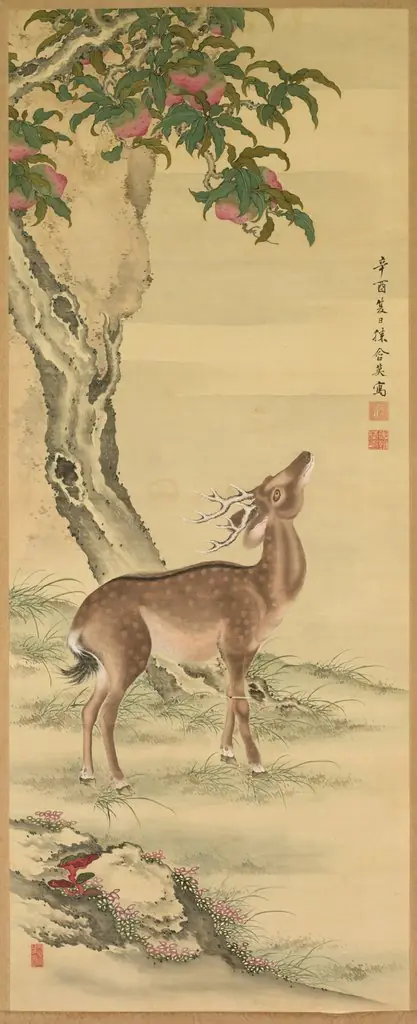 Symbols of Longevity: Deer under Peach and Pine (Pine) (right)
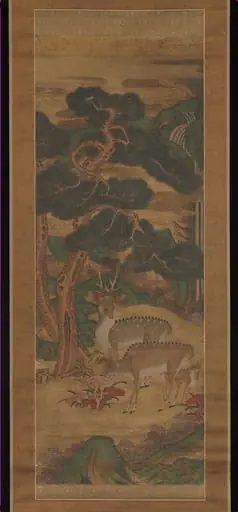 작자미상 소나무 아래 사슴 조선|作者未詳 松下雙鹿圖 朝鮮|Deer amid Pine Trees