Artwork
Abraham and the Three Angels
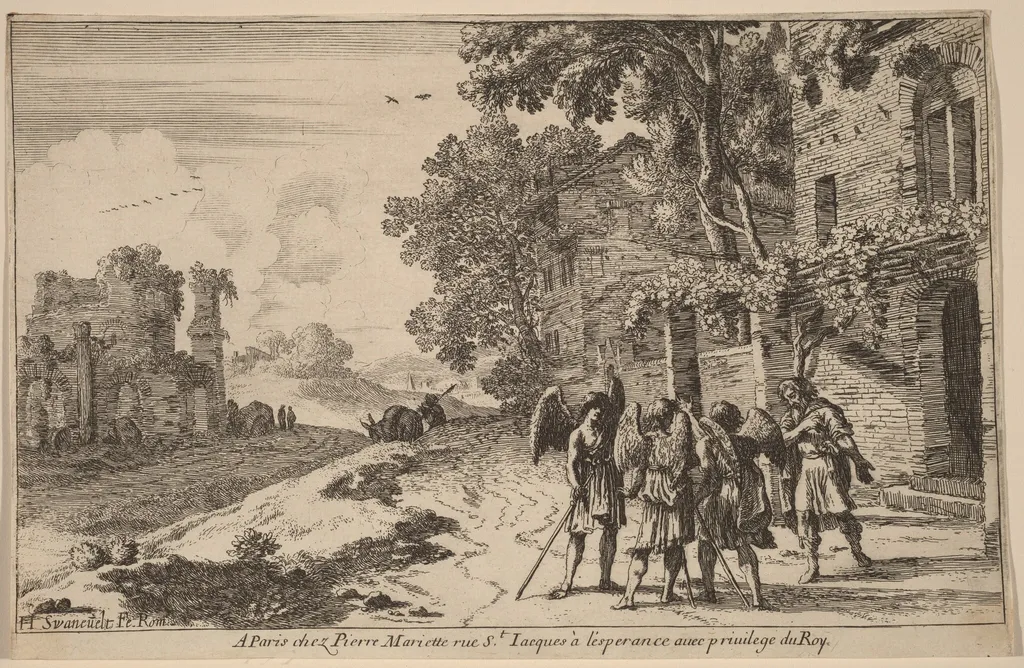
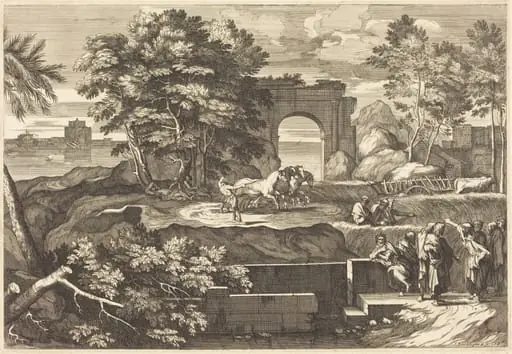
Abraham and the Three Angels is an ink print by the Baroque artist Herman van Swanevelt. It dates from 1628 and is held in the collection of the National Gallery of Art.
About this work
Overview
Herman van Swanevelt created this etching in 1628, capturing a moment from Genesis when Abraham encounters three divine messengers near the oaks of Mamre.
Herman van Swanevelt created this etching in 1628, capturing a moment from Genesis when Abraham encounters three divine messengers near the oaks of Mamre. The work belongs to the printmaking tradition of the early 17th century, reflecting the artist’s engagement with biblical narrative and naturalistic composition. Its intimate scale and refined technique distinguish it from larger altar pieces of the period.
Subject & Meaning
The scene illustrates Abraham’s hospitality to strangers who reveal themselves as divine emissaries. He kneels in reverence beneath the trees, his posture conveying humility before the sacred. The three figures stand still, their presence calm and otherworldly.
The composition emphasizes quiet awe rather than dramatic revelation, aligning with a contemplative interpretation of the biblical episode.
Technique & Style
Swanevelt employed etching with drypoint to achieve subtle tonal gradations. Delicate lines model the folds of the angels’ garments, while fine, irregular dots in the drypoint create a luminous texture on their robes. The soft glow on Abraham’s face emerges from controlled ink pressure, not bright highlights. The trees are rendered with loose, framing strokes that suggest depth without heavy detail.
History & Provenance
The etching was produced during Swanevelt’s time in Rome, where he absorbed Italian landscape traditions and religious iconography. It circulated among collectors of Northern European prints, particularly those interested in biblical themes rendered with poetic restraint. No definitive early ownership records survive, but it appears in several 18th-century European print collections.
Context
In the 1620s, Dutch and Flemish artists increasingly turned to biblical subjects through intimate print formats. Swanevelt’s approach diverged from the theatricality of contemporaries like Rembrandt, favoring stillness and atmospheric nuance. His work reflects the influence of Claude Lorrain and the Roman landscape school, blending sacred narrative with a sense of natural harmony.
Legacy
Though less widely known than his peers, Swanevelt’s etching contributed to a quieter strain of religious printmaking that valued subtlety over spectacle. Its influence is visible in later 17th-century Dutch etchers who prioritized mood and light over narrative intensity. The work remains a quiet example of how spiritual themes were rendered with restraint in early modern print culture.
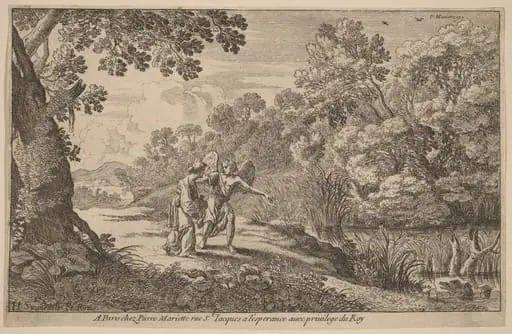
Own this work as a print
Artist & collection
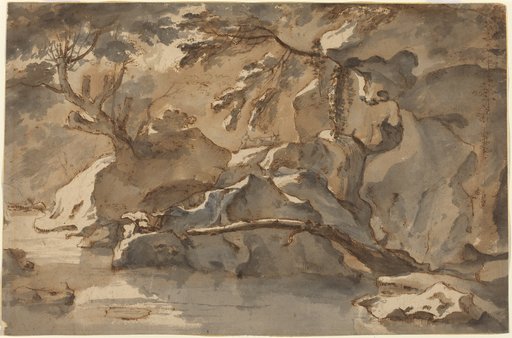

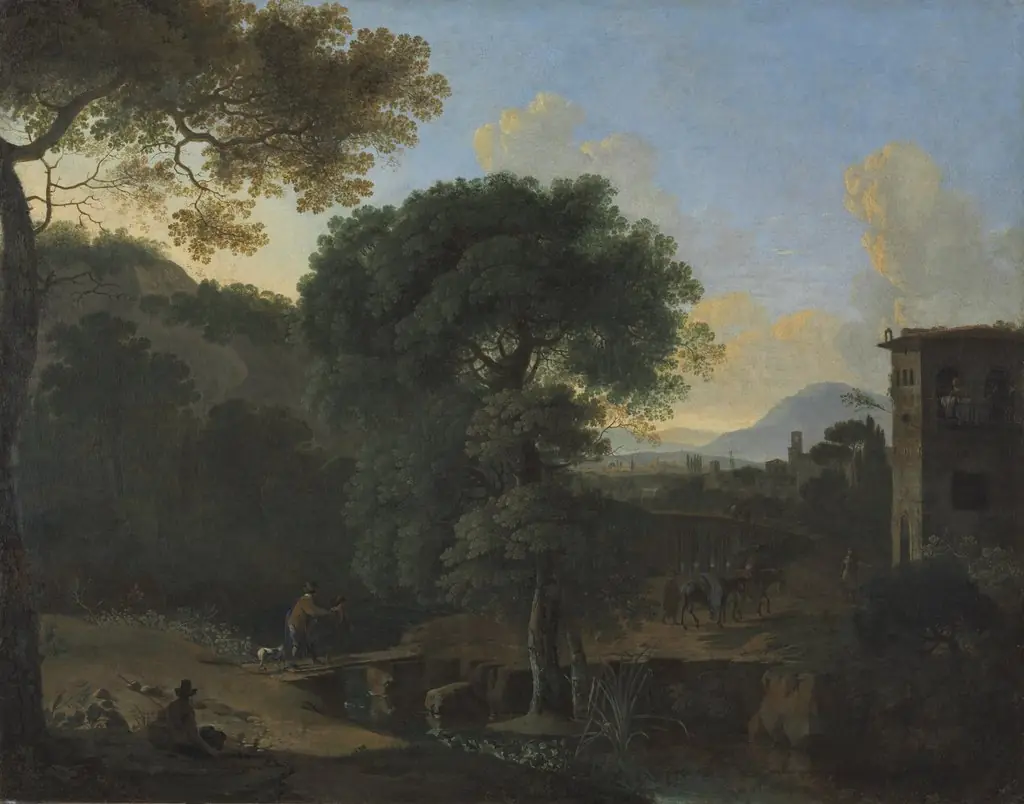
- Hagar and the Angel
 The Bent Tree
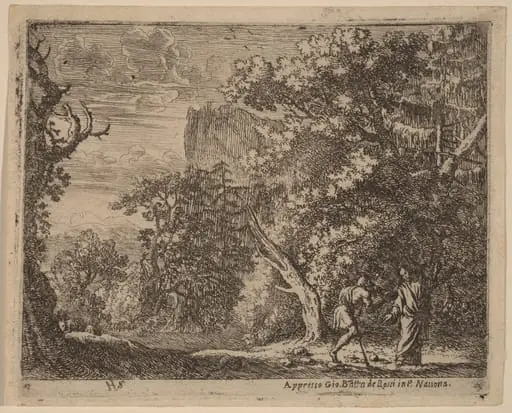 Temptation of Christ
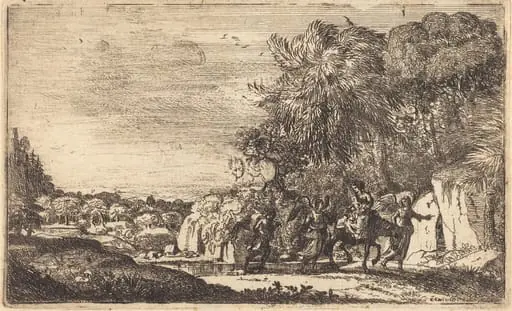 The Flight into Egypt (La fuite en Egypte)
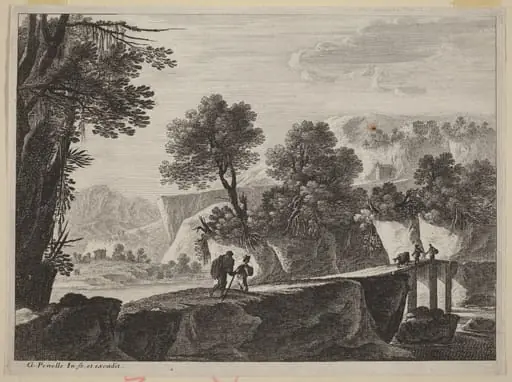 Travelers Approaching a Bridge
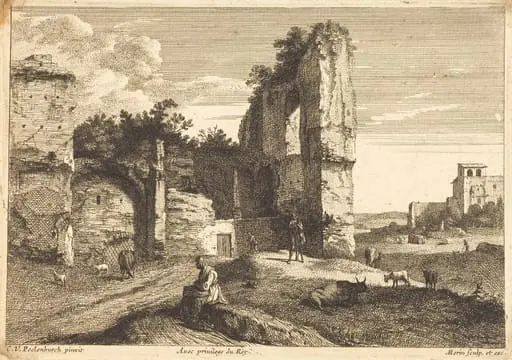 Old Woman Seated
 Building with a Square Tower
 The Adoration of the Magi
 Travelers on Road to Left of a Stream
 Landscape with Ruins
 The Pharisees Complain to Our Lord
 Coast Scene with an Artist (Le dessinateur)