Artwork
Italian landscape
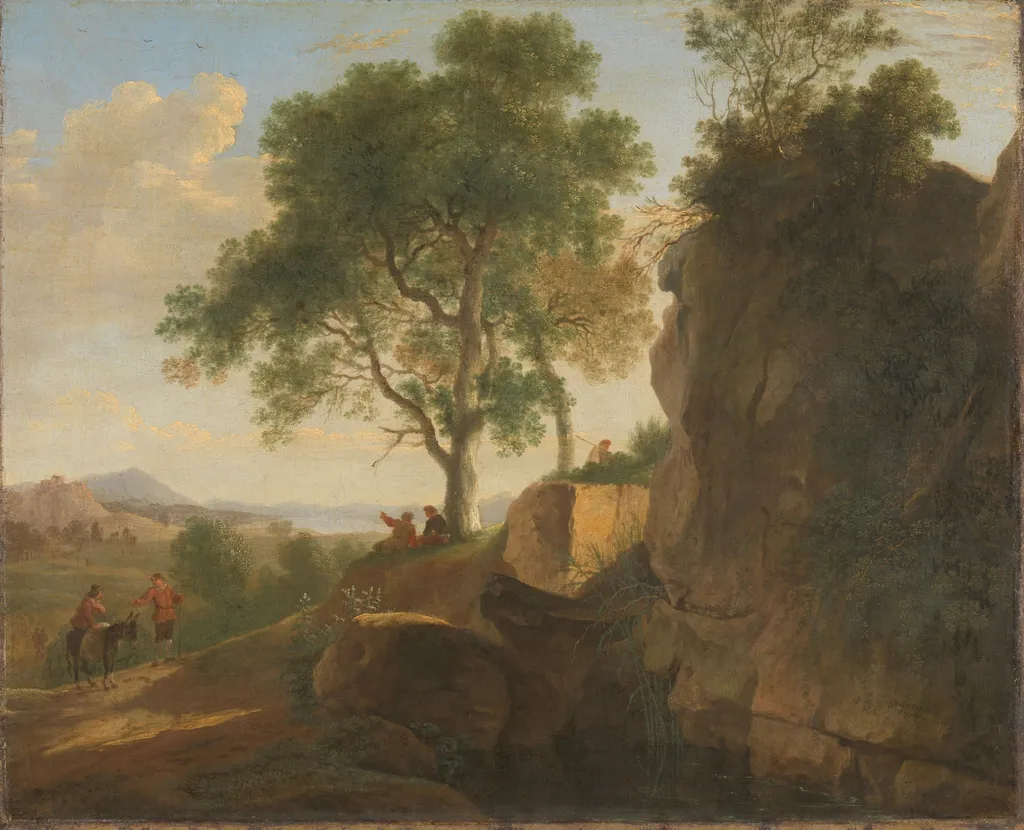
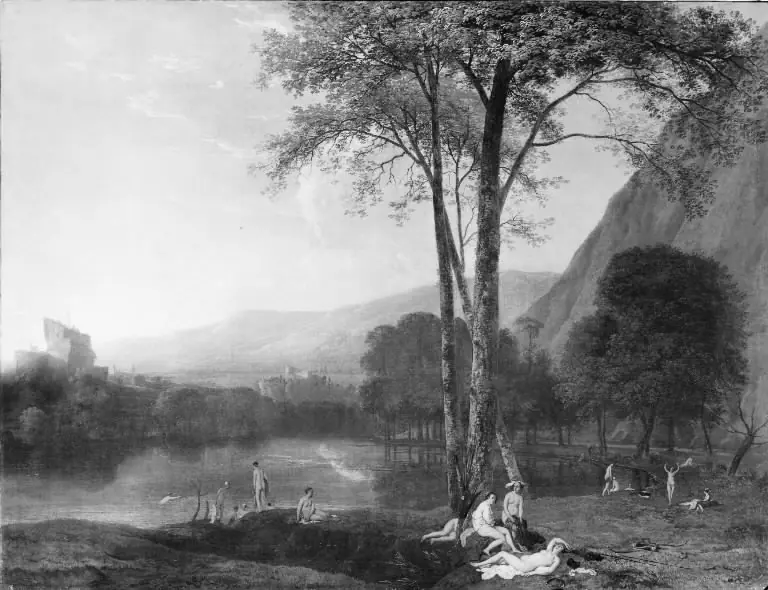
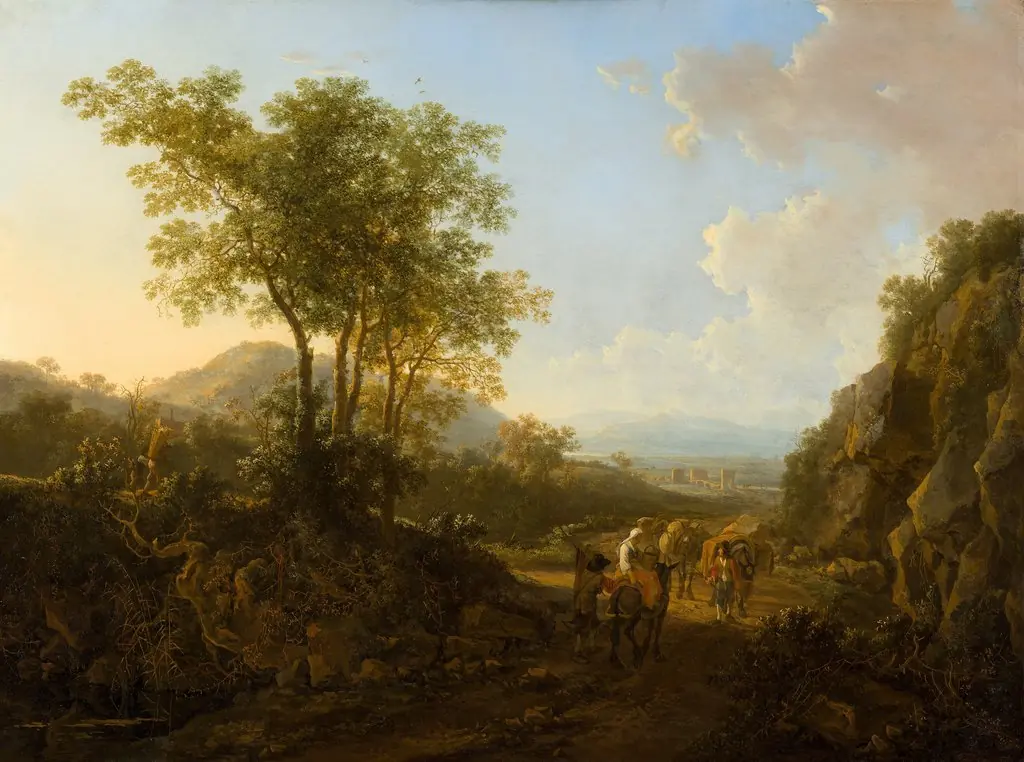
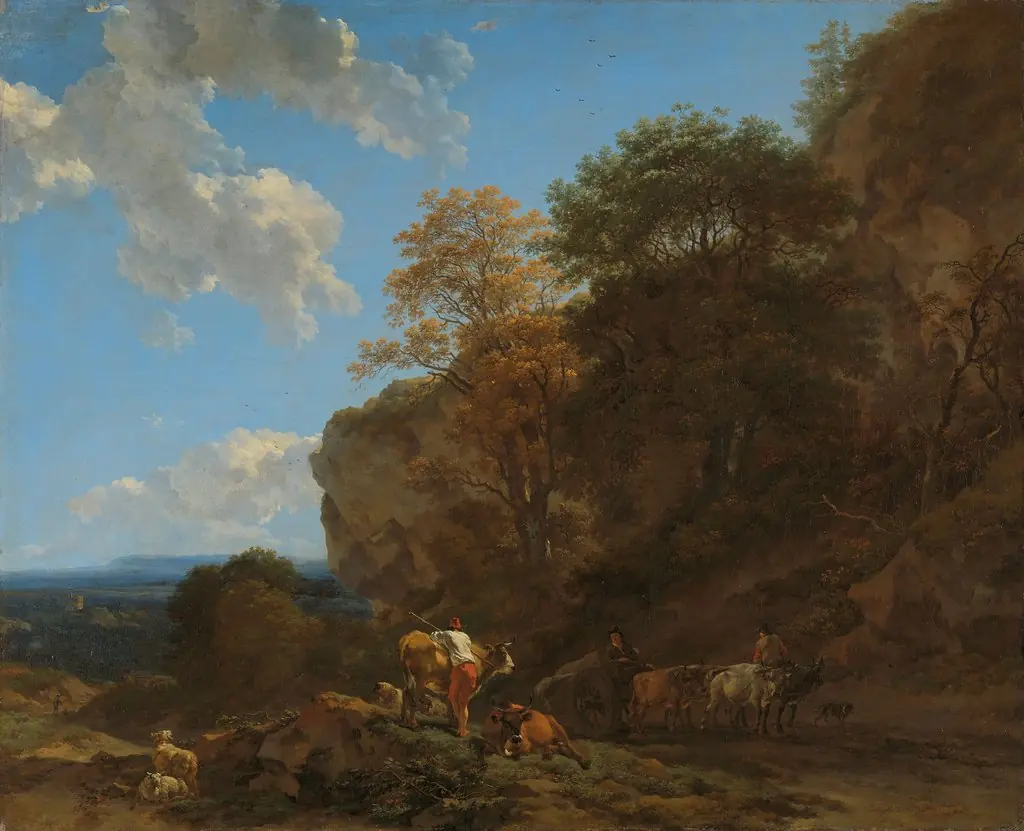
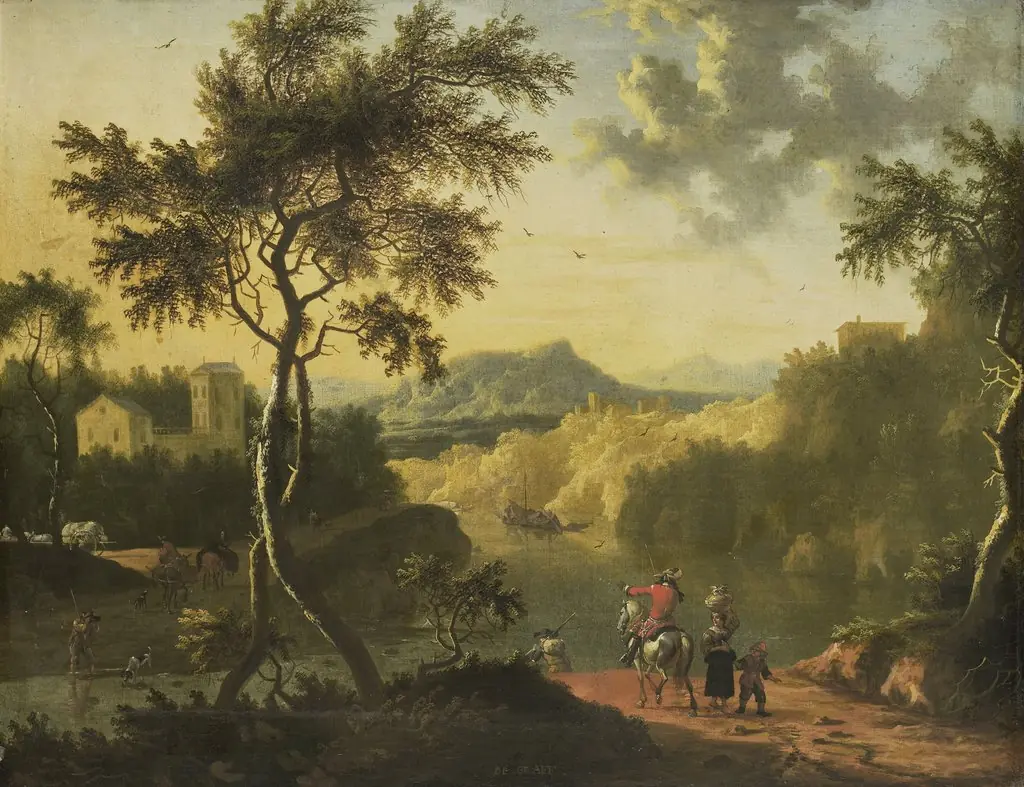
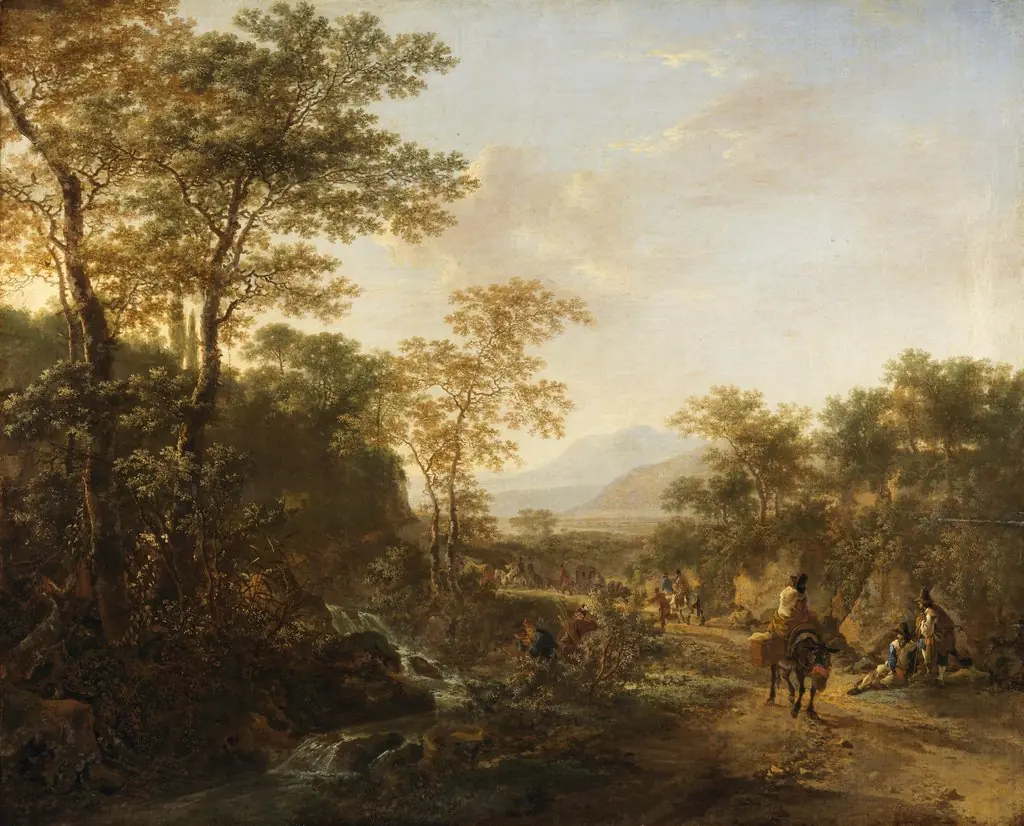
Italian landscape is an unspecified painting by the Baroque artist Herman van Swanevelt. It dates from 1643 and is held in the collection of the Rijksmuseum.
About this work
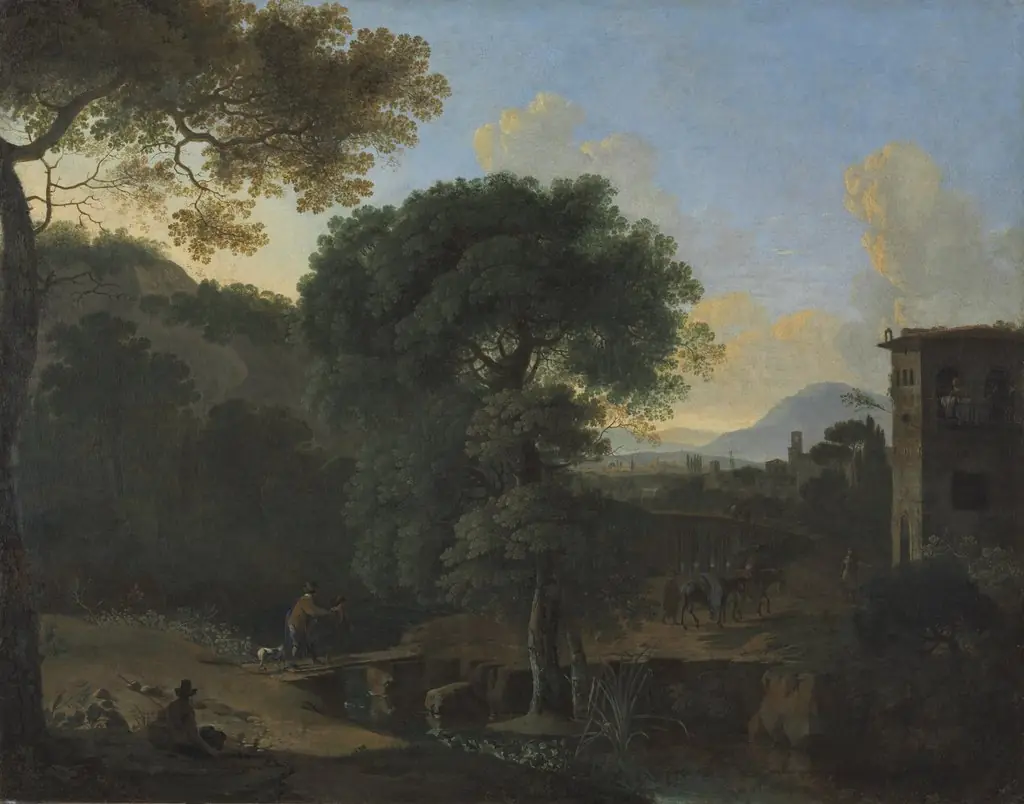
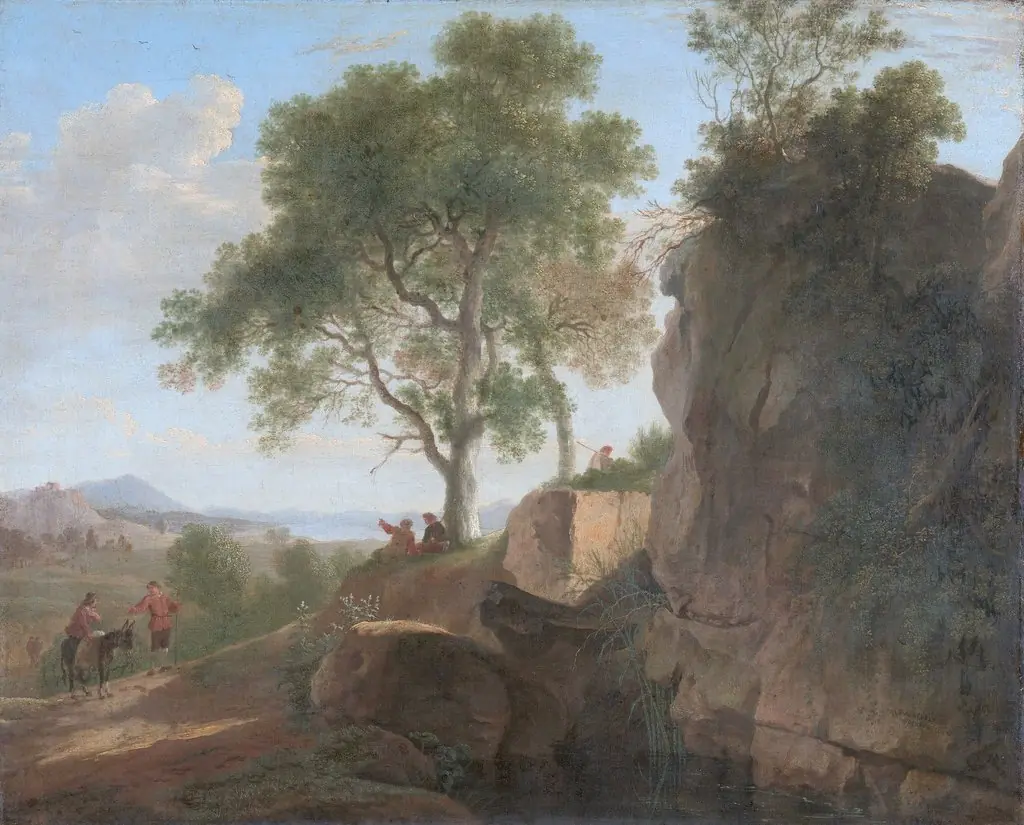
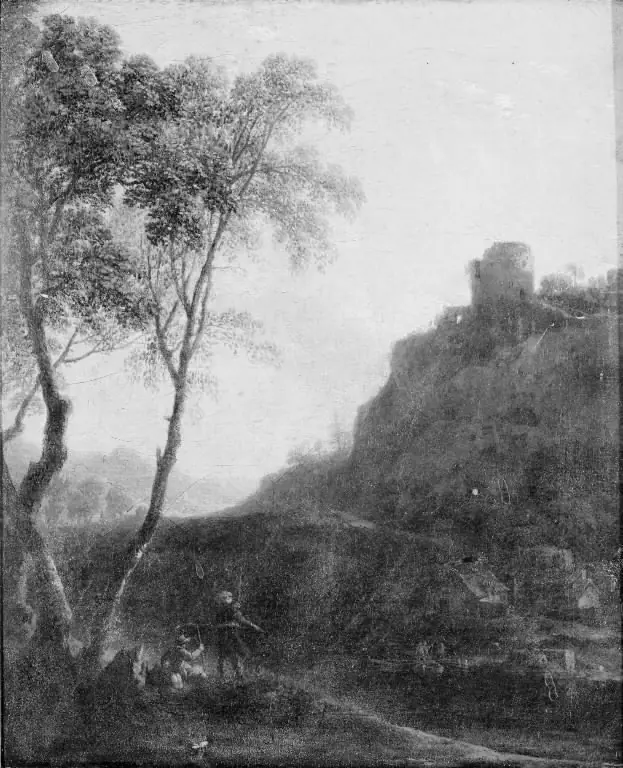
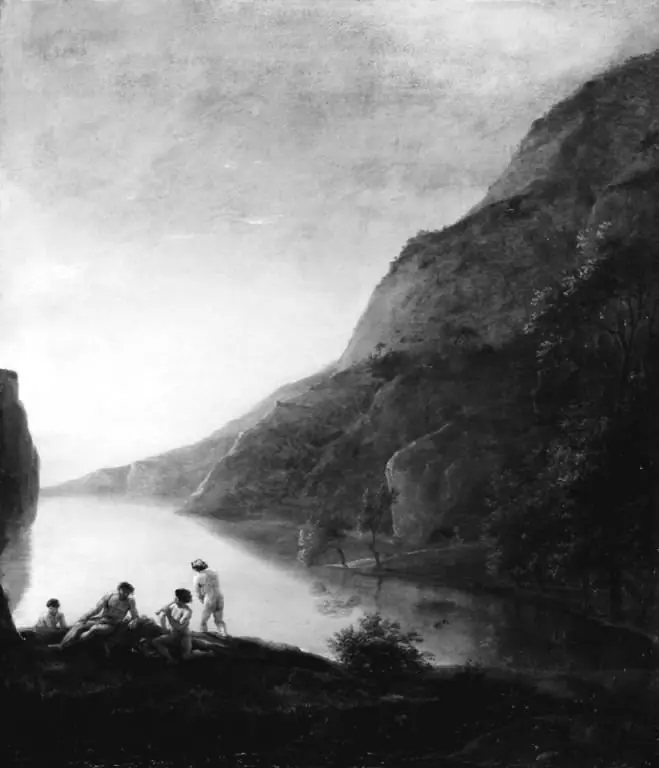
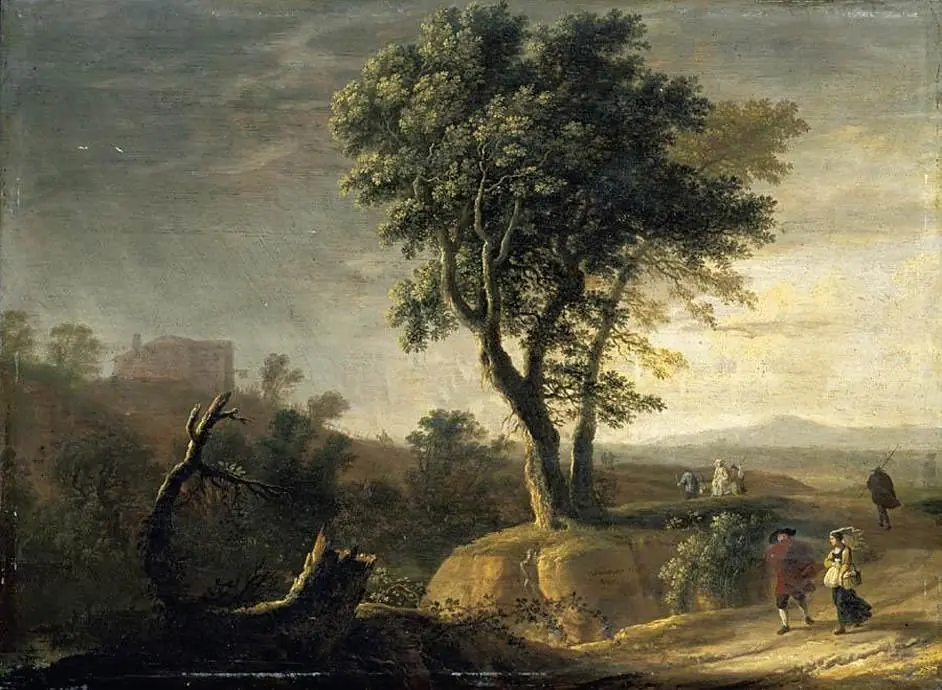
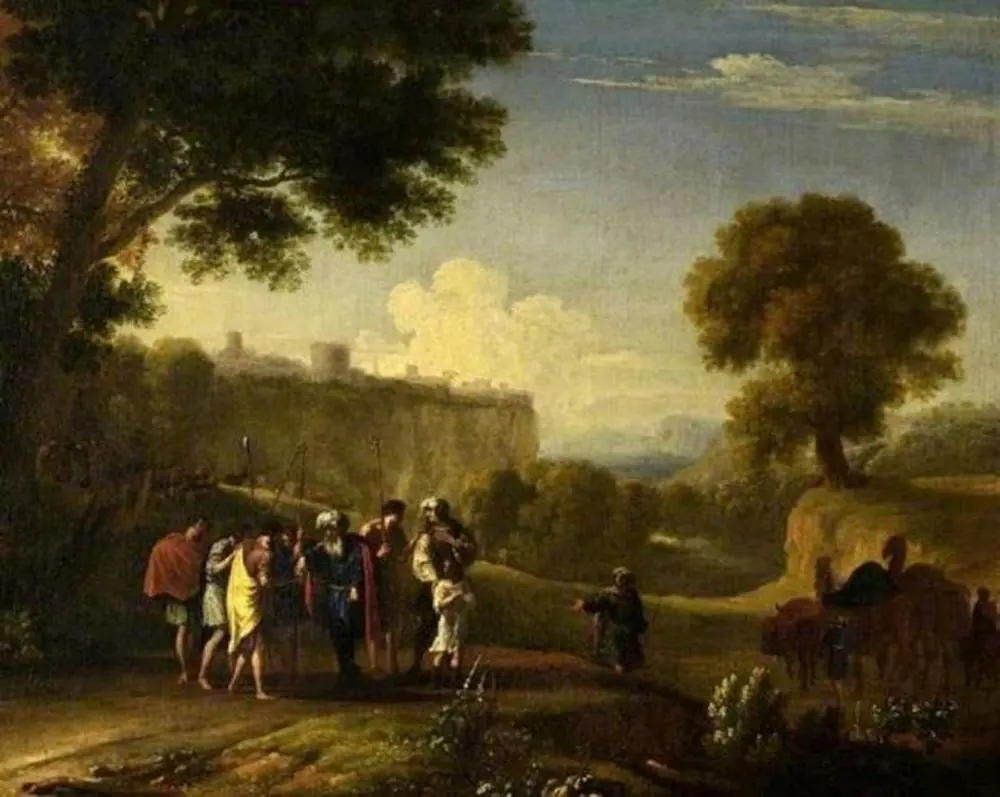
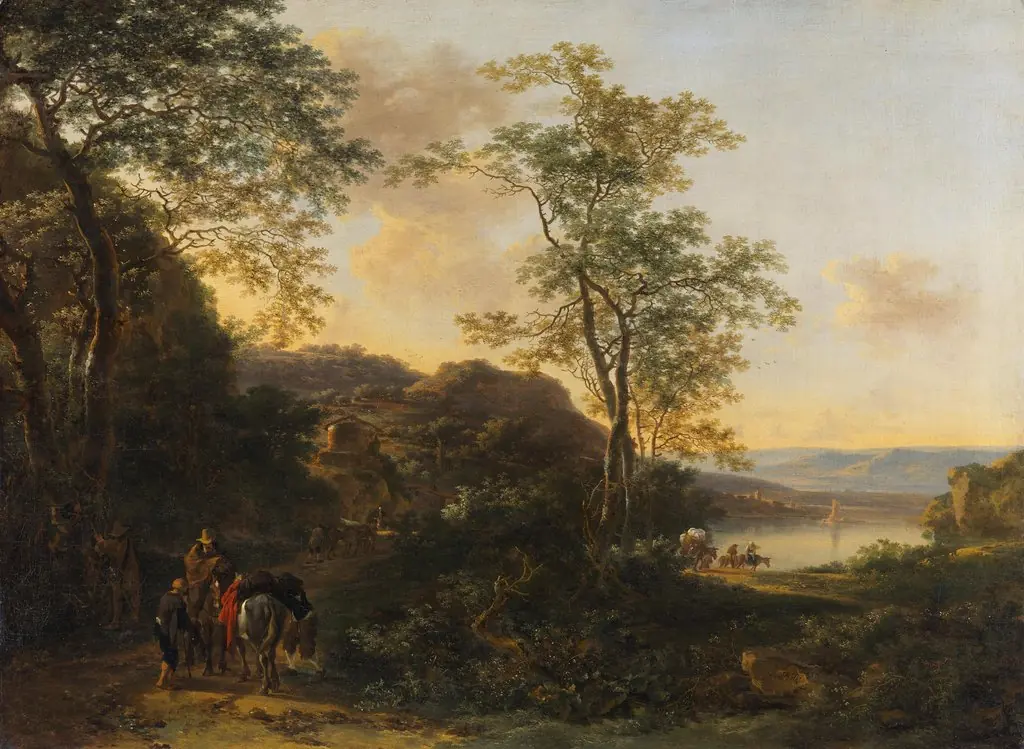
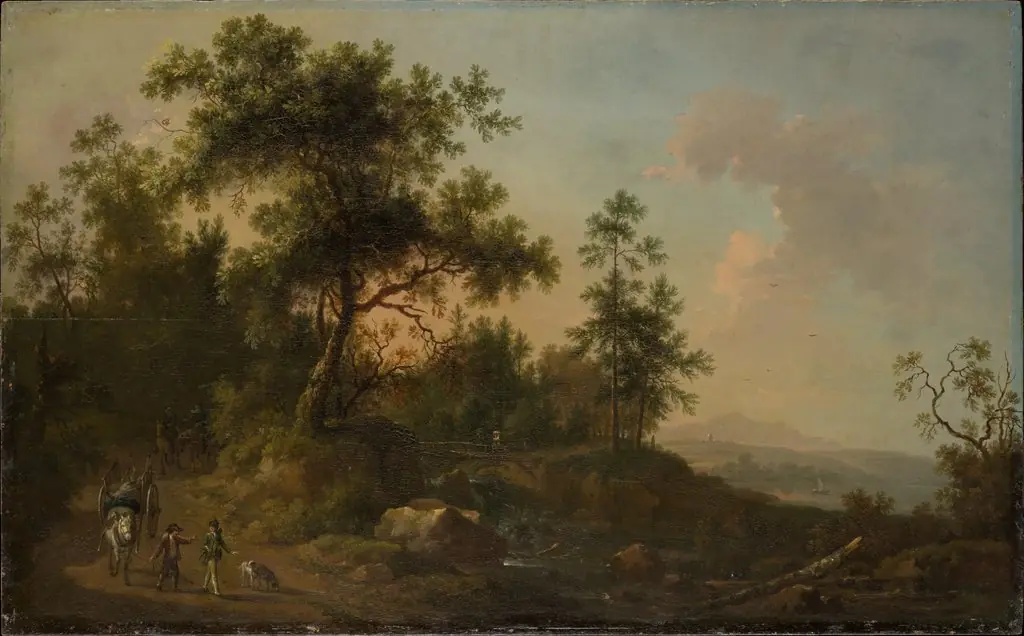
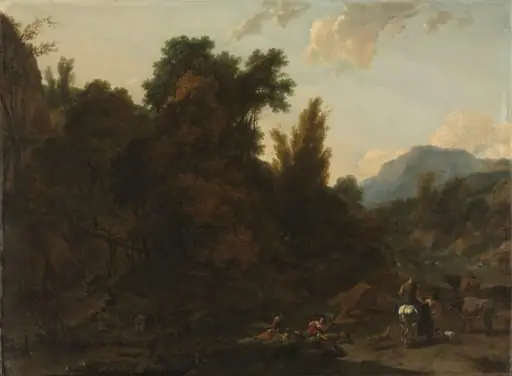
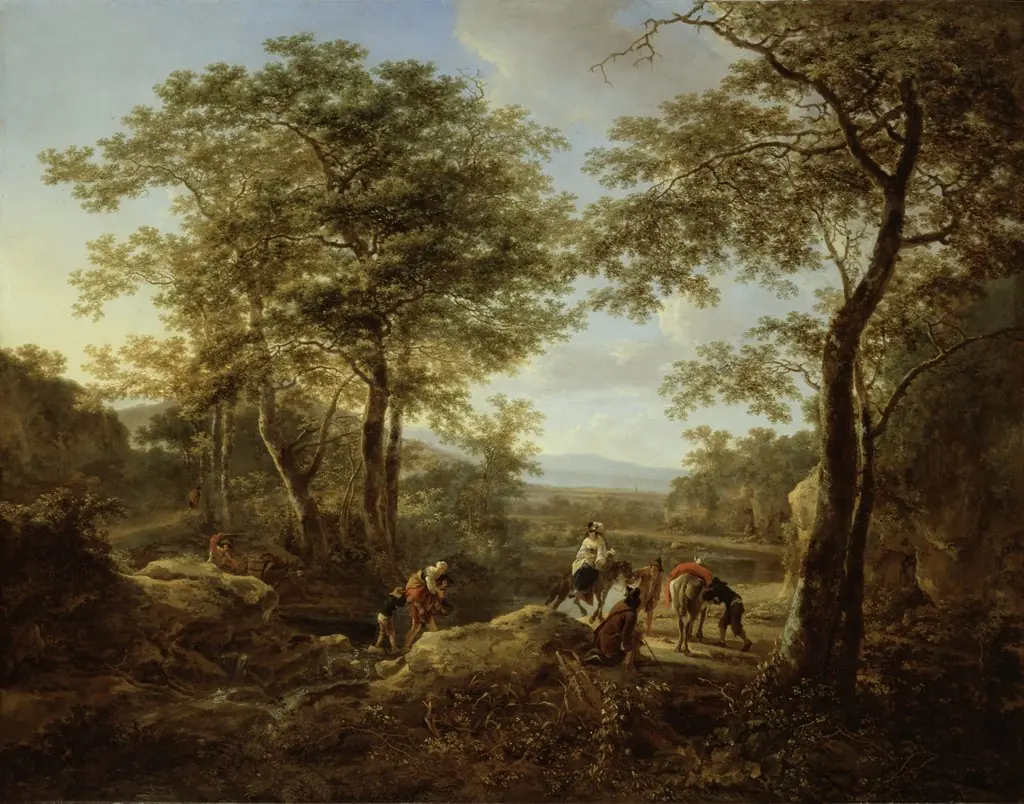
You see a rocky Italian hillside with a dark pool of water, travelers resting under trees, and mule drivers on a dirt road.
You see a rocky Italian hillside with a dark pool of water, travelers resting under trees, and mule drivers on a dirt road.
The artist painted this scene in 1643, but no one knows their name. That’s unusual, most Baroque landscapes were signed. The trees and rocks feel almost too big, like the artist wanted to show off how light and shadow play on rough surfaces.
If you like how the light and dark contrast here, look up chiaroscuro.
Subject & Meaning
The Italian landscape subject depicted by Herman van Swanevelt represents an idyllic, sunlit pastoral scene rooted in the Baroque tradition of Italianate landscape painting. His works, such as those created for the Barberini family and Pope Urban VIII, symbolize the idealized harmony between nature and classical antiquity, often reflecting the influence of Claude Lorrain. The subject matter, featuring small, well-proportioned figures like shepherds and travelers within expansive, luminous vistas, embodies themes of tranquility, classical antiquity, and the poetic observation of light across time, as seen in his etchings and frescoes for patrons including Louis XIV and the Vatican.
Technique & Style
Herman van Swanevelt worked on paper and copper to create his idyllic Italianate landscapes. His drawings and etchings employed fine linework to capture shifting southern light, while his oil paintings on canvas demonstrated a restrained handling of atmosphere and spatial depth. Contemporary accounts describe his technique as precise yet fluid, producing works that balanced topographical accuracy with poetic mood. The medium allowed him to render delicate chiaroscuro effects that defined his Baroque-era style.
History & Provenance
Italian landscape is a painting by Herman van Swanevelt dated 1643. By that year Swanevelt had already returned from Rome to Paris, a move he made in 1641 after more than a decade in Italy. The work was produced during his mature Parisian period, between his return from Italy and his later travels between Paris and Woerden in the late 1640s. No information is provided in the sources regarding the original commissioner, patron, or subsequent ownership chain of this specific painting. The sources document Swanevelt's general patronage network, including the Barberini family, the Vatican, Philip IV of Spain, Cardinal Richelieu, and Louis XIV, but none of these is tied to Italian landscape.
Context
Herman van Swanevelt is recognized as a pivotal figure in the Baroque era who helped define the classical phase of the Italianate landscape during the 1630s. His work serves as a crucial link between the first generation of Dutch Italianate painters, such as Cornelis van Poelenburch, and the second generation, including Jan Both and Nicolaes Berchem, who adopted his monumental compositions and treatment of southern sunlight. Art historical scholarship notes that his idyllic style developed in parallel with, and at times anticipated, that of Claude Lorrain. Swanevelt's reputation was built on his ability to depict subtle light variations at different times of day, earning him the nickname "heremiet" among the Bentvueghels. His influence extended significantly to the development of landscape art in France, where he later became a member of the Académie Royale de Peinture et de Sculpture.
Own this work as a print
Artist & collection