Artwork
The Four Ruined Arches
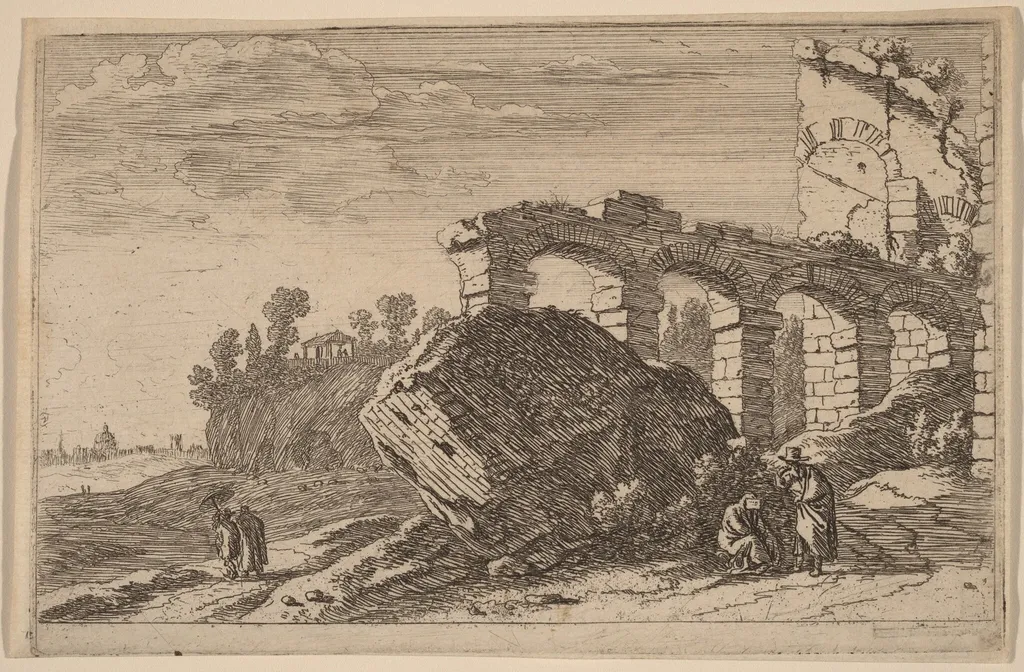
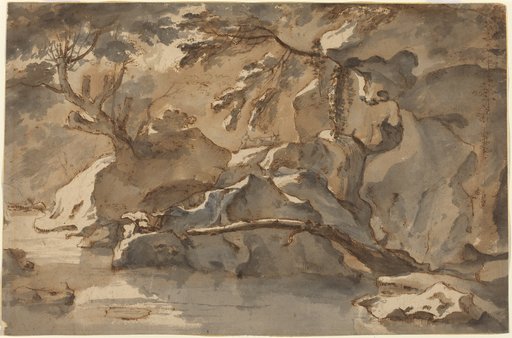
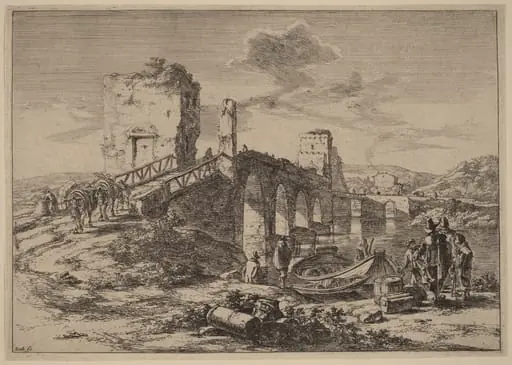
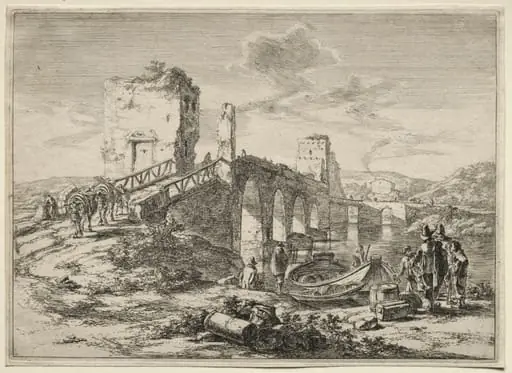
The Four Ruined Arches is an ink print by the Baroque artist Herman van Swanevelt. It dates from 1628 and is held in the collection of the National Gallery of Art.
About this work
Overview
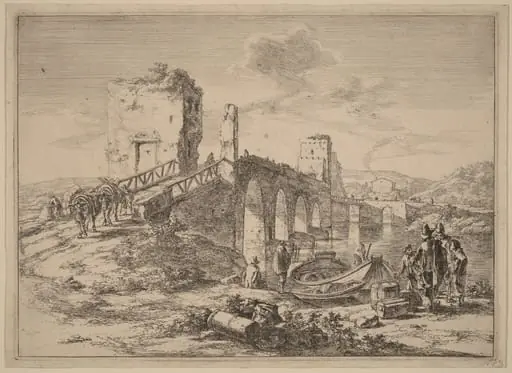
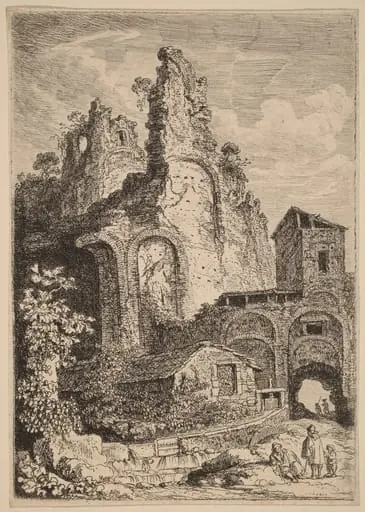
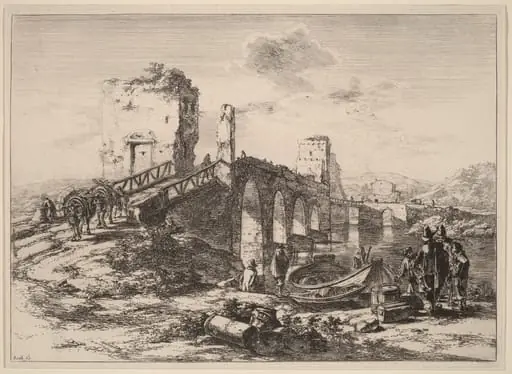
Created in 1628, The Four Ruined Arches is an etching by Herman van Swanevelt that depicts a quiet, decaying architectural fragment in a wild landscape. The work belongs to a 17th-century tradition that found poetic resonance in abandoned structures. Van Swanevelt rendered the scene with fine, controlled lines, capturing the stillness and gradual reclamation of nature over human construction.
Subject & Meaning
Their instability suggests time’s erosion, while the overgrown weeds and leaning trees imply nature’s quiet reassertion.
The composition centers on four collapsed stone arches, tilted and partially swallowed by vegetation. Their instability suggests time’s erosion, while the overgrown weeds and leaning trees imply nature’s quiet reassertion. Rather than celebrating grandeur, the image evokes melancholy reflection on impermanence, aligning with contemporary European tastes for contemplative ruins as symbols of transience.
Technique & Style
Van Swanevelt employed etching, using a needle to incise lines into a metal plate coated with wax. Ink was pressed into the grooves and transferred to paper under pressure. The shadows beneath the arches are rendered with dense, parallel strokes, creating strong contrasts that enhance the sense of depth and weight. The precision of the lines reflects technical discipline typical of Dutch and Flemish printmakers of the period.
History & Provenance
The print was made during van Swanevelt’s early career, likely while he was in Rome, where he studied classical ruins and developed his interest in landscape etching. Though few records of its early ownership survive, the work entered broader circulation through printsellers in the Low Countries. It remains one of his most recognized prints, frequently cited in studies of 17th-century Northern printmaking.
Context
In the early 1600s, Italian and Northern artists increasingly turned to ruins as subjects, blending topographical observation with allegorical undertones. Van Swanevelt’s work reflects this trend, influenced by Roman antiquities and the growing interest in landscape as an independent genre. His etchings contributed to a visual language that valued atmosphere and mood over narrative clarity.
Legacy
Van Swanevelt’s treatment of ruins influenced later Northern printmakers, including those who explored chiaroscuro and atmospheric depth. While less famous than Rembrandt, his precise use of line and shadow helped shape the aesthetic of landscape etching. The Four Ruined Arches endures as a quiet example of how early modern artists used decay to convey contemplative, almost spiritual themes.
Own this work as a print
Artist & collection