Artwork
Annunciation to the Shepherds
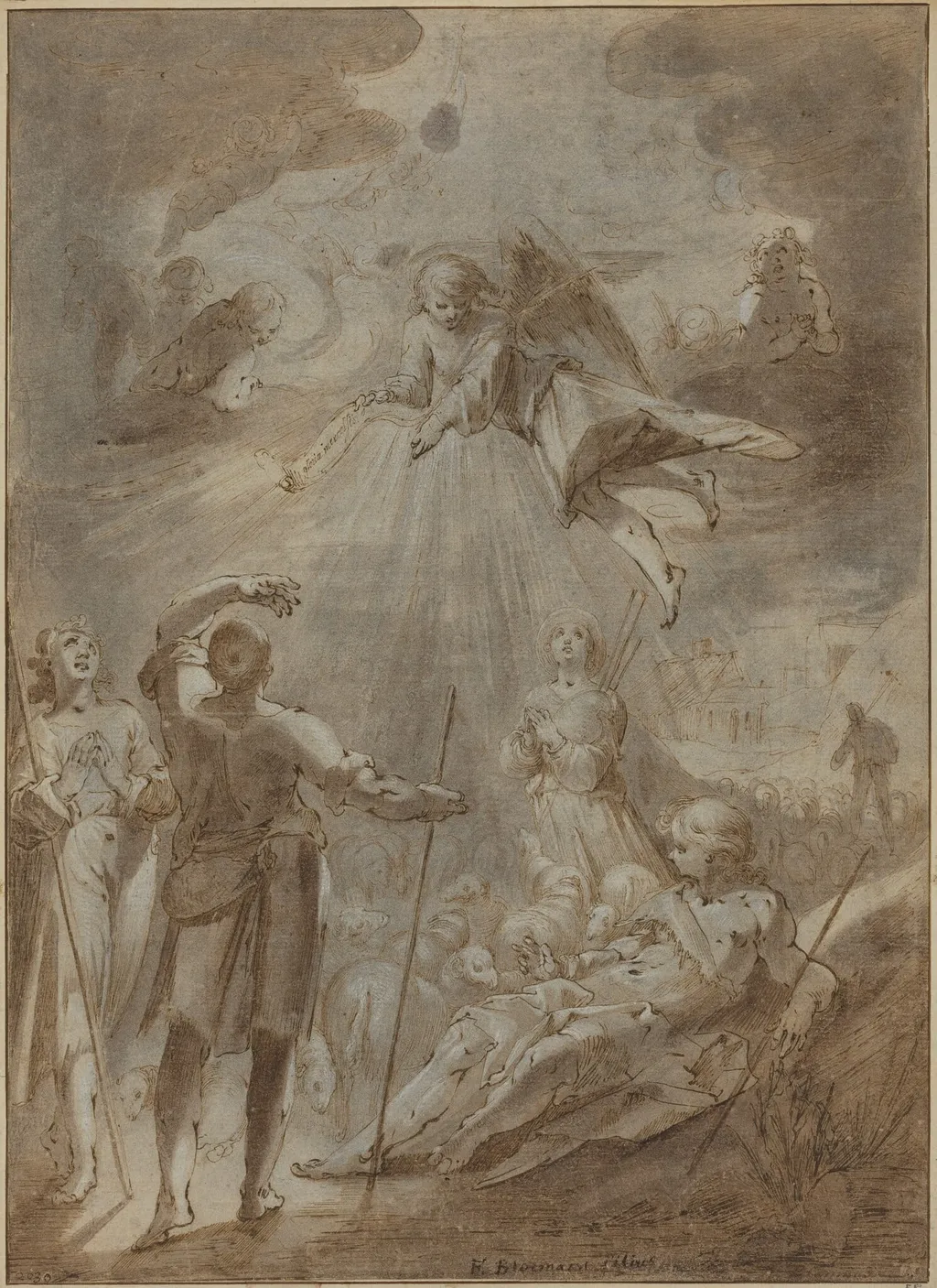
Annunciation to the Shepherds is an ink drawing by the Renaissance artist Gerrit Pietersz Sweelinck. It dates from 1606 and is held in the collection of the National Gallery of Art.
- Inscription
- Inscribed:in unknown hand, across bottom: F. Bloemaert[...?]; lower left:2030; upper center verso: Coll. Crozat / no.2030; center verso: bloem aert / 589;Jan ... Pict[ersz.?];Frederick ... A.B
- Markings
- Marked:BS: Francois Renaud (Lugt 1042)
About this work
Overview
Created in 1606, Gerrit Pietersz Sweelinck's Annunciation to the Shepherds is a dynamic pen and brown ink drawing with brown wash and white heightening.
Created in 1606, Gerrit Pietersz Sweelinck's Annunciation to the Shepherds is a dynamic pen and brown ink drawing with brown wash and white heightening. The composition depicts the biblical moment when an angel appears to shepherds in a field to announce the birth of Christ. Sweelinck organizes the scene with a winged figure descending from the upper left, holding a scroll, while the shepherds below react with a mixture of awe and alarm; one central figure raises his arms in surprise, while others kneel or gaze upward.
The artist employs loose, rapid hatching and fluid washes to convey movement and atmospheric depth, characteristic of Dutch Mannerist draftsmanship of the early 17th century. A ship visible in the background situates the event within a coastal landscape, a common motif in Northern European interpretations of this subject. Executed during a period when Sweelinck was active in Amsterdam, this work demonstrates his skill in capturing dramatic narrative tension through economical yet expressive line work, serving as a preparatory study or independent devotional image rather than a finished oil painting.
Subject & Meaning
The scene depicts the biblical episode in which an angel announces the birth of Christ to shepherds. A winged figure hovers above, holding a scroll, while a central man lifts his arms in response. Other figures kneel or gaze upward, embodying awe and devotion, while a distant ship hints at the broader world beyond the pastoral setting.
Technique & Style
Sweelinck employs pen work combined with a brown wash to model light and shadow, creating depth through varied line density and tonal shading. White highlights accentuate the luminous aspects of the angelic figure. The drawing’s loose, rapid strokes and cross‑hatching suggest a study or preparatory sketch rather than a finished composition, emphasizing spontaneity.
Context
Created in the early seventeenth century, the drawing reflects the period’s interest in religious narrative rendered with dynamic, expressive draftsmanship. The use of ink and wash aligns with contemporary practices for quick studies, allowing artists to explore composition and gesture before committing to a larger painted work.
Own this work as a print
Artist & collection


- Adoration of the Shepherds
 The Madonna and Child in Glory Adored by Saints
 The Triumph of the Trinity (The Gloria)
 Madonna and Child in Glory with Saints John the Baptist, Stephen, and Lawrence
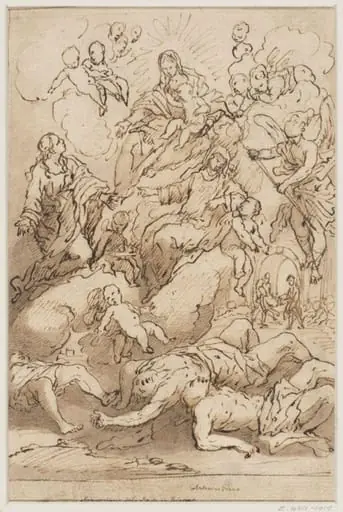 Anniversary of the Plague at Palermo
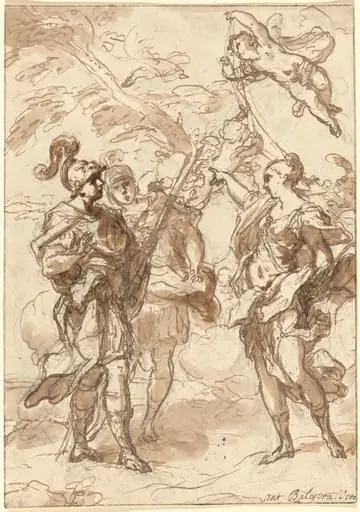 Venus as a Huntress Appearing to Aeneas and Achates
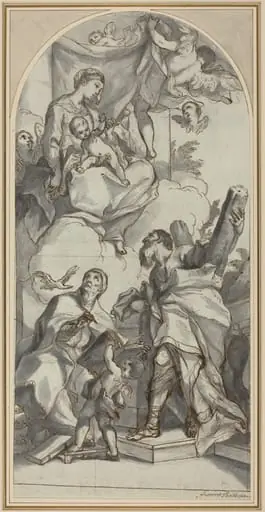 The Madonna and Child in Glory with Saints Gregory the Great and Andrew
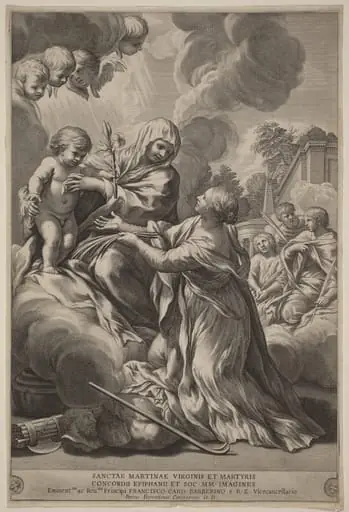 Virgin and Child with Martyrs
 Plague Victims Pleading for Help from Christ, the Virgin, and Saint Roch
 The Assumption of the Virgin
 The Last Judgment
 The Coronation of the Virgin