Artwork
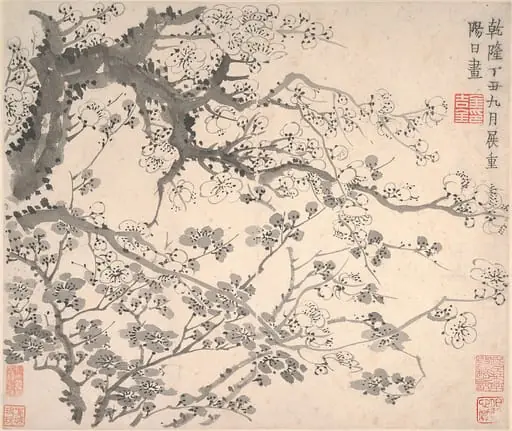
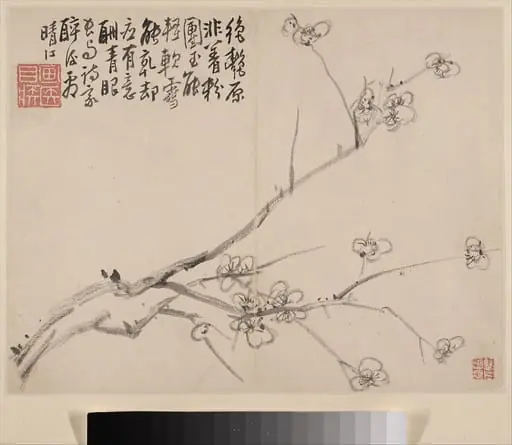
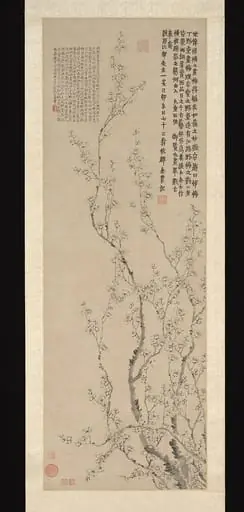
清 湯貽汾 墨梅 四冊頁|Blossoming Plum
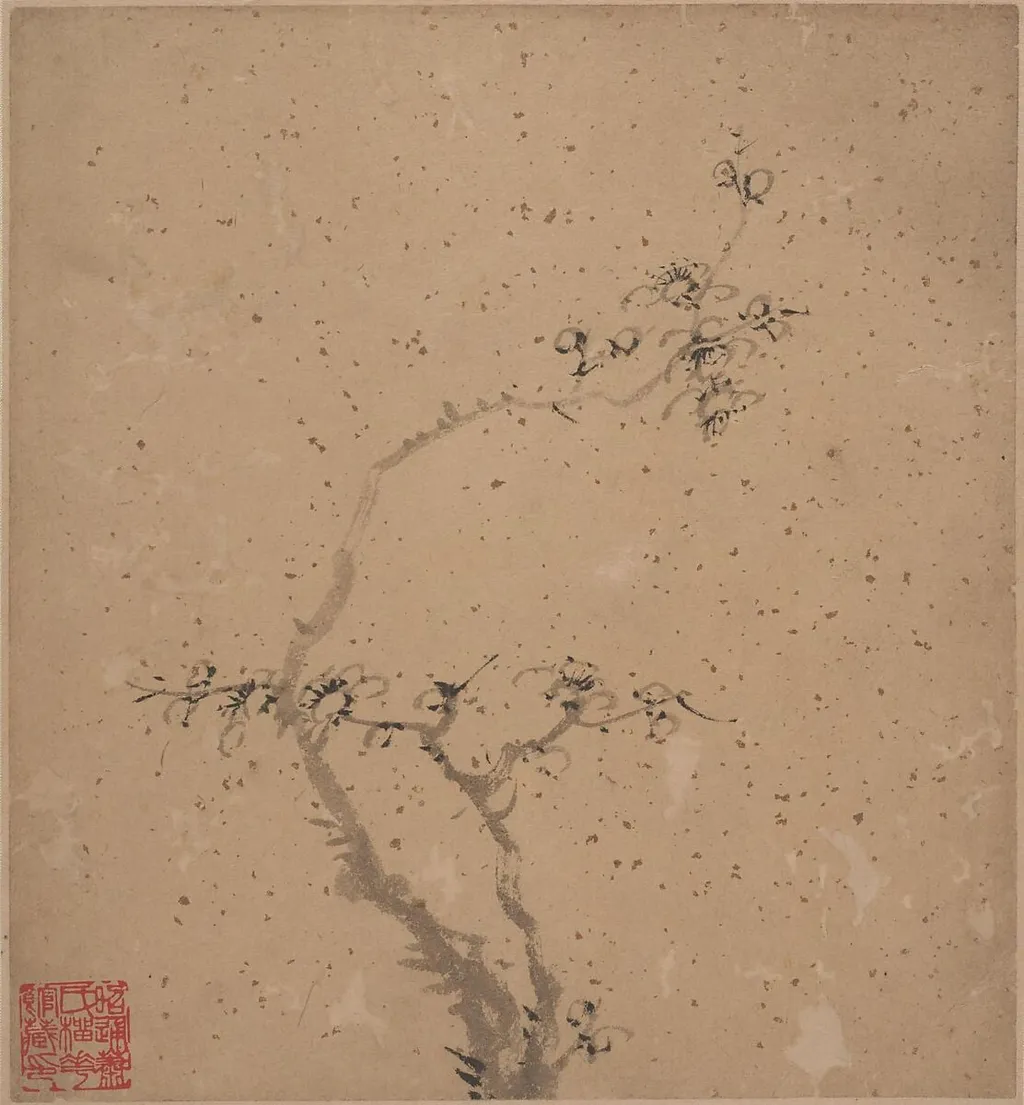
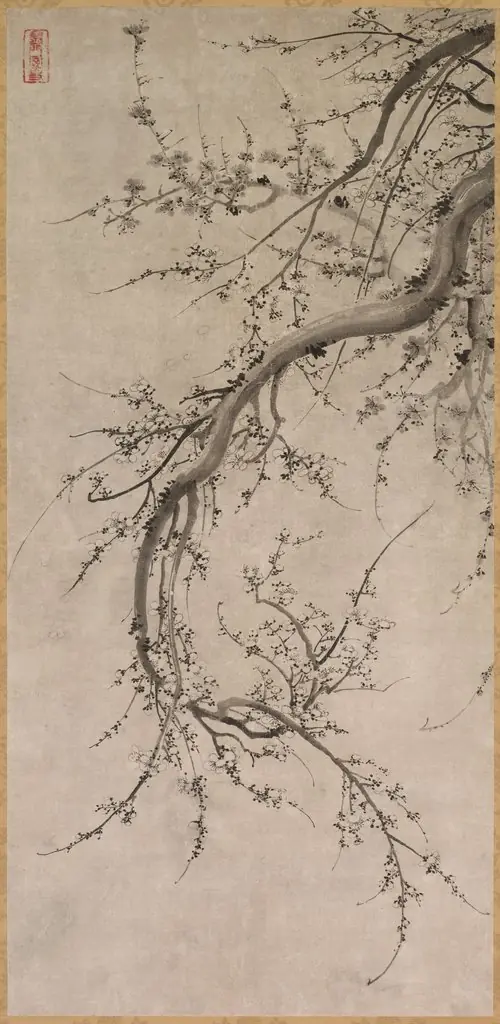
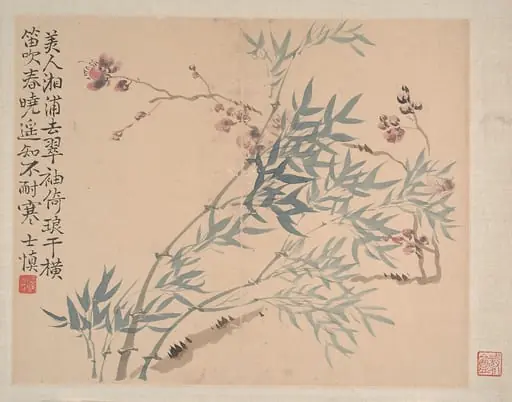
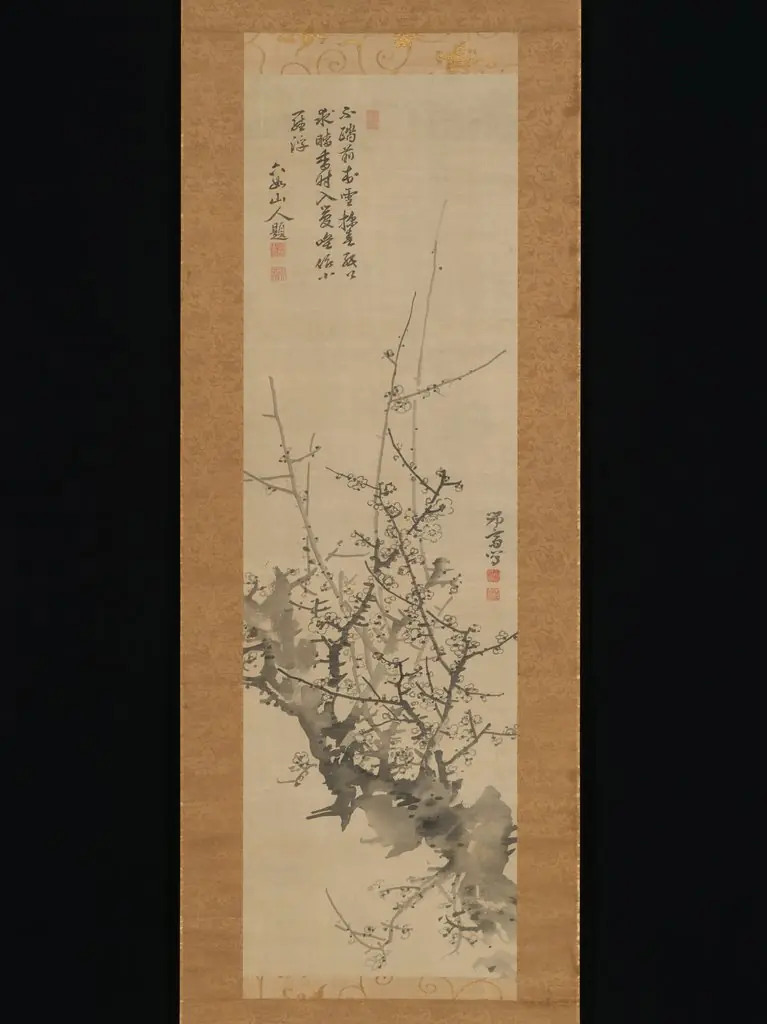
清 湯貽汾 墨梅 四冊頁|Blossoming Plum is an ink painting by the Qing dynasty painting artist Yu Sheng. It dates from 1840 and is held in the collection of the Metropolitan Museum of Art. Created in 1840 by Tang Yifen (1778–1853), this work comprises four album leaves executed in ink on gold-flecked paper.
About this work
The gold flecks catch light like early-morning frost, something you notice only when you lean close.
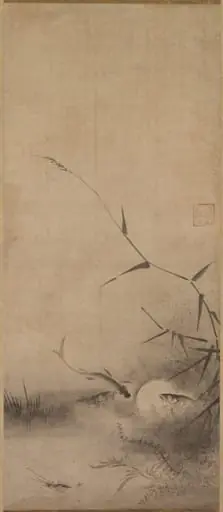
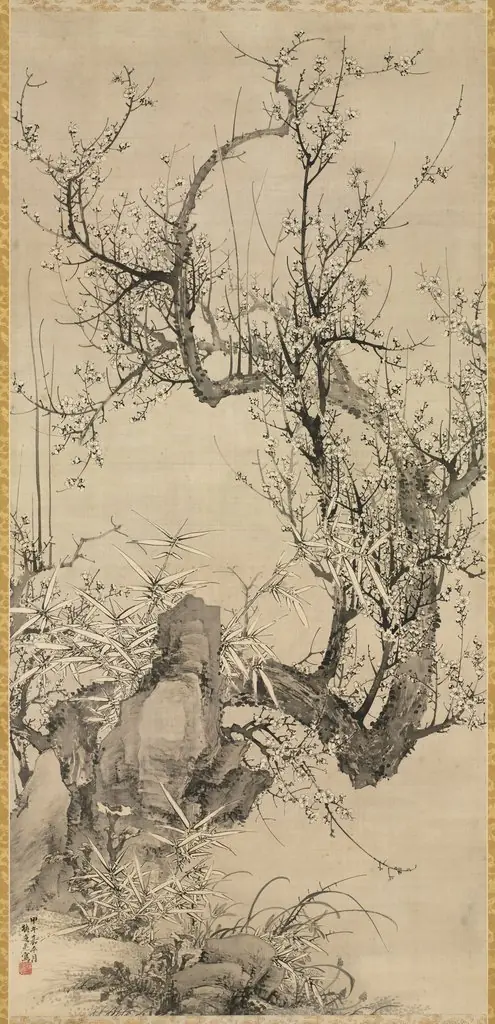
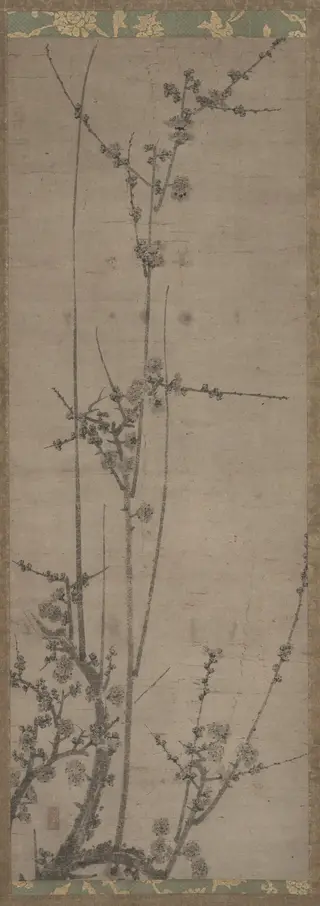
You see four small squares of gold-flecked paper, each holding a single plum branch in black ink. The twigs twist like old fingers; the blossoms look ready to drop.
Tang Yifen painted these in 1840, when scholars used plum branches to stand for quiet strength. The gold flecks catch light like early-morning frost, something you notice only when you lean close.
If you like the way ink can feel alive, look up the subject: trees.
Subject & Meaning
The work depicts blossoming plum trees, a subject identified explicitly in the source records as featuring both fruit and trees. Executed in ink on gold-flecked paper, the four album leaves focus on these botanical elements without additional narrative figures or landscapes. While the plum blossom is traditionally associated with resilience and purity in Chinese art history, the provided sources strictly limit the description to the visual representation of the fruit-bearing trees.
The composition centers on the natural form of the plum, capturing the tree and its produce as the primary iconographic content of the 1840 creation.
Technique & Style
The work is executed as four album leaves of ink on gold‑flecked paper, a traditional album leaf format. Tang Yifen applied ink to the paper support, rendering a blossoming plum tree with fruit, a subject classified as landscape. The piece was created in China in 1840 and is held in the Metropolitan Museum of Art, where it is catalogued as a painting.
Its formal qualities include a restrained composition, subtle tonal modulation, and the use of gold flecks that accentuate the floral motif.
History & Provenance
The work titled 'Blossoming Plum' (清 湯貽汾 墨梅 四冊頁) was produced in 1840 in China by the Qing‑period painter Tang Yifen. It consists of four album leaves rendered in ink on paper flecked with gold, depicting a fruit‑bearing tree. The composition is classified as a landscape genre within the broader category of paintings.
The Metropolitan Museum of Art holds the piece in its collection, having acquired it as part of its holdings of Chinese artwork. The museum’s records indicate the work’s inception date as 1840 and its place of creation as China.
Overview
Created in 1840 by Tang Yifen (1778–1853), this work comprises four album leaves executed in ink on gold-flecked paper. Each leaf presents a distinct composition of a plum branch, rendered with calligraphic brushwork that emphasizes the gnarled, twisting nature of the twigs. The blossoms are depicted with sparse, deliberate strokes, suggesting fragility and the transient nature of the season.
The use of gold-flecked paper adds a subtle luminosity that contrasts with the stark black ink, a technique favored in late Qing literati painting to elevate the subject matter. Tang Yifen, a scholar-official and artist active during the Qing dynasty, frequently employed the plum blossom motif to symbolize resilience, integrity, and moral fortitude in the face of adversity. This series reflects the scholar-painter tradition of using nature studies for self-cultivation and philosophical expression rather than mere representation.
The work stands as a characteristic example of mid-19th-century Chinese ink painting, where the interplay of form, texture, and symbolic meaning defines the aesthetic experience.
Artist & collection

Artist
Tang Yifen (Wade–Giles: T'ang I-fen, traditional: 湯貽汾, simplified: 汤贻汾, pinyin: Tāng Yífén); ca.