Artwork
Plums, Bamboo, and Orchid
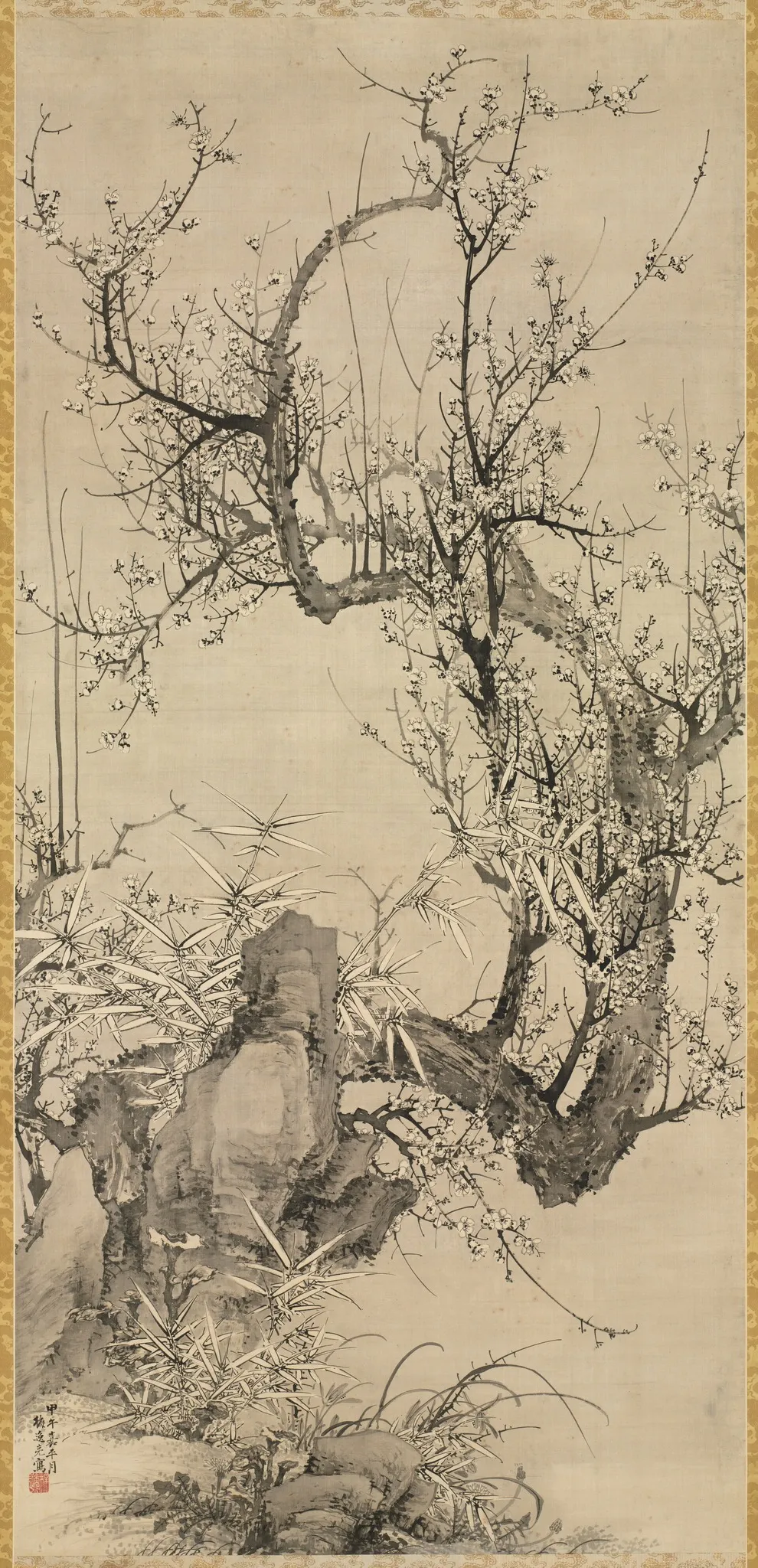
Plums, Bamboo, and Orchid is an unspecified painting by the Nihonga artist Yamamoto Baiitsu. It dates from 1834 and is held in the collection of the Cleveland Museum of Art.
About this work
History & Provenance
Plums, Bamboo, and Orchid, painted by Yamamoto Baiitsu in 1834, is held by the Cleveland Museum of Art, where it is catalogued under the accession number 1975.
Plums, Bamboo, and Orchid is a painting executed in 1834 by Yamamoto Baiitsu, a Japanese artist active in the late Edo period. The composition features plum, bamboo, and orchid motifs rendered in traditional brushwork.
The work was created in Japan and subsequently entered the collection of the Cleveland Museum of Art, where it remains on view. Its provenance is limited to its acquisition by the museum, and no earlier ownership records are documented.
Plums, Bamboo, and Orchid, painted by Yamamoto Baiitsu in 1834, is held by the Cleveland Museum of Art, where it is catalogued under the accession number 1975.93. The work was created in Japan and entered the museum's collection as part of its holdings of Japanese painting.
No exhibition history beyond its residence at the Cleveland Museum of Art is documented in the available sources.
Overview
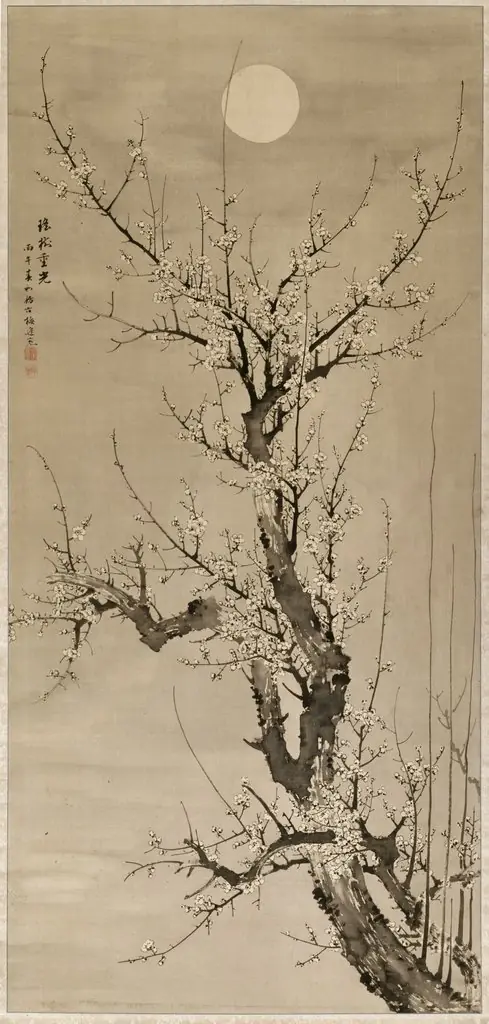
This painting, titled Plums, Bamboo, and Orchid, was created by Yamamoto Baiitsu in 1834. It is currently part of the collection at The Cleveland Museum of Art. The work presents a tranquil natural scene, characteristic of East Asian landscape traditions, focusing on specific botanical elements that hold cultural significance.
Subject & Meaning
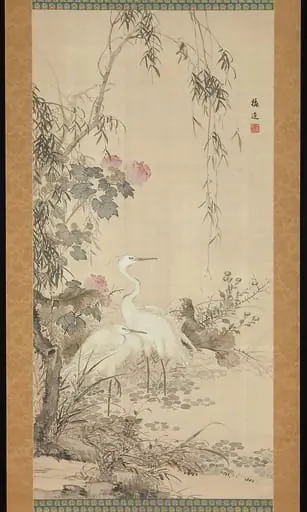
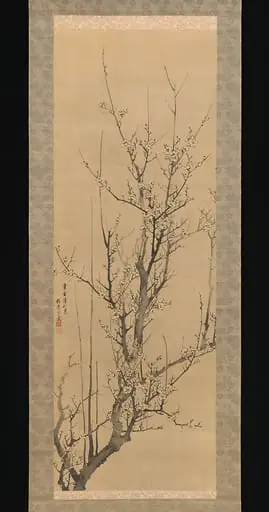
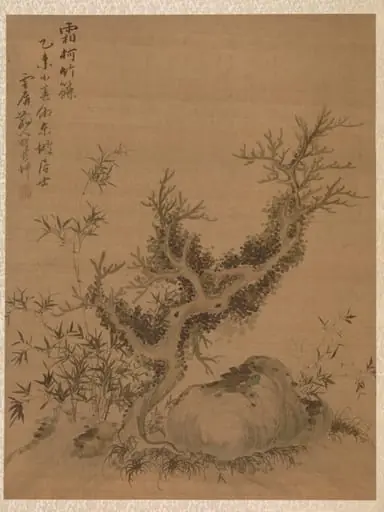
The composition prominently features a plum tree, its branches extending upwards and adorned with delicate white blossoms and foliage. In the foreground, slender bamboo stalks are visible, while a cluster of orchids occupies the lower left corner. These three plants, plum, bamboo, and orchid, are often revered in East Asian art for their symbolic associations, representing resilience, integrity, and purity, respectively.
Technique & Style
Yamamoto Baiitsu employed a restrained color palette for this painting, primarily utilizing shades of brown, beige, and white. This limited chromatic range contributes to the artwork's overall sense of serenity and quiet contemplation. The delicate rendering of the botanical forms, combined with the subdued tones, evokes a calm and tranquil atmosphere, inviting viewers into a peaceful natural setting.
Artist & collection