Artwork
Thirty-Six Poetic Immortals
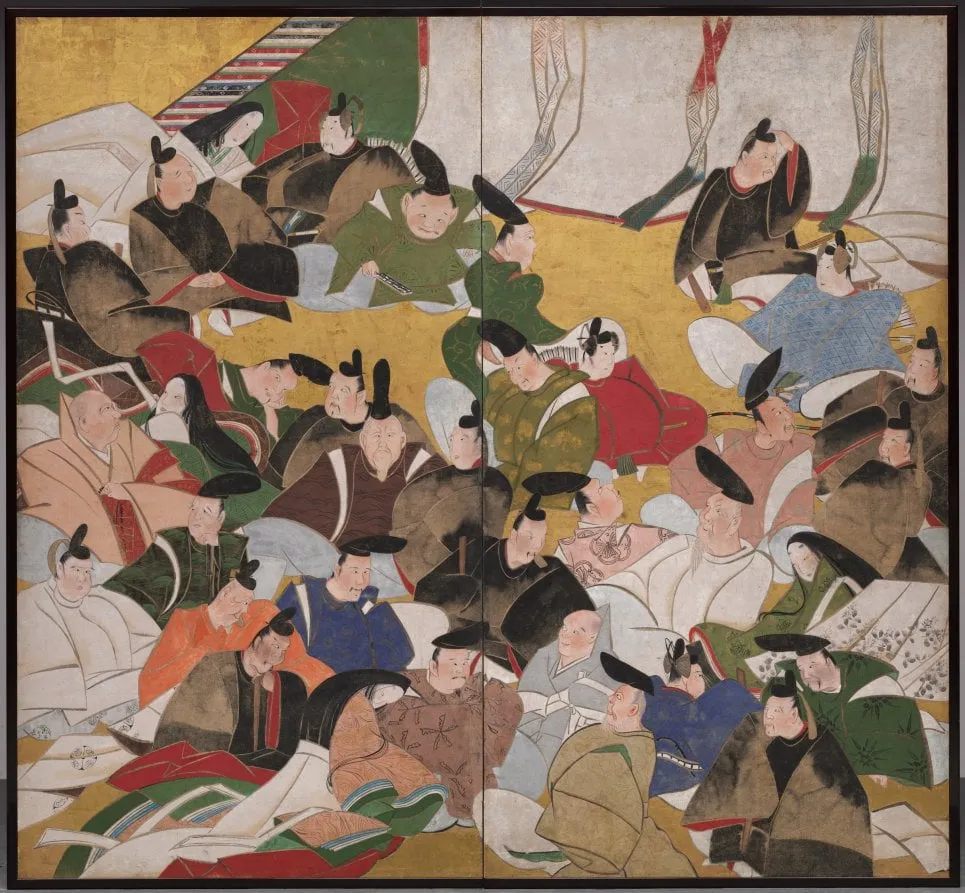
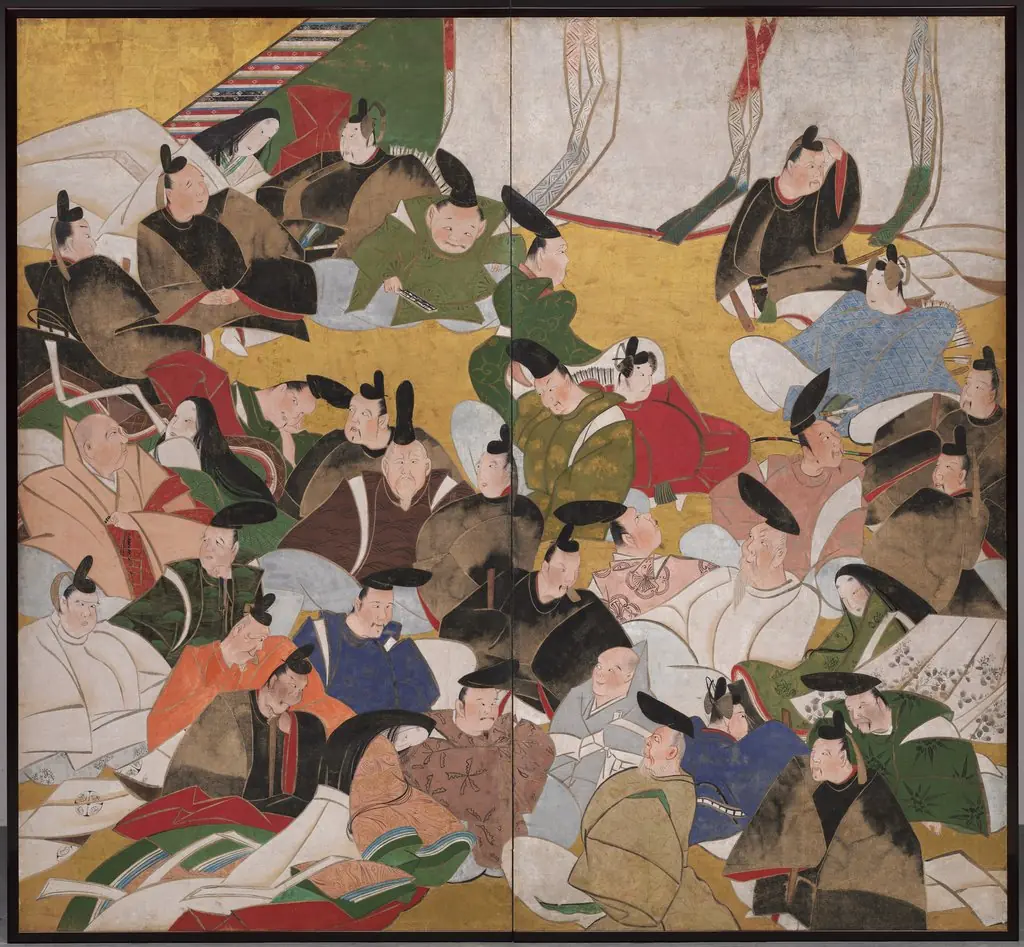
Thirty-Six Poetic Immortals is an unspecified painting by the Baroque artist Tatebayashi Kagei. It dates from 1704 and is held in the collection of the Cleveland Museum of Art.
- Accession no.
- 1960.183
- Credit line
- Mr. and Mrs. William H. Marlatt Fund
About this work
You see a six-panel folding screen filled with tiny poets in robes, each standing under a pine tree with a poem floating beside them.
You see a six-panel folding screen filled with tiny poets in robes, each standing under a pine tree with a poem floating beside them.
These aren’t real people together, they lived hundreds of years apart. The artist jammed them into one imaginary party to celebrate Japan’s most loved poets. The poems are short, just 31 syllables, but they were the pop lyrics of the day.
Look up Japan, Edo period (1615–1868) to see how artists turned poetry into pictures.
Overview
The six‑panel folding screen depicts the so‑called “Thirty‑Six Poetic Immortals,” a group of celebrated waka poets selected by the Heian court scholar Fujiwara no Kintō (996–1075). Each figure is rendered in miniature, standing beneath a pine tree with his poem inscribed nearby, creating a tableau that gathers these historically distant poets into a single imagined gathering.
Subject & Meaning
The work presents an anachronistic assembly of the thirty‑six poets, whose lives spanned from the 7th to the 10th centuries, to honor their collective contribution to Japanese poetry. By pairing each poet with a 31‑syllable verse, the screen underscores the enduring cultural value of waka as a refined literary form, likening the verses to popular lyrics of their era.
Technique & Style
Executed on a six‑panel byōbu, the composition follows a layout popularized by the Edo‑period designer Ogata Kōrin (1658–1716), employing a rhythmic sequence of small, idealized portraits. The figures are dressed in courtly robes, rendered with delicate brushwork and subtle coloration, while the accompanying poems appear as floating calligraphic elements, integrating text and image in a harmonious visual rhythm.
History & Provenance
The motif of the thirty‑six poetic immortals became a favored subject for painters after Fujiwara no Kintō’s anthology gained prominence. This particular screen, created during the Edo period (1615–1868), reflects the era’s fascination with literary themes and the practice of translating poetry into visual form. Its provenance traces through private collections before entering a museum setting.
Context
During the Edo period, the synthesis of poetry and painting flourished as part of a broader aesthetic that prized refinement and scholarly taste. Artists often rendered classic literary figures in decorative formats such as folding screens, allowing patrons to display both artistic skill and erudition within domestic spaces.
Artist & collection

 Group Pilgrimage to the Jizo Nun
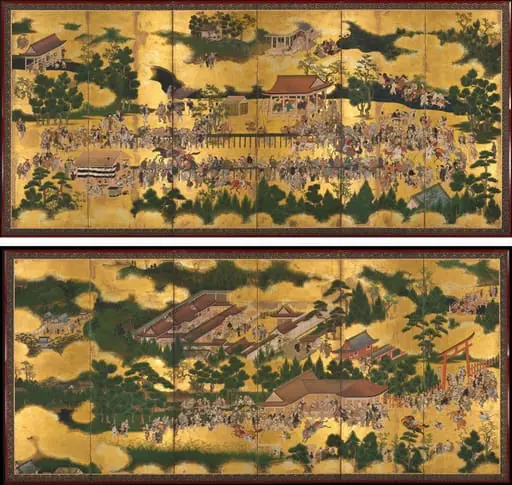 Horse Race at the Kamo Shrine
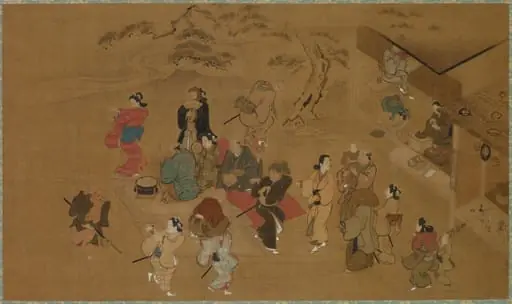 Spring Dance Scene
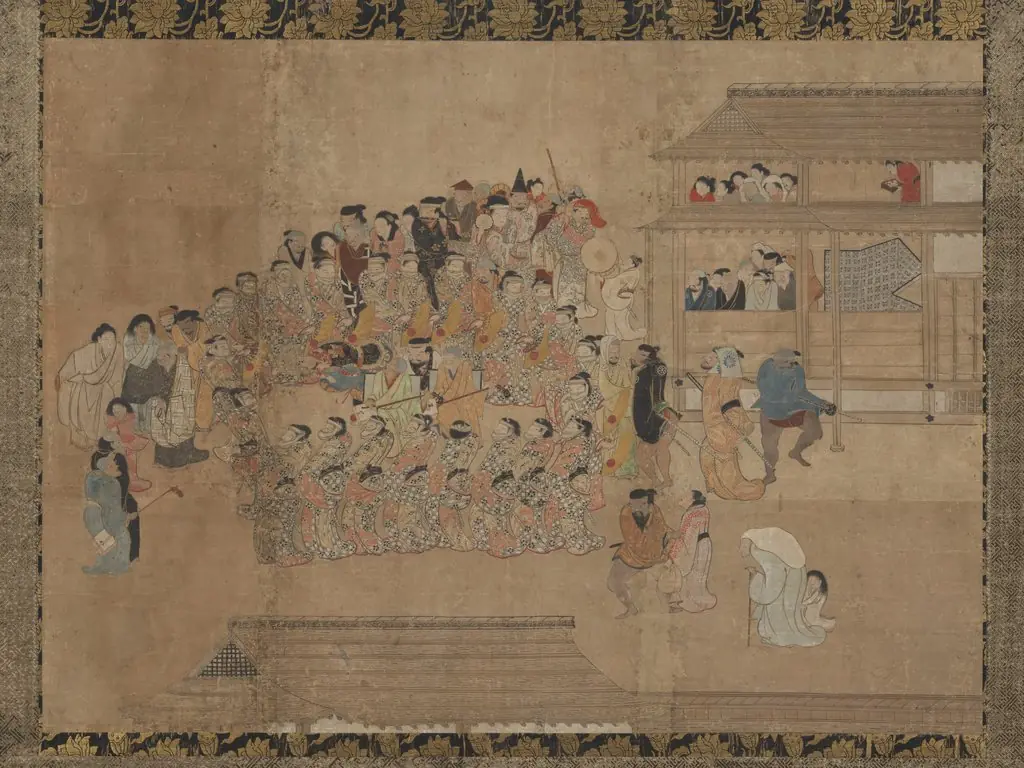 People Dancing
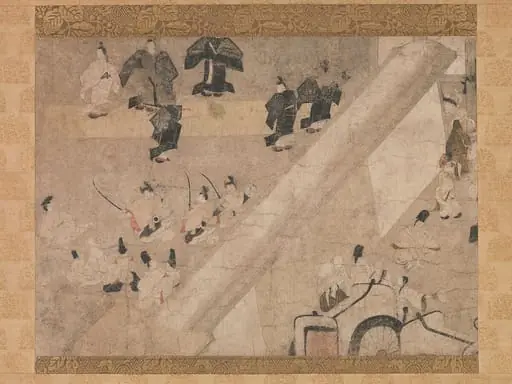 「高陽院駒競行幸絵巻」『栄花物語』 断簡|"Imperial Visit to the Great Horse Race at the Kaya-no-in Mansion" from the Tale of Flowering Fortunes
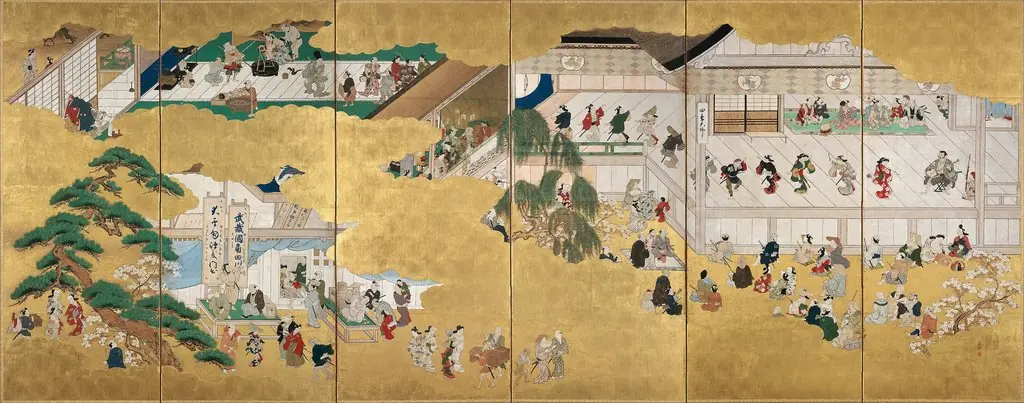 Scenes from the Nakamura Kabuki Theater
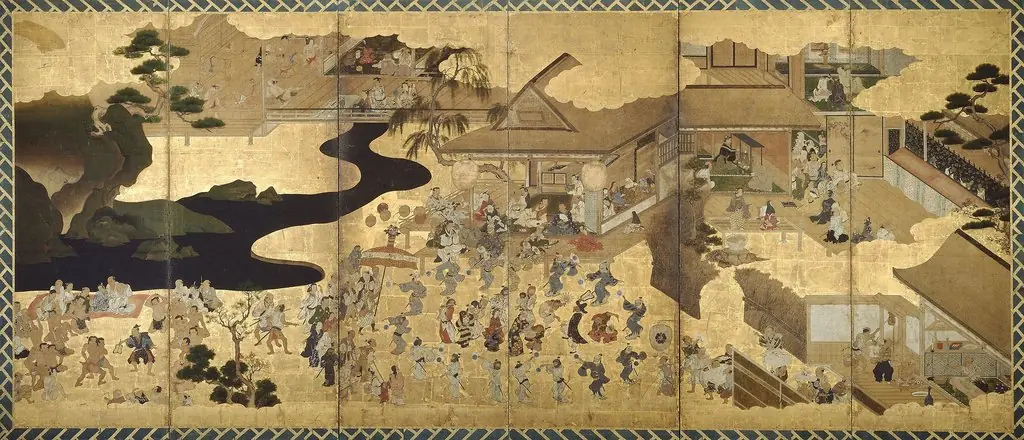 Genre Scenes (Fuzoku byobu)
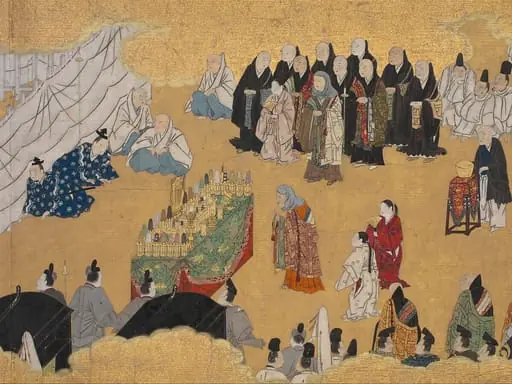 幻の源氏物語絵巻 「葵」|“Leaves of Wild Ginger” (Aoi), from the Phantom Genji Scrolls (Maboroshi no Genji monogatari emaki)
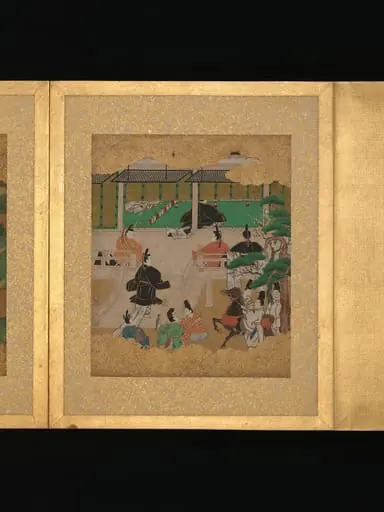 Untitled
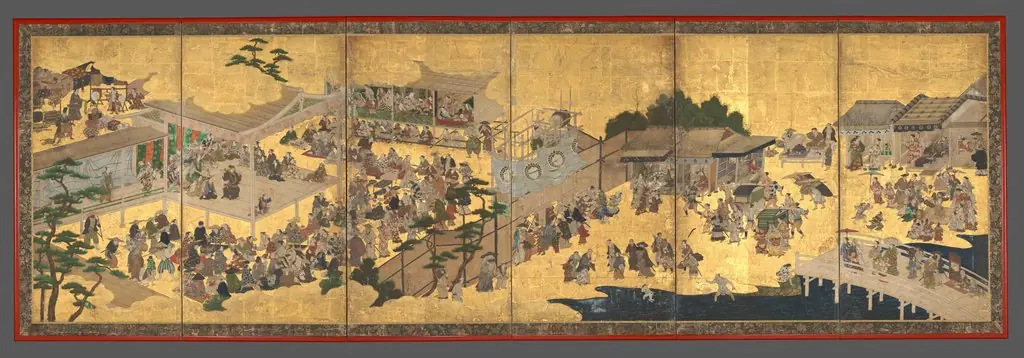 Women’s Kabuki
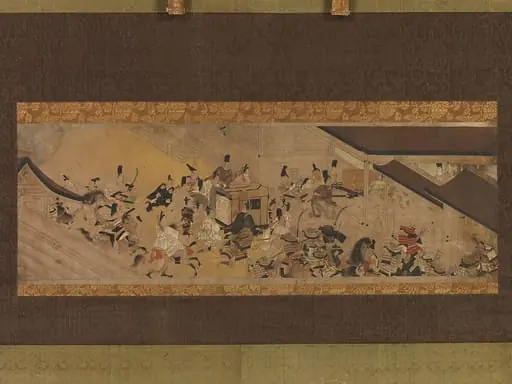 「六波羅行幸」 平治物語絵巻 断簡|Scene from “Imperial Visit to Rokuhara,” from The Tale of the Heiji Rebellion (Heiji monogatari)