Artwork
「六波羅行幸」 平治物語絵巻 断簡|Scene from “Imperial Visit to Rokuhara,” from The Tale of the Heiji Rebellion (Heiji monogatari)
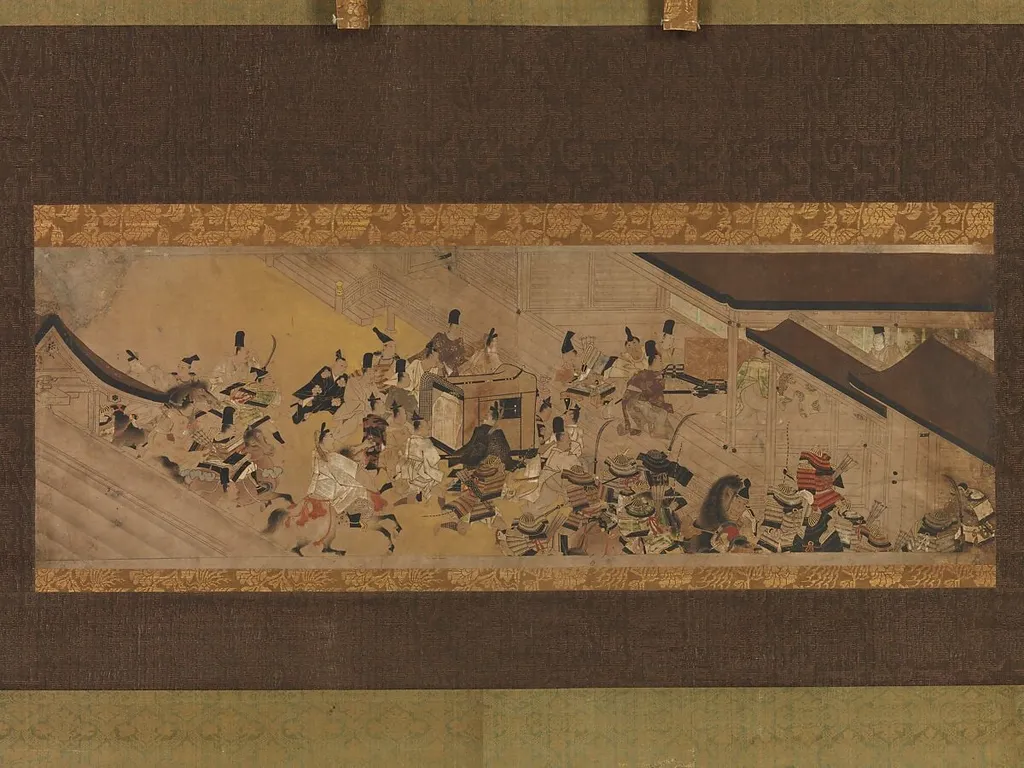
「六波羅行幸」 平治物語絵巻 断簡|Scene from “Imperial Visit to Rokuhara,” from The Tale of the Heiji Rebellion (Heiji monogatari) is an ink painting. It dates from 1749 and is held in the collection of the Metropolitan Museum of Art.
About this work
Technique & Style
The formal style illustrates equestrian figures, including men and soldiers alongside horses, characteristic of the historical narrative genre.
This fragment, originally part of a handscroll, has been remounted as a hanging scroll. Executed on paper, the work employs ink and color to depict the scene. Created in 1749 by an anonymous artist in Japan, the painting measures 29.8 centimeters in height and 89.6 centimeters in width.
The formal style illustrates equestrian figures, including men and soldiers alongside horses, characteristic of the historical narrative genre. As a detached segment of the larger Heiji monogatari emaki, the piece retains the visual language of the original scroll format while functioning as an independent mounted artwork in its current presentation.
History & Provenance
This handscroll segment, dated 1749, was created by an unknown artist during Japan's Edo period. Originally part of a larger narrative handscroll depicting episodes from The Tale of the Heiji Rebellion, the work was later remounted as a hanging scroll. The Metropolitan Museum of Art now holds the piece in its collection, though the specific ownership chain and circumstances of its acquisition by the museum are not detailed in the available sources. The commission history and original patron remain unknown.
The fragment is held by the Metropolitan Museum of Art, New York, where it is recorded as an anonymous Japanese painting of 1749. Its dimensions are 29.8 cm in height and 89.6 cm in width. The work has appeared in the museum’s Japanese collections and is cited under the accession category for paintings by anonymous hands.
Overview
This artwork, titled "Imperial Visit to Rokuhara," is a fragment from a larger handscroll known as The Tale of the Heiji Rebellion (Heiji monogatari). Executed with ink and color on paper, this painting originally formed part of an extensive narrative recounting a 12th-century civil conflict. It is now presented as a hanging scroll, offering a glimpse into a historical event through its dynamic visual storytelling.
Subject & Meaning
The scene depicts a procession of armored horsemen moving through a confined street, with banners fluttering above them. Onlookers press in closely, observing the event. While individual faces are distinct, the artist chose not to identify specific figures, instead emphasizing the collective experience and the unfolding drama of the moment within the broader context of the 12th-century Heiji Rebellion.
Artist & collection

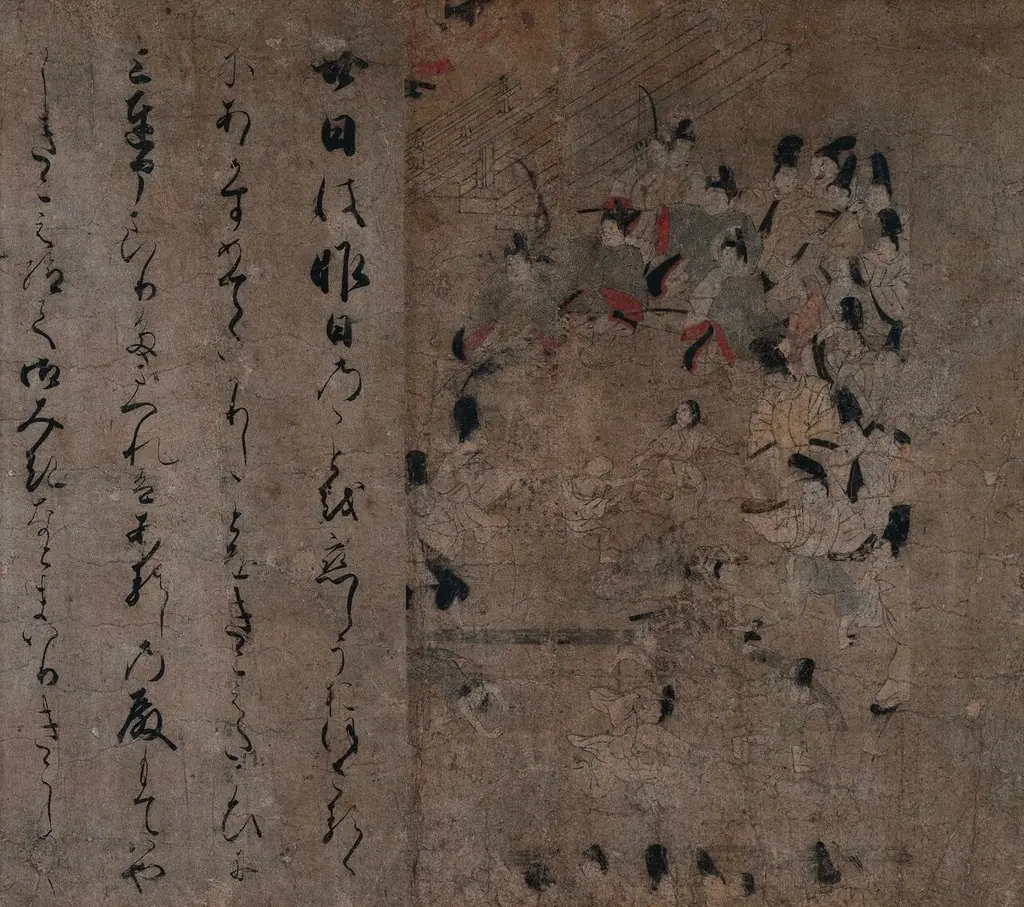 The Emperor's Attendance at the Horse Race: Episode from the Tale of Eiga (Eiga Monogatari)
 The Emperor's Attendance at the Horse Race: Episode from the Tale of Eiga (Eiga Monogatari)
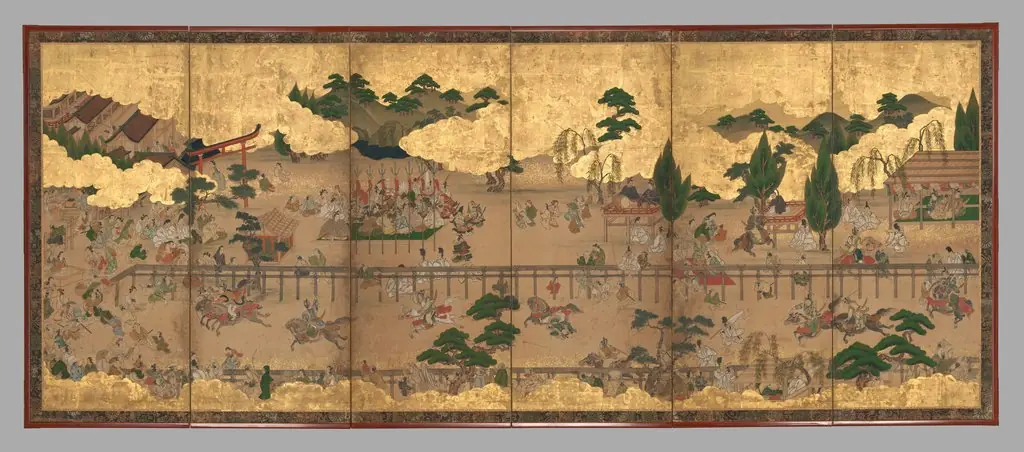 Horse Racing at Kamo Shrine
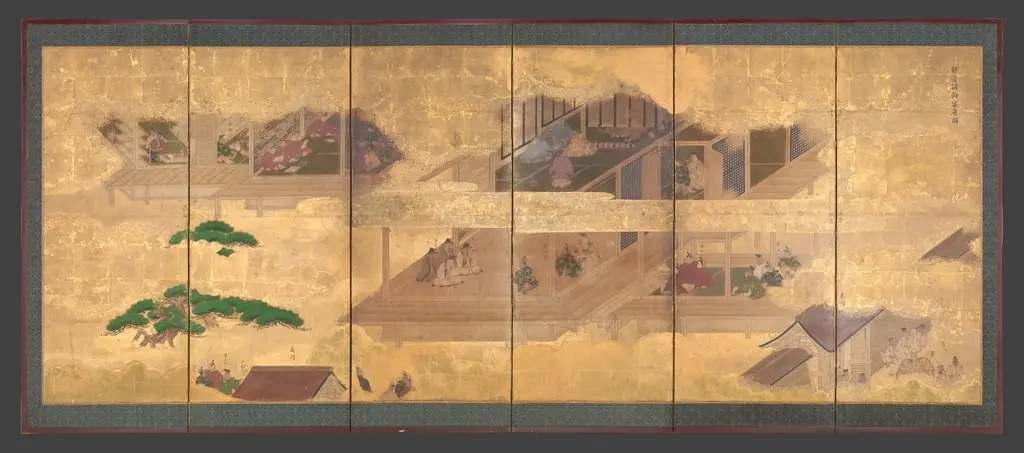 Scenes at the University with Images of the Ancient Sages; Debate and Banquet at the Administration Offices
 Genre Scenes (Fuzoku byobu)
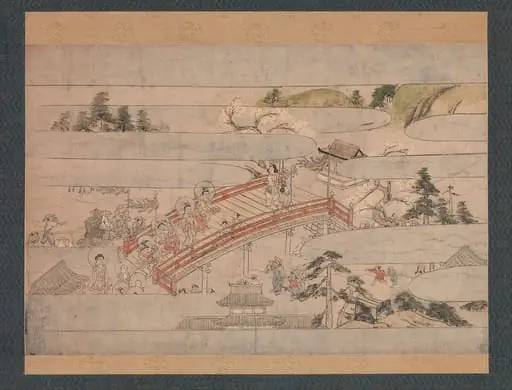 秋夜長物語絵巻断簡|The Final Scene from A Long Tale for an Autumn Night (Aki no yonaga monogatari)
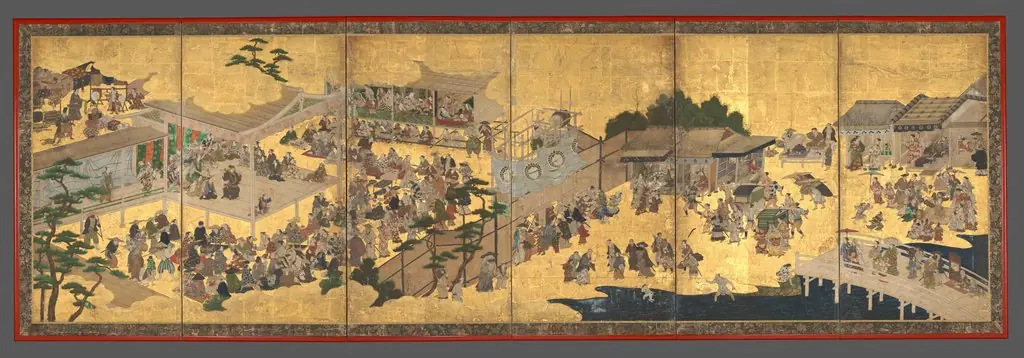 Women’s Kabuki
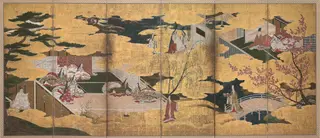 The Tale of Genji
- 「高陽院駒競行幸絵巻」『栄花物語』 断簡|"Imperial Visit to the Great Horse Race at the Kaya-no-in Mansion" from the Tale of Flowering Fortunes
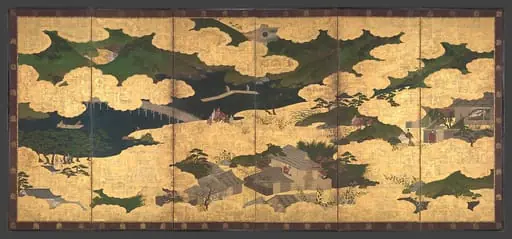 平家物語図屏風 「小督」 「大原御幸」|"Kogō" and "The Imperial Procession to Ōhara", from The Tale of the Heike (Heike monogatari)
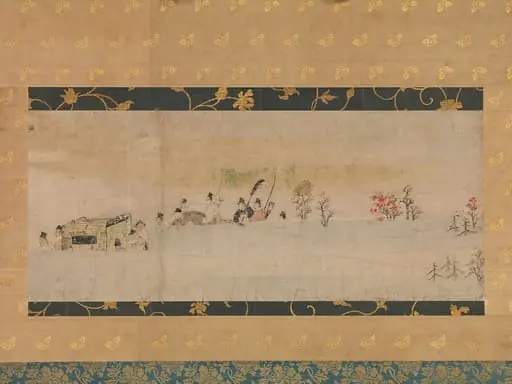 住吉物語絵巻 詞書断簡|The Tale of Sumiyoshi
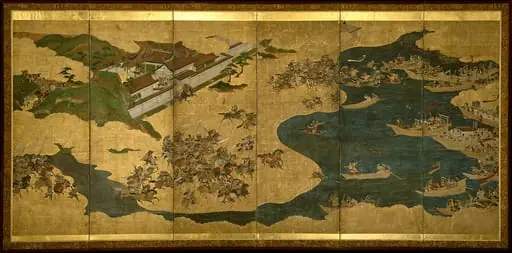 土佐派 屋島合戦図屏風|The Battle of Yashima, from The Tale of the Heike (Heike monogatari)