Artwork
Josaphat Thanking God for His Victory
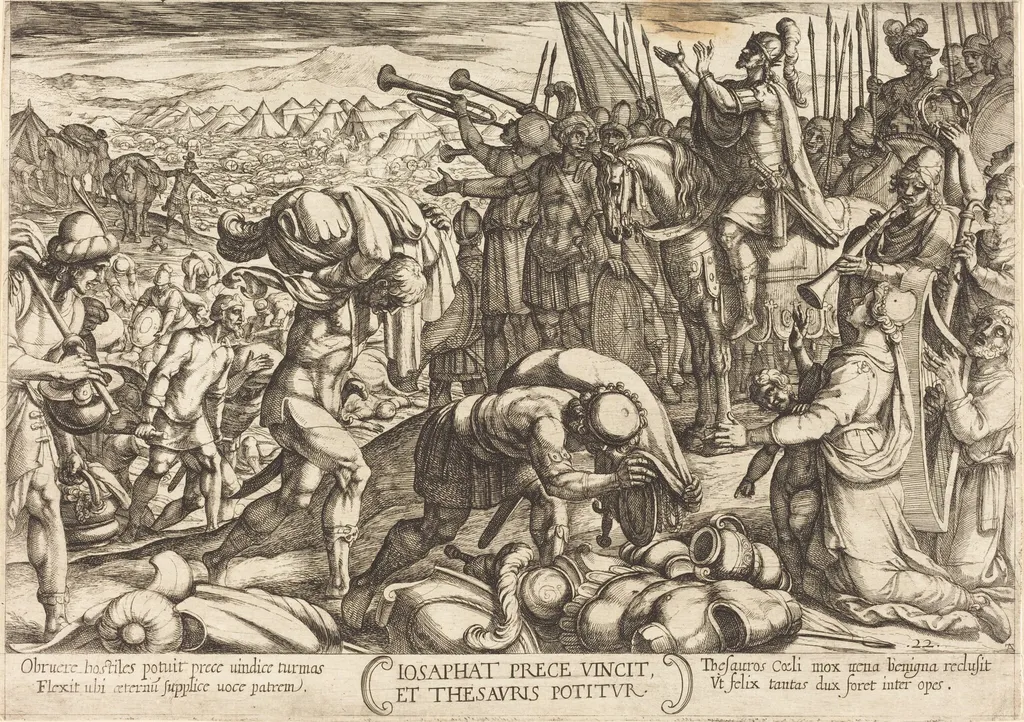
Josaphat Thanking God for His Victory is an ink print by the Baroque artist Antonio Tempesta. It dates from 1613 and is held in the collection of the National Gallery of Art.
About this work
Overview
Created during the transition from late Renaissance to early Baroque, the work reflects Tempesta’s reputation for dynamic compositions and historical subjects.
Antonio Tempesta’s 1613 etching depicts Josaphat, a Christian king from medieval legend, offering thanks after a military victory. Created during the transition from late Renaissance to early Baroque, the work reflects Tempesta’s reputation for dynamic compositions and historical subjects. As a printmaker active in Rome, he synthesized Italian precision with Northern European detail, producing images that appealed to both scholarly and devotional audiences.
Subject & Meaning
The scene illustrates Josaphat kneeling in prayer amid the aftermath of battle, acknowledging divine intervention in his triumph. Surrounding figures, soldiers, wounded, and laborers, suggest the chaos of war and its human toll. The act of gratitude frames victory not as personal glory but as a sacred moment, aligning with Counter-Reformation ideals that emphasized humility before God despite earthly success.
Technique & Style
Tempesta employed fine, incised lines to render texture and depth, using etching’s capacity for intricate detail to animate a crowded composition. Shading and overlapping forms create spatial recession, while the darkened sky heightens the emotional gravity. The precision of individual figures, each engaged in distinct actions, demonstrates his command of narrative pacing and his ability to convey movement within a static medium.
History & Provenance
The print was produced in Rome during a period when Tempesta was commissioned for religious and historical subjects by ecclesiastical patrons. Though specific early ownership records are sparse, similar etchings circulated widely among collectors and religious institutions. Its survival in multiple institutional collections suggests it was reproduced and disseminated as part of a broader visual culture of devotion and historical commemoration.
Context
Tempesta’s work emerged amid heightened interest in biblical and legendary narratives that reinforced Catholic identity after the Reformation. Josaphat’s story, drawn from the medieval tale of Barlaam and Josaphat, was used to illustrate Christian virtues like piety and humility. The etching’s dramatic tone aligns with contemporaneous efforts to use visual art as a tool for spiritual instruction and moral reinforcement.
Legacy
Tempesta’s etchings influenced later printmakers through their narrative density and technical rigor. While not widely celebrated today, his works contributed to the development of historical printmaking in early 17th-century Italy. This piece exemplifies how religious themes were rendered with theatrical realism, bridging devotional intent and artistic innovation in a period of profound cultural transformation.
Own this work as a print
Artist & collection
Artist
Antonio Tempesta, also called il Tempestino (1555 – 5 August 1630), was an Italian painter and engraver, whose art acted as a point of connection between Baroque Rome and the culture of Antwerp.

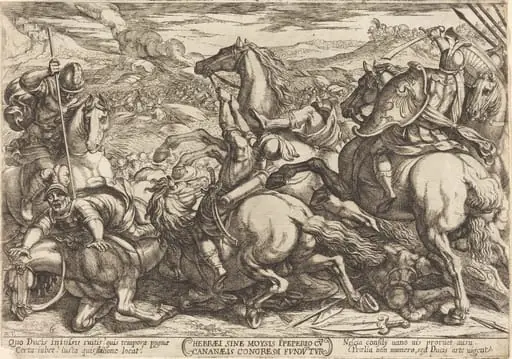 The Hebrews defeat the Canaans
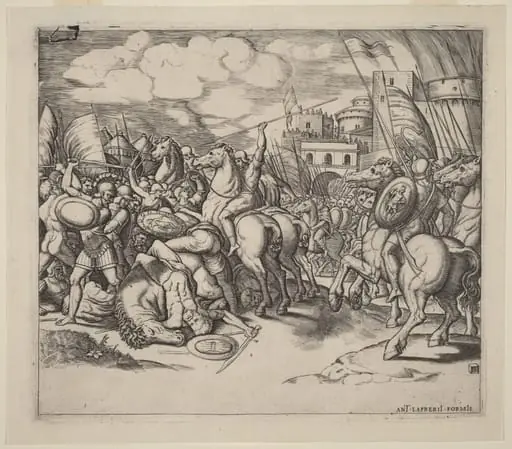 The Victory of Scipio over Syphax
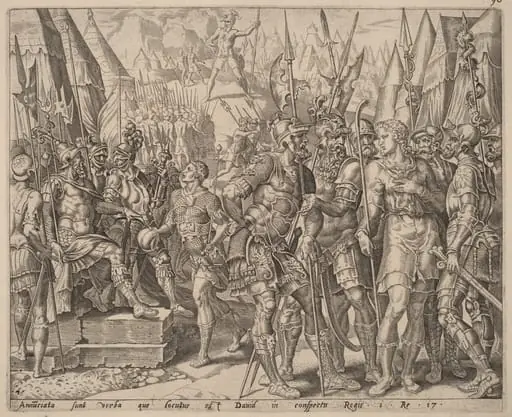 David's Brother Relating to Him Goliath's Challenge
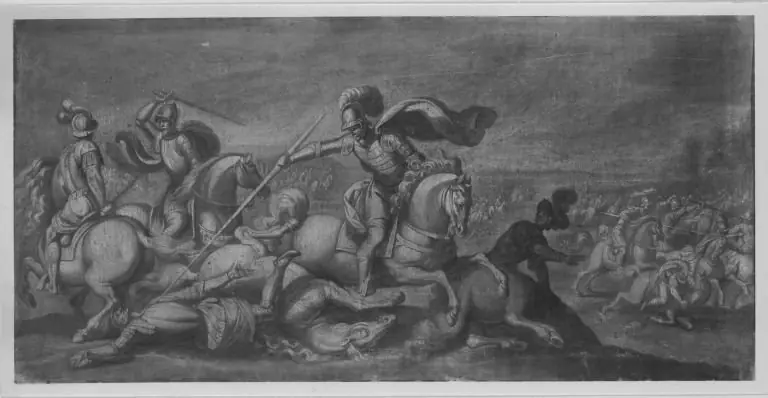
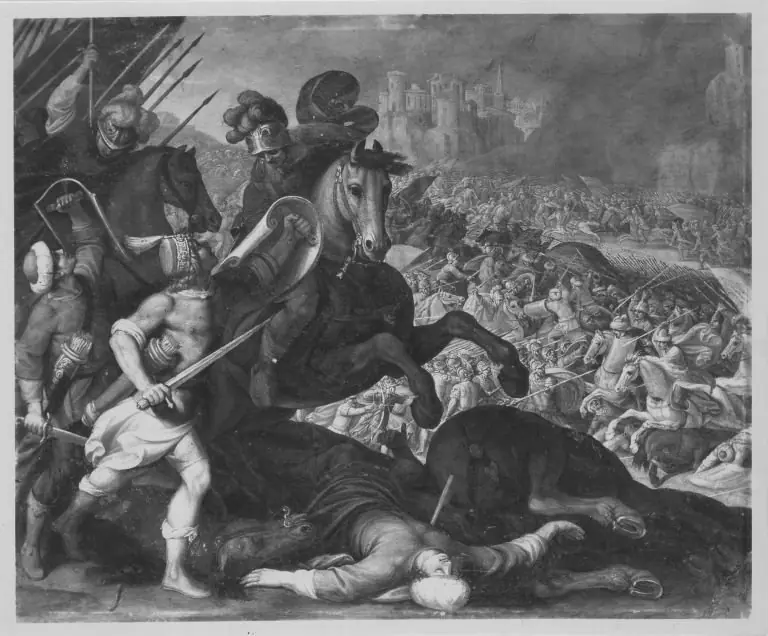
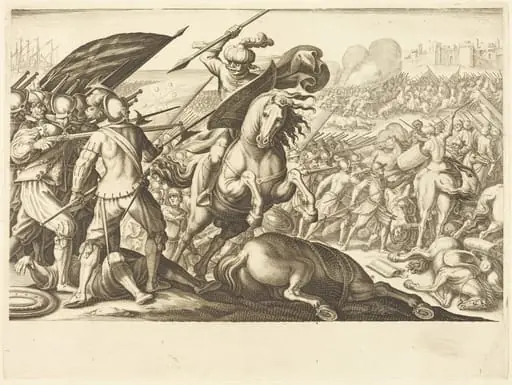 The Defeat of the Turkish Cavalry
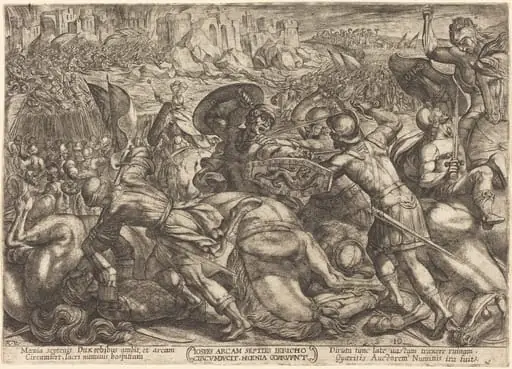 The Taking of the City of Jericho
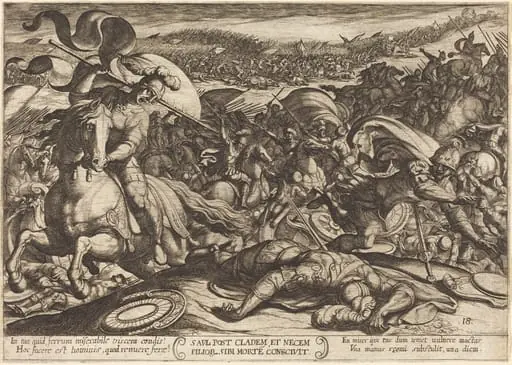 Saul Kills Himself after the Defeat of his Army by the Philistines
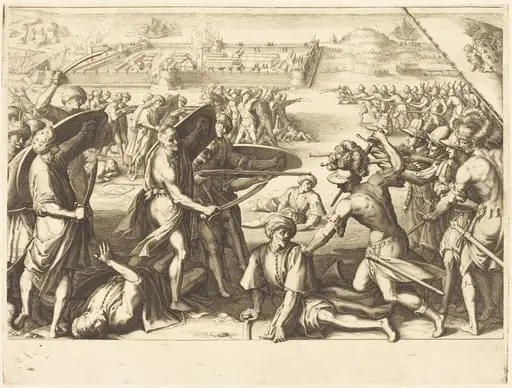 Assault on the Outer Forts of Bone
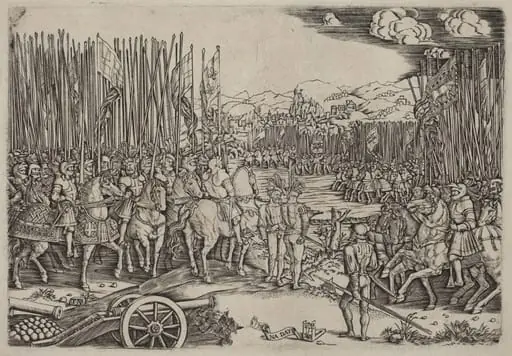 The Two Armies at the Battle of Ravenna
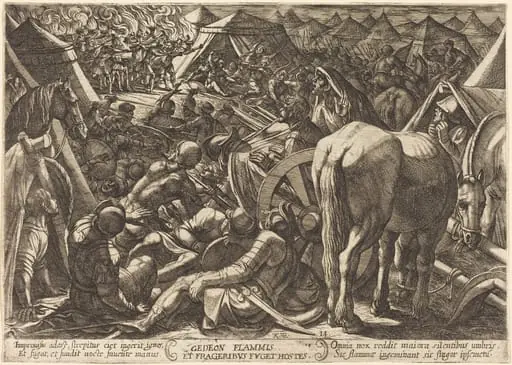 Gideon Frightens His Enemies in Their Camp
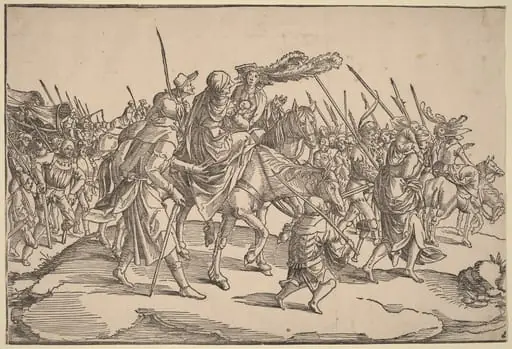 The Stragglers
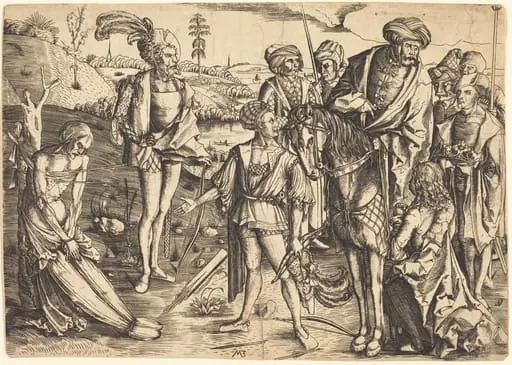 The Testing of the King's Sons
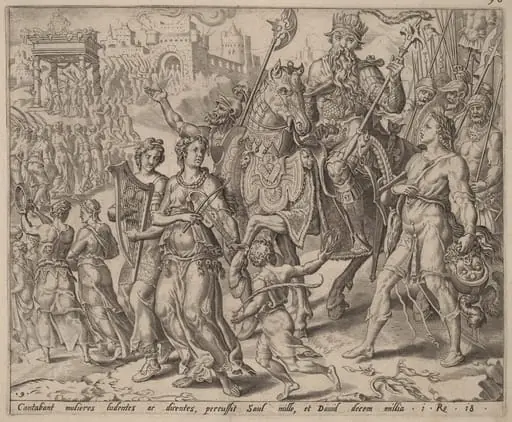
- The Triumph of Saul and David