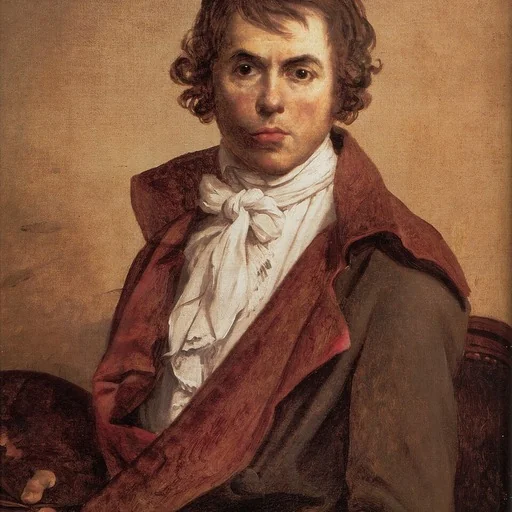
Subject
Cavalry
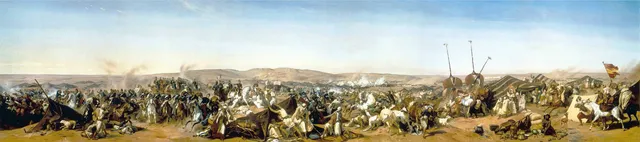
Cavalry is a subject in art. The gallery holds 28 works in this subject in art, including works by Jacques-Louis David, Philips Wouwerman and Jan Asselijn.
Historically, cavalry (from the French word cavalerie, itself derived from cheval meaning "horse") are groups of soldiers or warriors who fight mounted on horseback. Until the 20th century, cavalry were the most mobile of the combat arms, operating as light cavalry in the roles of reconnaissance, screening, and skirmishing, or as heavy cavalry for decisive economy of force and shock attacks.
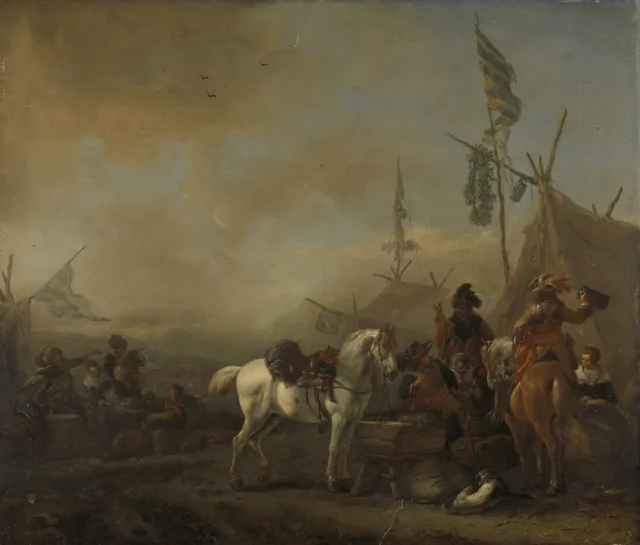
Key artists
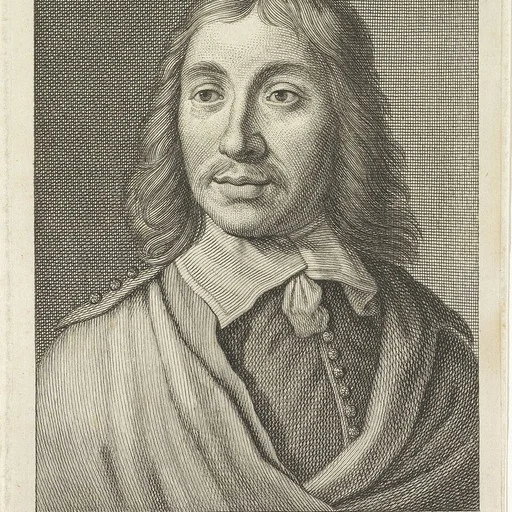
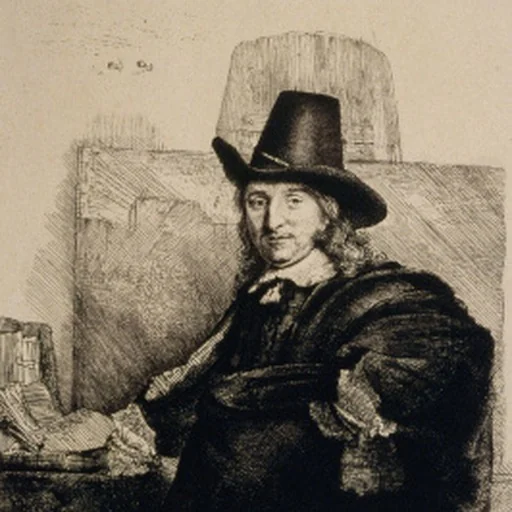
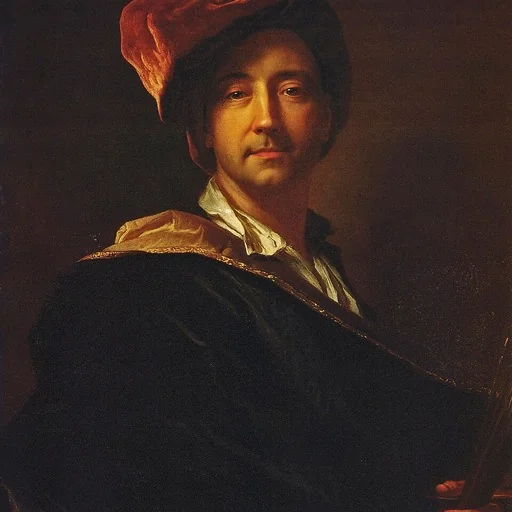
Overview
Cavalry denotes groups of soldiers or warriors who fight mounted on horseback. The term derives from the French cavalerie, which itself stems from cheval, meaning horse, tracing further back to the Italian cavaliere and Latin caballus. Historically, cavalry constituted the most mobile combat arm, operating until the 20th century as light cavalry for reconnaissance, screening, and skirmishing, or as heavy cavalry for shock attacks and decisive battlefield actions. The designation strictly applies to horse-mounted forces, excluding chariots, camels, elephants, or mules. An individual member is known by various designations depending on era and tactics, including cavalryman, horseman, trooper, cataphract, knight, hussar, uhlan, mamluk, cuirassier, lancer, and dragoon, the latter originally referring to mounted infantry who rode to battle but fought on foot.
Iconography & meaning
In art and military culture, the cavalryman embodies mobility, speed, and the power to shift the tides of war. The mounted soldier carries profound psychological and physical advantages over the foot soldier, gaining superior height, velocity, and inertial mass during a charge. This visual and tactical dominance made cavalry the signature force of aristocratic and feudal warfare, particularly the heavily armored medieval knight. The image of the cavalry charge, whether executed by nomadic horse archers or heavy cuirassiers, symbolizes both elite martial status and the shock of the offensive. Even as armor became obsolete against firearms, the retention of the cuirass and helmet in some regiments served a dual purpose, offering limited protection against blades while providing a vital morale boost to the wearer, reinforcing the enduring icon of the formidable mounted warrior.
Across movements & periods
The artistic and military treatment of cavalry transformed drastically from antiquity to the modern era. In ancient Eurasia, nomadic societies like the Scythians and Mongols favored light cavalry, emphasizing speed and horse archery, while settled European cultures increasingly armored their riders, culminating in the heavy medieval knight. During the 17th century, European cavalry discarded most armor as muskets and cannons rendered it ineffective, though some cuirassiers retained thickened breastplates. The Napoleonic era restored cavalry to a dominant battlefield role, but the steady improvement of firearms in the 19th century precipitated its decline. By World War I, traditional cavalry charges proved suicidal against entrenched infantry and machine guns, forcing a shift to dragoon-style dismounted combat. In the interwar period and World War II, horse cavalry was largely converted to motorized and mechanized units, with the traditional roles of light and heavy cavalry transferred to armored cars, tanks, and air cavalry utilizing helicopters.
Notable depictions
Canonical depictions of cavalry in Western art frequently center on the Napoleonic wars, a period that briefly restored the arm to its peak tactical prestige. The collection highlights this through works like The Distribution of the Eagle Standards and The Battle of Smolensk 17th August 1812, which capture the grand scale and sweeping motion of massed horsemen. The seizure of Abd-el-Kader's camp in 1843 and Battle of Isly August 14 1844 depict French colonial engagements where cavalry remained operationally decisive. Beyond painting, the motif is central to military material culture preserved in institutions like the U.S. Cavalry Museum at Fort Riley, which holds works by Frederic Remington, Don Stivers, and Don Troiani, artists who defined the visual identity of the American horse soldier during the Indian Wars and the frontier era.
Legacy
Although horse-mounted cavalry became functionally obsolete by the mid-20th century, its legacy persists in military nomenclature, ceremonial duties, and modern armored doctrine. Many continental armies retained traditional cavalry regiment names for their mechanized and tank units, with the heavy cavalry's shock role directly inherited by main battle tanks. Modern armies also use the term for units performing light cavalry reconnaissance roles using fast armored vehicles. Ceremonial cavalry survives prominently, such as the British Household Cavalry Mounted Regiment, which has maintained daily rituals like the King's Life Guard and the 4 O'Clock Inspection at Horse Guards largely unchanged since the Restoration of King Charles II in 1660. In the United States, the Armor and Cavalry Collection at Fort Benning preserves this lineage, housing over 190 armored vehicles and artifacts that trace the continuous evolution from the horseback charges of Gettysburg to the tank deployments of Operation Desert Storm.
Works
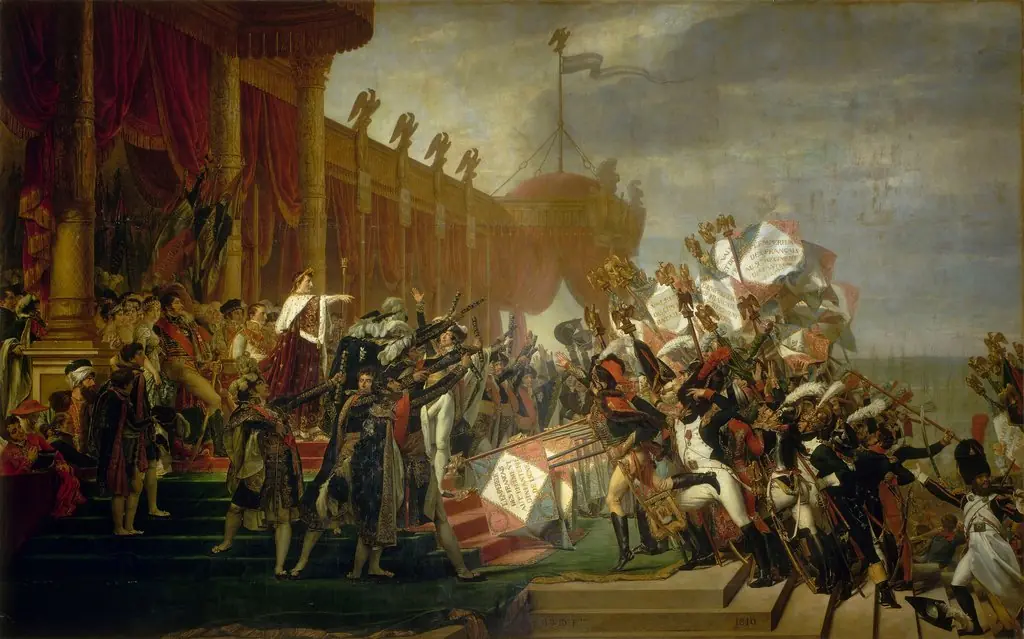 The Distribution of the Eagle Standards
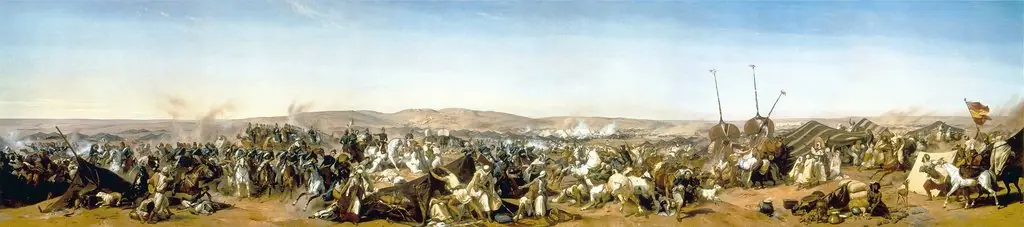 The seizure of Abd-el-Kader's camp in 1843
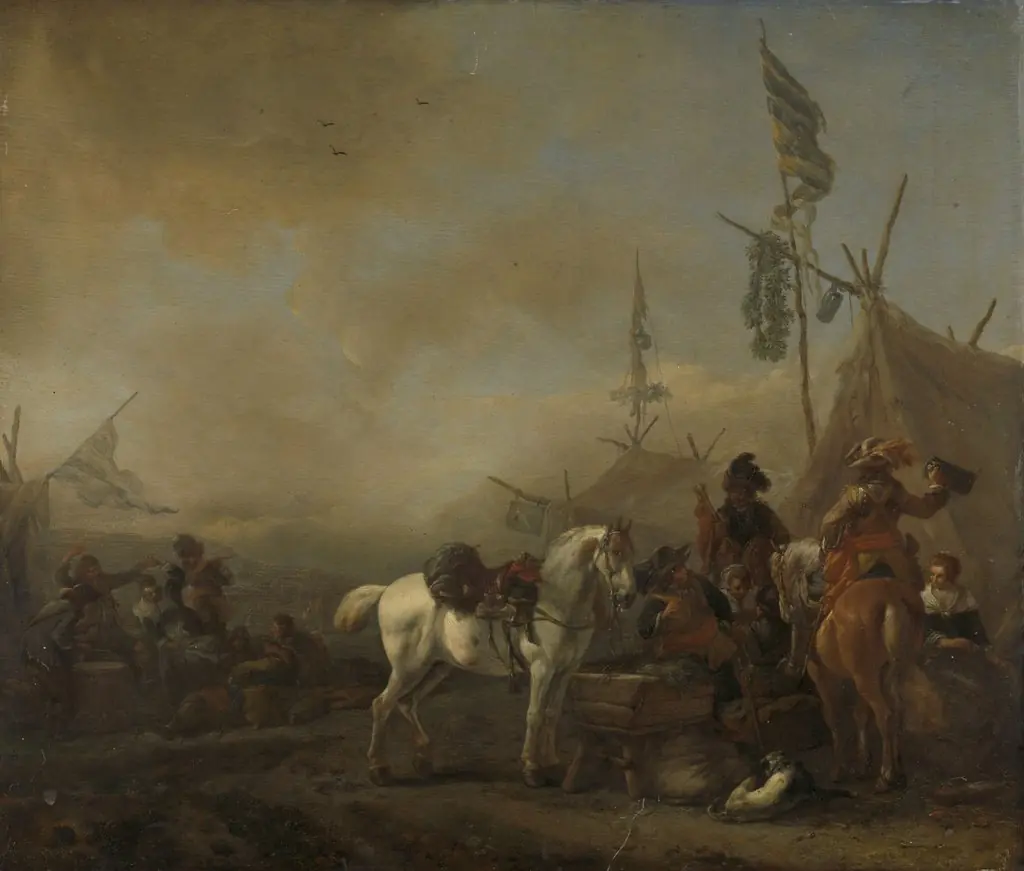 An army camp
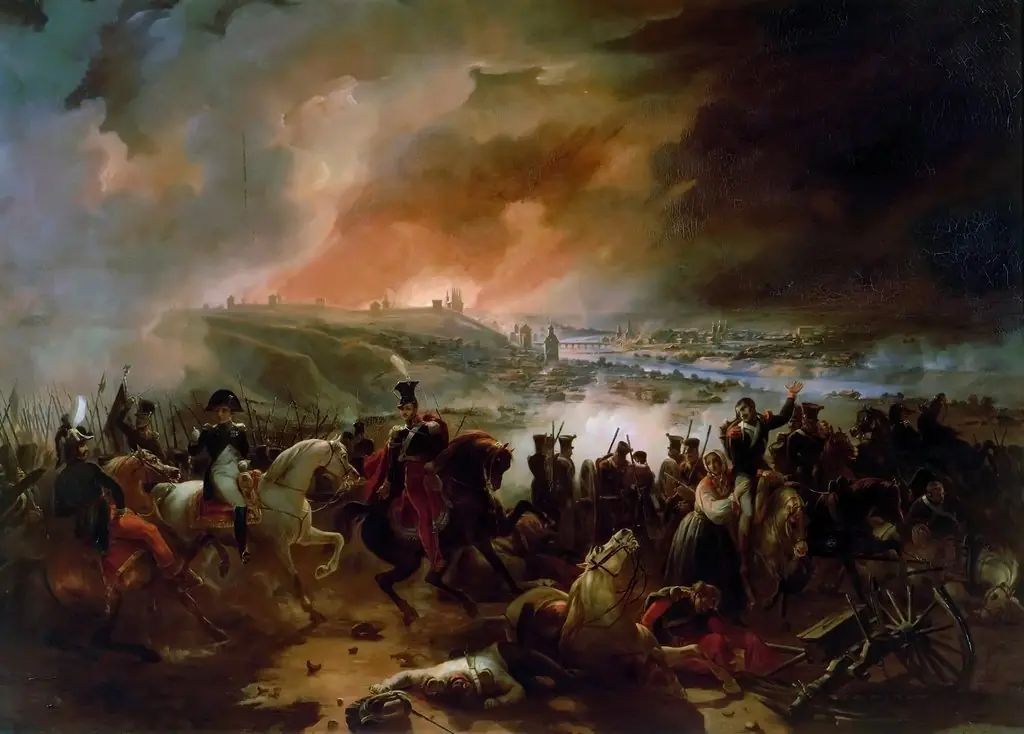 The Battle of Smolensk, 17th August 1812
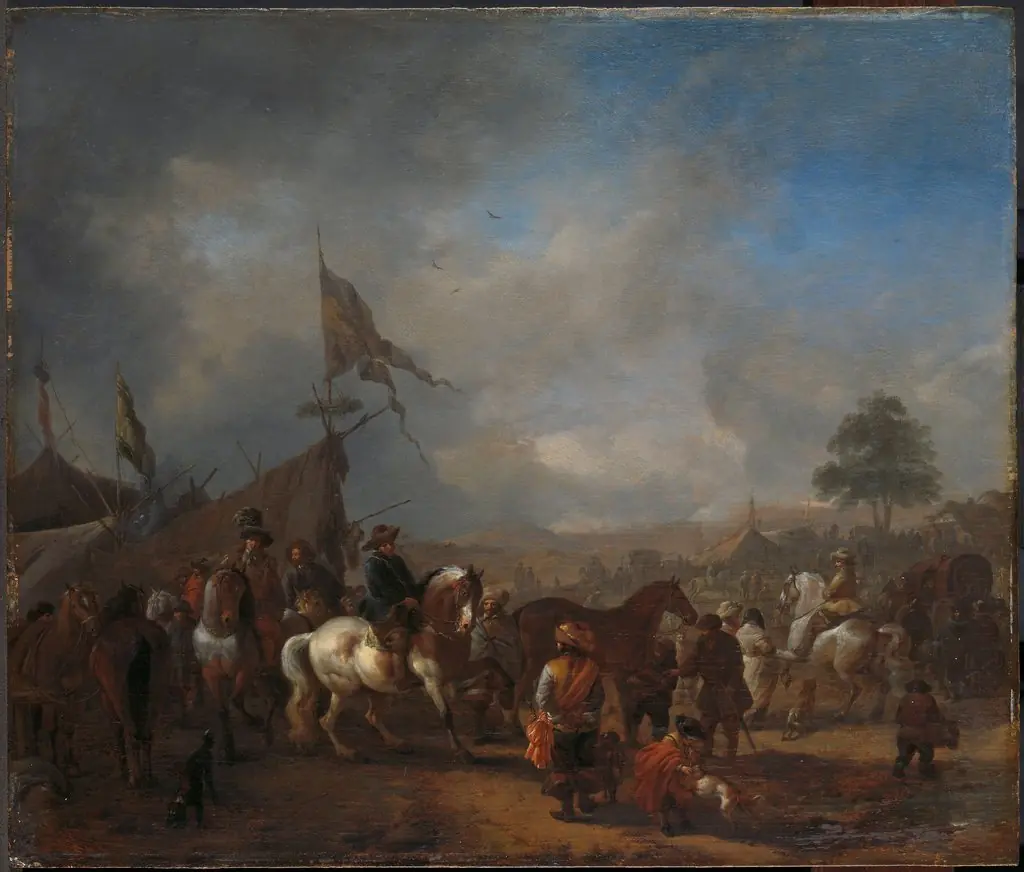 An army camp
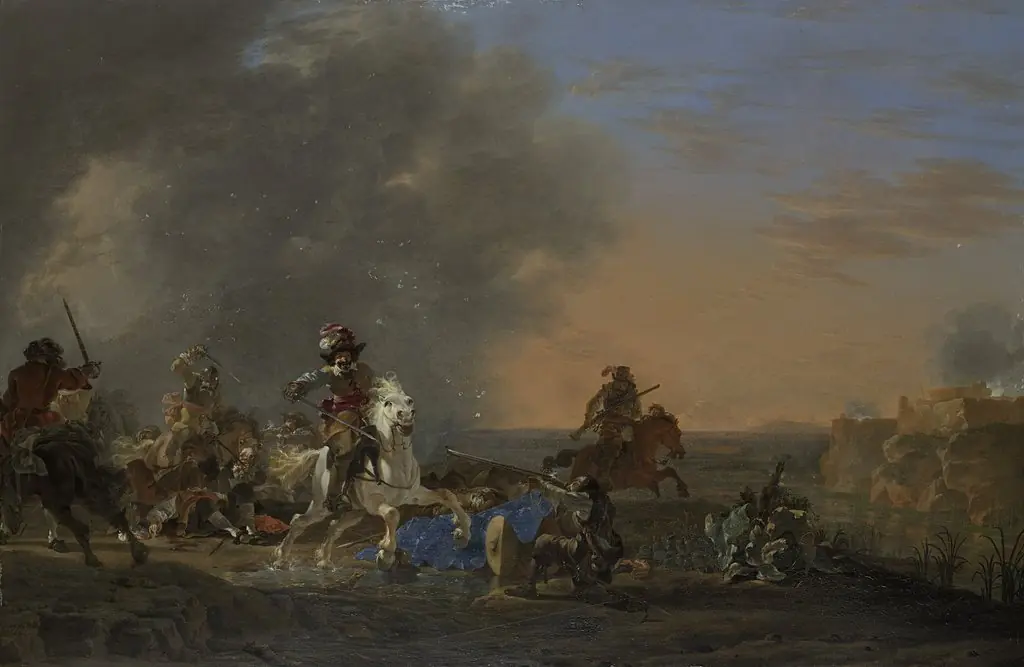 Cavalry attack at sunset
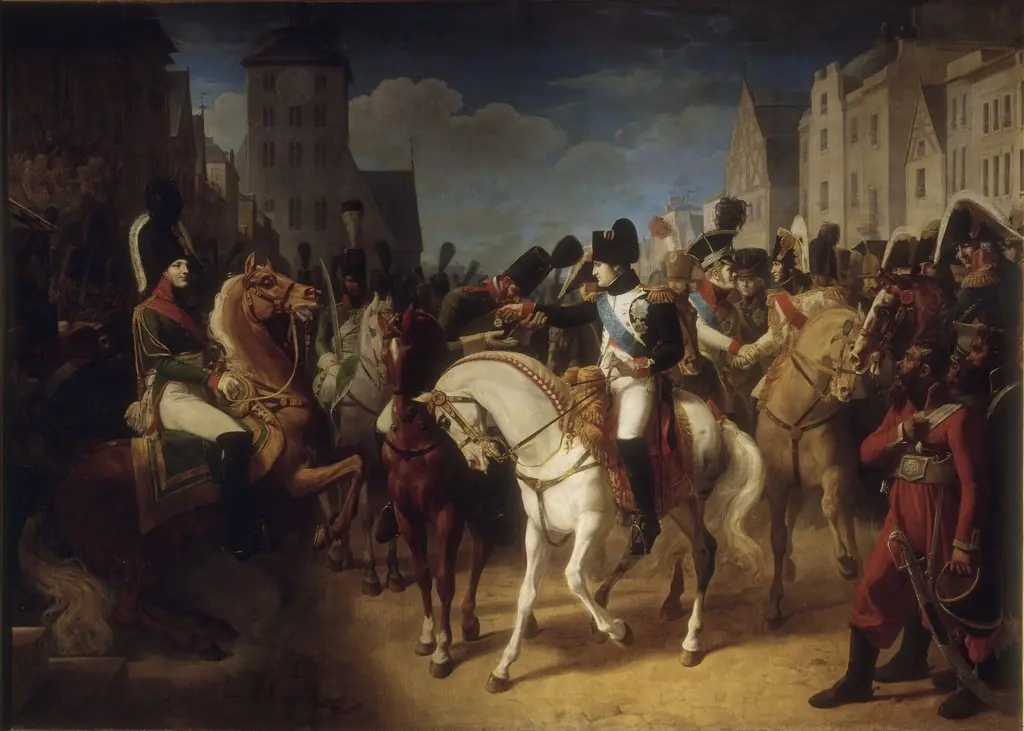 Napoleon I decorated a soldier of the Russian army in Tilsitt with the cross of the Legion of Honor
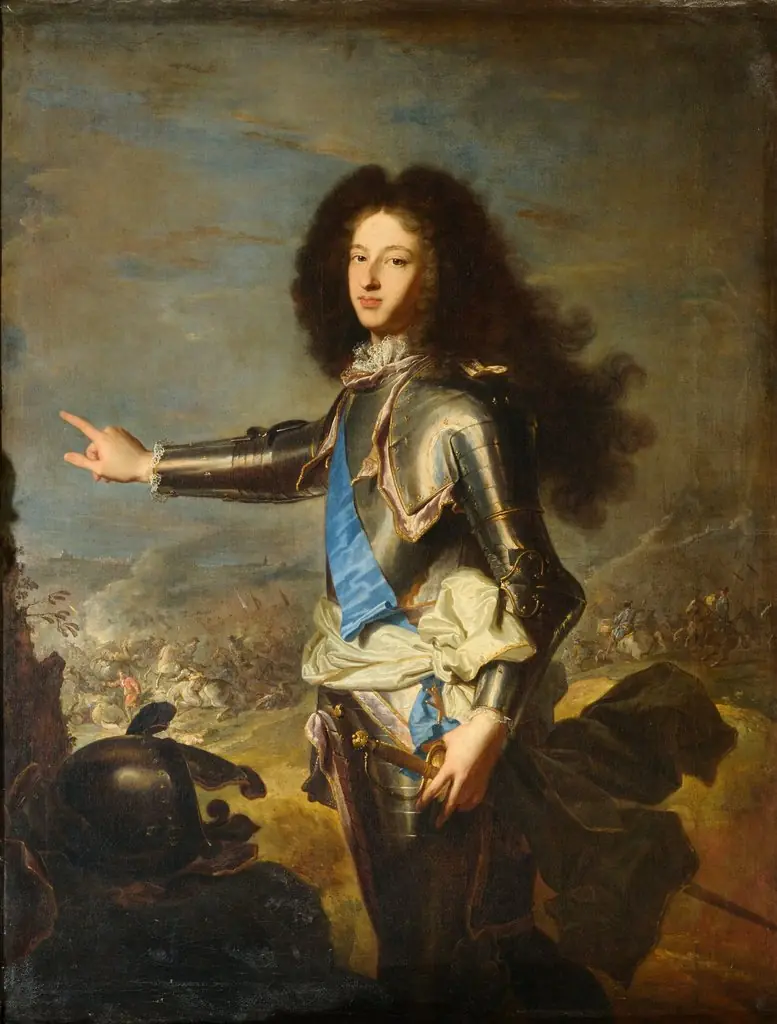 Louis de France, Duke of Burgundy
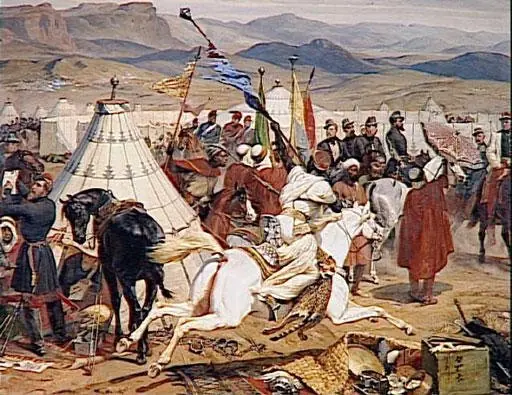 Battle of Isly, August 14, 1844
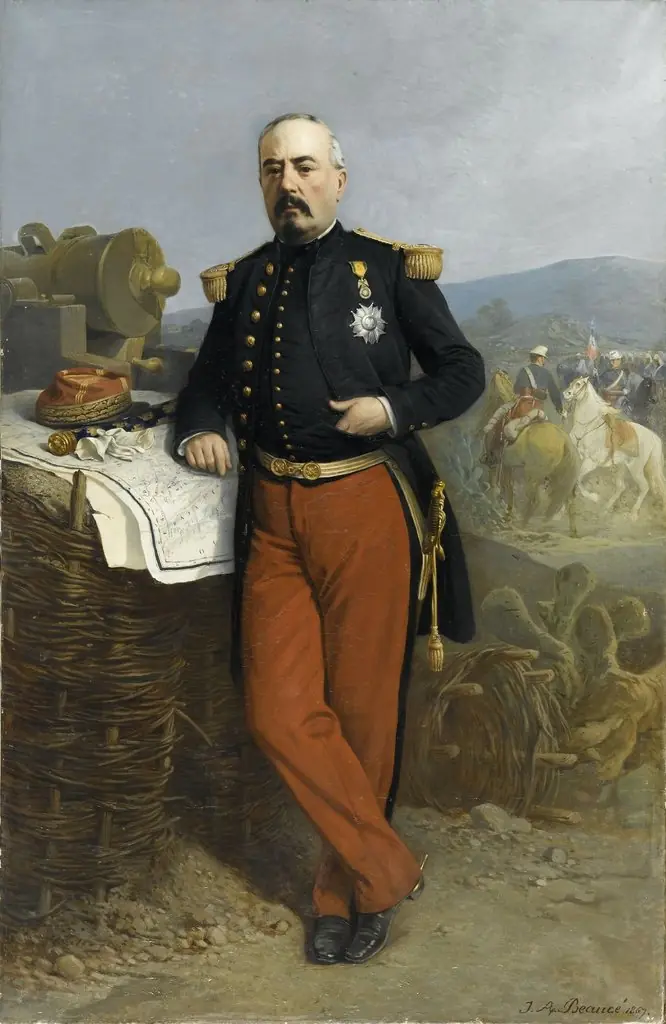 Achille-François Bazaine, Marshal of France
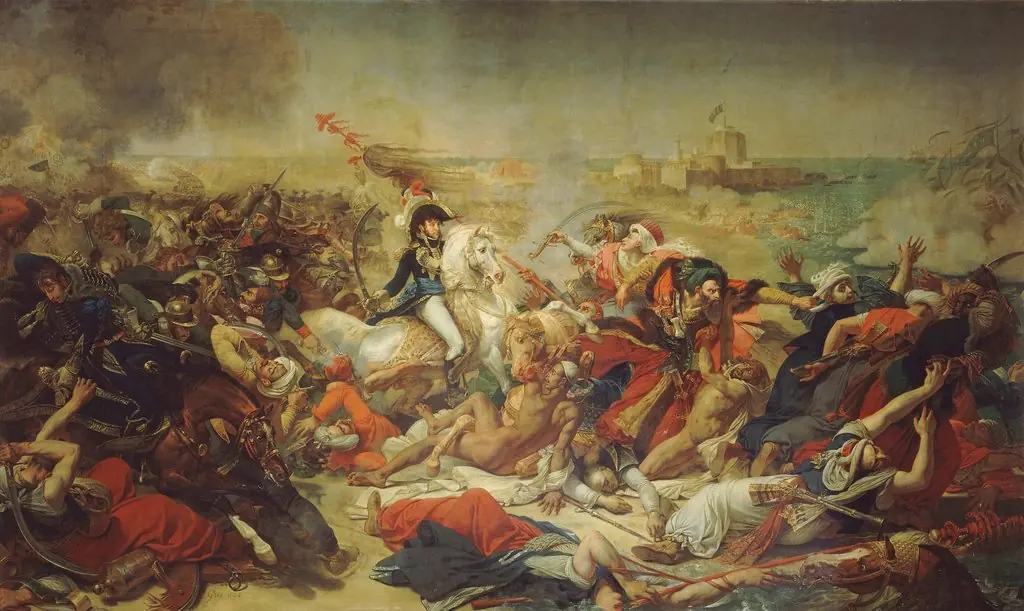 Bataille d'Aboukir, 25 Juillet 1799
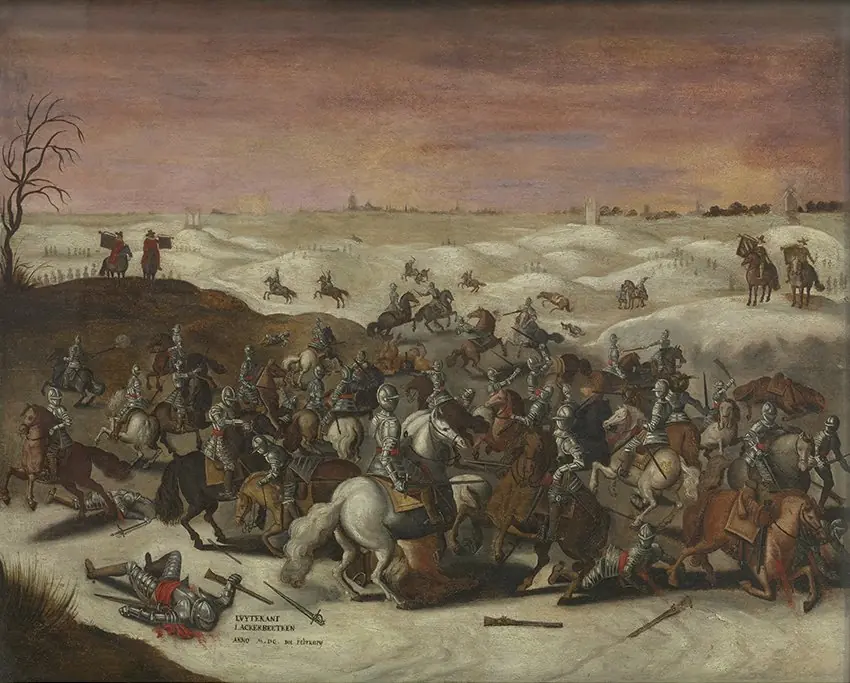 The Battle of Lekkerbeetje
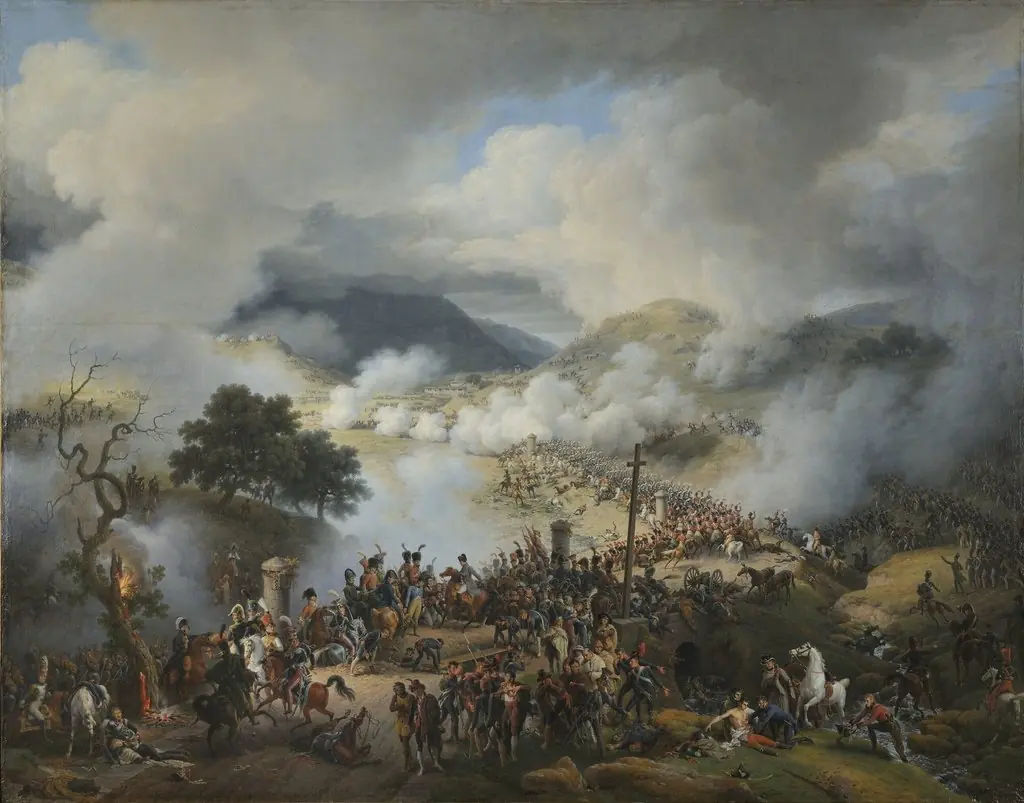 Battle of Somosierra, November 30, 1808
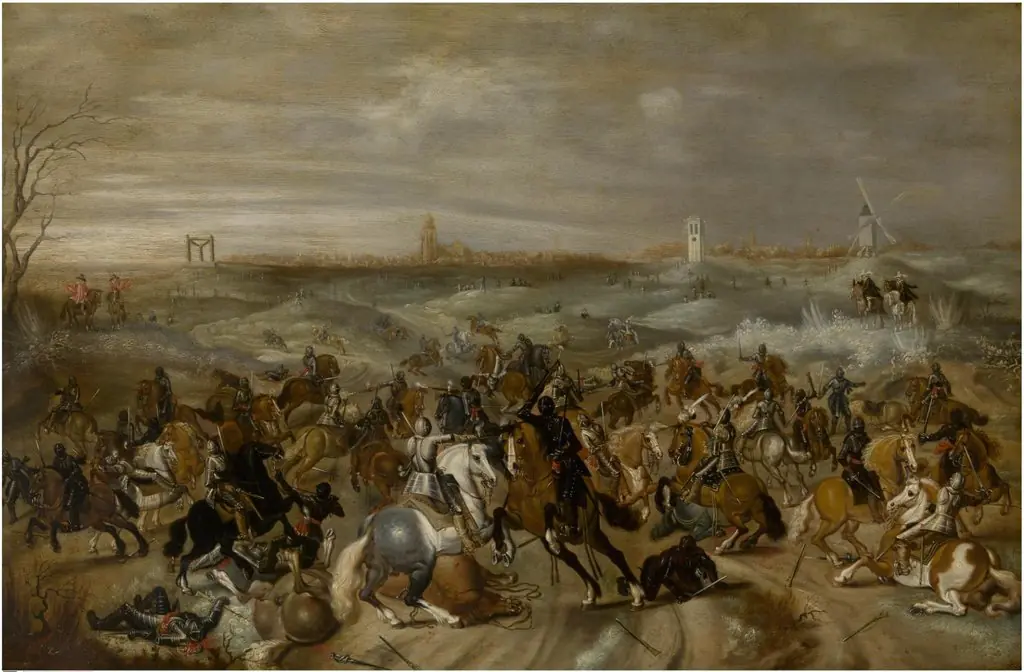 The battle of Leckerbeetje
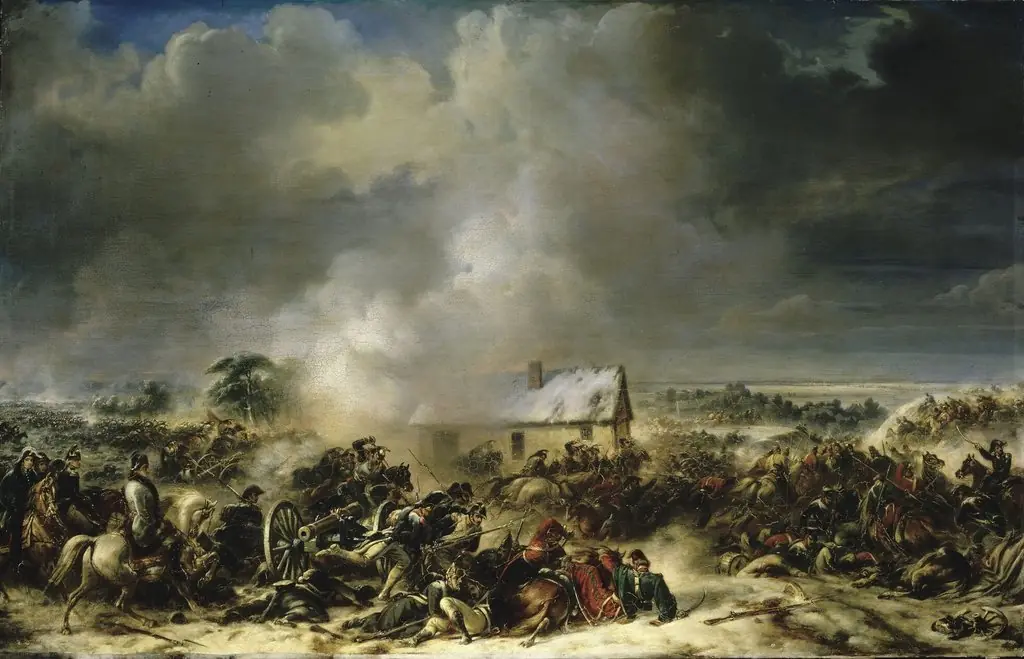 Battle of Hoff, February 6, 1807
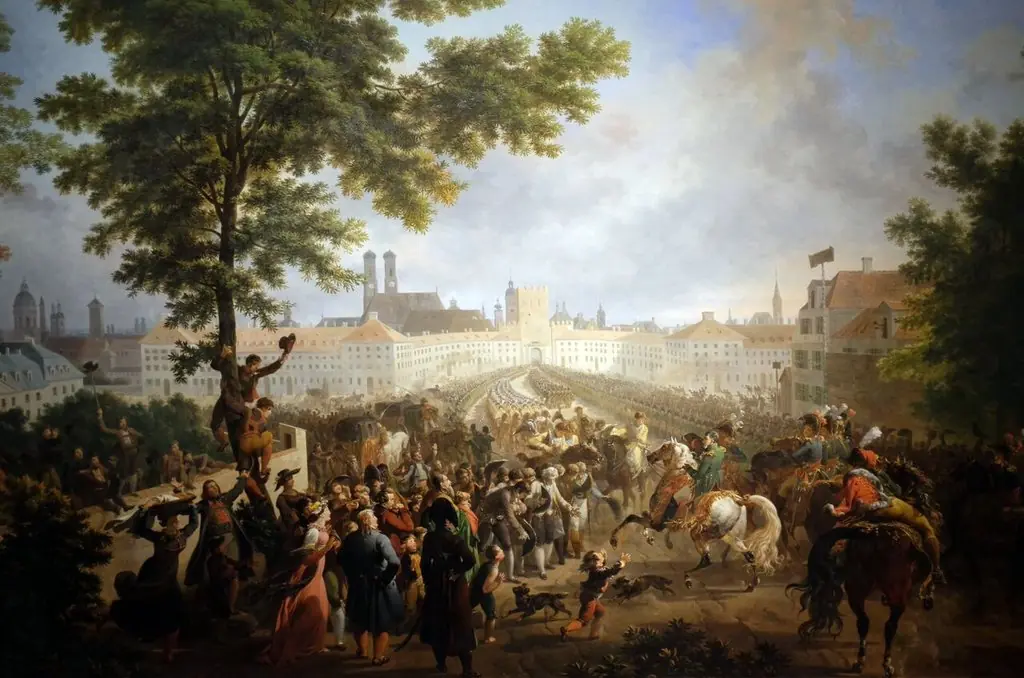 Entry of the French army in Munich
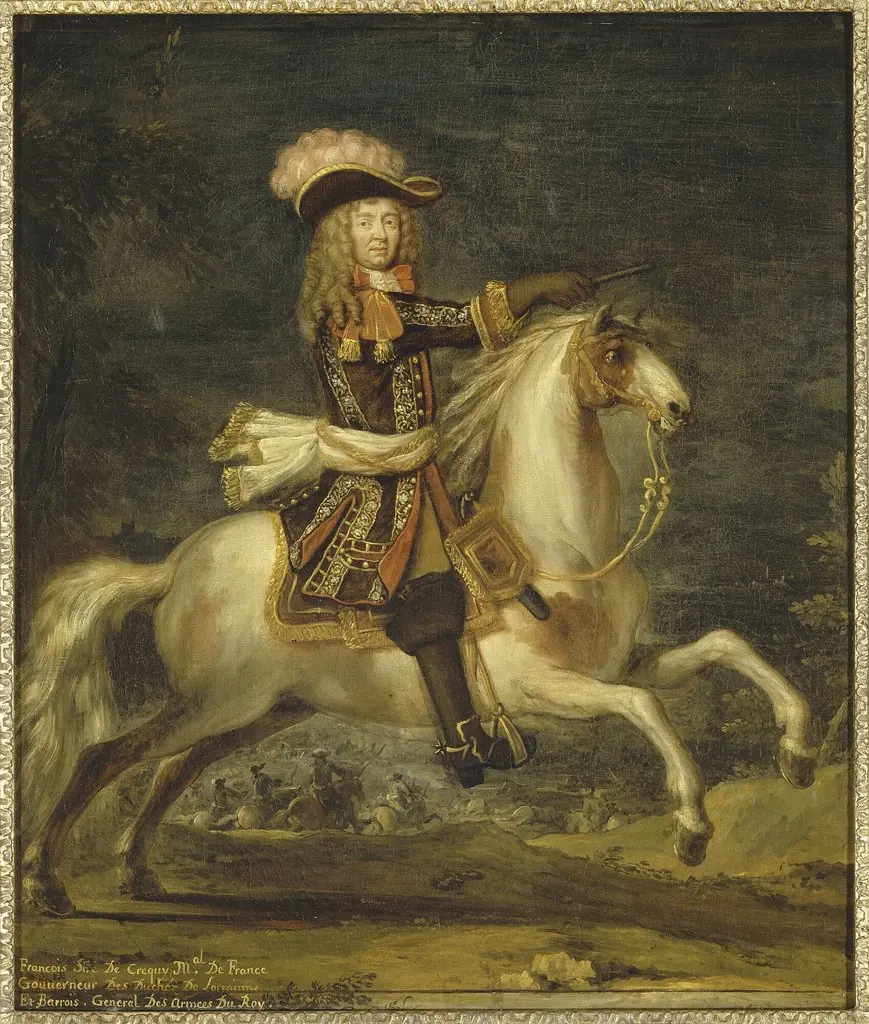 François de Blanchefort, Marquis de Créquy, Marshal of France
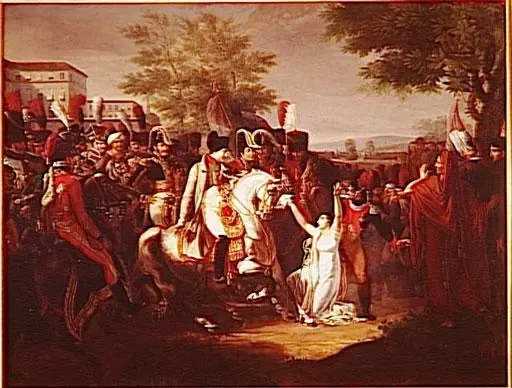 Mademoiselle de Saint-Simon asking for her father's pardon, December 1808
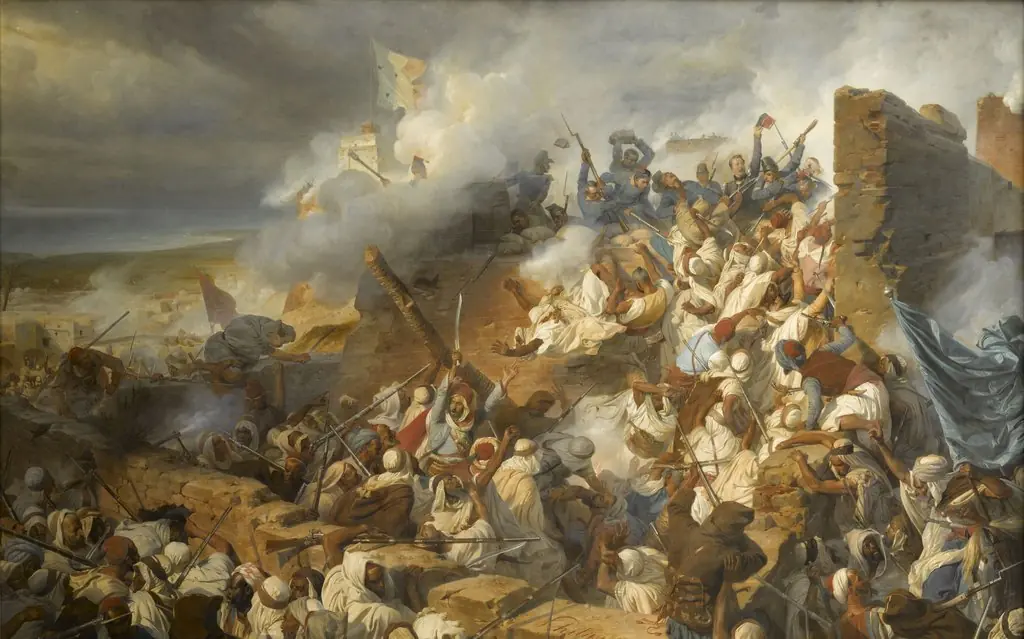 Defense of Mazagran, February 2 to 6, 1840
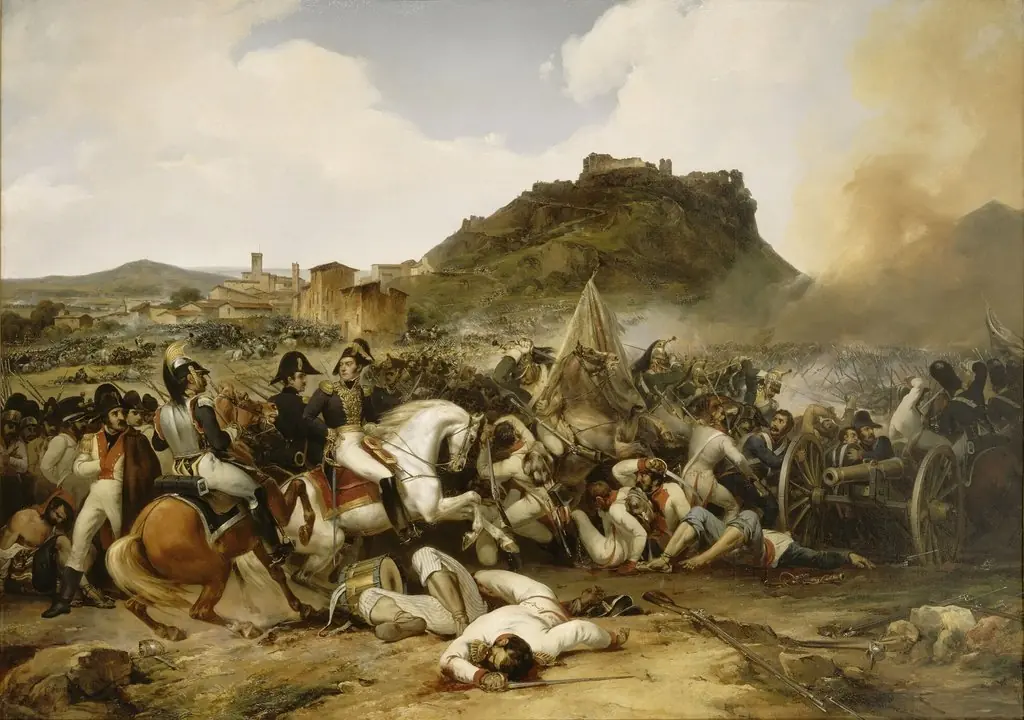 Battle of Castalla, July 21, 1812
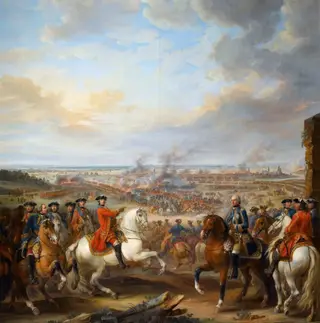 Battle of Fontenoy, 11th May 1745
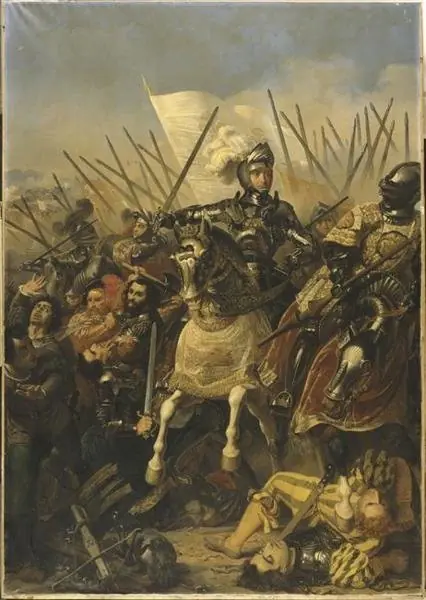 Battle of Agnadel, 14th May 1509
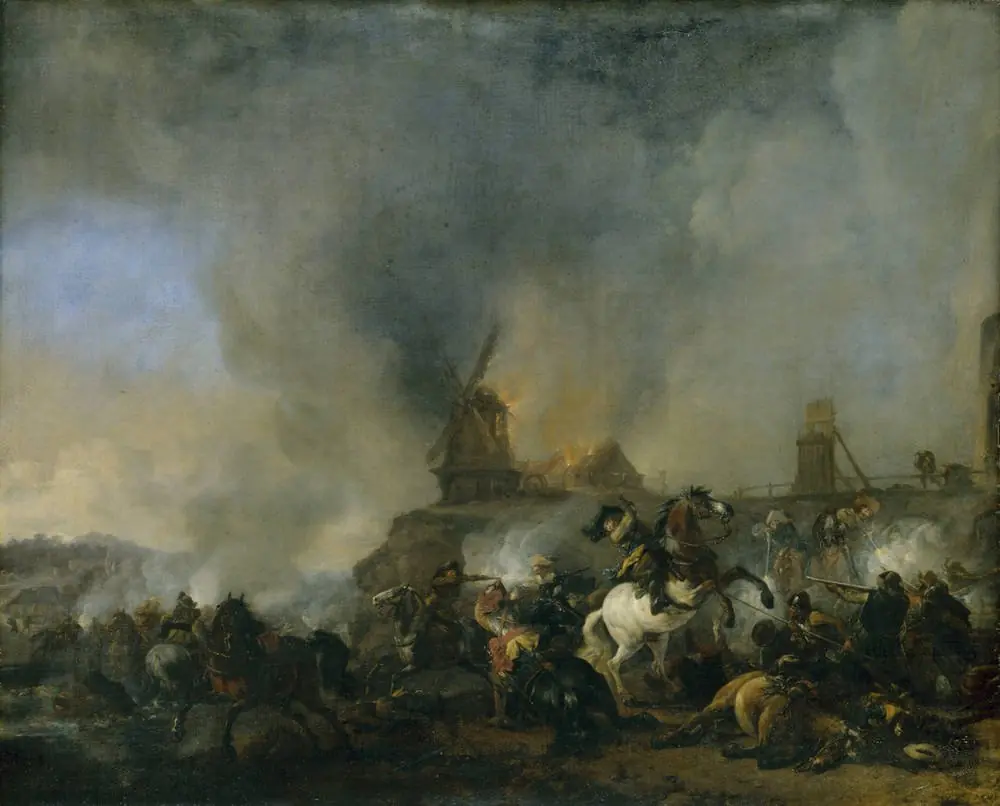 Cavalry in front of a Burning mill
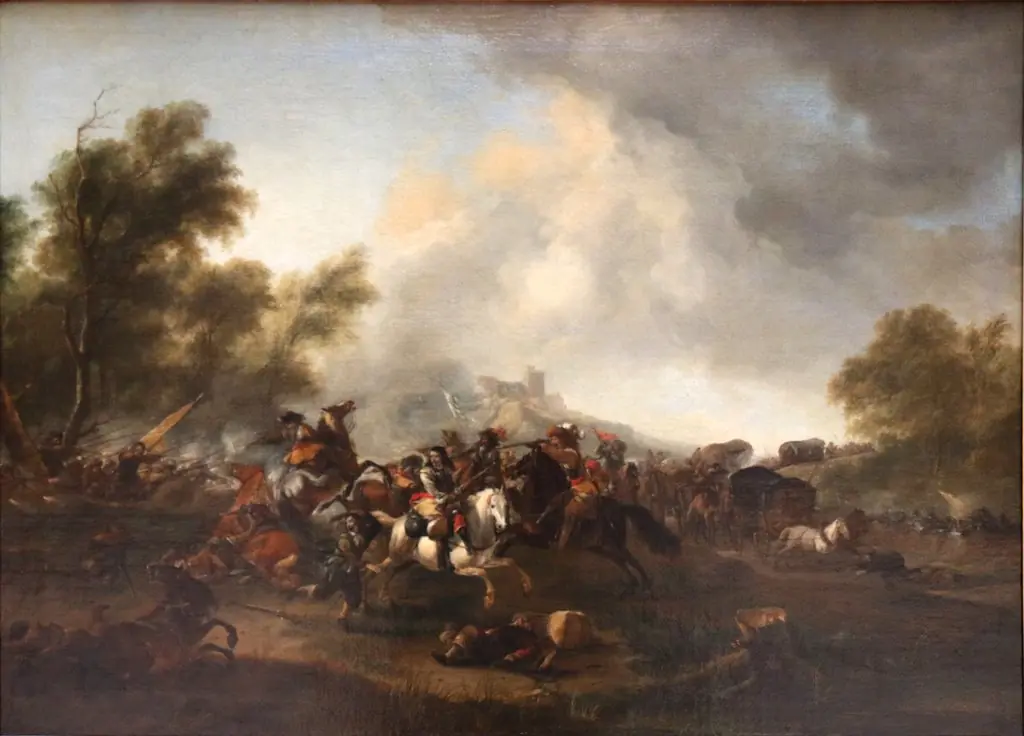 Attack on a Convoy
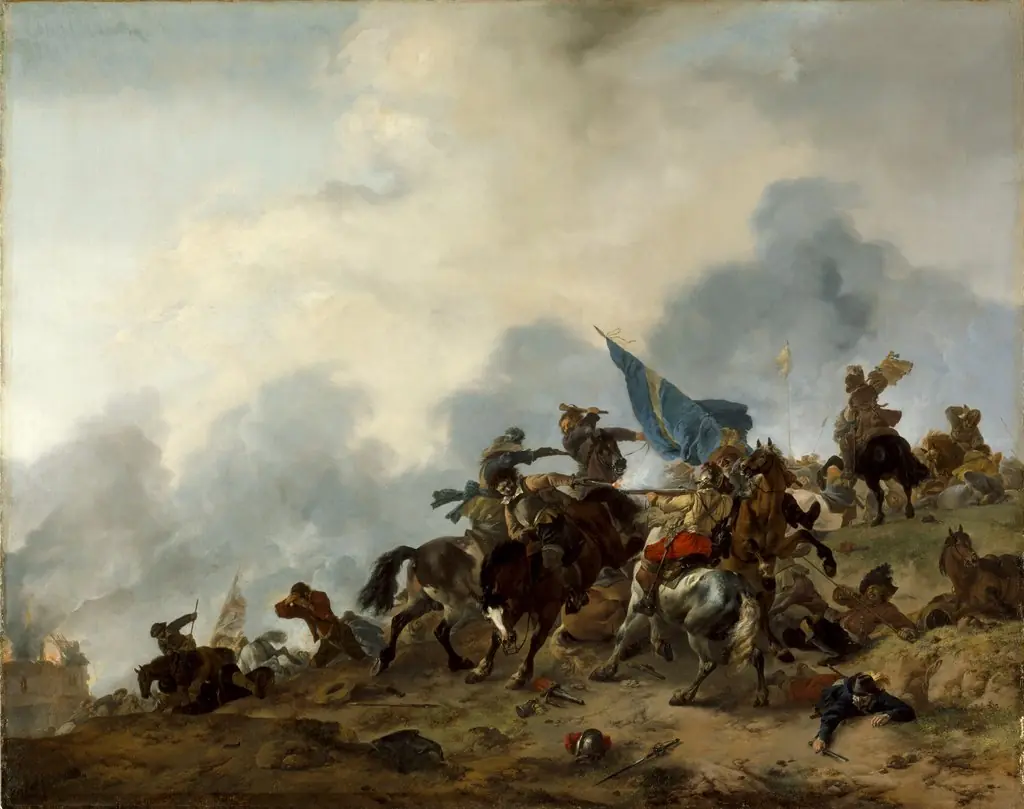 Battle Scene
 Cavalry Skirmish
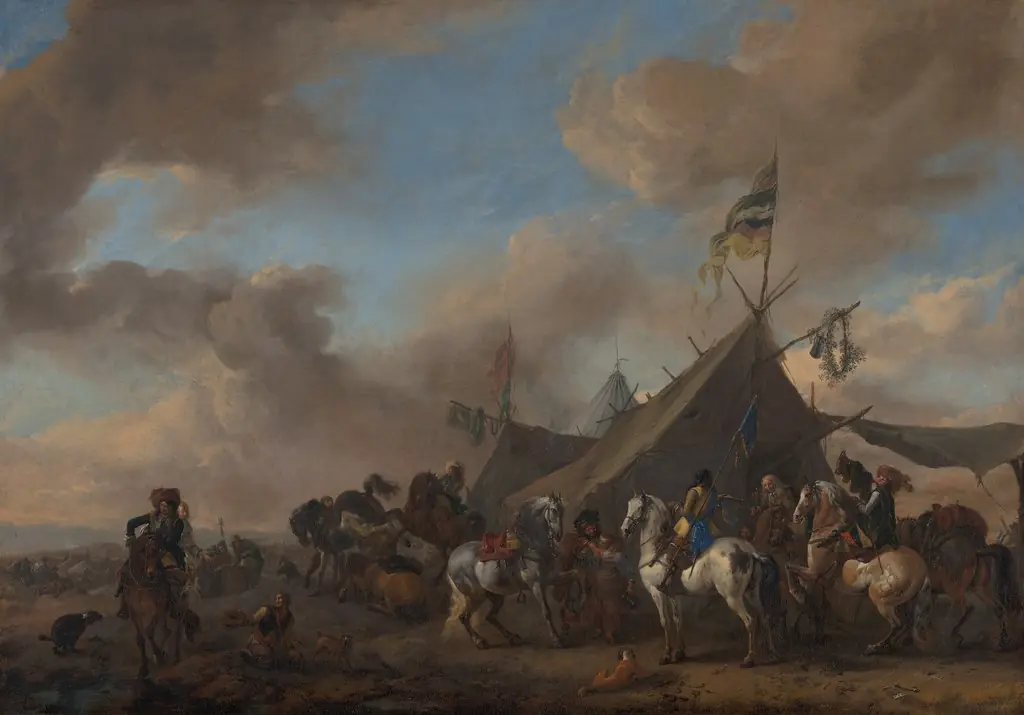 Army Camp
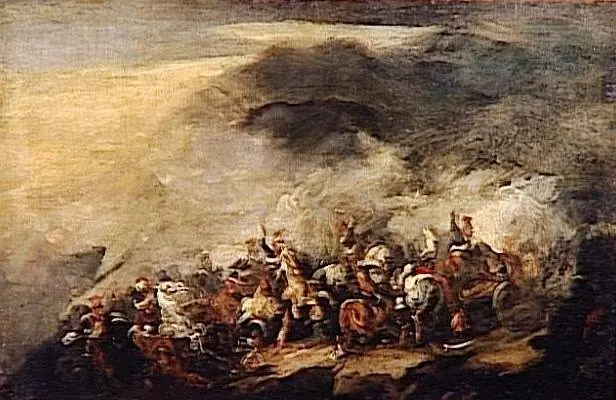 La Bataille de Somosierra
Frequently asked questions
What is Cavalry?
Cavalry is a subject in art. Historically, cavalry (from the French word cavalerie, itself derived from cheval meaning "horse") are groups of soldiers or warriors who fight mounted on horseback.
How many Cavalry works does Artifact World Gallery have?
Artifact World Gallery holds 28 public-domain Cavalry works, all free to view and download.
Who are the key Cavalry artists?
Key Cavalry artists in the collection include Jacques-Louis David, Philips Wouwerman and Jan Asselijn.
Where can I see Cavalry works?
Cavalry works in the collection are held by Palace of Versailles, Rijksmuseum and Groeningemuseum.