Artwork
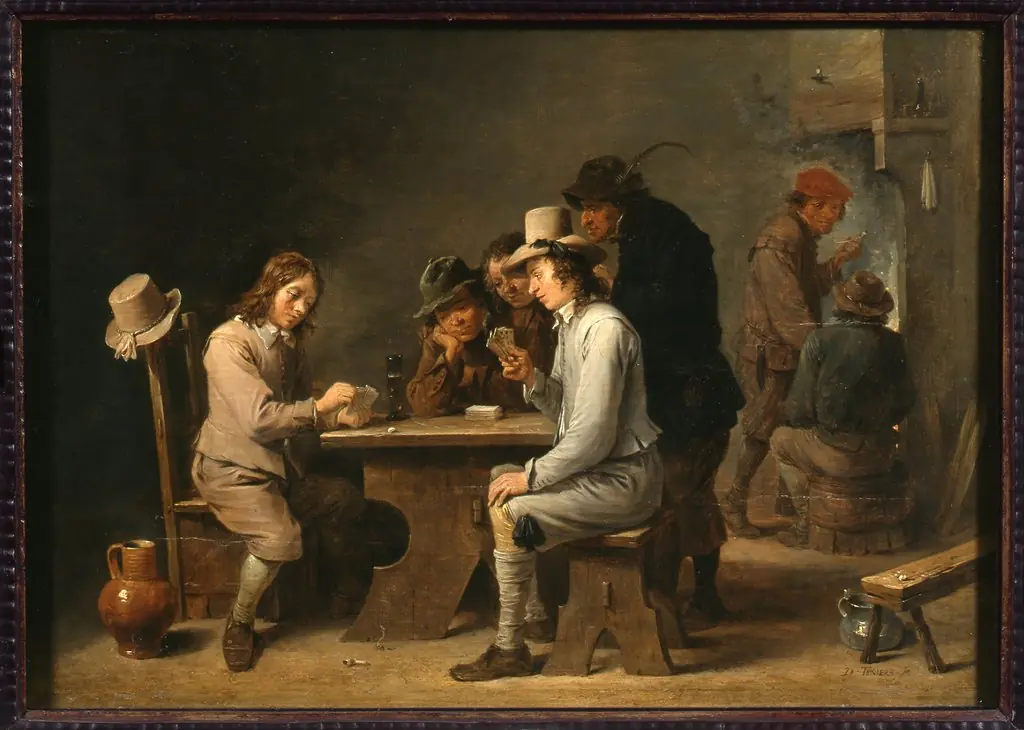
Tavern Scene
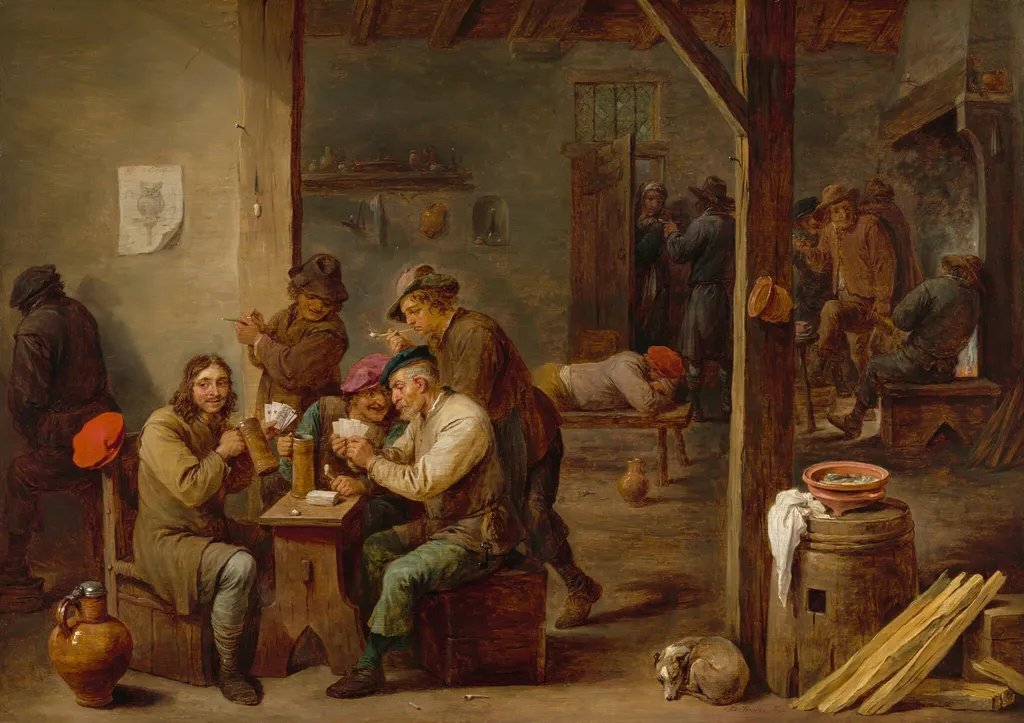
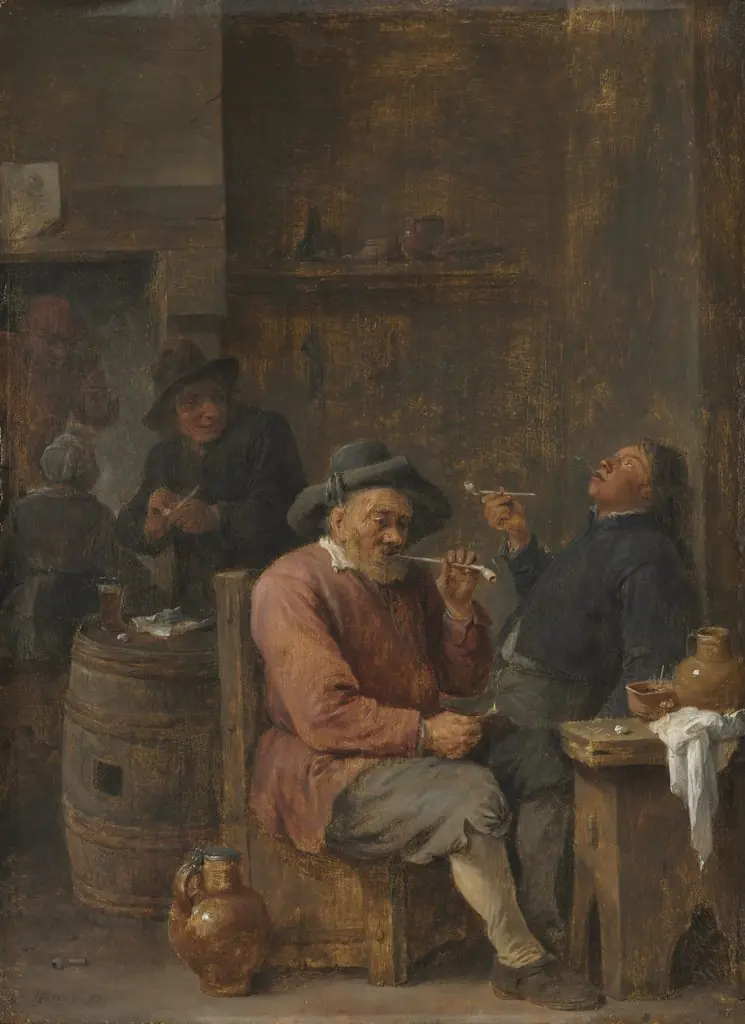
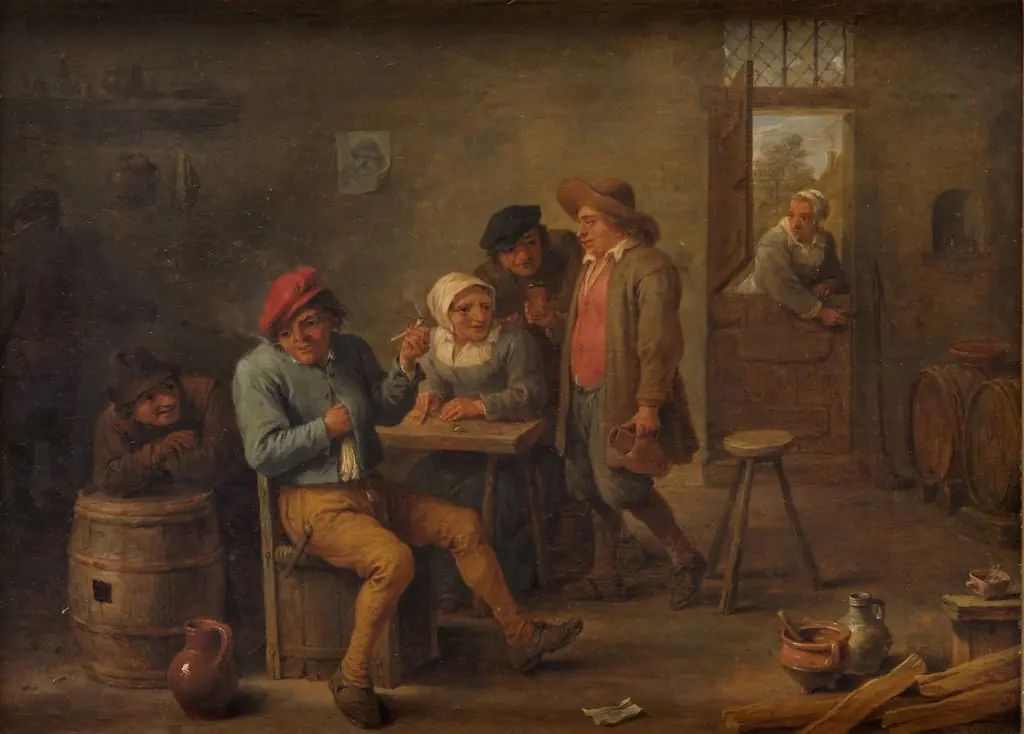
Tavern Scene is an oil painting by the Baroque artist David Teniers the Younger. It dates from 1658 and is held in the collection of the National Gallery of Art.
- Inscription
- Inscribed:lower right: .D. TENIERS . FEC.; upper left on drawing tacked to wall, An in ligature: An 1658
About this work
Technique & Style
The composition belongs to the genre of everyday interior scenes, reflecting the observational interest in contemporary domestic life.
The work is an oil painting executed on a wooden panel, the support specified for the piece. Its creation dates to 1658, placing it within the mid‑17th‑century period of Dutch‑Flemish genre scenes. The medium consists of oil paint applied to the panel surface, a technique that allows the artist to achieve fine detail and a rich, warm tonal range characteristic of genre subjects.
The composition belongs to the genre of everyday interior scenes, reflecting the observational interest in contemporary domestic life. No explicit information about the painting’s condition or handling is provided in the source material.
History & Provenance
Created in 1658 by David Teniers the Younger, this oil on panel painting was originally known as _Le Chapeau Rouge_. Its documented ownership begins with Prince Golitzyn in Paris, followed by a sale in 1825 where it was purchased by De Fontaine. The work subsequently entered the collection of M. Boursault before being acquired, likely by the agent Falkner, for Edmund Higginson of Saltmarshe Castle.
After appearing in Higginson's 1846 sale, the painting passed to Samuel Sandars and later his widow. Following a period of ownership by Alan Rofe and Ernst Wilhelm Sachs, the piece was sold through the Terry-Engell Gallery in London to Robert H. and Clarice Smith in October 1972. The Smiths donated the work to the National Gallery of Art in Washington, D.C., in 1975.
Tavern Scene has been held by the National Gallery of Art in Washington, D.C., since 1975, when it was given by Robert H. and Clarice Smith, who had purchased the painting in October 1972 through the Terry-Engell Gallery in London.
Its earlier provenance traces from Prince Golitzyn in Paris, through a 1825 Lebrun sale, to M. Boursault and then to Edmund Higginson of Saltmarshe Castle, Herefordshire, before passing to Samuel Sandars and later to Alan Rofe in London. A 1929 Christie, Manson & Woods sale followed, with subsequent ownership by Ernst Wilhelm Sachs in London prior to a 1970 Sotheby's sale.
The painting was known earlier by the title Le Chapeau Rouge ("The Red Hat") and appeared in several 19th- and 20th-century auction catalogues, including the 1832 Boursault sale, the 1846 Christie & Manson sale of Higginson's collection, and the 1970 Sotheby's sale.
Overview
David Teniers the Younger's Tavern Scene, painted in oil on panel in 1658, depicts a lively genre scene. It captures a moment of everyday life within a bustling tavern, a common subject for the artist. The composition focuses on a group of men engaged in various leisure activities, illuminated by a distinct light source.
Subject & Meaning
The painting portrays a crowded interior where several figures, characterized by their rustic appearance, are absorbed in drinking and a card game. A man wearing a red hat appears to be victorious, drawing attention to the game's outcome. Teniers frequently explored such scenes, presenting a candid and often humorous view of common social interactions and pastimes of his era.
Context
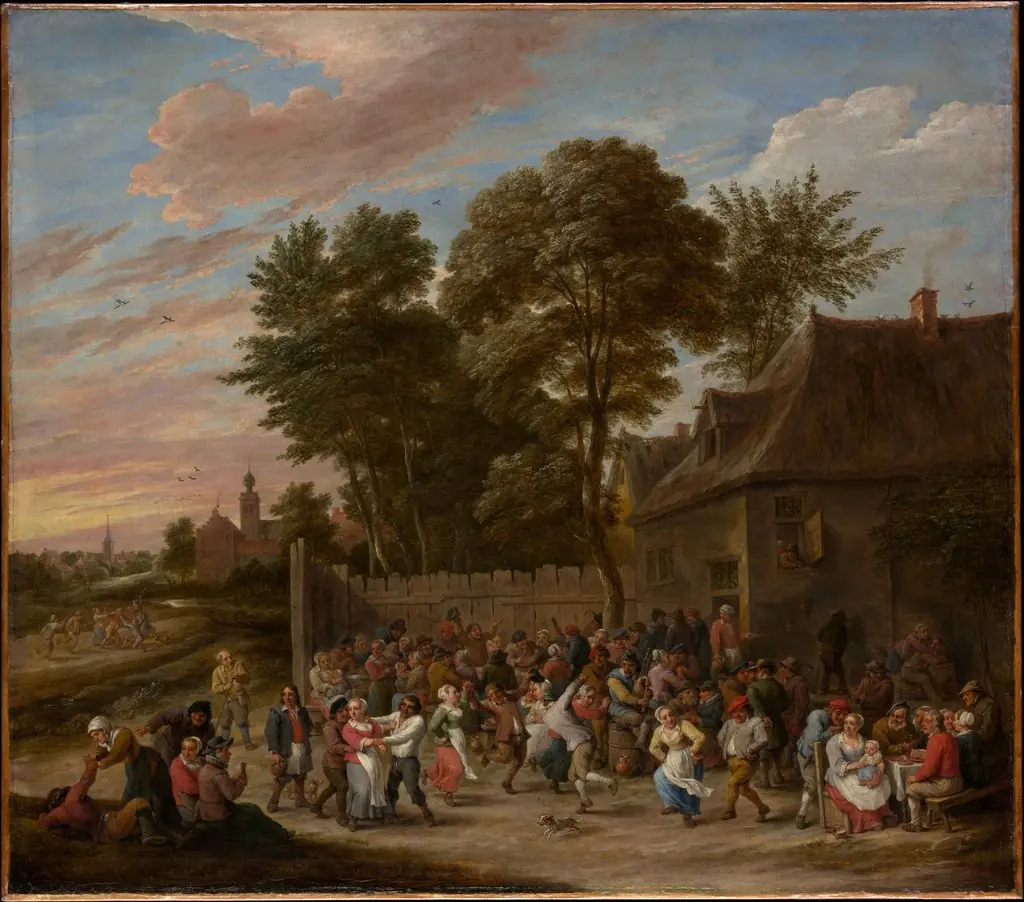
Tavern Scene exemplifies David Teniers the Younger's consistent engagement with genre painting, a popular category in 17th-century Flemish art. His frequent portrayal of ordinary people in their daily environments, such as taverns or village festivities, reflects a broader artistic interest in depicting contemporary life with a blend of observational realism and narrative charm.
Own this work as a print
Artist & collection
Artist
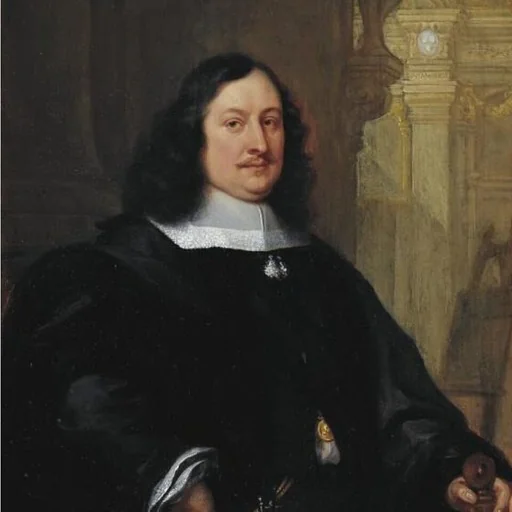
David Teniers the Younger or David Teniers II was a Flemish Baroque painter, printmaker, and artist.