Artwork
諸國名橋奇覧 摂洲阿治川口天保山|Tenpōzan at the Mouth of the Aji River in Settsu Province (Sesshū Ajikawaguchi Tenpōzan), from the series Remarkable Views of Bridges in Various Provinces (Shokoku meikyō kiran)
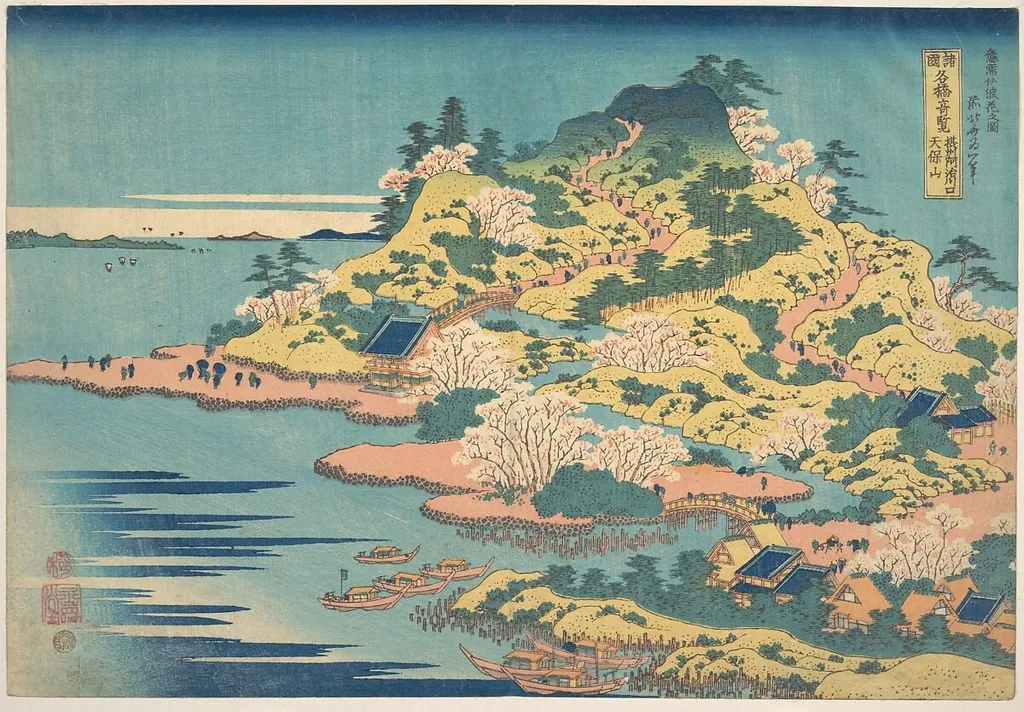
諸國名橋奇覧 摂洲阿治川口天保山|Tenpōzan at the Mouth of the Aji River in Settsu Province (Sesshū Ajikawaguchi Tenpōzan), from the series Remarkable Views of Bridges in Various Provinces (Shokoku meikyō kiran) is an ink print by the Japonisme artist Katsushika Hokusai. It dates from 1828 and is held in the collection of the Metropolitan Museum of Art.
About this work
Overview
The work is a woodblock print executed in ink and color on paper, created in 1828 by the Japanese artist Katsushika Hokusai. It belongs to the series titled “Remarkable Views of Bridges in Various Provinces,” which documents notable bridges and surrounding scenery across the country. The print is part of the collection of The Metropolitan Museum of Art.
Subject & Meaning
The image depicts a gently sloping hill crowned with foliage, descending toward the mouth of the Aji River in Settsu Province. Small vessels drift on the water while modest structures and trees line the riverbank, suggesting a tranquil, everyday landscape that emphasizes the harmony between natural and built environments.
Technique & Style
Hokusai employed the traditional ukiyo-e woodblock method, layering ink outlines with multiple color plates to achieve a nuanced palette of blues, greens, and earth tones. The composition balances fine line work with broader color washes, creating a sense of atmospheric depth while maintaining precise detail in the architectural and botanical elements.
History & Provenance
The print was produced during the late Edo period, a time when travel guides and scenic series were popular among urban audiences. After its creation, the sheet entered private collections before being acquired by The Metropolitan Museum of Art, where it remains on view as part of the museum’s Japanese prints holdings.
Context
Part of a broader series that surveyed famous bridges across Japan, this print reflects the era’s interest in documenting regional landmarks for both practical and aesthetic purposes. The focus on a modest river mouth rather than a grand bridge illustrates Hokusai’s willingness to portray everyday locales alongside more celebrated sites.
Artist & collection

Artist
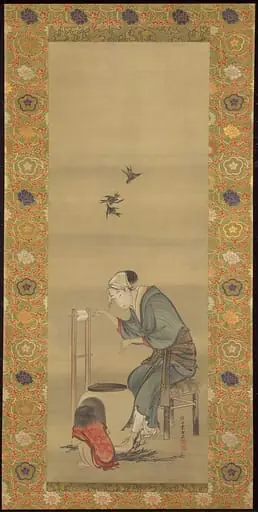
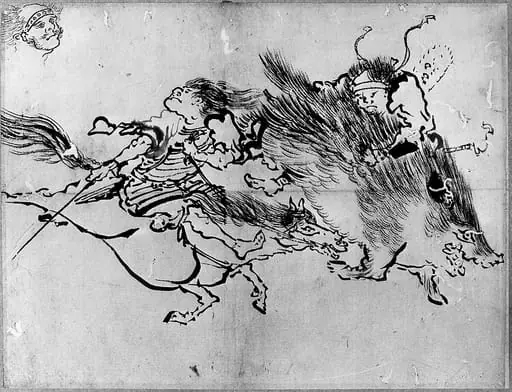
Katsushika Hokusai spent his life in Edo, now Tokyo, where he drew and carved prints for a living.

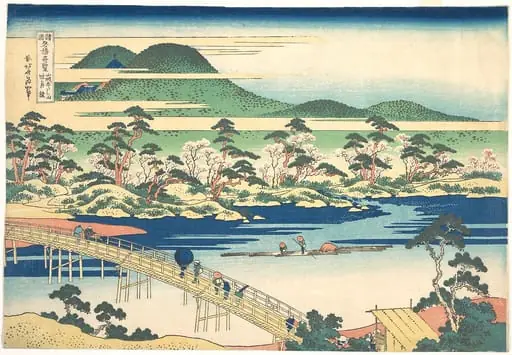
- 諸國名橋奇覧 山城あらし山吐月橋 |Togetsu Bridge at Arashiyama in Yamashiro, from the series Remarkable Views of Bridges in Various Provinces (Shokoku meikyō kiran)
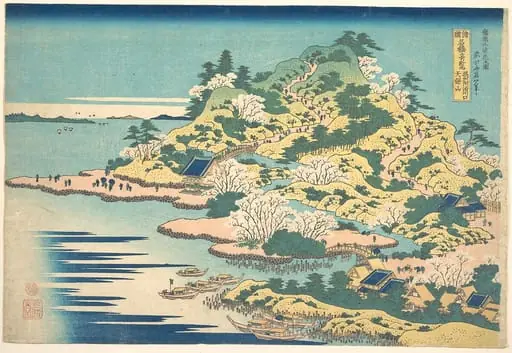 諸國名橋奇覧 摂洲阿治川口天保山|Tenpōzan at the Mouth of the Aji River in Settsu Province (Sesshū Ajikawaguchi Tenpōzan), from the series Remarkable Views of Bridges in Various Provinces (Shokoku meikyō kiran)
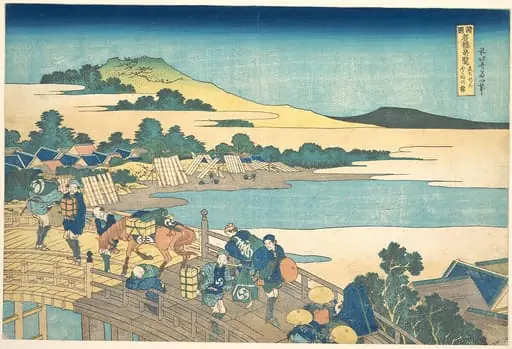 諸國名橋奇覧 ゑちぜんふくゐの橋|Fukui Bridge in Echizen Province (Echizen Fukui no hashi), from the series Remarkable Views of Bridges in Various Provinces (Shokoku meikyō kiran)
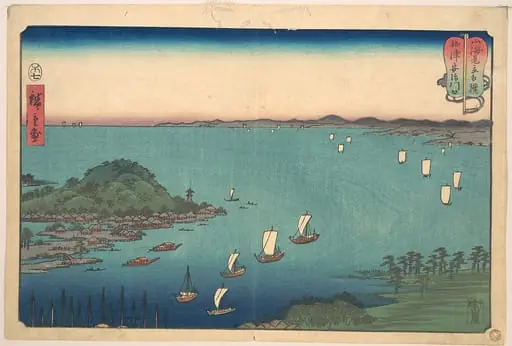 山海見立相撲 摂津安治川口|The Harbor of Ajikawa, Settsu Province
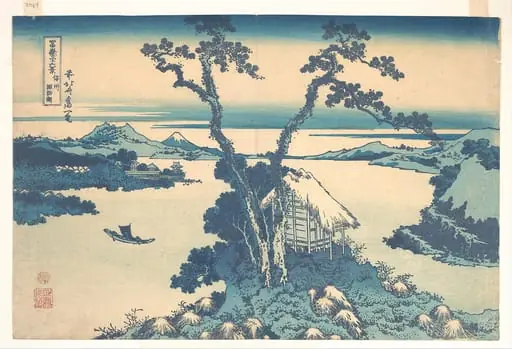 冨嶽三十六景 信州諏訪湖|Lake Suwa in Shinano Province (Shinshū Suwako), from the series Thirty-six Views of Mount Fuji (Fugaku sanjūrokkei)
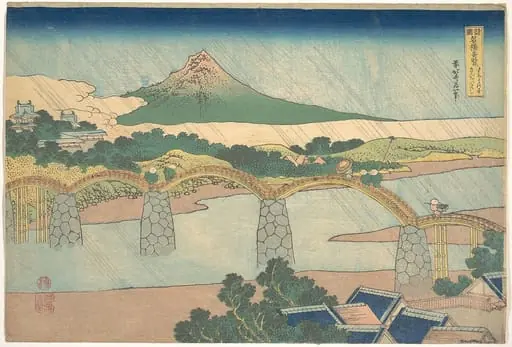 諸國名橋奇覧 すほうの国きんたいはし|Kintai Bridge in Suō Province (Suō no kuni Kintaibashi), from the series Remarkable Views of Bridges in Various Provinces (Shokoku meikyō kiran)
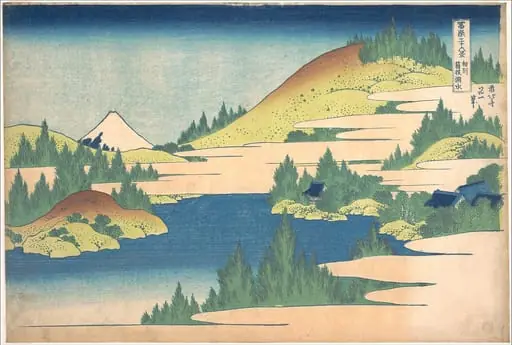 冨嶽三十六景 相州箱根湖水|The Lake at Hakone in Sagami Province (Sōshū Hakone kosui), from the series Thirty-six Views of Mount Fuji (Fugaku sanjūrokkei)
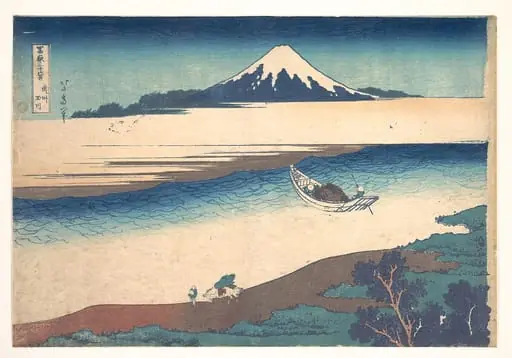 冨嶽三十六景 武州玉川|Tama River in Musashi Province (Bushū Tamagawa), from the series Thirty-six Views of Mount Fuji (Fugaku sanjūrokkei)