Artwork
諸國名橋奇覧 摂洲阿治川口天保山|Tenpōzan at the Mouth of the Aji River in Settsu Province (Sesshū Ajikawaguchi Tenpōzan), from the series Remarkable Views of Bridges in Various Provinces (Shokoku meikyō kiran)
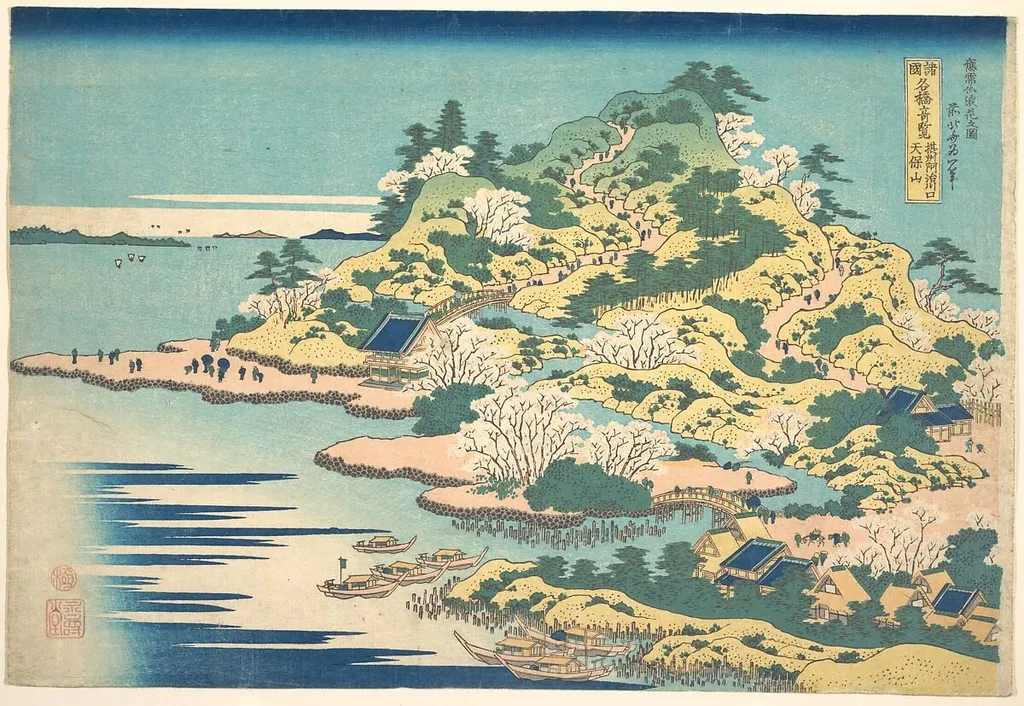
諸國名橋奇覧 摂洲阿治川口天保山|Tenpōzan at the Mouth of the Aji River in Settsu Province (Sesshū Ajikawaguchi Tenpōzan), from the series Remarkable Views of Bridges in Various Provinces (Shokoku meikyō kiran) is an ink print by the Japonisme artist Katsushika Hokusai. It dates from 1804 and is held in the collection of the Metropolitan Museum of Art.
About this work
Overview
This woodblock print is part of Katsushika Hokusai’s series Remarkable Views of Bridges in Various Provinces, produced around 1804.
This woodblock print is part of Katsushika Hokusai’s series Remarkable Views of Bridges in Various Provinces, produced around 1804. It depicts a tranquil riverside in Settsu Province, where a modest bridge spans the Aji River. The composition emphasizes quietude over grandeur, focusing on the interplay between land, water, and human presence.
Printed in ink and color on paper, it reflects the ukiyo-e tradition of capturing everyday landscapes with restrained elegance.
Subject & Meaning
The scene portrays Tenpōzan, a low hill near the river’s mouth, dotted with trees and small dwellings. A winding path leads upward, where a few figures move slowly, suggesting daily life rather than spectacle. The bridge and two floating boats anchor the view in practicality, transport and labor, not ceremony. The absence of dramatic action invites contemplation of place, time, and the subtle rhythms of rural Japan.
Technique & Style
Hokusai employs soft, muted tones, pale blues, greens, and earth browns, to create a serene atmosphere. Depth is suggested through overlapping layers of hills and trees, rendered with simplified forms rather than detailed perspective. Fine cross-hatching defines shadows and texture, particularly on the hillside and boat hulls.
The scale of human figures and vessels is deliberately small, enhancing the sense of quiet vastness in the landscape.
History & Provenance
Created in the early 19th century, this print belongs to a lesser-known series by Hokusai that predates his more famous Thirty-Six Views of Mount Fuji. It was likely produced for a commercial publisher, intended as part of a set documenting regional landmarks. The print is now held in the collection of The Metropolitan Museum of Art, where it contributes to the understanding of Hokusai’s early landscape work.
Context
During the Edo period, interest in travel and regional geography grew among urban populations. Series like this one catered to that curiosity, offering idealized glimpses of distant places. Though not as celebrated as his later works, this print reflects a broader trend in ukiyo-e: the elevation of ordinary scenery into subjects worthy of artistic attention, grounded in observation rather than myth.
Legacy
This print illustrates Hokusai’s evolving approach to landscape, where composition and mood take precedence over narrative or spectacle. Its quiet realism influenced later artists in both Japan and the West, contributing to the global appreciation of Japanese printmaking. Though modest in scale, it remains a thoughtful example of how everyday places could be rendered with dignity and calm.
Artist & collection

Artist
Katsushika Hokusai spent his life in Edo, now Tokyo, where he drew and carved prints for a living.

- 諸國名橋奇覧 摂洲阿治川口天保山|Tenpōzan at the Mouth of the Aji River in Settsu Province (Sesshū Ajikawaguchi Tenpōzan), from the series Remarkable Views of Bridges in Various Provinces (Shokoku meikyō kiran)
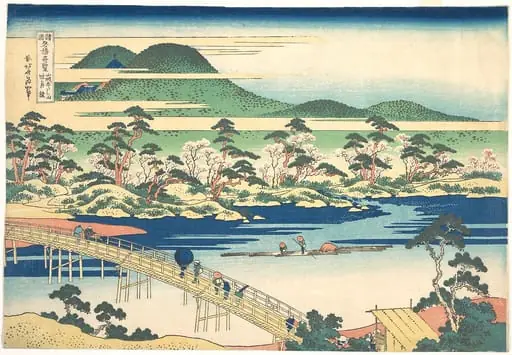 諸國名橋奇覧 山城あらし山吐月橋 |Togetsu Bridge at Arashiyama in Yamashiro, from the series Remarkable Views of Bridges in Various Provinces (Shokoku meikyō kiran)
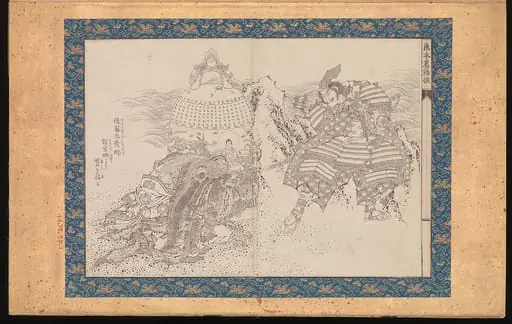
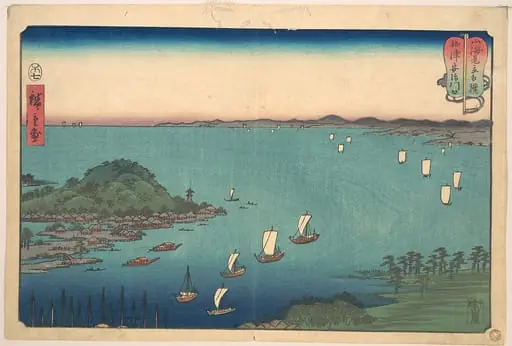 山海見立相撲 摂津安治川口|The Harbor of Ajikawa, Settsu Province
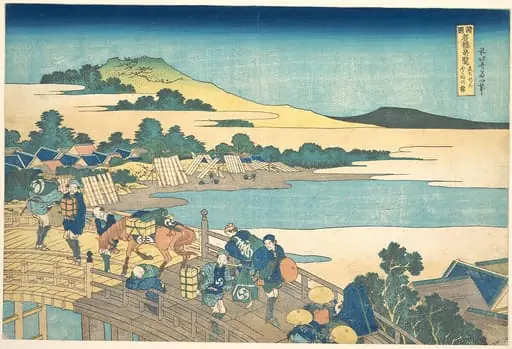 諸國名橋奇覧 ゑちぜんふくゐの橋|Fukui Bridge in Echizen Province (Echizen Fukui no hashi), from the series Remarkable Views of Bridges in Various Provinces (Shokoku meikyō kiran)
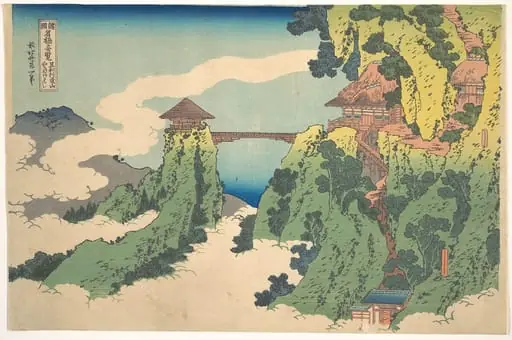 諸國名橋奇覧 足利行道山くものかけはし|The Hanging-cloud Bridge at Mount Gyōdō near Ashikaga (Ashikaga Gyōdōzan kumo no kakehashi), from the series Remarkable Views of Bridges in Various Provinces (Shokoku meikyō kiran)
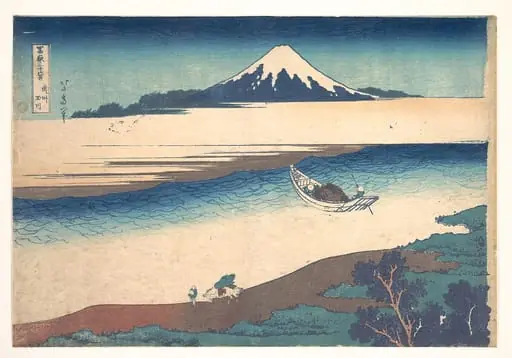 冨嶽三十六景 武州玉川|Tama River in Musashi Province (Bushū Tamagawa), from the series Thirty-six Views of Mount Fuji (Fugaku sanjūrokkei)
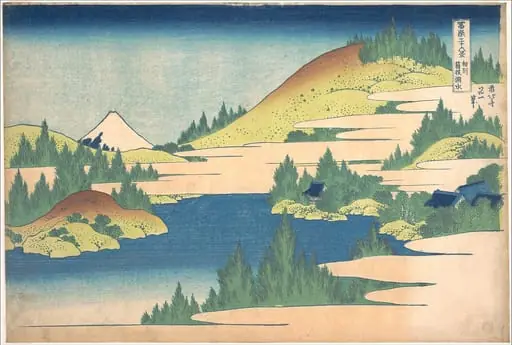 冨嶽三十六景 相州箱根湖水|The Lake at Hakone in Sagami Province (Sōshū Hakone kosui), from the series Thirty-six Views of Mount Fuji (Fugaku sanjūrokkei)
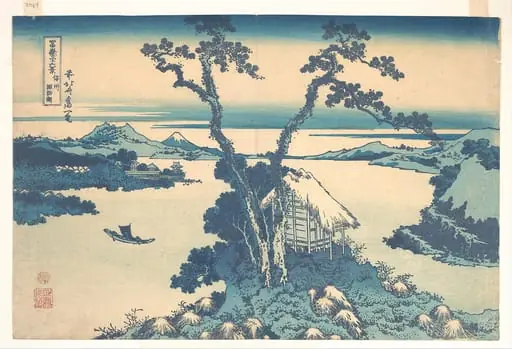 冨嶽三十六景 信州諏訪湖|Lake Suwa in Shinano Province (Shinshū Suwako), from the series Thirty-six Views of Mount Fuji (Fugaku sanjūrokkei)