Artwork
Portret George Enescu
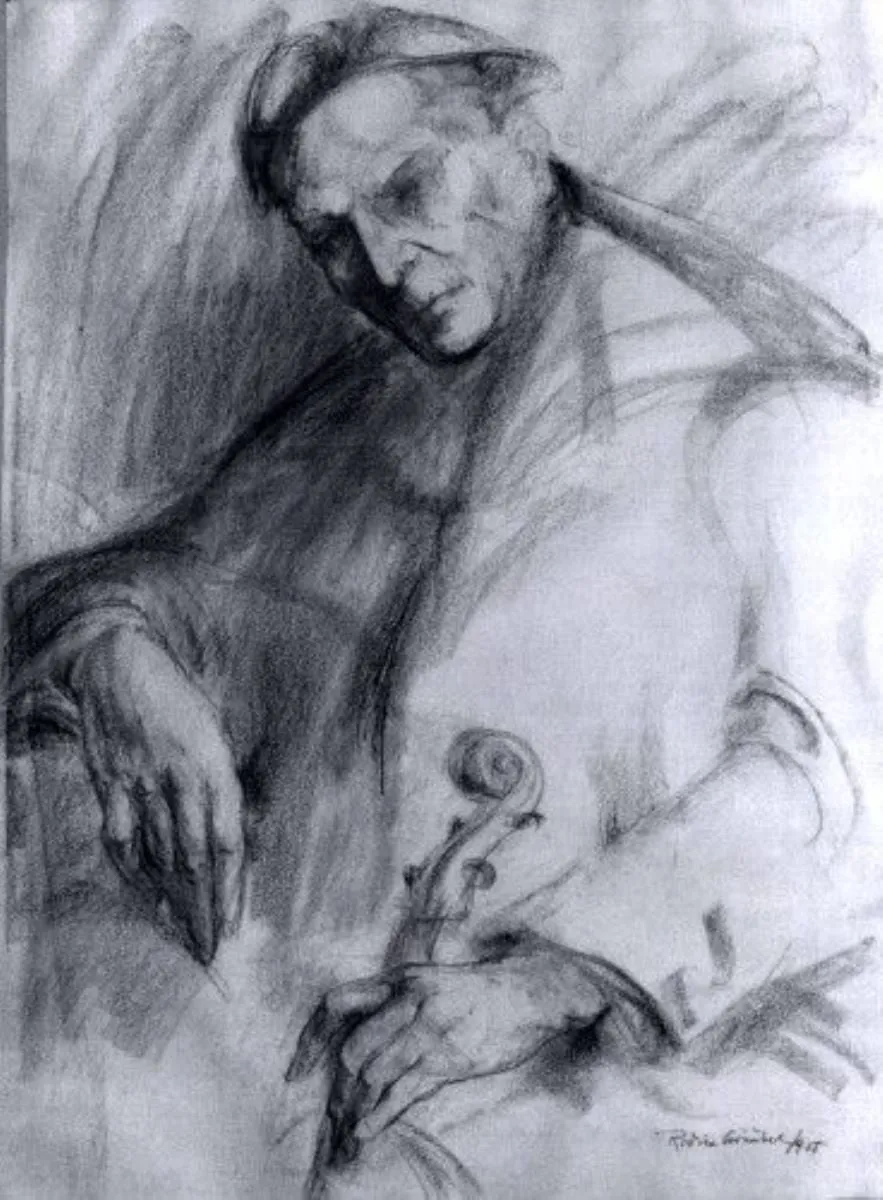
Portret George Enescu is an unspecified painting by Rodica Teodorescu Ciocârdel. It dates from 1955 and is held in the collection of the George Enescu National Museum.
About this work
Overview
Created in 1955 by Rodica Teodorescu Ciocârdel, this pencil sketch depicts the Romanian composer and violinist George Enescu. The work is part of the Museum of Ethnography’s collection. Rendered with delicate, fluid lines, it captures a moment of quiet concentration rather than a formal portrait. The figure emerges from a near-abstract background, emphasizing presence over setting.
Subject & Meaning
His posture suggests an intimate, unguarded moment, head turned away, fingers resting on the violin’s neck.
The subject is George Enescu, a central figure in Romanian musical culture, shown mid-performance. His posture suggests an intimate, unguarded moment, head turned away, fingers resting on the violin’s neck. The sketch conveys not just his identity as a musician, but the physicality of his craft: the tension in his grip, the weight of his instrument, the focus in his gaze. It is a tribute to the act of creation itself.
Technique & Style
The artist employs soft, smudged pencil strokes to model form with subtle gradations of tone. Shading is concentrated on the face and hands, defining volume without sharp outlines. The background is intentionally muted, allowing the figure to dominate. The effect recalls chiaroscuro, though applied with restraint, light and shadow serve to reveal gesture, not drama.
History & Provenance
The sketch was made in 1955, during a period of renewed cultural interest in Enescu’s legacy within Romania. It entered the Museum of Ethnography’s holdings shortly after completion, likely as part of an effort to document national artistic figures. Its intimate scale and informal style suggest it was made from direct observation, possibly during a rehearsal or private session.
Context
In mid-20th century Romania, Enescu was revered as a symbol of cultural sovereignty. Artists and intellectuals often turned to his image to express national identity amid political pressures. This sketch, though modest in scale, aligns with broader efforts to preserve the visual memory of cultural icons through personal, unidealized portrayals.
Legacy
The drawing endures as a quiet testament to Enescu’s enduring presence in Romanian artistic consciousness. Unlike formal portraits, it captures the immediacy of his artistry, unposed, unadorned. Its preservation in a museum of ethnography underscores its value not as high art, but as a record of lived cultural practice.
Artist & collection
Artist
She painted one room over and over, a studio in Bucharest with a north-facing window, using the same wooden chair as a model.
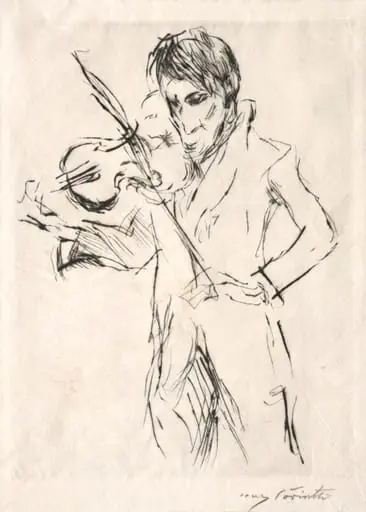 Andreas Weissgaerber
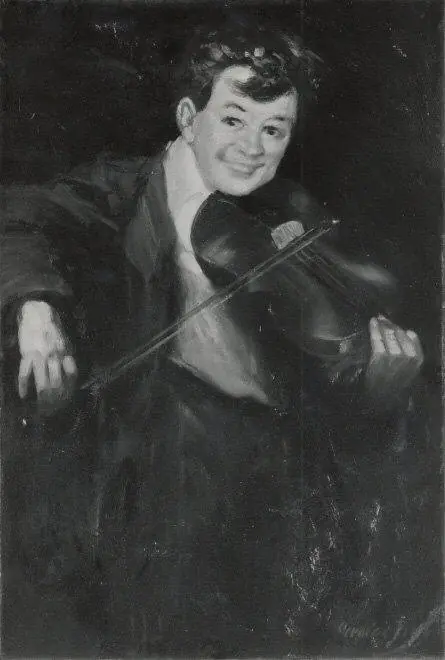 Boy with Violin
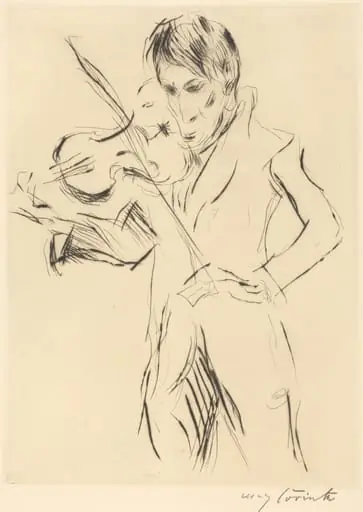 Bildnis Andreas Weissgaerber (Portrait of Andreas Weissgaerber)
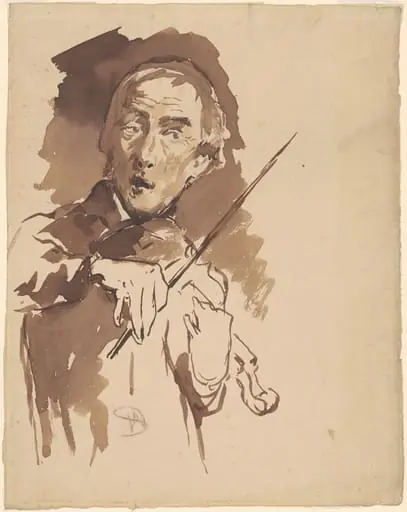 Study for "Toning the Bell"
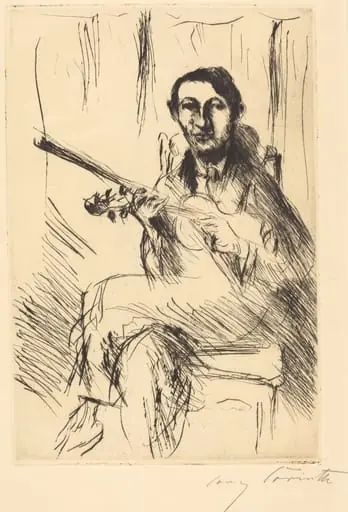 Bildnis Andreas Weissgaerber (Portrait of Andreas Weissgaerber)
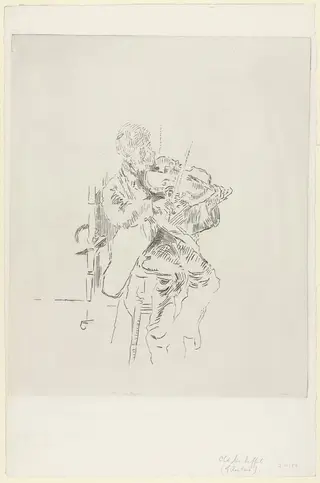 Untitled
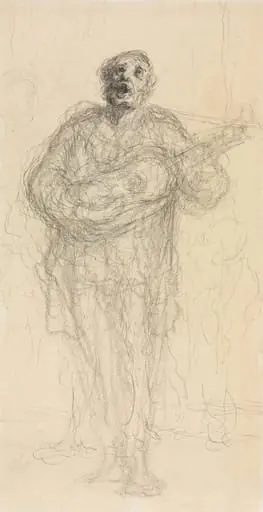 Singing Guitarist (recto)
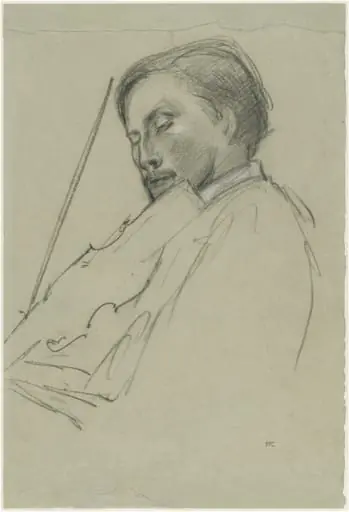 The Violinist
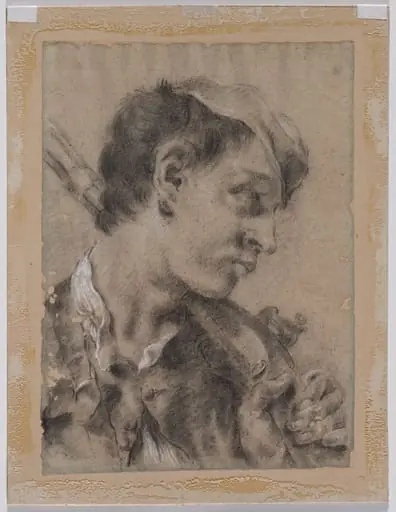 Head of a Young Man in Profile with a Gun over His Shoulder
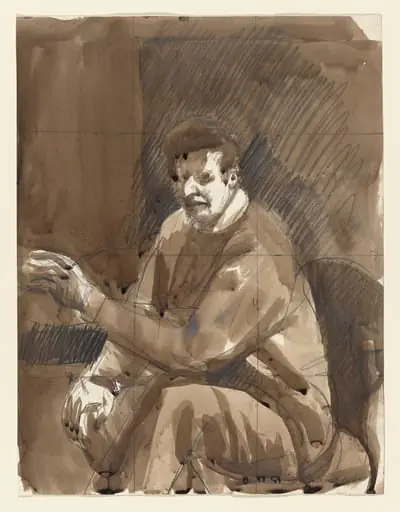 Untitled