Artwork
Scene in the Jewish Quarter of Constantine
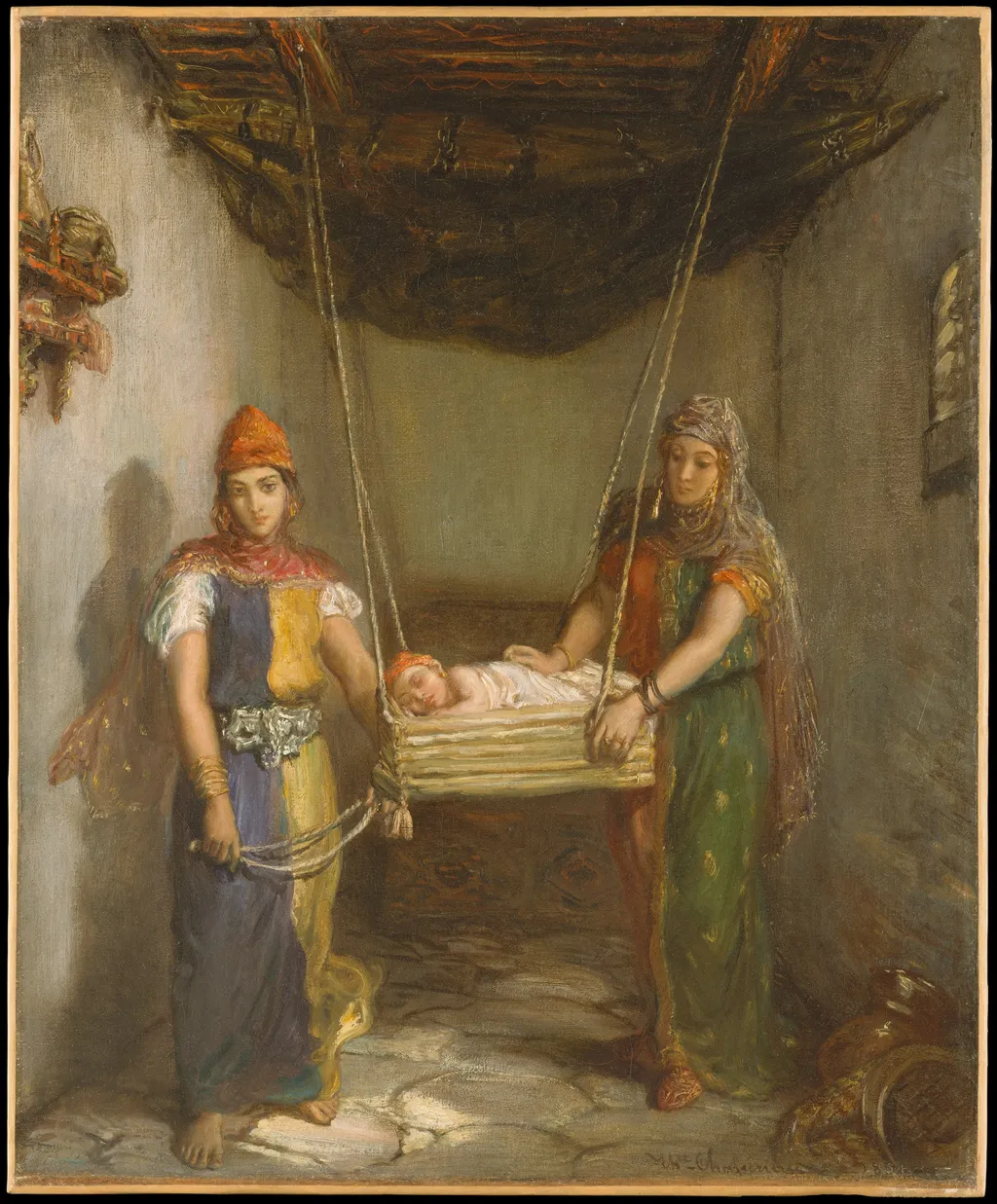
Scene in the Jewish Quarter of Constantine is an oil painting by the Orientalist artist Théodore Chassériau. It dates from 1851 and is held in the collection of the Metropolitan Museum of Art.
About this work
Subject & Meaning
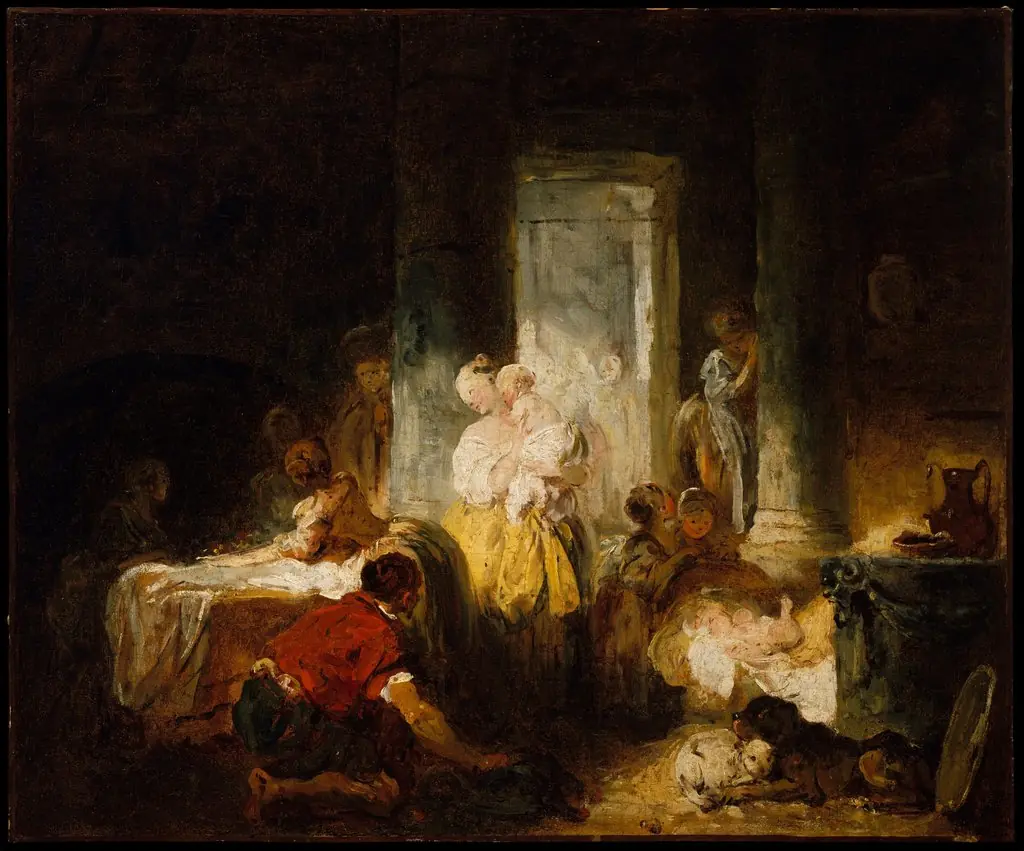
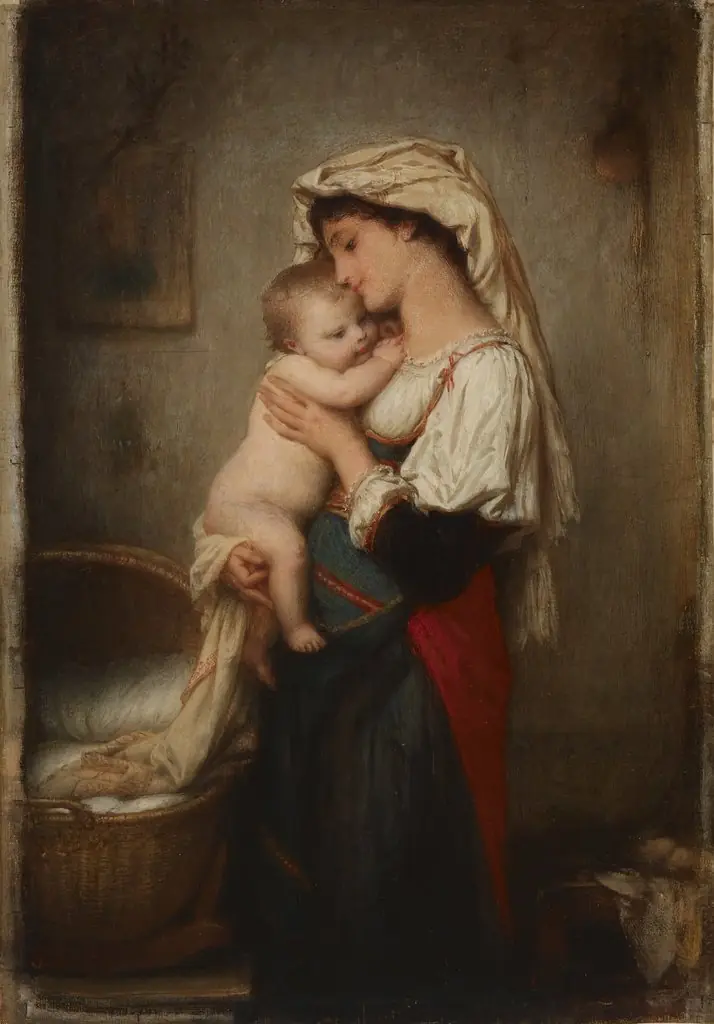
The canvas presents a domestic interior in the Jewish quarter of Constantine, showing a mother with a sleeping infant in a modest bed.
The canvas presents a domestic interior in the Jewish quarter of Constantine, showing a mother with a sleeping infant in a modest bed. The composition emphasizes the intimate bond between the figures within an Orientalist framework that foregrounds locale and cultural specificity, reflecting Chassériau's interest in North African domestic life following his 1846 journey to Algeria. His rendering blends observed detail with romanticized Orientalist convention, inviting viewers to contemplate both the quotidian and the exotic within the same frame.
Technique & Style
Executed in 1851, Scene in the Jewish Quarter of Constantine is an oil painting on canvas reflecting Théodore Chassériau's blend of academic finish and Romantic colour. The composition is anchored by a woman seated beside an infant. Stylistically the work aligns with mid-nineteenth-century Orientalism, balancing observed detail with idealized grace while avoiding the heightened exoticism typical of later practitioners.
History & Provenance
The work is held by the Metropolitan Museum of Art, New York, where it is recorded under accession number 1975.1.202. It was painted in 1851 and entered the museum's collection in 1975.
Overview
Théodore Chassériau, a French Romantic painter born in the Dominican Republic, completed Scene in the Jewish Quarter of Constantine in 1851. This oil painting captures an intimate domestic moment within an implied North African setting, featuring an infant asleep with two women nearby. The work exemplifies the Orientalist movement, a significant trend in 19th-century European art that often depicted scenes from the Middle East and North Africa, frequently informed by artists' travels.
Context
Chassériau's extensive travels to Algeria profoundly influenced his artistic output, leading him to create numerous Orientalist scenes. Scene in the Jewish Quarter of Constantine belongs to this body of work, reflecting a European fascination with North African and Middle Eastern cultures during the 19th century. Orientalist painters often depicted daily life, customs, and landscapes, though these representations were frequently filtered through contemporary European perspectives and imaginations rather than direct ethnographic accuracy.
Own this work as a print
Artist & collection
Artist
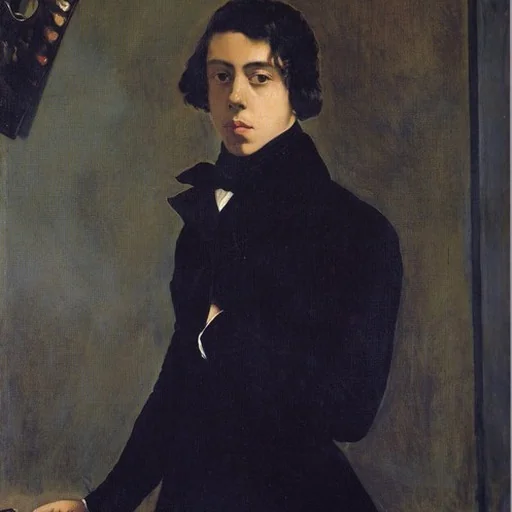
Théodore Chassériau (French pronunciation:; Spanish: Teodoro Chasseriau; September 20, 1819 – October 8, 1856) was a Dominican-born French Romantic painter noted for his portraits, historical and religious paintings,…