Artwork
諸國名橋奇覧 足利行道山くものかけはし|The Hanging-cloud Bridge at Mount Gyōdō near Ashikaga (Ashikaga Gyōdōzan kumo no kakehashi), from the series Remarkable Views of Bridges in Various Provinces (Shokoku meikyō kiran)
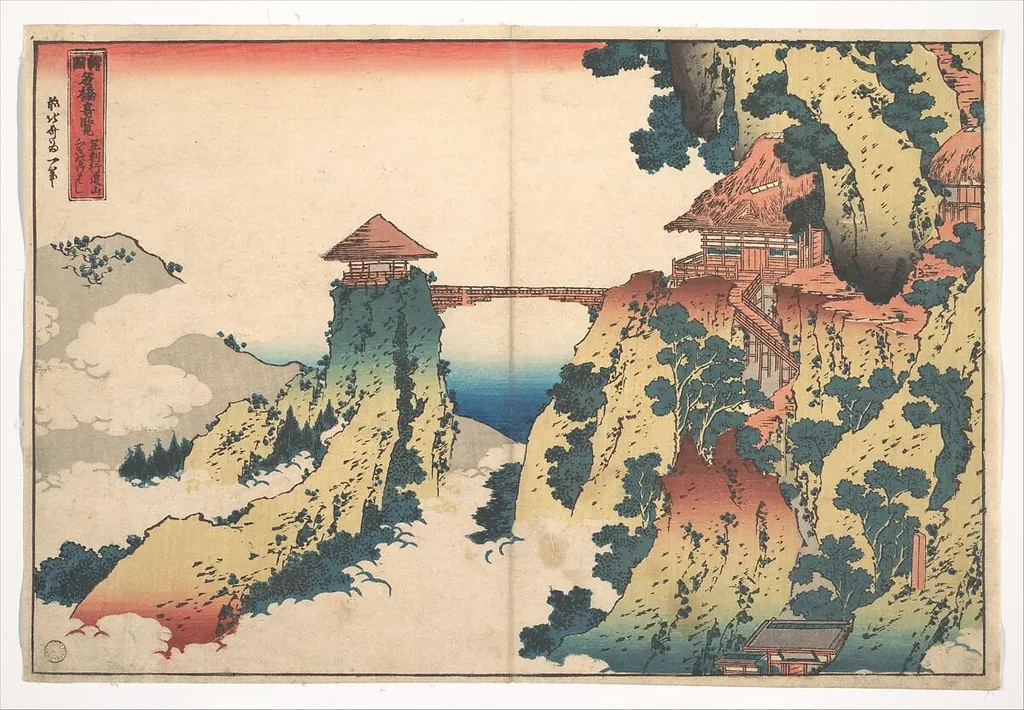
諸國名橋奇覧 足利行道山くものかけはし|The Hanging-cloud Bridge at Mount Gyōdō near Ashikaga (Ashikaga Gyōdōzan kumo no kakehashi), from the series Remarkable Views of Bridges in Various Provinces (Shokoku meikyō kiran) is an ink print by the Japonisme artist Katsushika Hokusai. It dates from 1830 and is held in the collection of the Metropolitan Museum of Art.
About this work
Overview
Its inclusion in a published series suggests it was intended for widespread distribution among urban audiences interested in distant landscapes.
This woodblock print is part of a series depicting notable bridges across Japan, created around 1830 by Katsushika Hokusai. Rendered in ink and color on paper, it portrays a slender bridge suspended high on a rugged mountainside near Ashikaga. The composition emphasizes verticality and elevation, with layered terrain and atmospheric clouds framing the structure.
Its inclusion in a published series suggests it was intended for widespread distribution among urban audiences interested in distant landscapes.
Subject & Meaning
The bridge, known as 'Hanging-cloud Bridge,' is depicted as if suspended between earth and sky, evoking a sense of ethereal detachment. Its name reflects the visual illusion of floating amid mist, a poetic device common in Japanese landscape traditions. The temple on the plateau and the small structure clinging to the cliff suggest human presence harmonized with nature, reinforcing themes of spiritual seclusion and the quiet endurance of sacred architecture in remote terrain.
Technique & Style
Hokusai employs flat, unmodulated areas of color, greens, browns, and reds, to define rock faces, foliage, and architectural forms, minimizing shading in favor of bold outlines. The bridge is rendered with delicate, curving lines that contrast with the angularity of the cliffs. Clouds are softly graded, creating a hazy atmosphere, while cross-hatching subtly suggests texture in the stone and tree bark. The print’s design balances precision with expressive simplicity, characteristic of late Edo-period ukiyo-e aesthetics.
History & Provenance
The print originates from the series Remarkable Views of Bridges in Various Provinces, published during the 1830s. Though the exact publisher and edition details are uncertain, the work circulated widely as part of a growing market for landscape prints. It entered the collection of The Metropolitan Museum of Art through documented acquisitions in the 20th century, where it remains among the institution’s key holdings of Hokusai’s later work.
Context
During the 1830s, Japanese urban populations developed a fascination with travel and regional landmarks, fueled by improved roads and printed guides. Hokusai’s series tapped into this interest, offering idealized visions of distant sites. The depiction of Mount Gyōdō, though possibly imagined or stylized, aligns with contemporary trends in landscape art that blended real geography with poetic license, reflecting both cultural curiosity and spiritual reverence for nature.
Legacy
This print exemplifies Hokusai’s mature style, where composition and symbolism outweigh naturalistic detail. Its influence extended beyond Japan, contributing to Western perceptions of Japanese aesthetics in the late 19th century. Though not as widely reproduced as his later wave prints, it remains a significant example of how ukiyo-e artists transformed topographical subjects into meditative, symbolic landscapes that continue to inform modern interpretations of Japanese visual culture.
Artist & collection

Artist
Katsushika Hokusai spent his life in Edo, now Tokyo, where he drew and carved prints for a living.

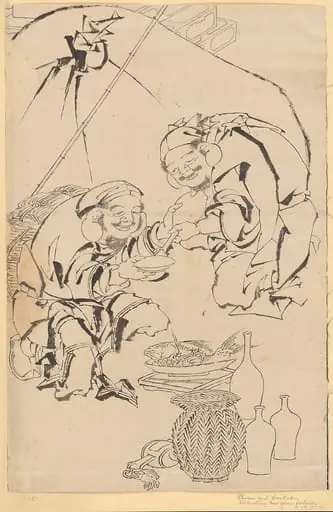
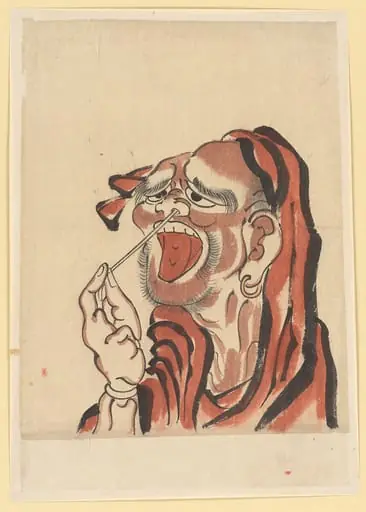
- 諸國名橋奇覧 山城あらし山吐月橋 |Togetsu Bridge at Arashiyama in Yamashiro, from the series Remarkable Views of Bridges in Various Provinces (Shokoku meikyō kiran)
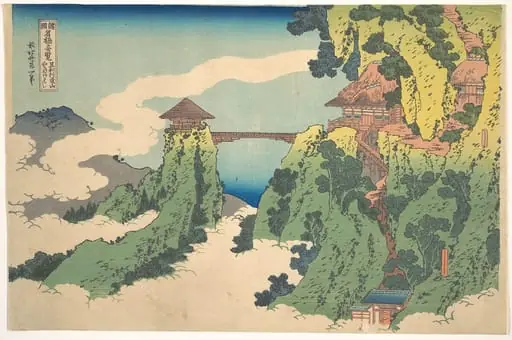 諸國名橋奇覧 足利行道山くものかけはし|The Hanging-cloud Bridge at Mount Gyōdō near Ashikaga (Ashikaga Gyōdōzan kumo no kakehashi), from the series Remarkable Views of Bridges in Various Provinces (Shokoku meikyō kiran)
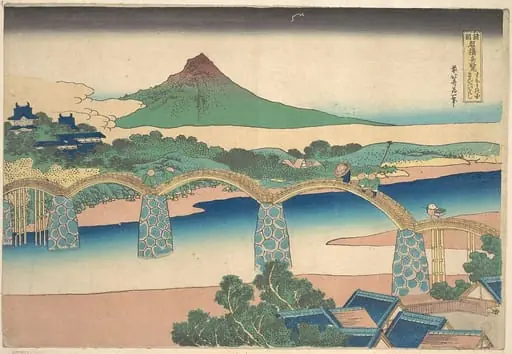 諸國名橋奇覧 すほうの国きんたいはし|Kintai Bridge in Suō Province (Suō no kuni Kintaibashi), from the series Remarkable Views of Bridges in Various Provinces (Shokoku meikyō kiran)
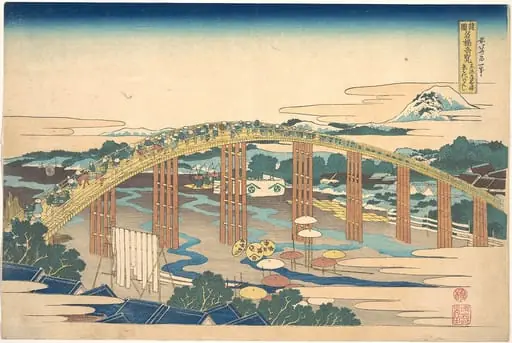 諸國名橋奇覧 東海道岡崎矢はぎのはし|Yahagi Bridge at Okazaki on the Tōkaidō (Tōkaidō Okazaki Yahagi no hashi), from the series Remarkable Views of Bridges in Various Provinces (Shokoku meikyō kiran)
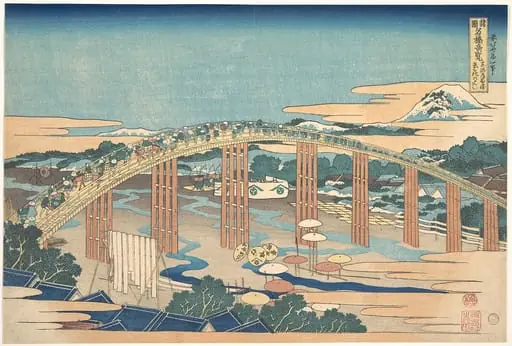 諸國名橋奇覧 東海道岡崎矢はぎのはし|Yahagi Bridge at Okazaki on the Tōkaidō (Tōkaidō Okazaki Yahagi no hashi), from the series Remarkable Views of Bridges in Various Provinces (Shokoku meikyō kiran)