Artwork
The Holy Family
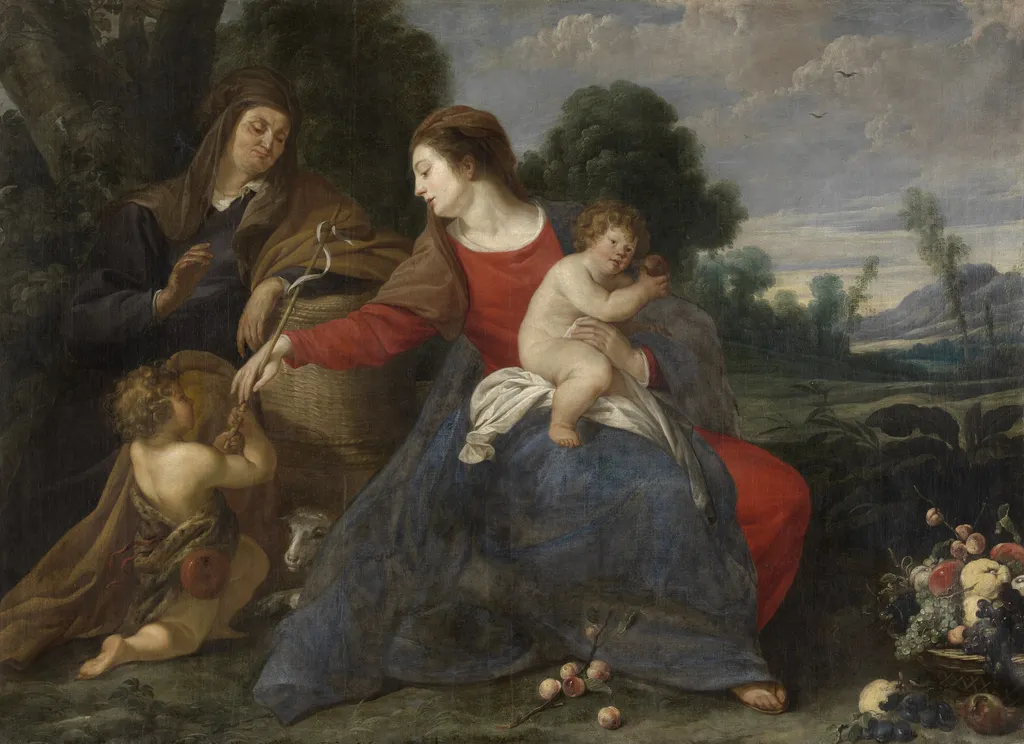
The Holy Family is an oil painting by the Flemish Baroque painting artist Theodoor Rombouts. It dates from 1634 and is held in the collection of the Royal Museum of Fine Arts Antwerp.
About this work
Subject & Meaning
As a religious work, it presents the central Christian narrative of Jesus’ earthly family, highlighting the sanctity and intimacy of the domestic sphere.
The painting portrays the Holy Family, Mary, the Christ Child, and Joseph, together in a single composition. As a religious work, it presents the central Christian narrative of Jesus’ earthly family, highlighting the sanctity and intimacy of the domestic sphere. The grouping of these three figures underscores the theological idea of the Incarnation within a human household, a theme frequently explored in Baroque devotional art to inspire piety and contemplation of familial virtue.
Technique & Style
The Holy Family is executed in oil on canvas, a common support for 17th-century Flemish religious paintings. The work measures 148 cm in height by 209.7 cm in width, reflecting the typical dimensions of devotional compositions from this period. Rombouts employs chiaroscuro to model the figures, creating a three-dimensional presence for Mary, the Christ Child, and Joseph.
The composition emphasizes intimate interaction among the family members, with delicate gestures and naturalistic drapery that highlight the tactile quality of the oil medium. The painting’s surface retains its original gloss, indicating careful handling and preservation within the Royal Museum of Fine Arts Antwerp’s collection.
History & Provenance
The Holy Family was created by Theodoor Rombouts in 1634, executed in oil paint on canvas. The painting depicts the Virgin Mary, the Christ Child, and Saint Joseph as its main subject, and is classified as a religious work.
The work is held in the collection of the Royal Museum of Fine Arts Antwerp, which forms part of the Vlaamse Kunstcollectie. No further details of commission, intermediate ownership, or acquisition history are documented in the available sources.
Context
Theodoor Rombouts’s The Holy Family (1634) occupies a pivotal place within Flemish Caravaggism, reflecting the artist’s engagement with the dramatic tenebrism and naturalistic figural types characteristic of the movement. Scholars have situated the work as part of Rombouts’s mature phase, where his earlier Italian sojourn, particularly in Rome during the 1620s, manifests in a synthesis of Northern European devotional iconography and Southern European chiaroscuro. The painting’s robust, sculptural figures and intimate, almost genre-like composition align it with contemporaneous Counter-Reformation trends, emphasizing affective piety and accessibility in religious imagery.
Critical reception has underscored the work’s technical virtuosity, particularly in the rendering of textiles and flesh tones, which demonstrate Rombouts’s mastery of oil paint. Its inclusion in the Royal Museum of Fine Arts Antwerp’s collection has further cemented its status as a key example of Antwerp’s 17th-century religious painting, bridging the gap between the city’s Rubensian tradition and the more austere, Caravaggesque currents introduced by artists like Gerard Seghers and Rombouts himself. The painting’s dimensions and composition suggest it may have been intended for private devotion, a context that aligns with the period’s growing demand for intimate, emotionally resonant religious works.
Legacy
The Holy Family painted by Theodoor Rombouts in 1634 has been recognized for its devotional intensity and compositional balance, influencing later Flemish religious works. Its presence in the Royal Museum of Fine Arts Antwerp has contributed to scholarly assessments of 17th-century Antwerp painting, reinforcing Rombouts' reputation as a master of the genre. The work is frequently cited in studies of Baroque family depictions, shaping interpretations of sacred domestic scenes.
Overview
The Holy Family is a 1634 oil painting by Theodoor Rombouts, a prominent Flemish artist. It is a representation of a sacred scene, characteristic of the Flemish Baroque period.
Own this work as a print
Artist & collection
Artist
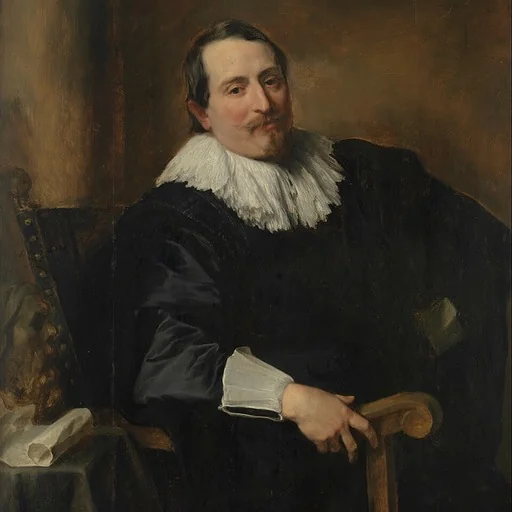
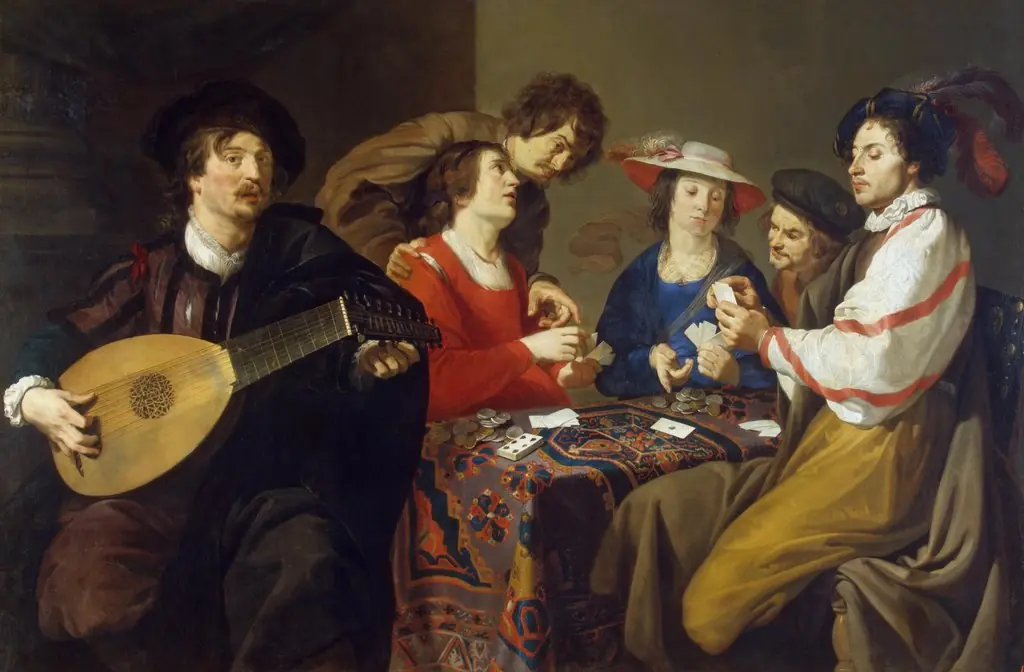
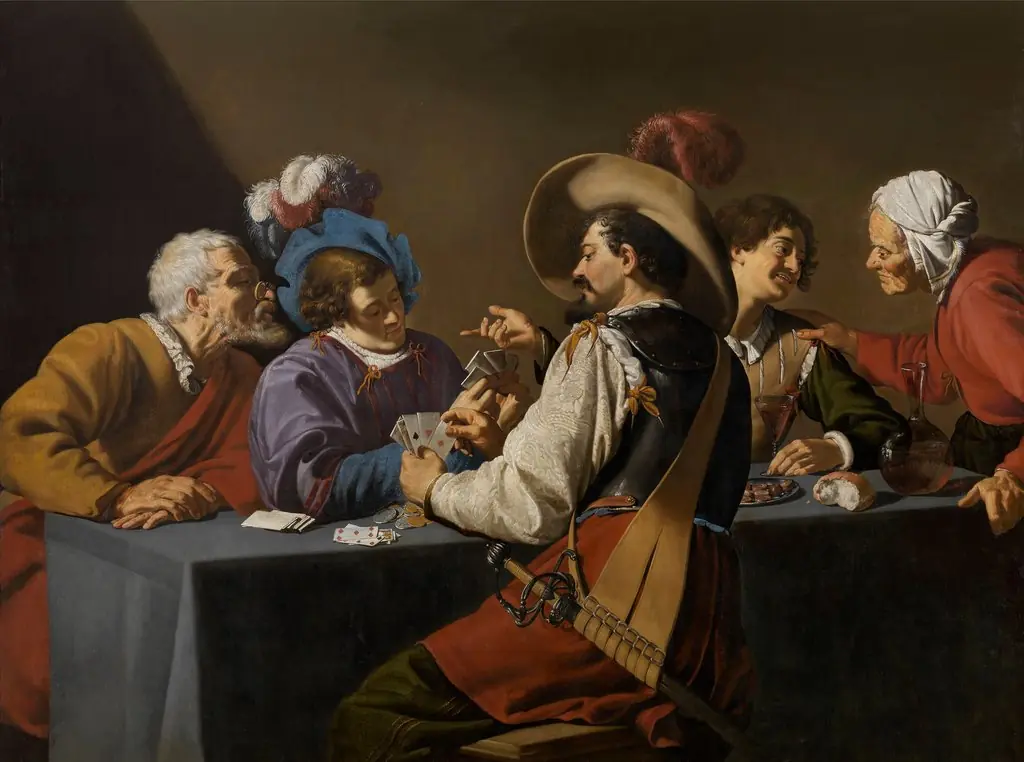
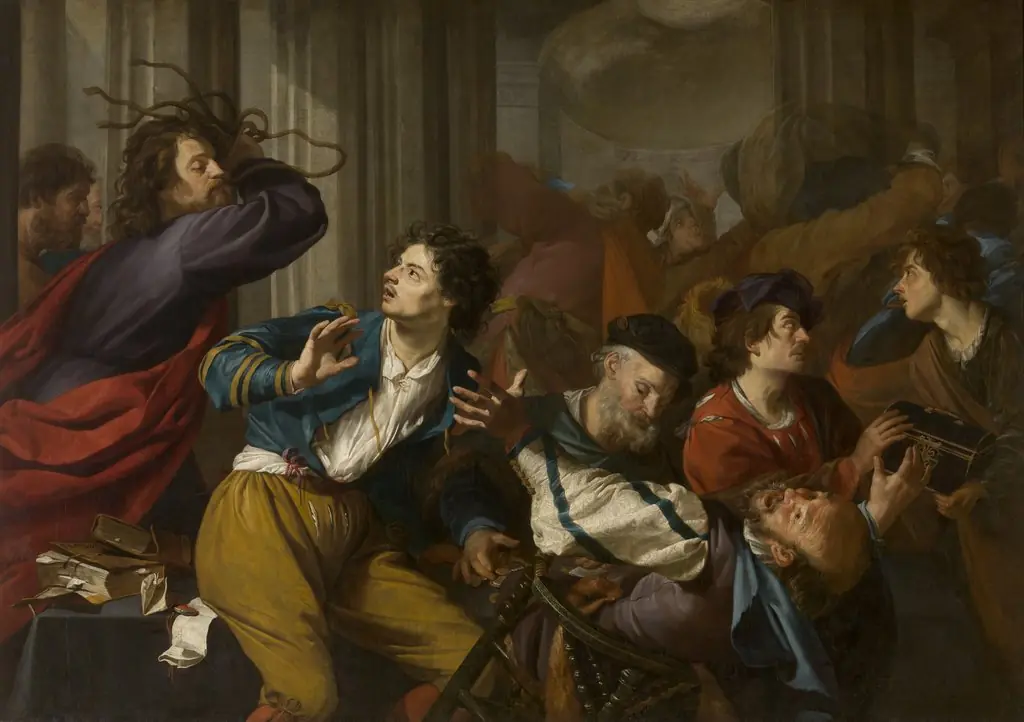
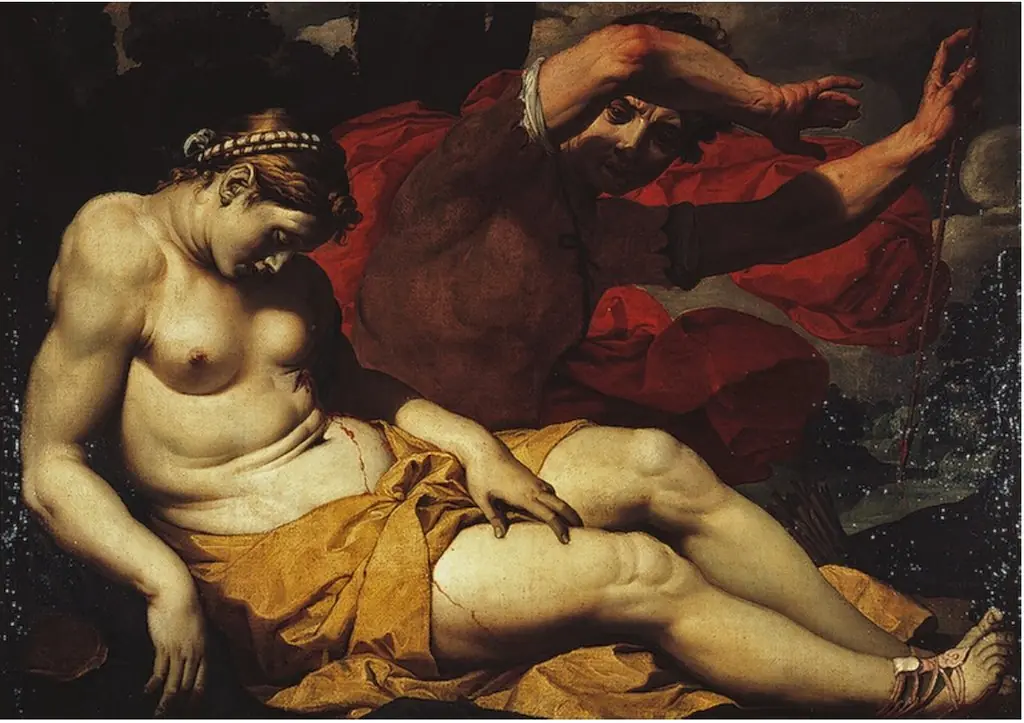
Theodoor Rombouts (2 July 1597 – 14 September 1637) was a Flemish painter who is mainly known for his Caravaggesque genre scenes depicting lively dramatic gatherings as well as religiously themed works.

- The Virgin and Child with Saints Elizabeth and John
 Rest on the Flight into Egypt
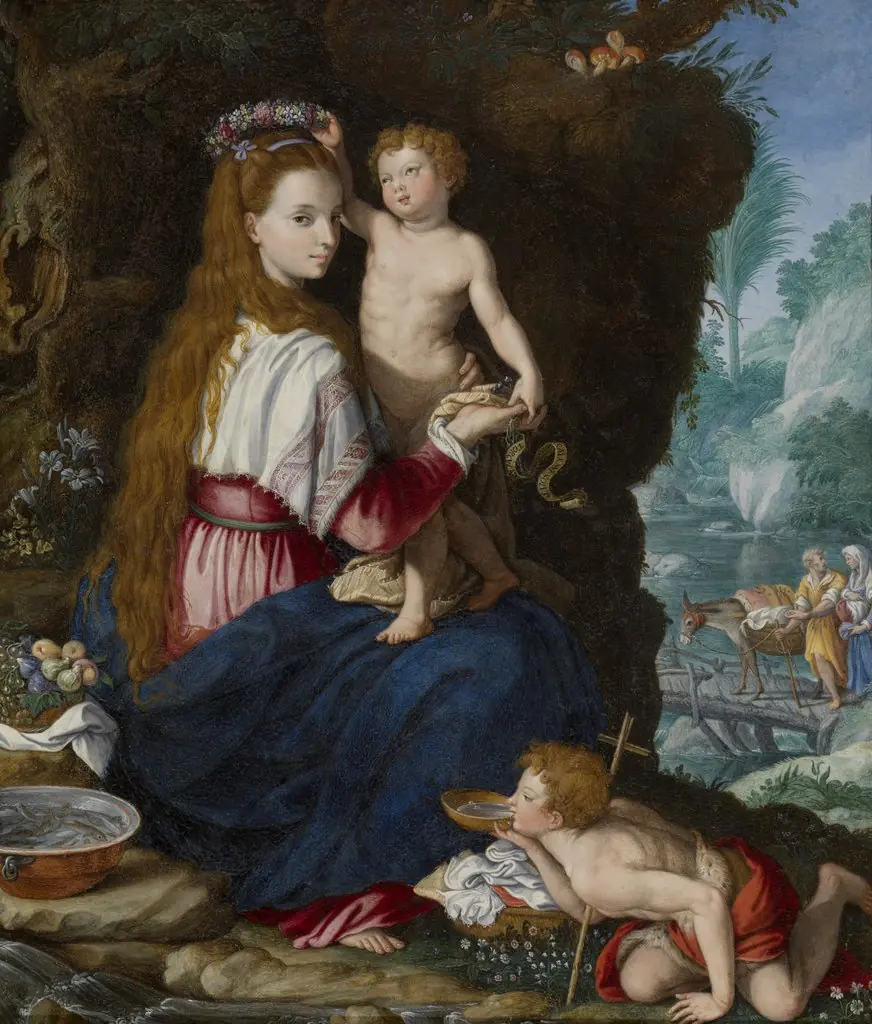 Madonna with Little Saint John
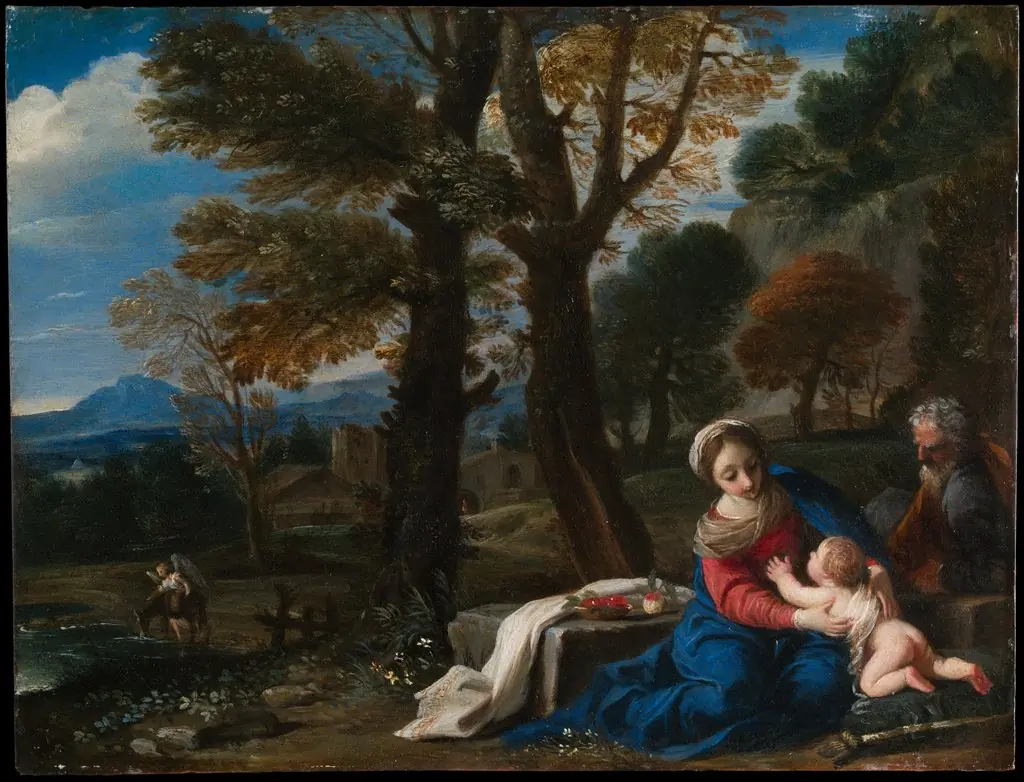 Rest on the Flight into Egypt
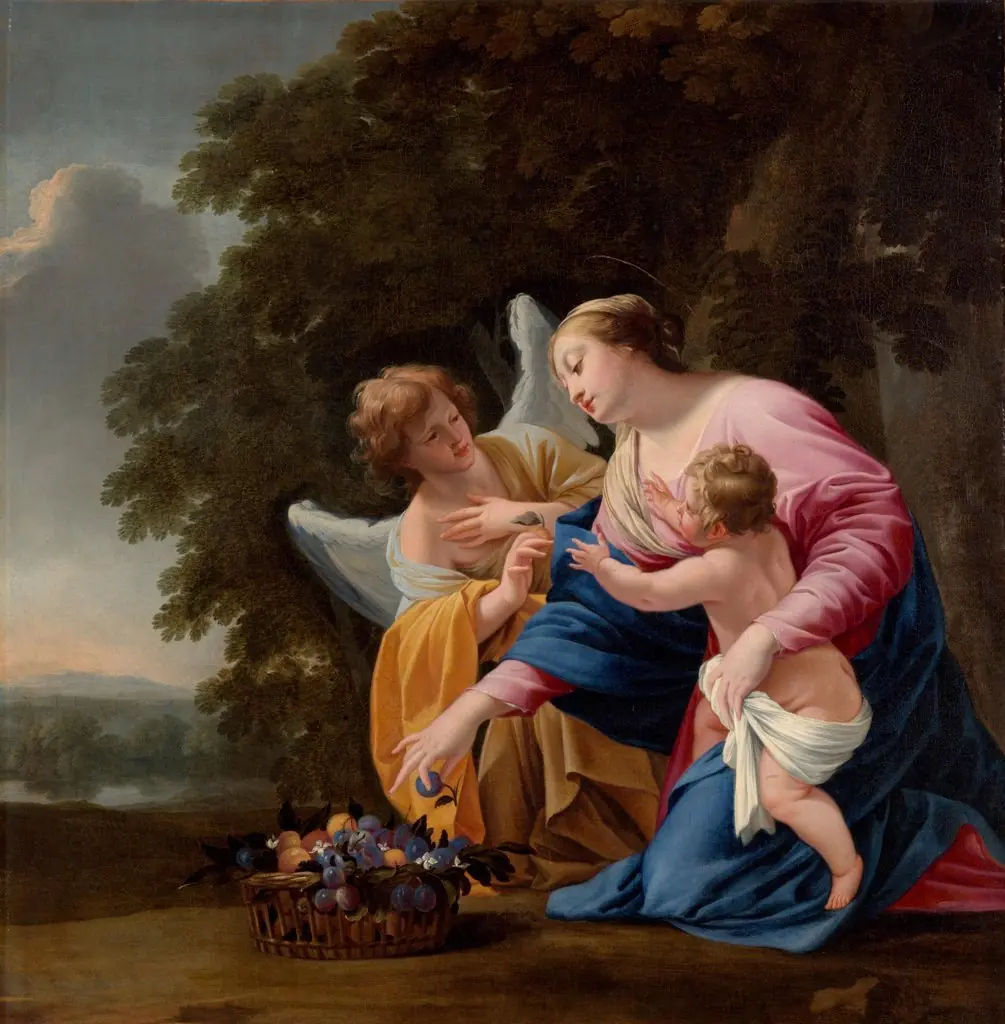 Virgin and Child, with an Angel
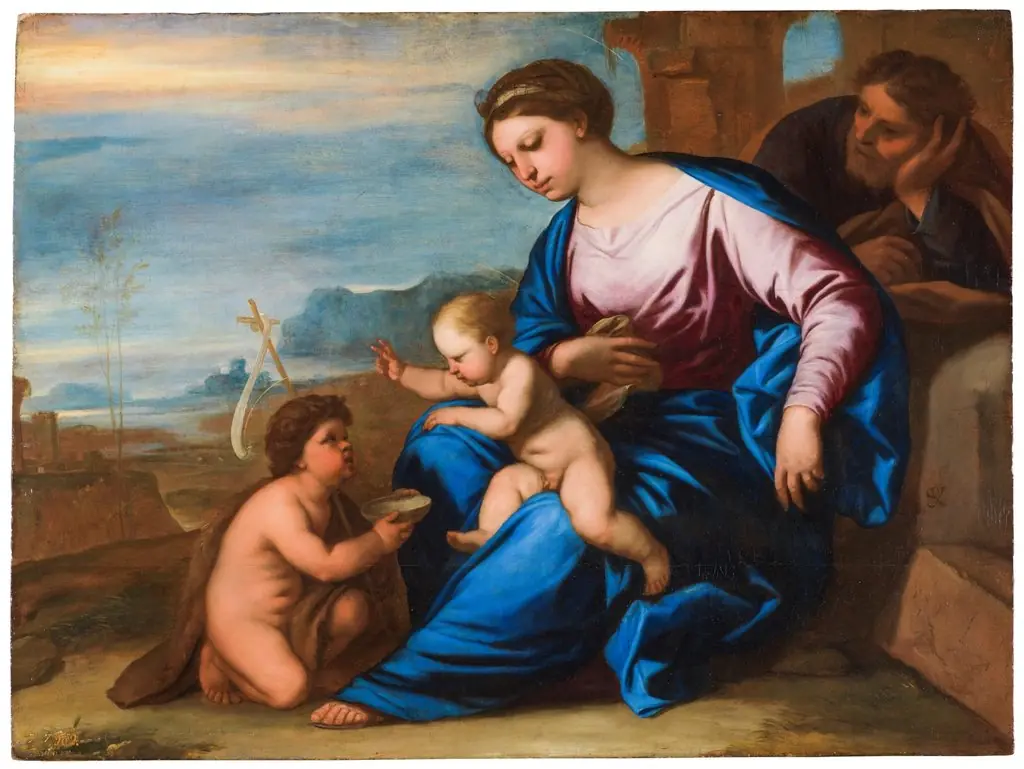 Sagrada Familia con San Juanito
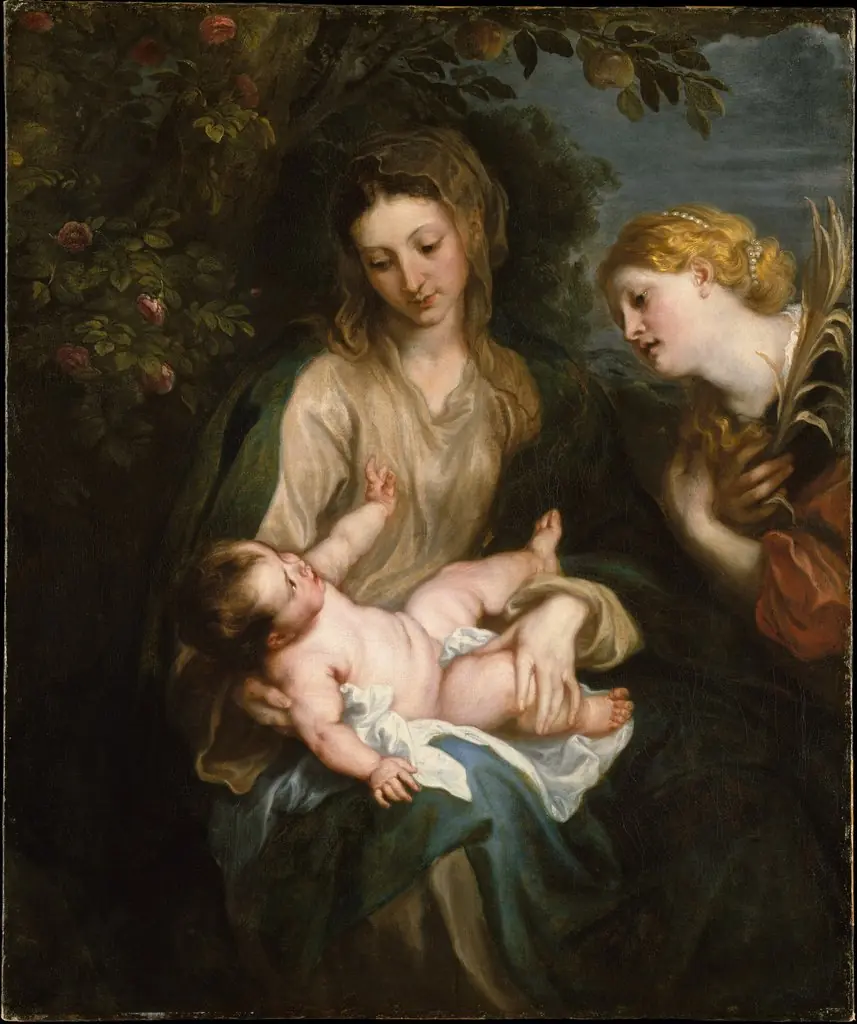 Virgin and Child with Saint Catherine of Alexandria
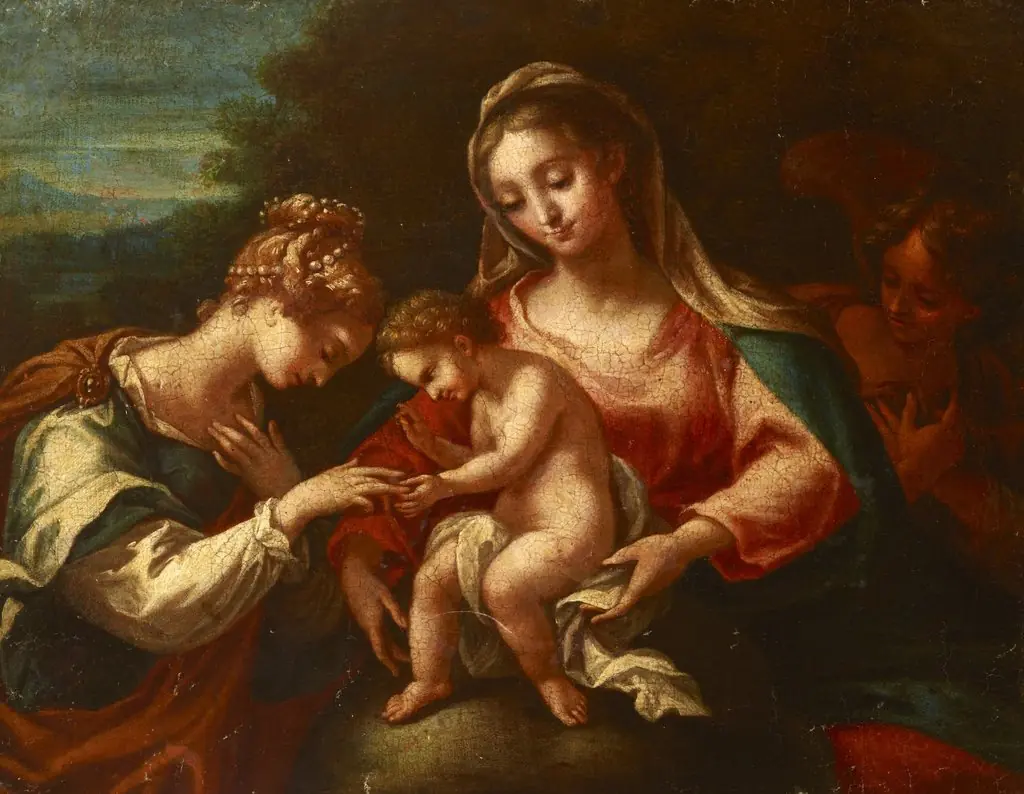 Mistic Marriage of Saint Catherine
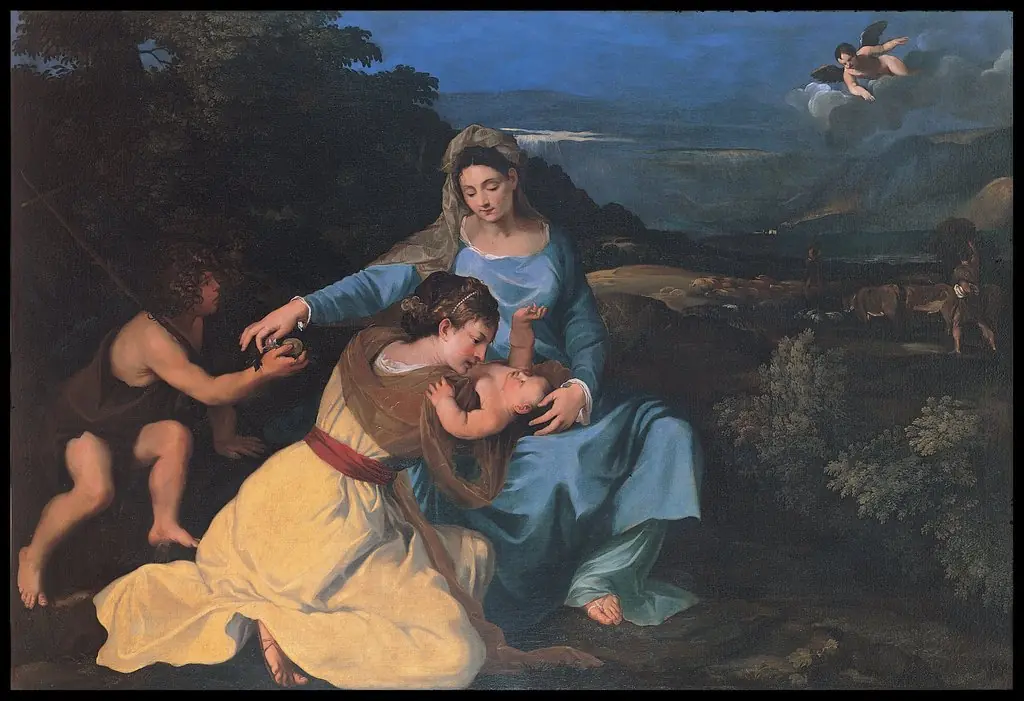 Madonna with the Child, Saint Catherine and Saint John
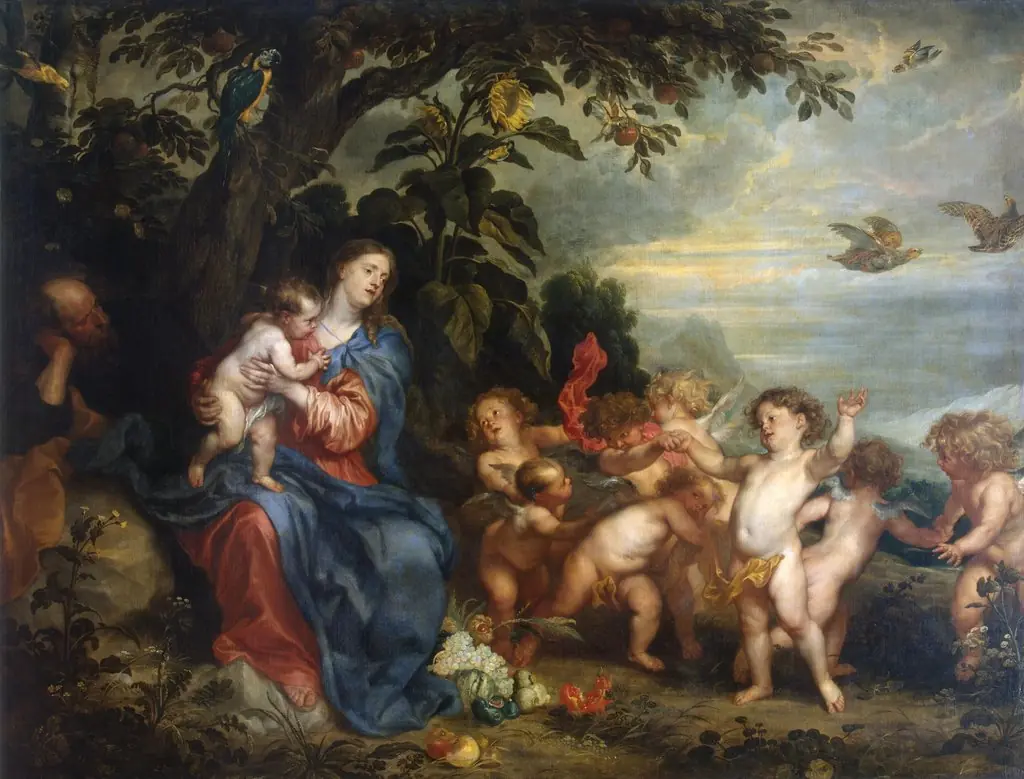 Madonna with Partridges
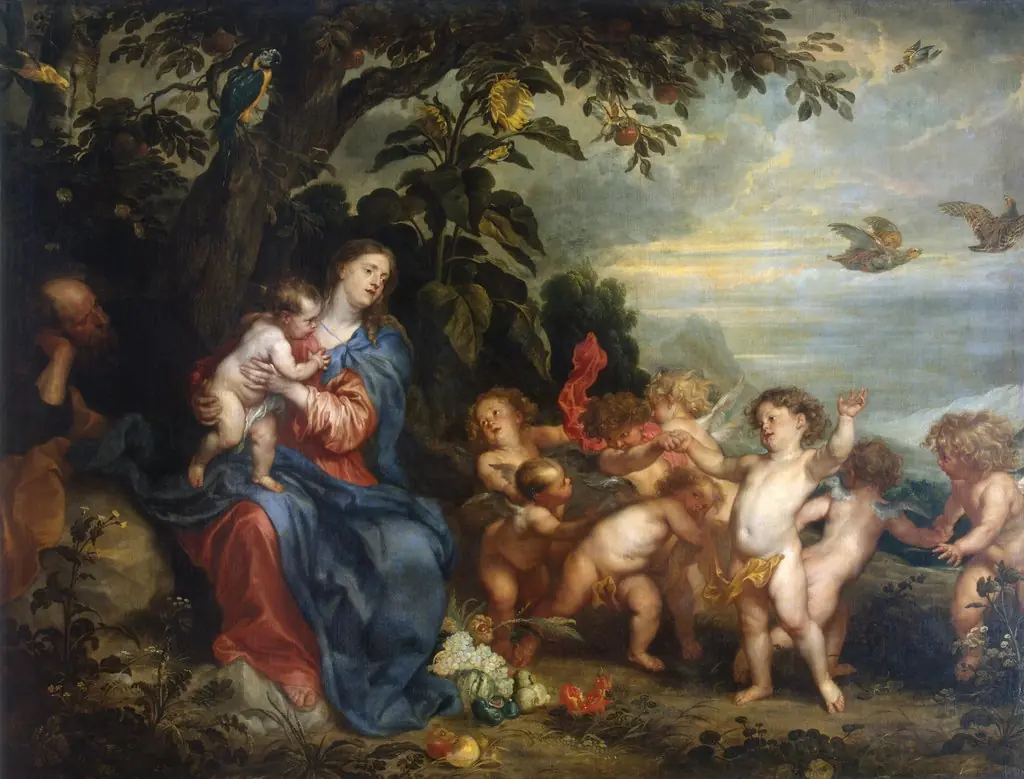 Rest on the Flight into Egypt (Madonna with Partridges)
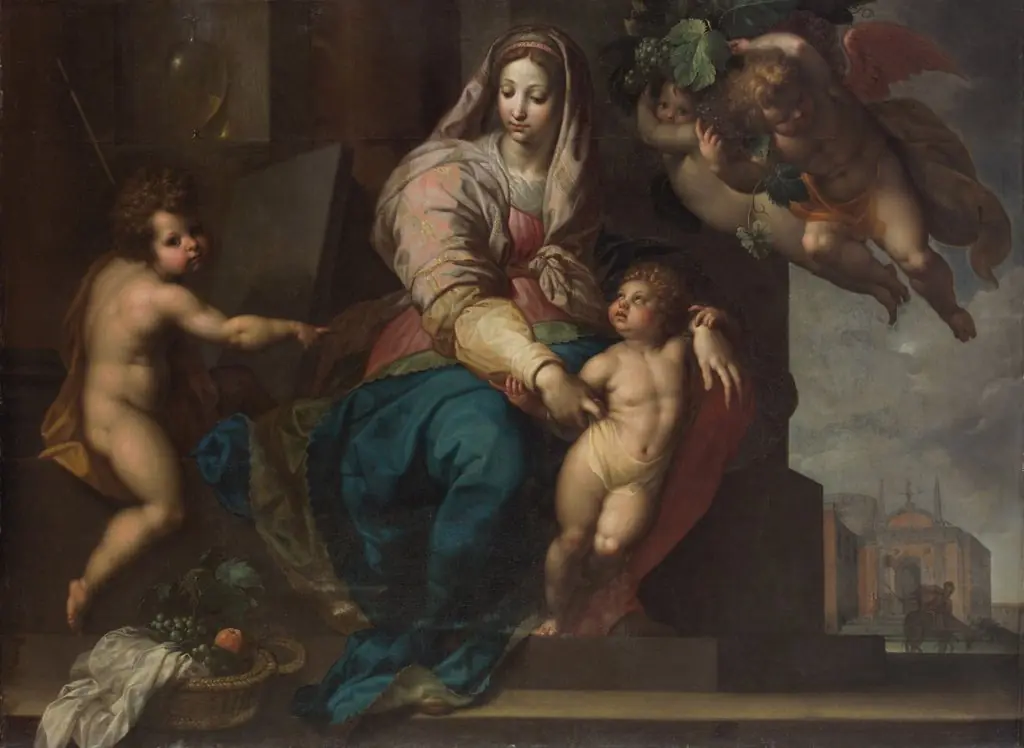 Maria mit Kind, Johannesknaben und Engeln