Artwork
Sagrada Familia con San Juanito
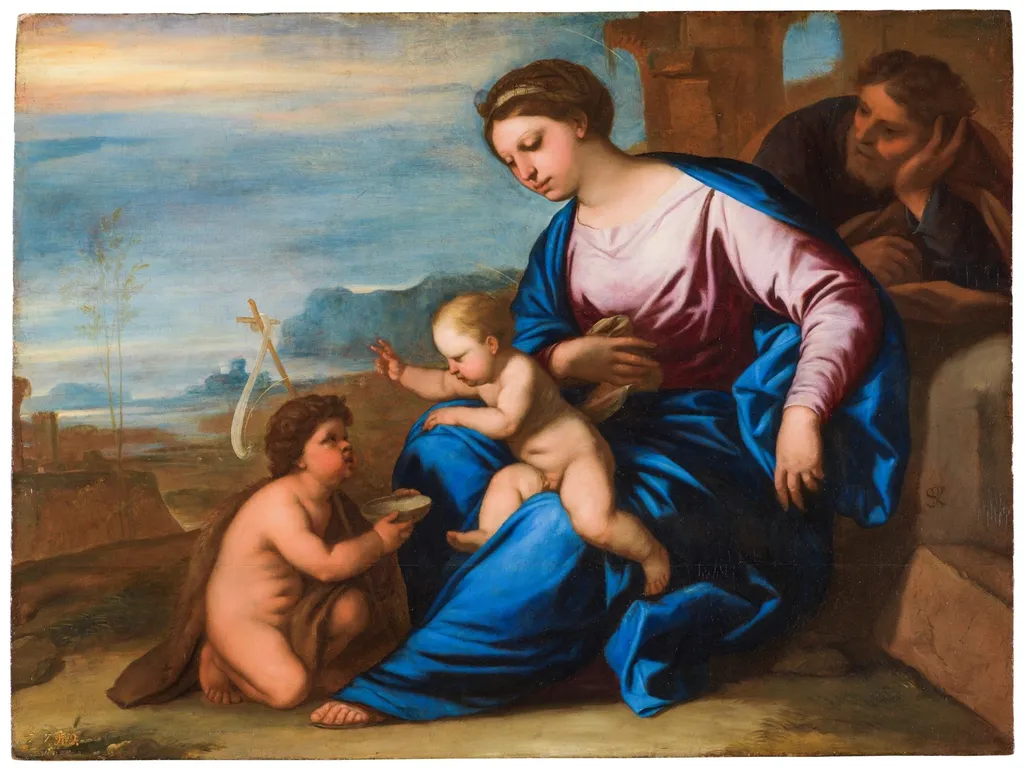
Sagrada Familia con San Juanito is an oil painting by the Early Baroque Italian artist Luca Giordano. It dates from 1675 and is held in the collection of the Museo del Prado.
About this work
Subject & Meaning
John, identifiable by his animal-skin garment and reed cross, kneels with an attitude of humility and prophecy, foreshadowing Christ’s future ministry.
The painting depicts the Holy Family with the young John the Baptist, a common theme in Counter-Reformation iconography that emphasizes the sacred lineage of Christ. Saint Joseph stands to the left, while the Christ Child, supported by Mary, occupies the center, receiving the Baptist’s gesture of veneration. John, identifiable by his animal-skin garment and reed cross, kneels with an attitude of humility and prophecy, foreshadowing Christ’s future ministry.
The composition aligns with traditional representations of the "Sacra Famiglia" in which familial piety and divine destiny intersect, reinforcing the theological significance of Christ’s earthly origins.
Technique & Style
Executed in 1675, this religious painting by Luca Giordano utilizes oil paint applied to a panel support. The work measures 78 cm in height and 104 cm in width. Stylistically, the composition depicts the Holy Family, featuring the Christ Child, Mary, and Joseph, alongside the figure of John the Baptist. The piece is classified as a panel painting within the religious genre.
History & Provenance
The painting Sagrada Familia con San Juanito was created in 1675 by Luca Giordano as an oil on panel work depicting the Holy Family with John the Baptist, Joseph, Mary, and the Christ Child. It entered the collection of Ferdinand VII of Spain and is now housed in the Museo del Prado at the Royal Palace of Aranjuez. The work measures 78 cm in height and 104 cm in width and was produced during the Baroque period as part of Giordano's religious output.
The provenance records its ownership directly with the Spanish monarch, indicating a continuous chain from the artist's commission to royal possession, which aligns with documented holdings in the museum's collection.
The work is held in the Museo del Prado’s Royal Palace of Aranjuez site, where it is inventoried under its permanent collection.
It has been exhibited within the Prado’s program of displaying its holdings at the Aranjuez palace, where the painting remains on view as part of the museum’s religious-art holdings.
Overview
Created in 1675, this panel work by the Italian Baroque painter Luca Giordano presents a quiet devotional scene. The composition centers on the infant Christ, accompanied by a youthful John the Baptist and the figure of Joseph, all rendered with a calm, intimate atmosphere. The painting now belongs to the collection of the Museo del Prado in Madrid.
Context
Luca Giordano, a prolific artist of the Neapolitan school, was known for synthesizing the dynamism of Caravaggio with the elegance of the Roman tradition. This painting exemplifies his ability to adapt grand Baroque gestures to more intimate, contemplative subjects, reflecting the period’s demand for personal religious imagery.
Own this work as a print
Artist & collection

Artist
Luca Giordano was an Italian late-Baroque painter and printmaker in etching. Giordano was one of the most celebrated artists of the Neapolitan Baroque, whose vast output included altarpieces, mythological paintings and…

- The Virgin and Child with Saints Elizabeth and John
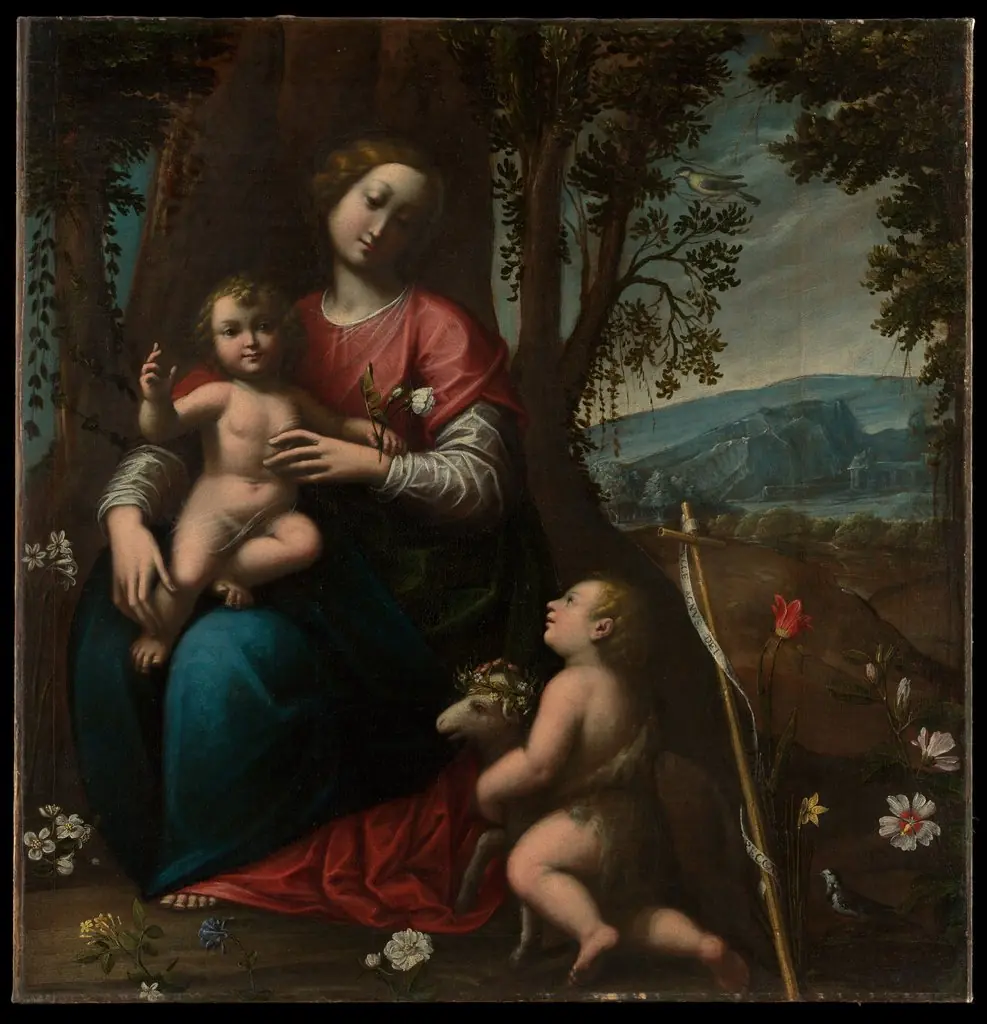 Madonna and Child with the Infant Saint John the Baptist
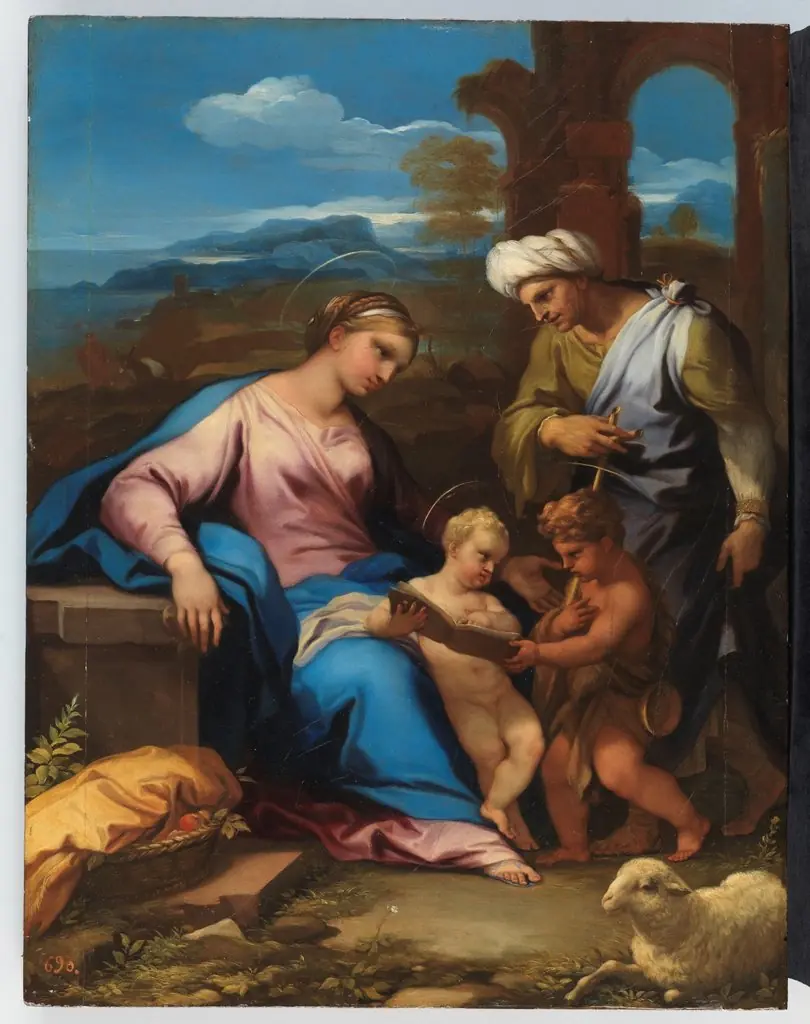 La Sagrada Familia con santa Isabel y san Juanito
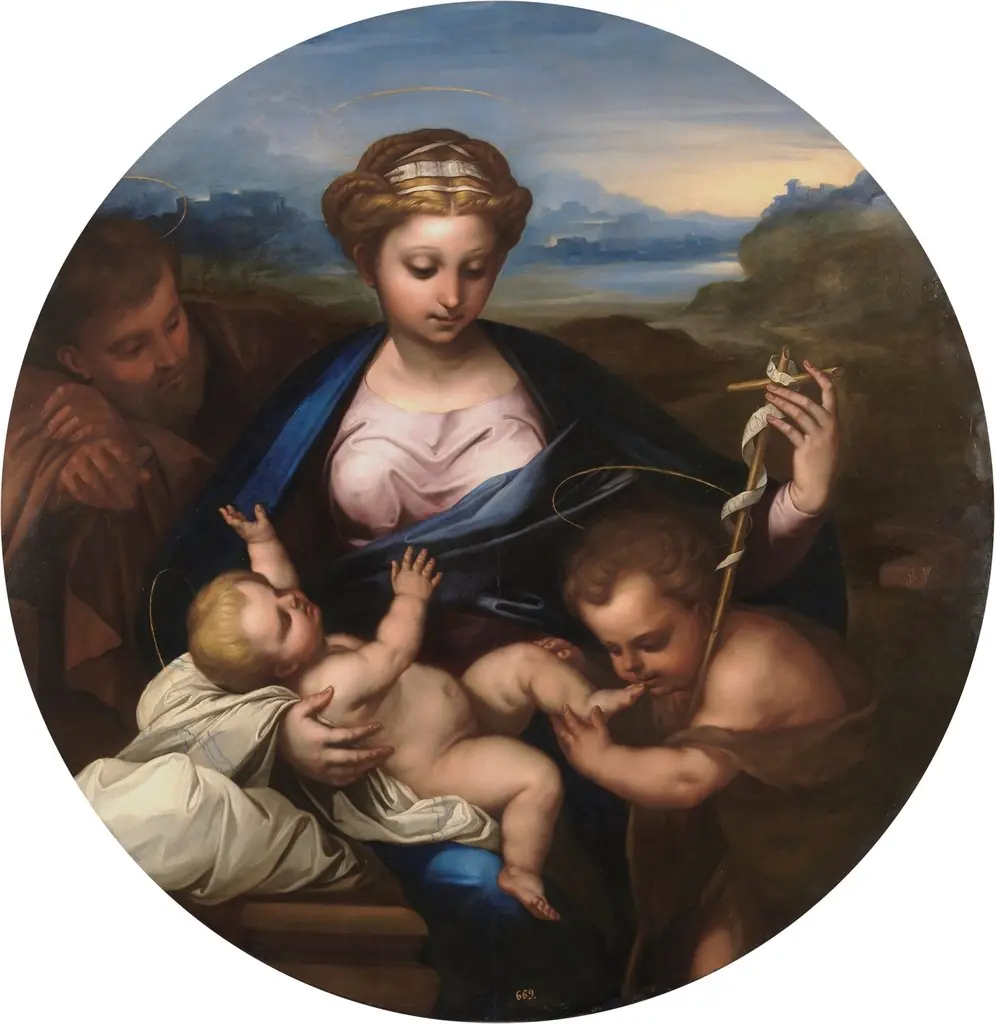 The Holy Family with Saint John
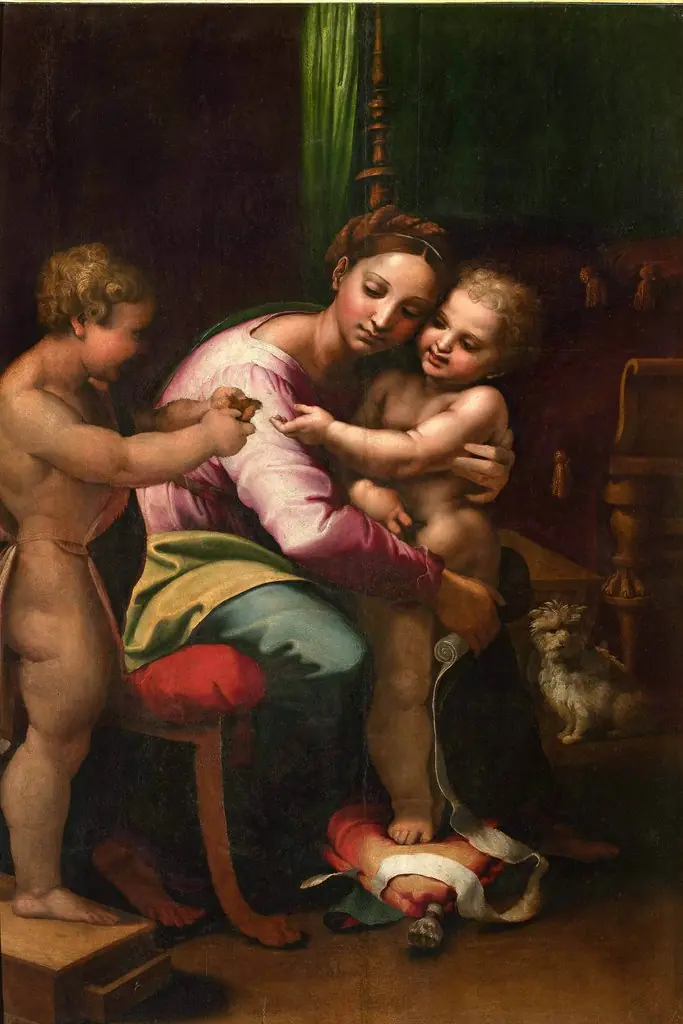 Madonna and Child with The Infant Saint John the Baptist
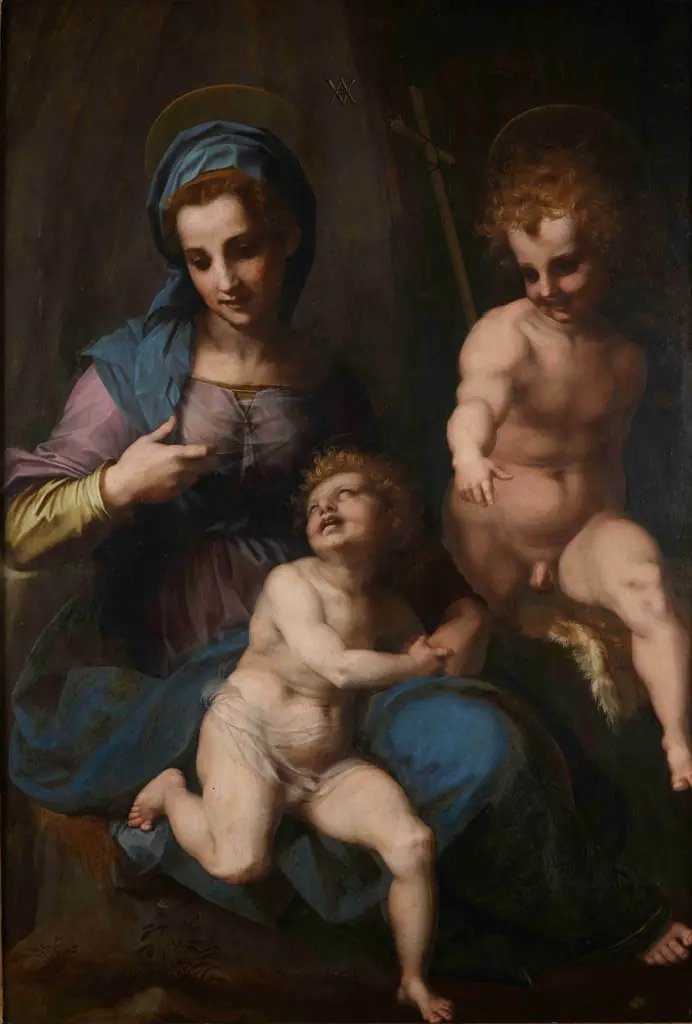 Madonna and Child with Young St John
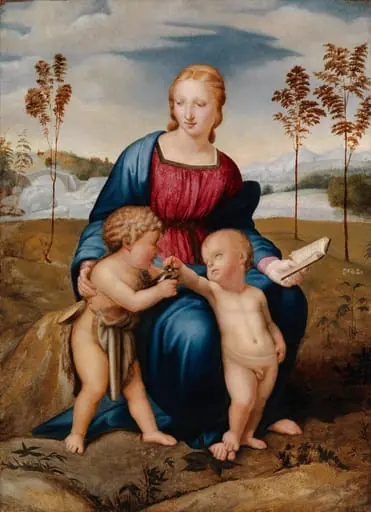 Madonna del Cardellino, kopio Rafaelin (Raffaello Sanzio) mukaan
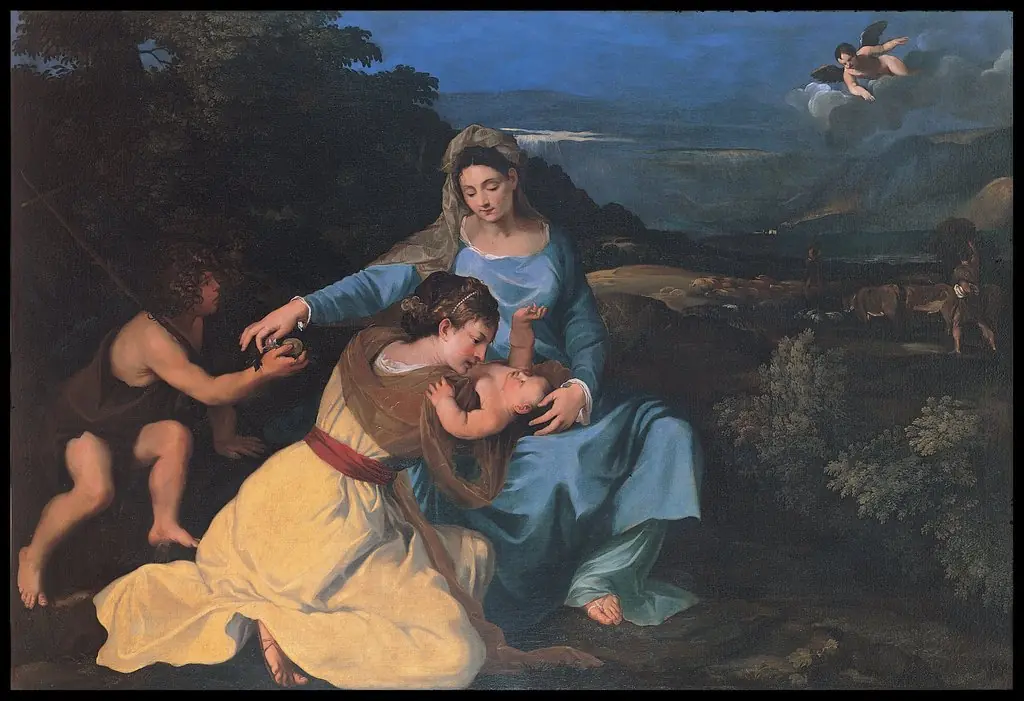 Madonna with the Child, Saint Catherine and Saint John
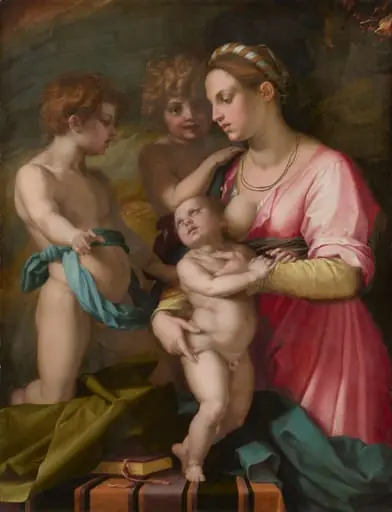 Charity
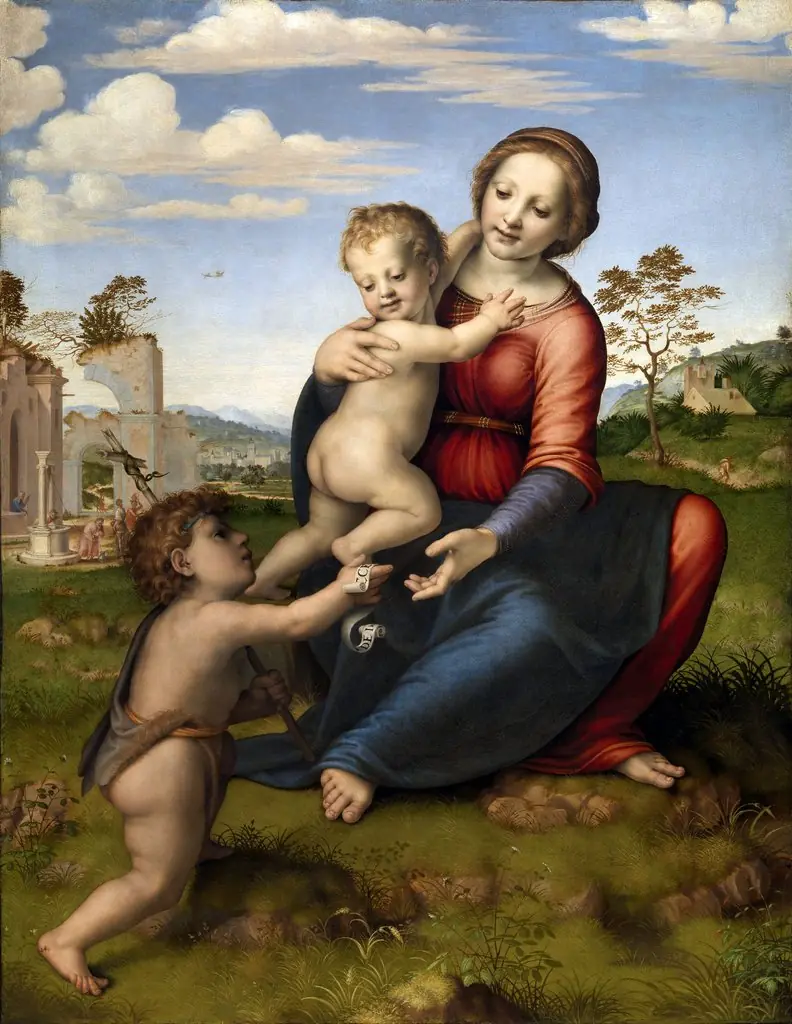 Madonna of the Well or Madonna and Child with the young St. John the Baptist
 Mistic Marriage of Saint Catherine
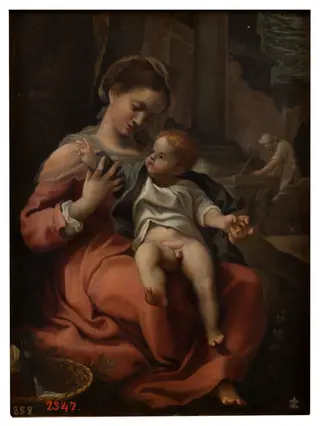 La Virgen del canastillo