Artwork
Visul cailor sălbatici
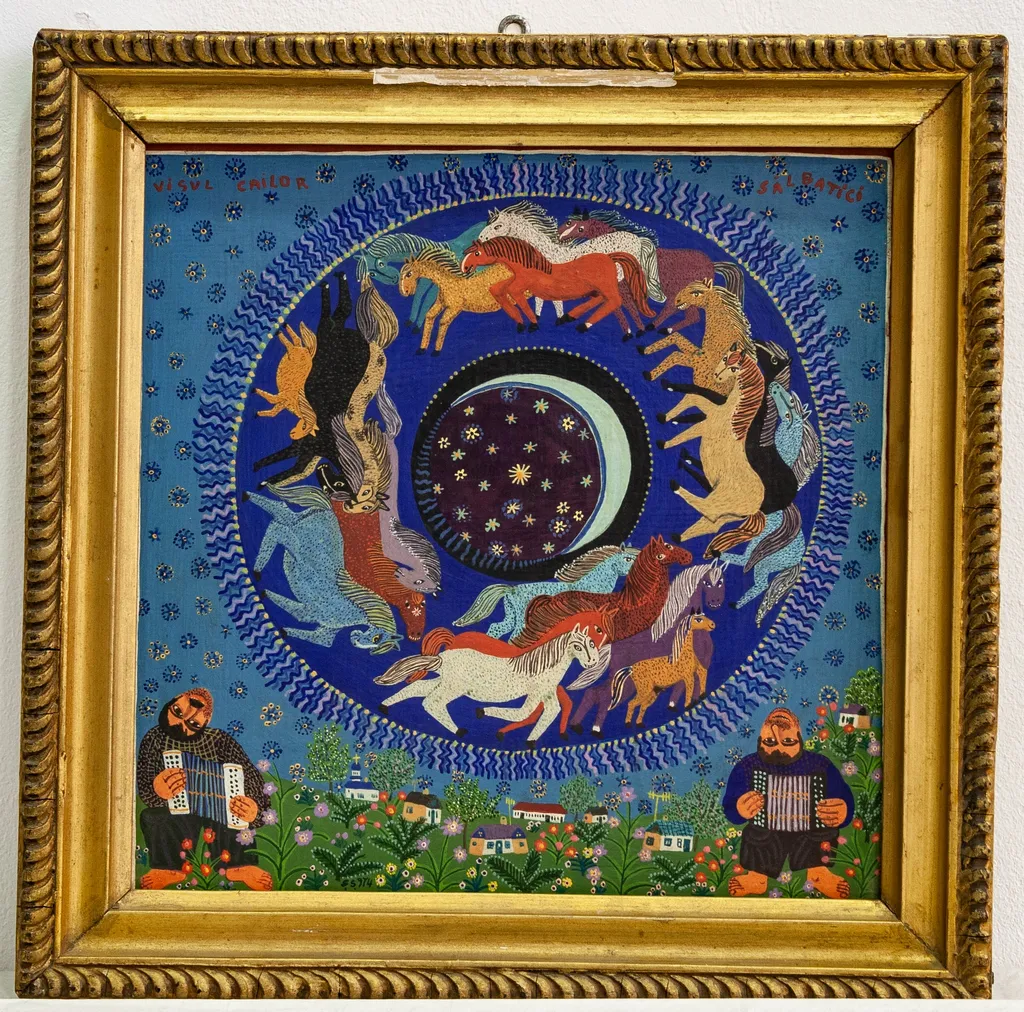
Visul cailor sălbatici is an unspecified painting by the Surrealist artist Știrbu Ștefan. It dates from 1974 and is held in the collection of the Gavrila Simion Eco-Museum Research Institute Tulcea.
About this work
Overview
Created in 1974 by Romanian artist Ștefan Știrbu, Visul cailor sălbatici is part of the collection of the Museum of Ethnography. The work is an image that presents a nocturnal tableau populated by fantastical creatures and human figures, set against a deep‑blue, star‑spattered sky illuminated by a thin crescent moon.
Subject & Meaning
The composition juxtaposes imagined beasts, some bearing tiger‑like stripes, others with the slender limbs of deer, who appear to whirl in a communal dance around the lunar light. Below them, two musicians perform amid a verdant garden dotted with vivid blossoms and miniature dwellings, suggesting a synthesis of mythic wilderness and cultivated domesticity.
Technique & Style
Știrbu employs a dreamlike visual language, using stark contrasts between the dark sky and luminous celestial elements to heighten the surreal atmosphere. The figures are rendered with fluid, elongated forms that blur the boundary between animal and human, while the garden scene is depicted with a more detailed, decorative approach, emphasizing texture and color.
History & Provenance
The painting entered the Museum of Ethnography’s holdings shortly after its completion, becoming part of the institution’s effort to document contemporary Romanian visual culture. Its acquisition reflects the museum’s broader mandate to preserve works that intersect folk motifs with modern artistic experimentation.
Context
Produced during a period of heightened interest in folklore and symbolic imagery in Eastern Europe, the piece reflects the artist’s engagement with Romanian mythic traditions. The title, translating to “The Dream of Wild Horses,” invokes the cultural resonance of untamed equine figures, while the inclusion of musical performers links the scene to communal rituals.
Artist & collection
Artist
A Romanian printmaker, Ștefan Știrbu made linocuts and paintings that blend folklore scenes with everyday life.
Museum
Gavrila Simion Eco-Museum Research Institute Tulcea
Continue through works from the same source collection.
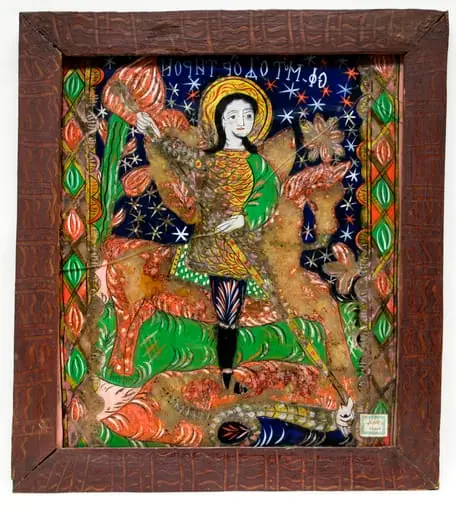
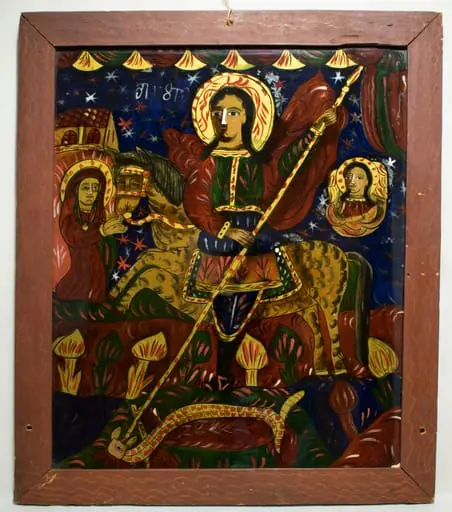
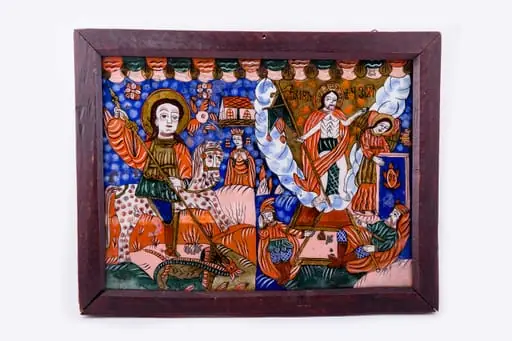
- Icoana îl reprezintă pe sfântul mucenic Teodor Tiron . Sfântul, în centrul compoziției, călare pe cal , înfige o suliță lungă(ce marchează diagonala compoziției)în gura balaurului plasat inferior, dimensiuni reduse. Foarte asemănătoare cu reprezentarea sf Gheorghe, calul este roșu. Veșmintele sunt asemănătoare celor ale soldaților chezaro-crăiești, cizme înalte, negre, pantaloni bufanți cu motive fitomorfe, lorică, tunică scurtă, verde, mantie roșu-cărămiziu. Poziționarea neanatomică. trăsăturile butucănoase, ochii mari, negri, părul lung, negru închis lăsat pe umeri. Nimb cu decor fitomorf. Câmp albastru ultramarin cu decor floral(o floare pe o tulpină uriașă, două flori mai mici) și astral(steluțe albe și roșii). Chenar dublu pe laturile verticale(lanț vertical de romburi alternând cromatic) și semicercuri. Relief din benzi orizontale vălurite, diferite culori(verde, roșu, roz) Foiță de aur. Rama brun roșcat, decorată cu linii vălurite dispuse orizontal, întrerupte ritmic de linii drepte transversale. În colțul din stânga jos o etichetă cu numele Prof Gusti, bătut la mașină. Suportul pictural crăpat, stratul pictural exfoliat, temă rară.
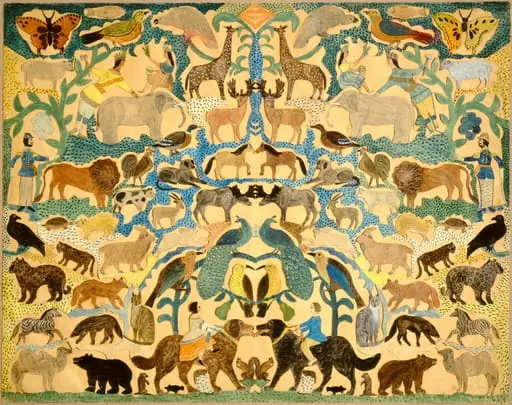 Cutout of Animals
 Icoaată
 Sfânmati
 Icoa
Icoa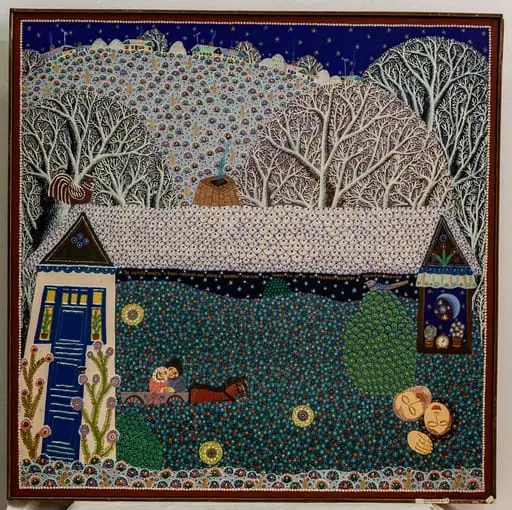 Visul de iarnă al bunilor moșnegi
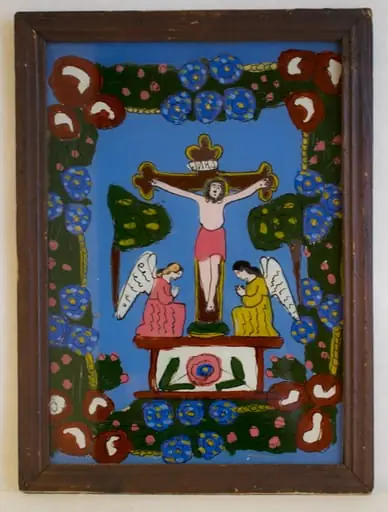 Icoana redă tema Răstignirii combinată cu Plângerea de influență apuseană, catolică. Desenul este executat probabil fără tipar, cu un instrument de scris cu cerneala sau tuș. Isus răstignit pe cruce plasată deasupra pietrei mormântului, plâns de doi îngeri cu profiluri diforme, este încadat de un chenar greoi compus din ramuri groase și elemente florale divers colorate(roz, roșu, albastru, galben). De o parte și de alta a lui Isus doi copaci cu coroane globulare, diforme..Desenul este foarte naiv. Isus are ochii deschiși, părul este bogat, mânile și picioarele diforme.Aureola se "scurge" pe lângă capul lui Isus. În jurul mijlocului veșmânt roz. Crucea treflată, pictată cu brun, chenar ocru galben și inscripția INRI pe fond alb. Îngerii au părul ondulat,(unul blond, unul brunet) sunt înveșmântați în roz și galben, veșminte de inspirație catolică.. Mormântul decorat cu o floare roz. Câmul icoanei bleu închis. Pe spate a avut lipită o hârtie mai groasă care servea drept dos. Rama este profilată, lăcuită, de culoare cafeniu închis.
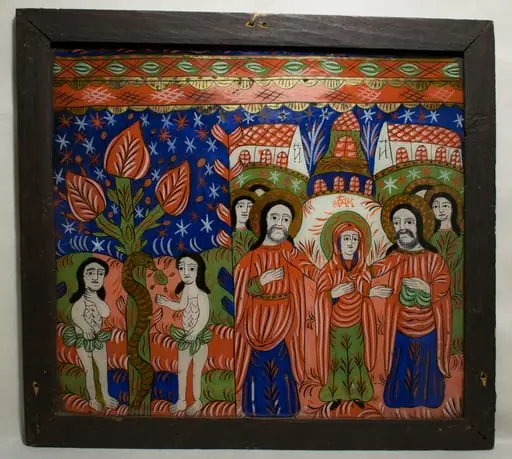 Icoaînve
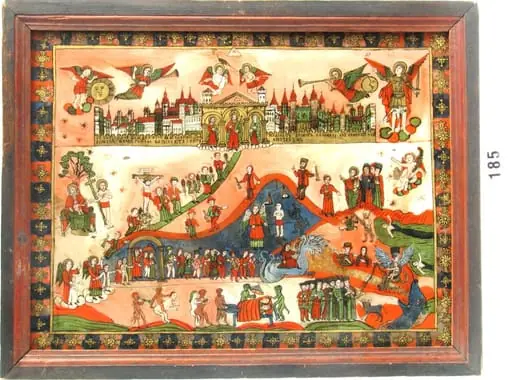 Înfricoșătoarea judecată de apoi
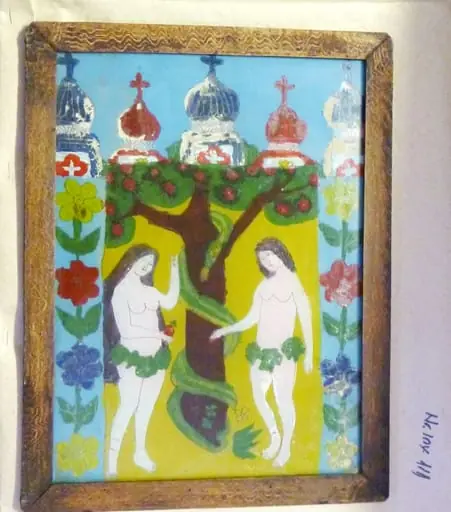 icoană pe sticlă
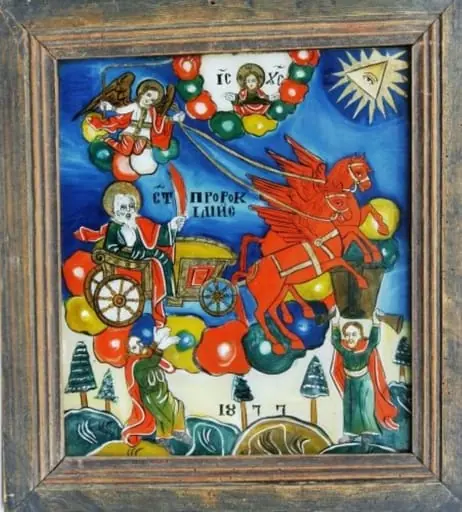 Sfântul Prooroc Ilie