Artwork
Grand Garde (Souvenir du siège de Paris)
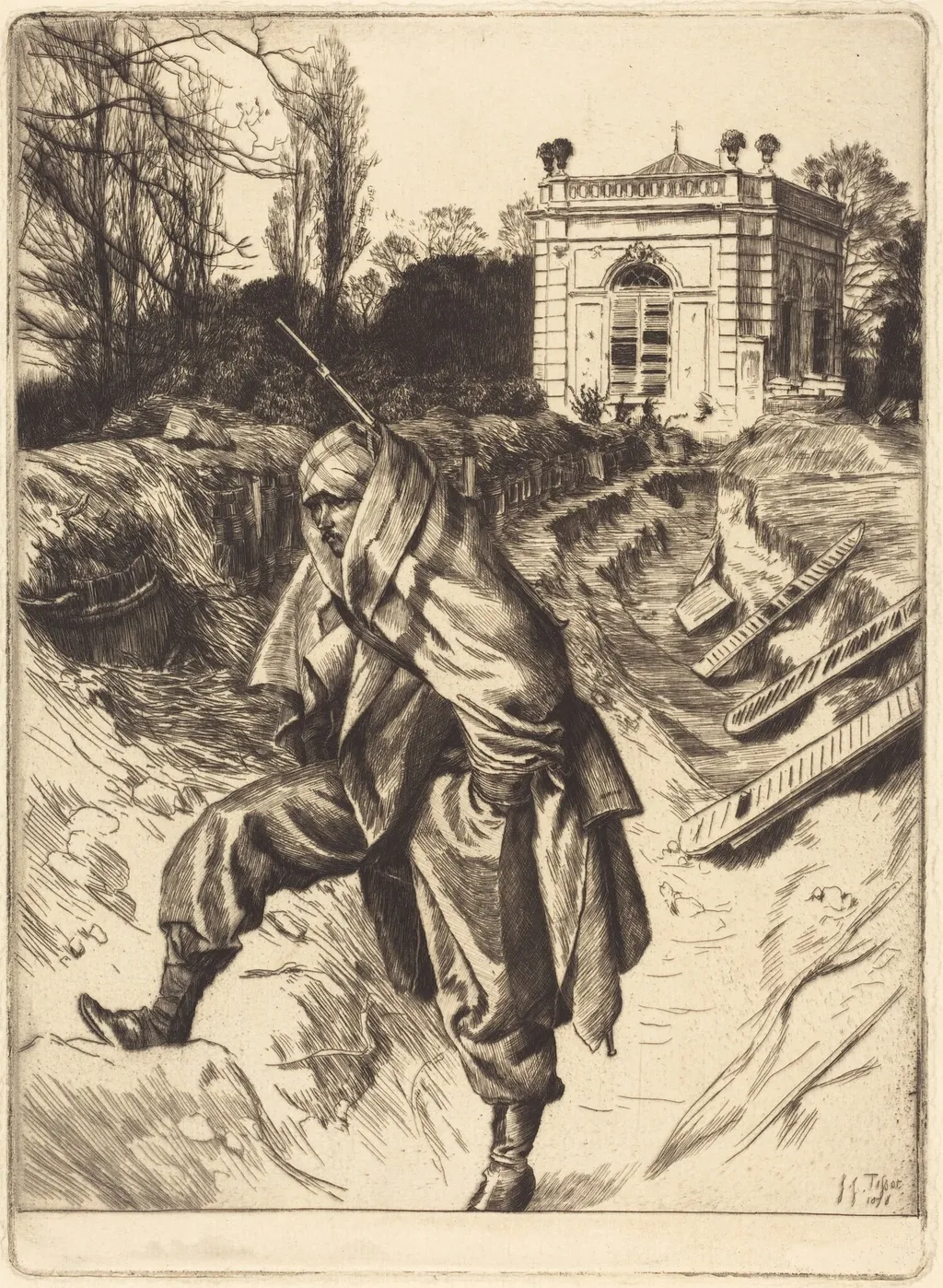
Grand Garde (Souvenir du siège de Paris) is an ink print by the Romanticist artist James Jacques Joseph Tissot. It dates from 1878 and is held in the collection of the National Gallery of Art.
- Inscription
- Inscribed:recto: lower right in plate: J.J. Tissot / 1878; verso: at upper left, in blue pencil: 48
- Markings
- Marked:verso: stamped in black-blue ink: J. SIMONET / Paris
About this work
Overview
The scene’s subdued tonality and precise detailing evoke a moment of quiet tension, characteristic of Tissot’s engagement with historical and wartime themes.
James Jacques Joseph Tissot’s Grand Garde (Souvenir du siège de Paris) is an 1878 etching and drypoint on laid paper. The print presents a solitary figure traversing a landscape, his military bearing underscored by a rifle slung over one shoulder. The scene’s subdued tonality and precise detailing evoke a moment of quiet tension, characteristic of Tissot’s engagement with historical and wartime themes.
Subject & Meaning
The central figure, clad in a long coat and hat, embodies the archetype of a guard or sentinel, his solemn expression and deliberate stride suggesting duty or vigilance. The building in the distance, possibly a church or estate, anchors the scene in a specific locale, while the surrounding foliage reinforces the isolation of the subject. The title’s reference to the Siege of Paris implies a commemorative intent, framing the image as a reflection on the personal toll of conflict.
Technique & Style
Tissot employs etching and drypoint to achieve a range of textures, from the crisp lines defining the figure’s attire to the softer, atmospheric rendering of the background. The interplay of light and shadow, particularly in the foliage and architectural elements, demonstrates his command of intaglio processes. The composition’s balance between detail and suggestion aligns with the period’s interest in narrative realism, while the somber mood reflects broader artistic explorations of war’s aftermath.
History & Provenance
Created in 1878, Grand Garde emerged during Tissot’s later career, a period marked by his return to France after years in London. The print’s subject matter, linked to the 1870–71 Siege of Paris, situates it within a wave of artistic responses to the Franco-Prussian War. While specific early ownership remains unrecorded, the work has since entered public and private collections, often studied for its technical and thematic contributions to 19th-century printmaking.
Context
The etching reflects the era’s preoccupation with military memory, a theme amplified by France’s recent defeat and the Commune’s violent suppression. Tissot’s treatment of the guard as an emblematic, rather than individualized, figure aligns with contemporary works that sought to universalize the soldier’s experience. The print’s restrained tone contrasts with more overtly dramatic depictions of war, instead emphasizing endurance and quiet resolve.
Legacy
Grand Garde exemplifies Tissot’s ability to merge technical precision with evocative storytelling, a hallmark of his printmaking. Its focus on the human dimension of historical events anticipates later artistic engagements with war’s psychological and social consequences. The work remains a reference point for scholars examining 19th-century representations of conflict, particularly in the context of intaglio traditions and the period’s evolving attitudes toward military service.
Own this work as a print
Artist & collection


- Desperate Man (Le desespere)
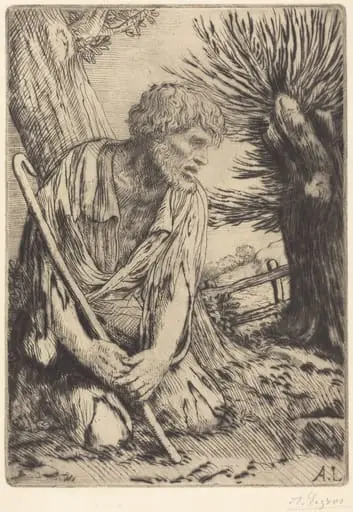 The Prodigal Son, 3rd plate (L'enfant prodigue)
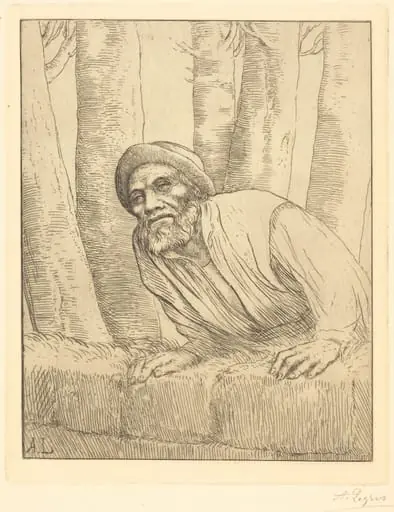 Man Climbing a Wall (L'escalade)
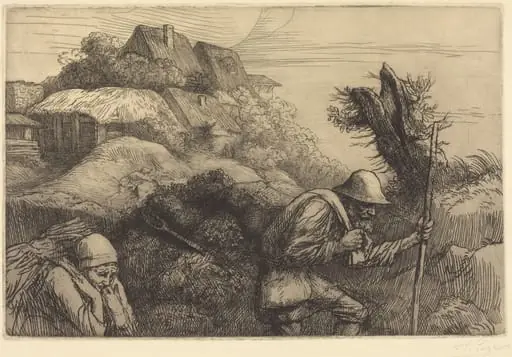 Return from the Woods (Le retour du bois)
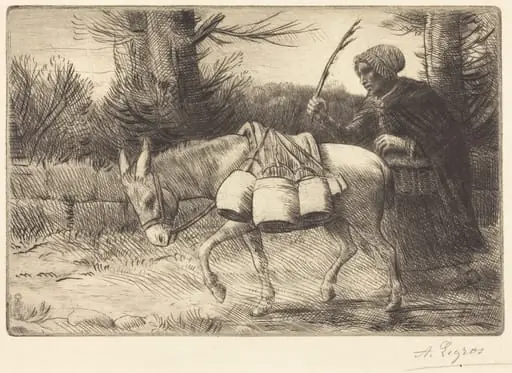 Milkmaid of Boulogne, 3rd plate (Laitiere a Boulogne)
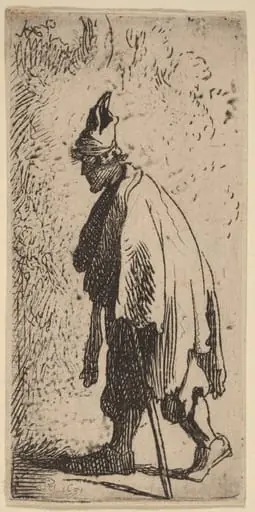 Beggar with a Stick, Walking to the Left
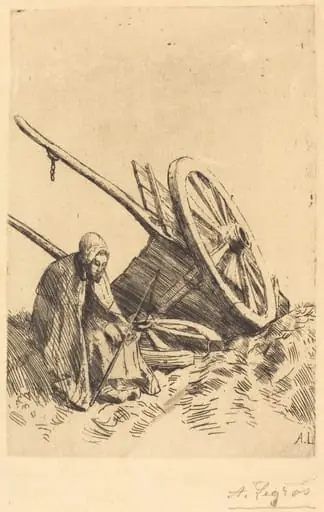 Broken Cart (La charette brisee)
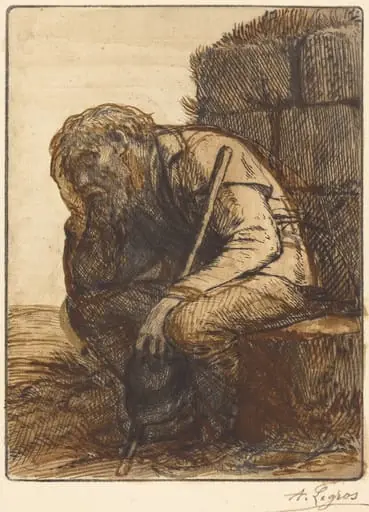 Desperate Man (Le desespere)
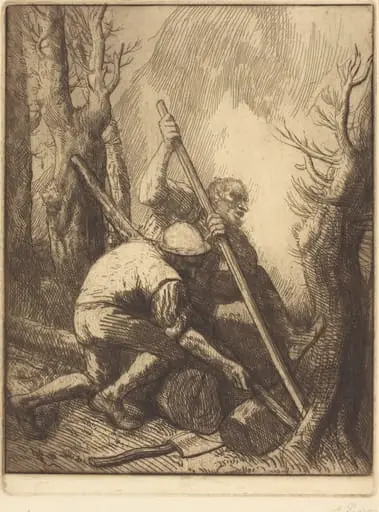 Woodcutters, 3rd plate (Les bucherons)
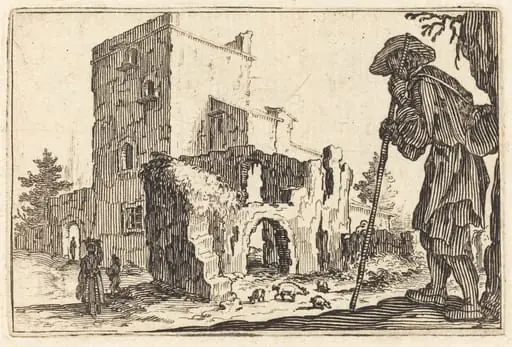 Shepherd and Ruins
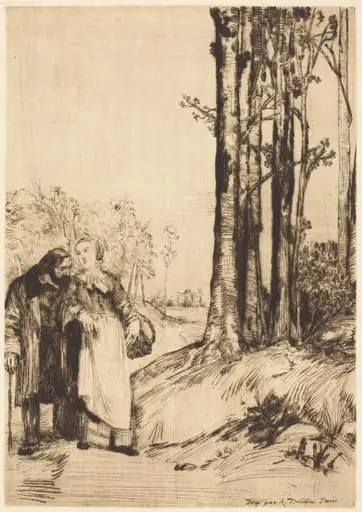 Stroll of the Convalescent (La promenade du convalescent)
 The Dismissal of Hagar